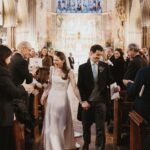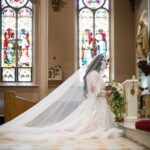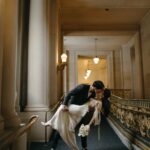
The silhouettes here run from a full-formal ball gown with a long train to a jumpsuit with no skirt at all, and the right one depends on the venue and how I expect you to move: stairs, grass and a dance floor each favor a different cut.
1. Ball Gown
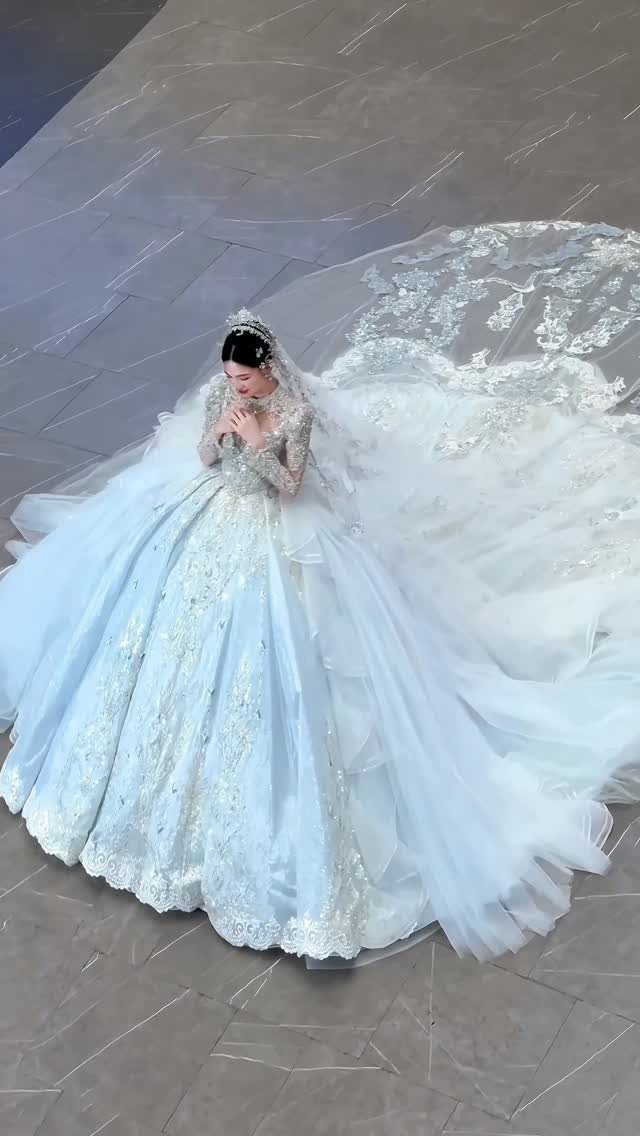
A ball gown is the most formal shape you can choose: a fitted bodice over a skirt that spreads wide from the waist.
Add a long train and a tiara, and a ball gown in lace becomes a full-formal look; a light blue underlayer is a soft way to bring in color.
I’d choose it only if the rest of the wedding matches.
A skirt this big needs room for walking, sitting and dancing, and it pairs best with a ceremony that already feels formal. At a casual backyard wedding it would fight the setting.
2. Mermaid Wedding Dress
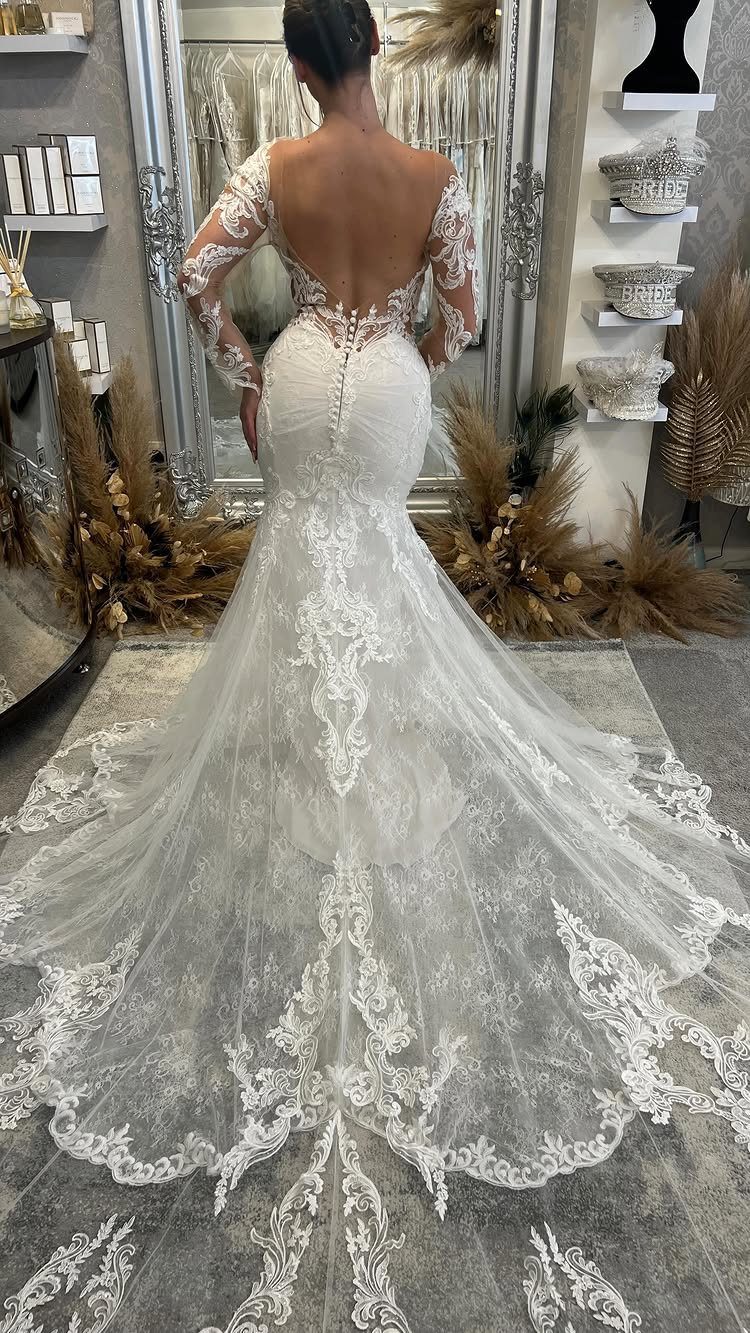
Mermaid dresses hug the body through the hips, then flare out toward the hem. Lace keeps that fitted line from feeling plain, and a long train adds the drama a mermaid cut is known for.
Because the shape is so close, fit decides everything.
I’d book fittings with the shoes you plan to wear, and I’d test sitting down and walking before you commit. For a silhouette with more room to move, I’d pick the A-line.
3. Sheath Wedding Dress
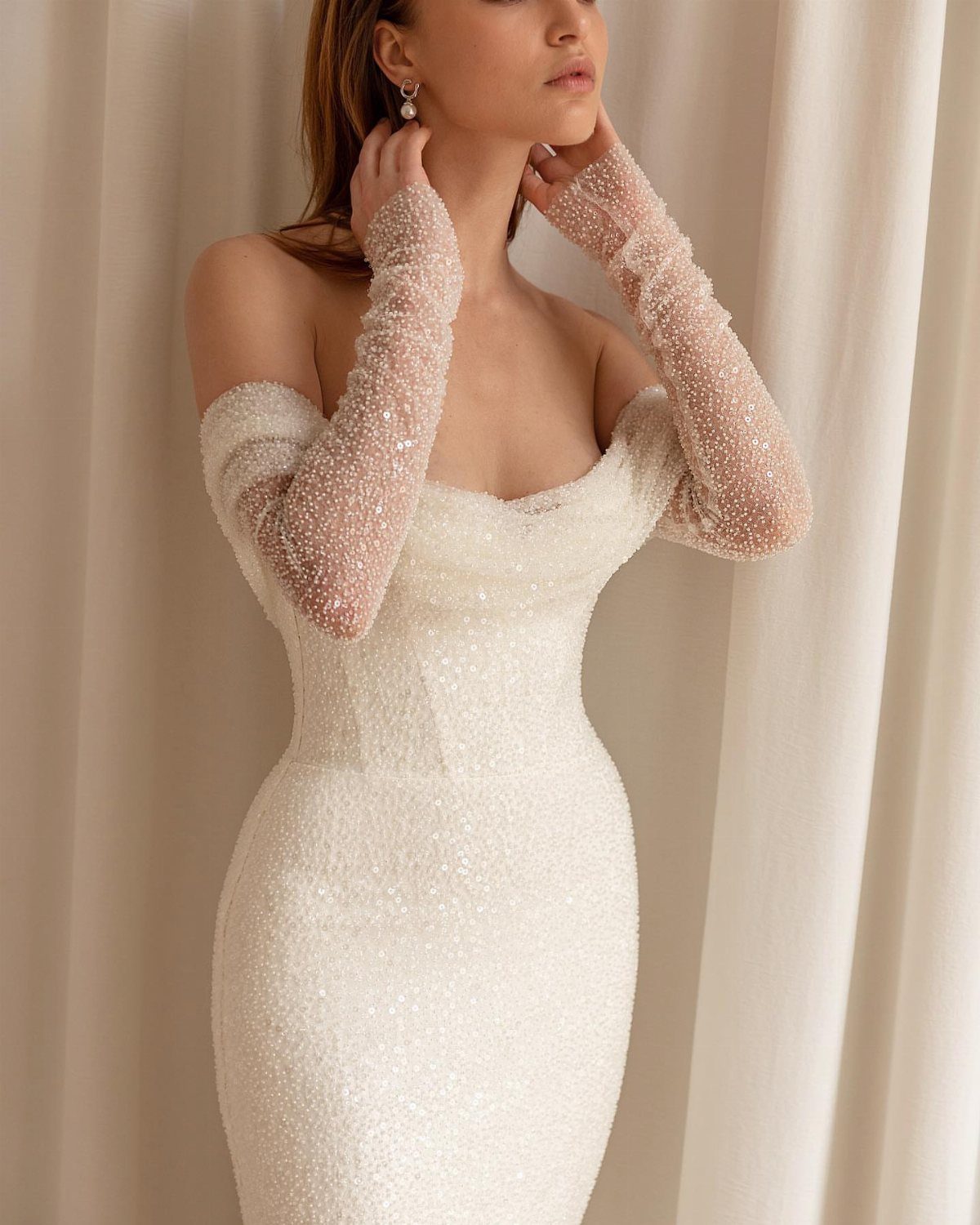
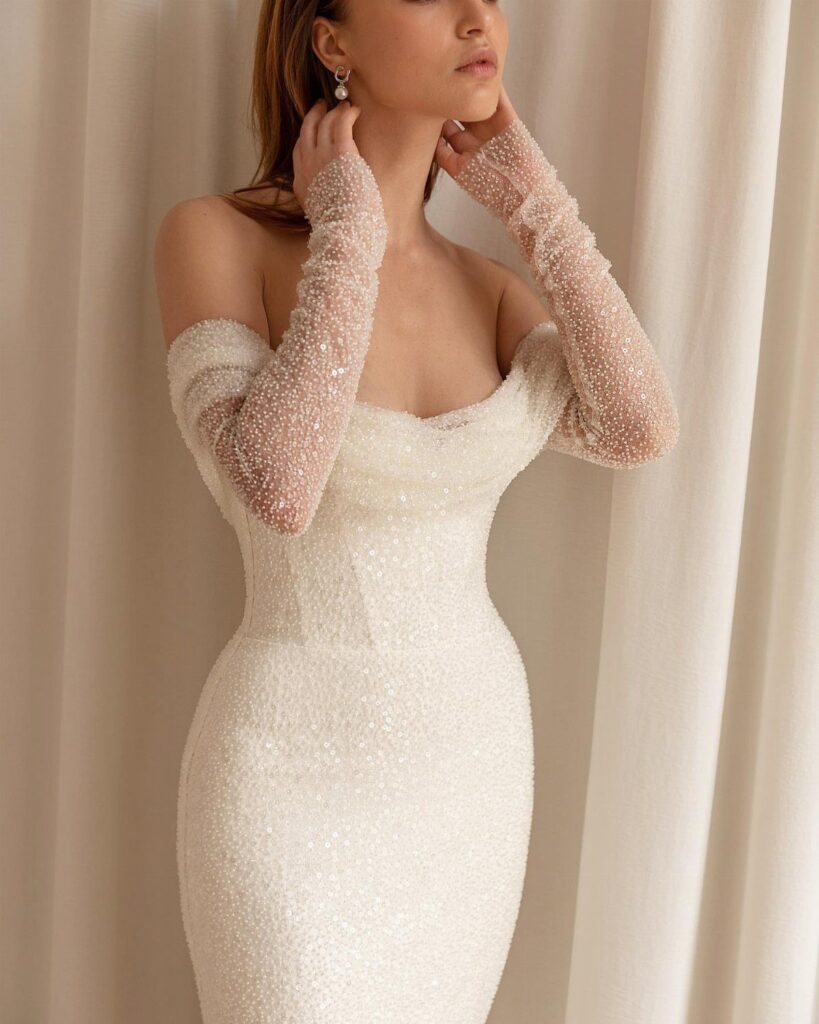
Sequins turn a sheath into a statement. A sheath falls straight and slim from shoulder to hem, so the fabric carries the look; beaded gloves add a finishing detail without adding volume.
A sheath suits a bride who wants a streamlined line rather than a big skirt.
I’d skip heavy veils or extra layers, since they compete with the sparkle. Keep accessories to one or two pieces.
“Your guests will not know that it can be removed as it molds perfectly with the dress,” shares Zwillinger. “By having this, she has two completely different looks for her wedding day, and can feel more comfortable after her ceremony going into her reception.”
— Vogue
4. A-Line Wedding Dress
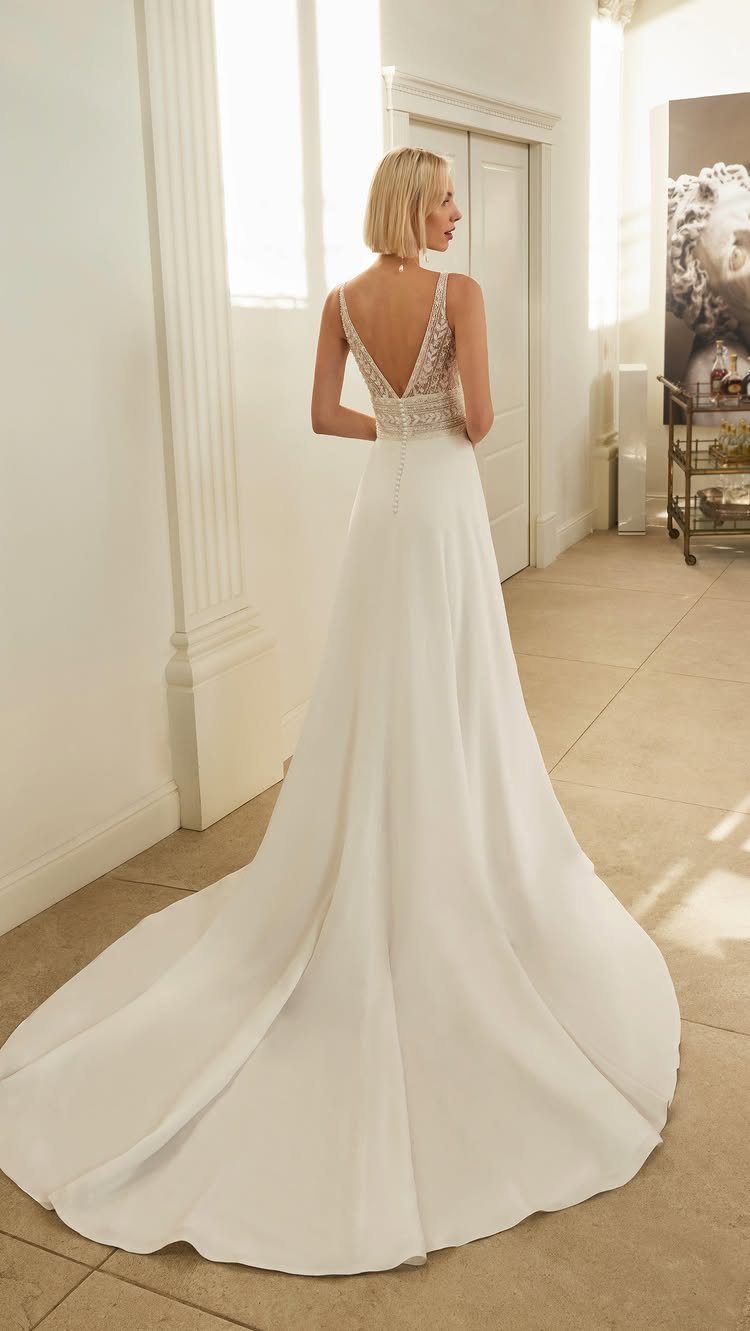
Fitted at the bodice and widening gently from the waist, the A-line forms a letter A. It’s the shape I point most brides toward first, because it gives skirt room without the bulk of a ball gown.
Judge the back of an A-line as carefully as the front, since that is the side your guests see during the ceremony.
A lace V-back with beading, like this one, gives you detail for the photos taken as you walk away. Try it on and check that the back looks as good as the front.
5. Empire Waist Wedding Dress
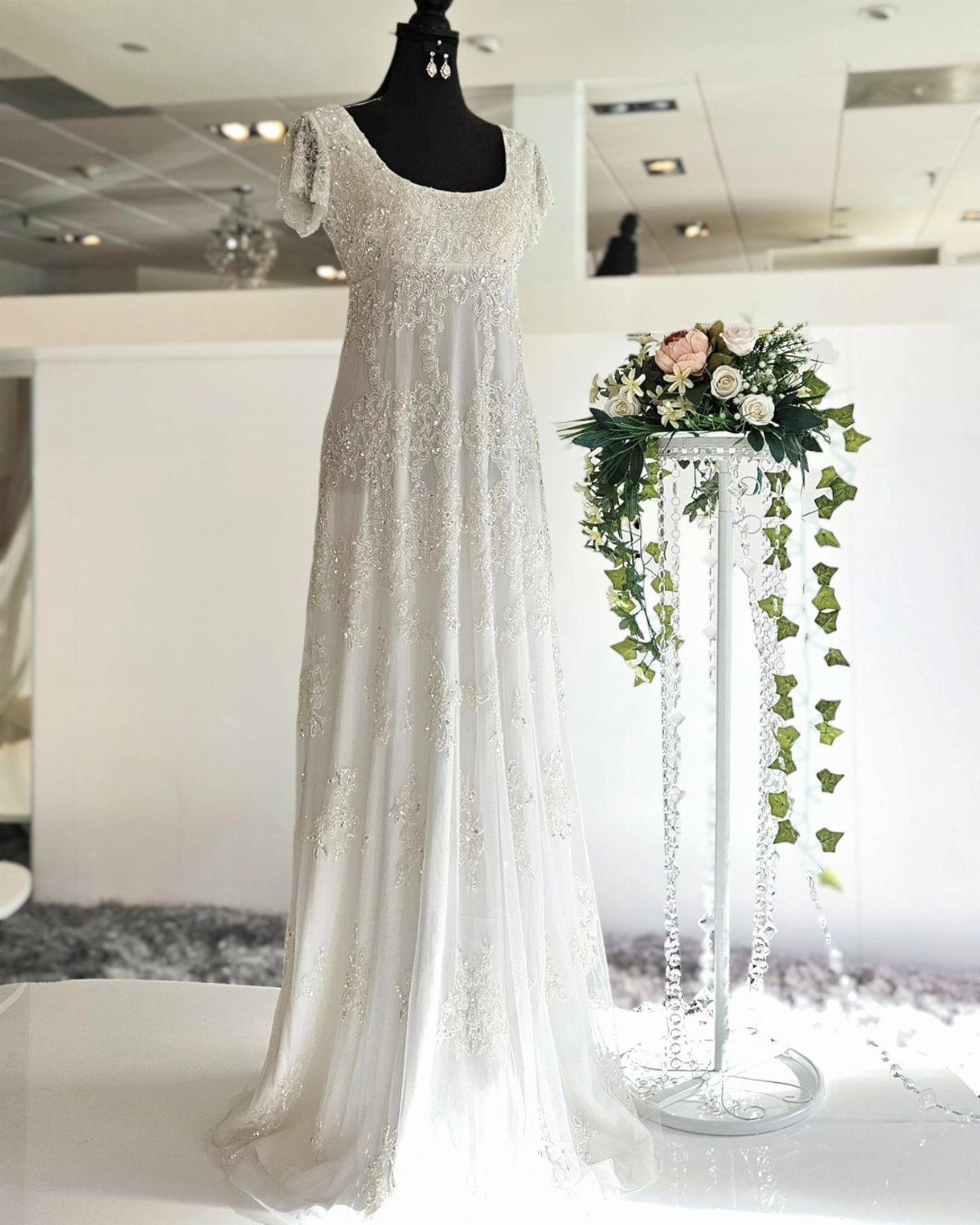
An empire waist sits high, right under the bust, and the skirt falls straight down from there. Silver embroidery across the bodice, as on this dress, draws the eye upward and keeps the skirt simple.
I like this style for brides who want to feel unrestricted, since nothing pinches at the natural waist.
The cost of that high seam is a change in your proportions, so try it on before you commit. Try one on in person before ordering, and check where the seam lands on you.
6. Off the Shoulder Wedding Dress
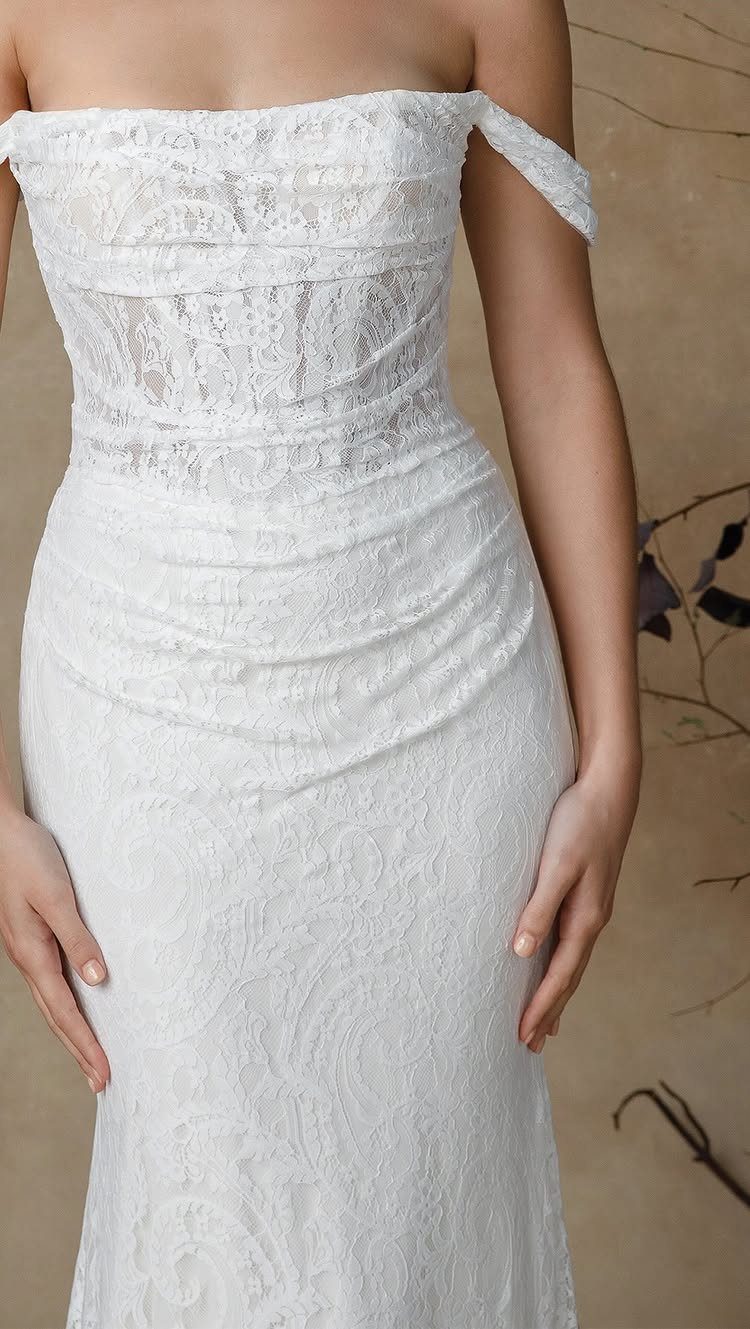
Straps that sit low on the arms, leaving the collarbone and shoulders bare, make off-the-shoulder dresses the most romantic option for me. Paired with lace and a fitted silhouette, as here, the look is soft and feminine.
Because the neckline frames the shoulders, I’d keep jewelry minimal: earrings or a delicate necklace, not both. Wear your hair up if you want the neckline fully on display.
7. Tea-Length Wedding Dress
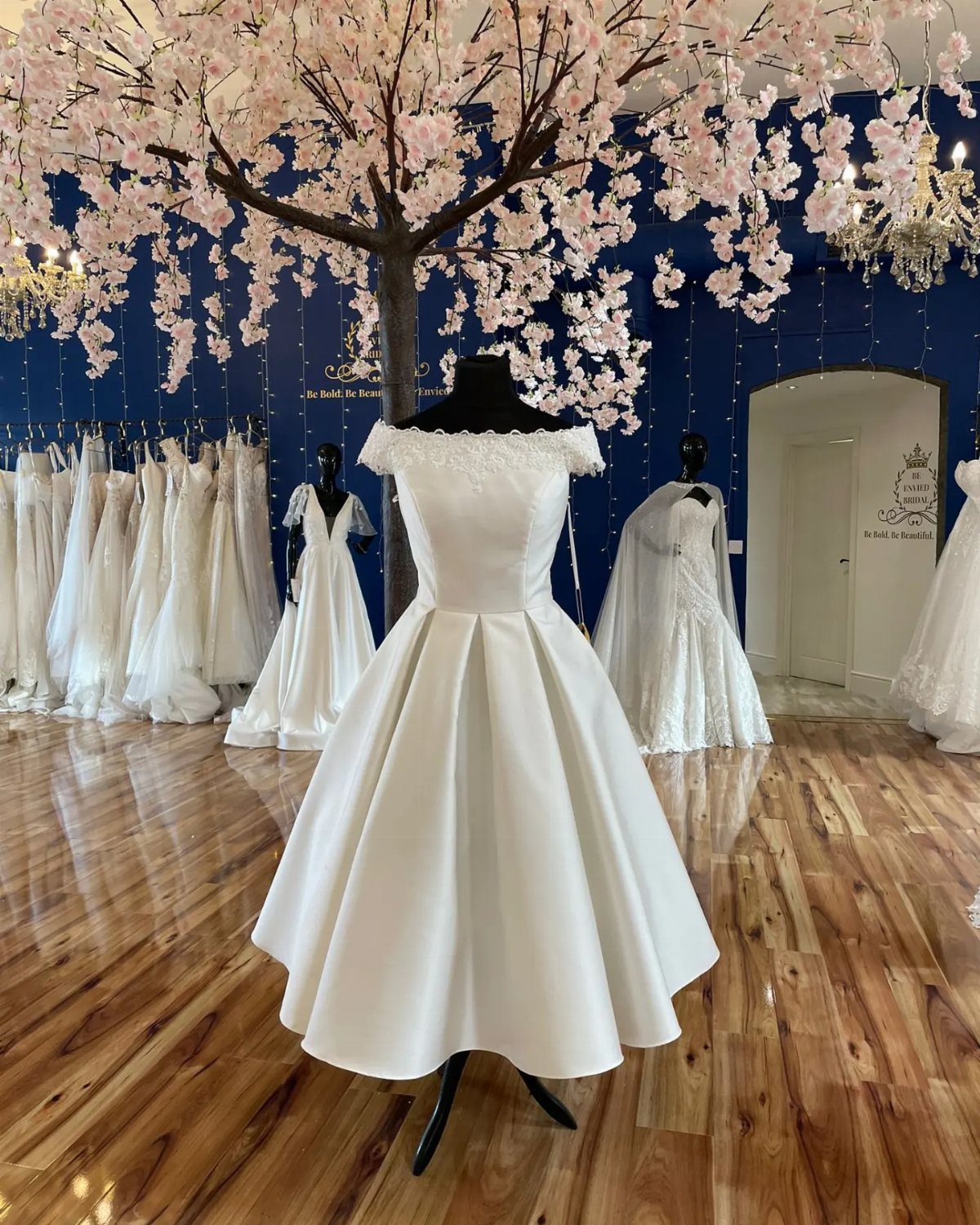
Hemlines that land between the knee and the ankle give a tea-length dress its easy, walkable shape. With an off-the-shoulder neckline, as on this one, the look stays soft while the skirt stays short.
For a bride who plans to spend most of the reception on the dance floor, this is my pick: no train to scoop up and no bustle to fuss with.
Bring your wedding shoes to the fitting, because they are fully on display. Pick the pair first, then set the hem.
8. Two-Piece Wedding Dress
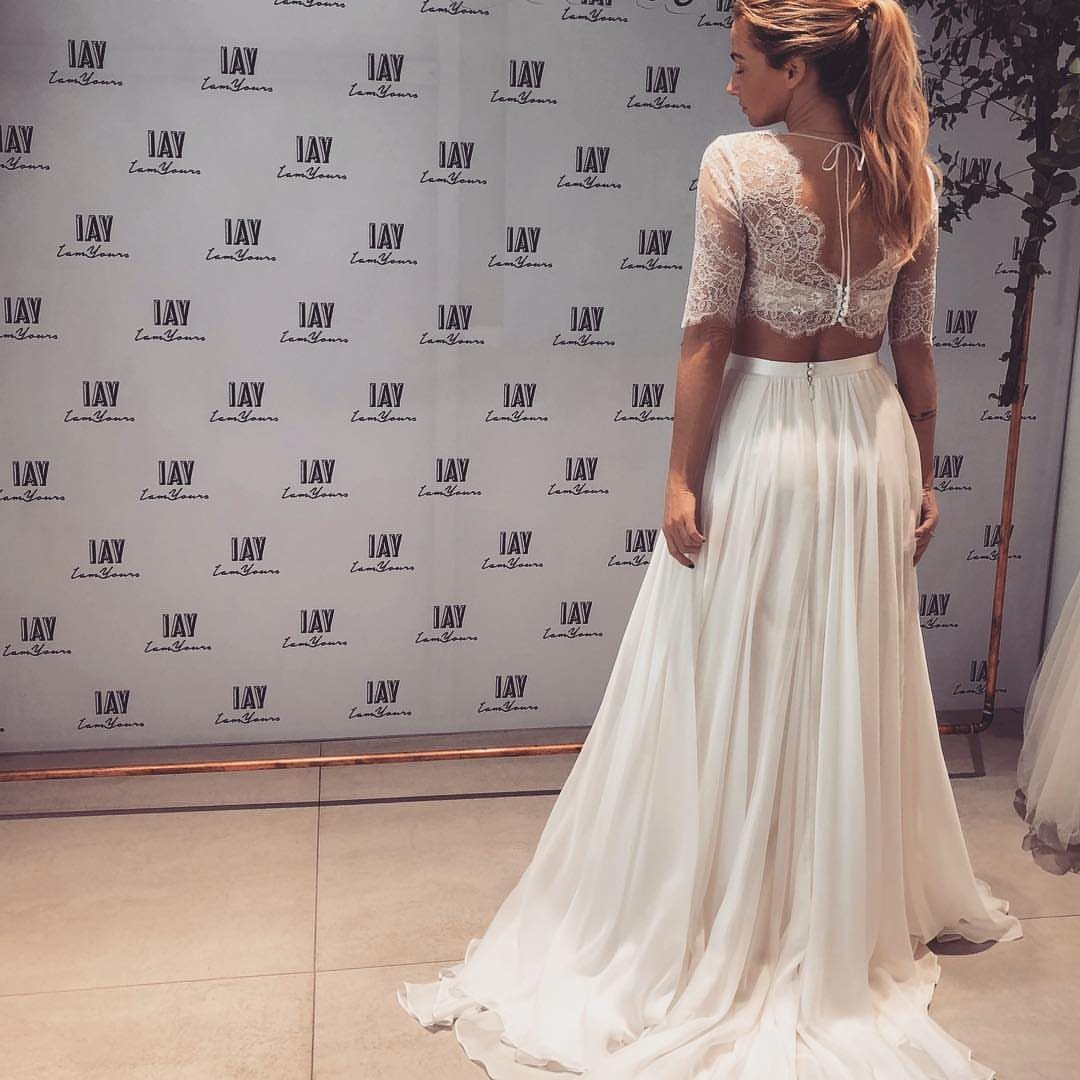
A lace crop top paired with a long, flowing chiffon skirt is the two-piece look at its lightest. Separating top and skirt lets each piece do its own job: lace for detail up top, movement below.
Buy the pieces together if you can, so the whites match.
Ivory and bright white can look off side by side in photos. I’d also check where the top ends and the skirt begins when you raise your arms and sit, since a gap is easier to spot on a two-piece.
9. Jumpsuit
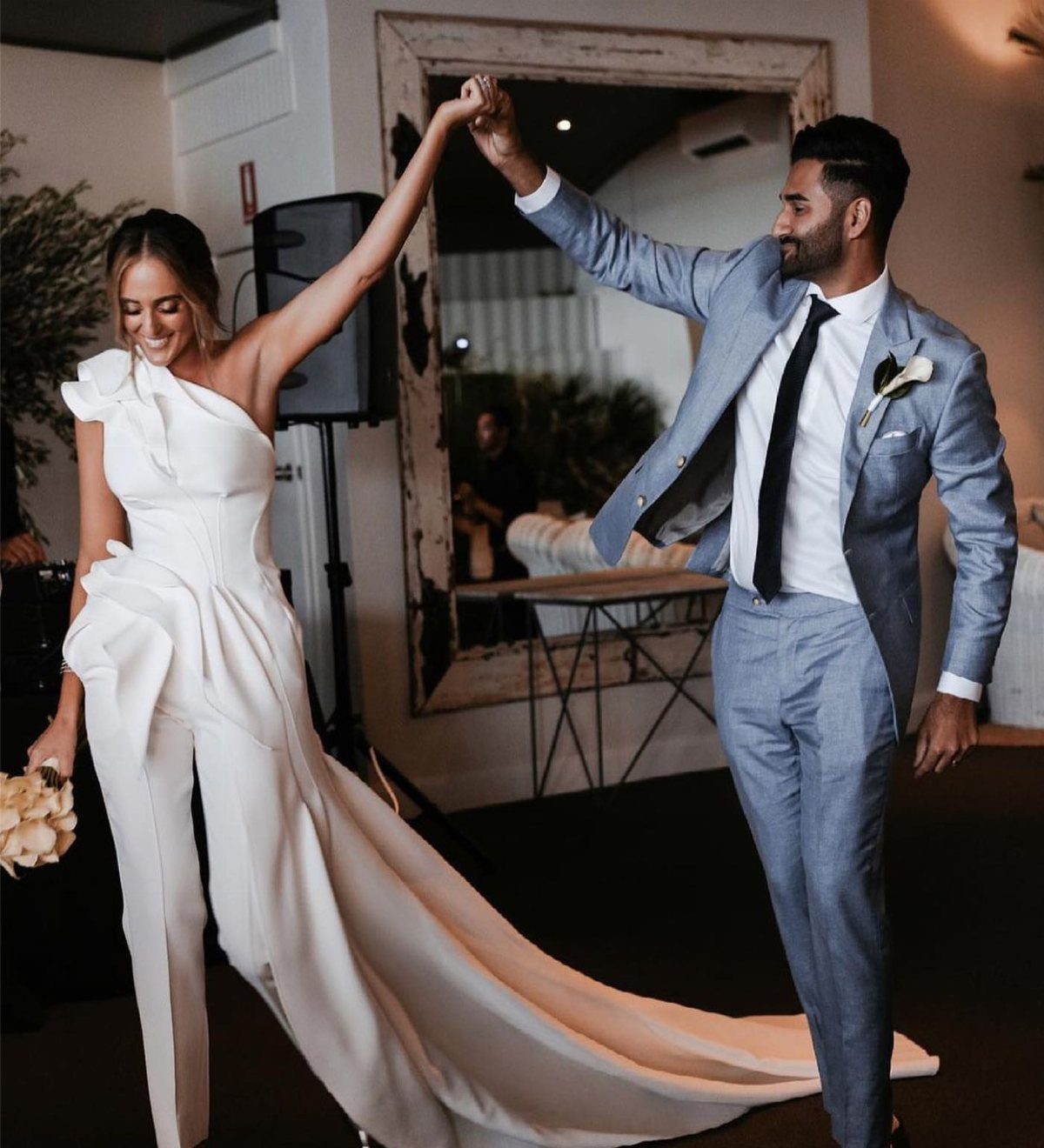
Pants under a bridal train sound like a contradiction, and that’s the appeal. A white jumpsuit with a train keeps the formal drama of a gown while letting you move freely on the dance floor.
For me this is the strongest pick for a bride who knows she won’t love a skirt.
Because the garment is one piece, fit through the torso matters more than anywhere else, so try it on and sit, bend and dance before you order. If a train feels like too much, ask whether it detaches.
10. Boho Wedding Dress
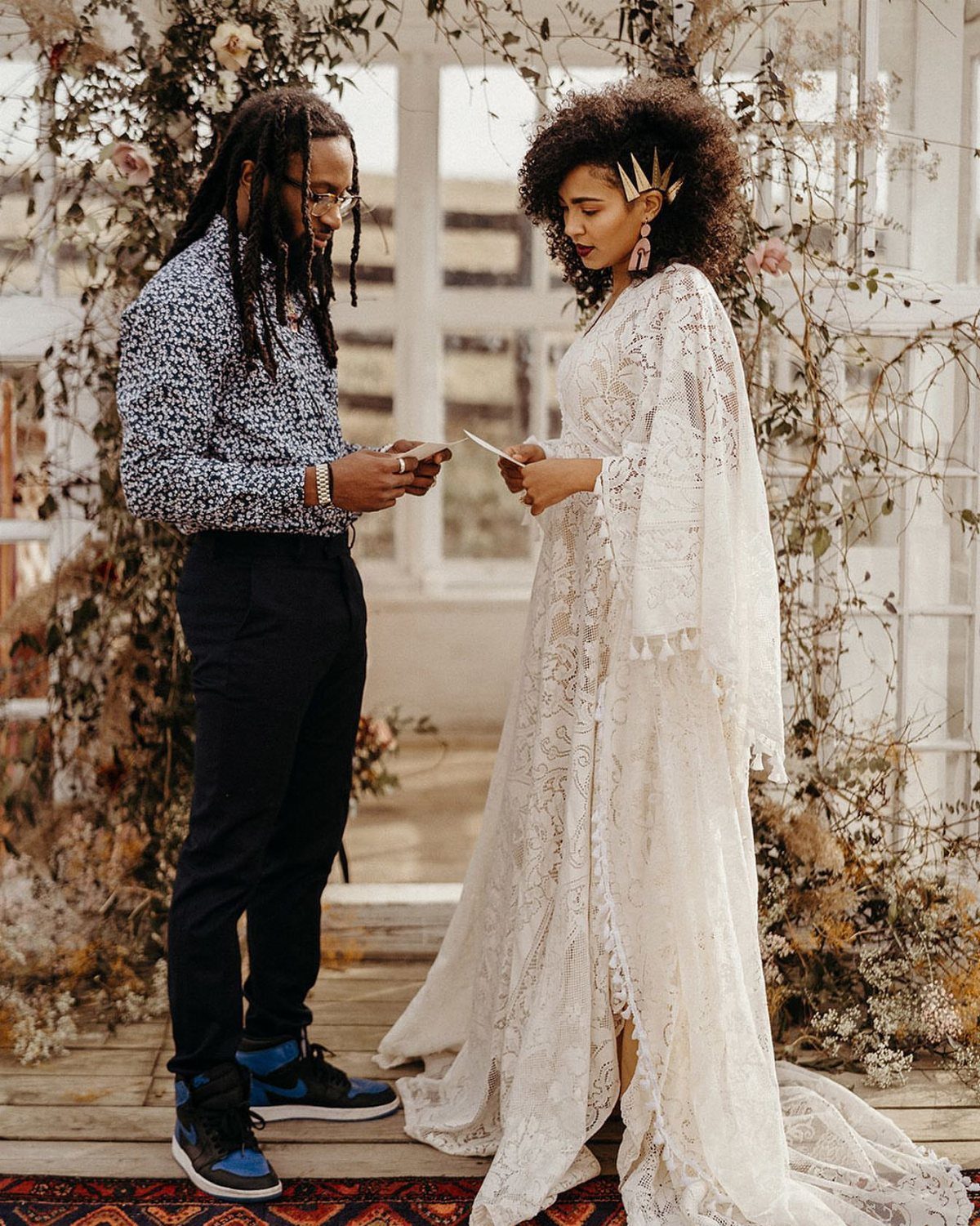
Lace, a relaxed shape and a lack of fuss define a boho wedding dress. Worn in a greenhouse, as here, it sits naturally among plants and light.
I’d let the setting decide: boho looks best in gardens, greenhouses and other outdoor spaces, and can feel underdressed in a formal ballroom.
Keep styling loose too. Soft waves, a few flowers and simple jewelry suit the dress better than a structured updo and a heavy veil.
11. Strapless Wedding Dress
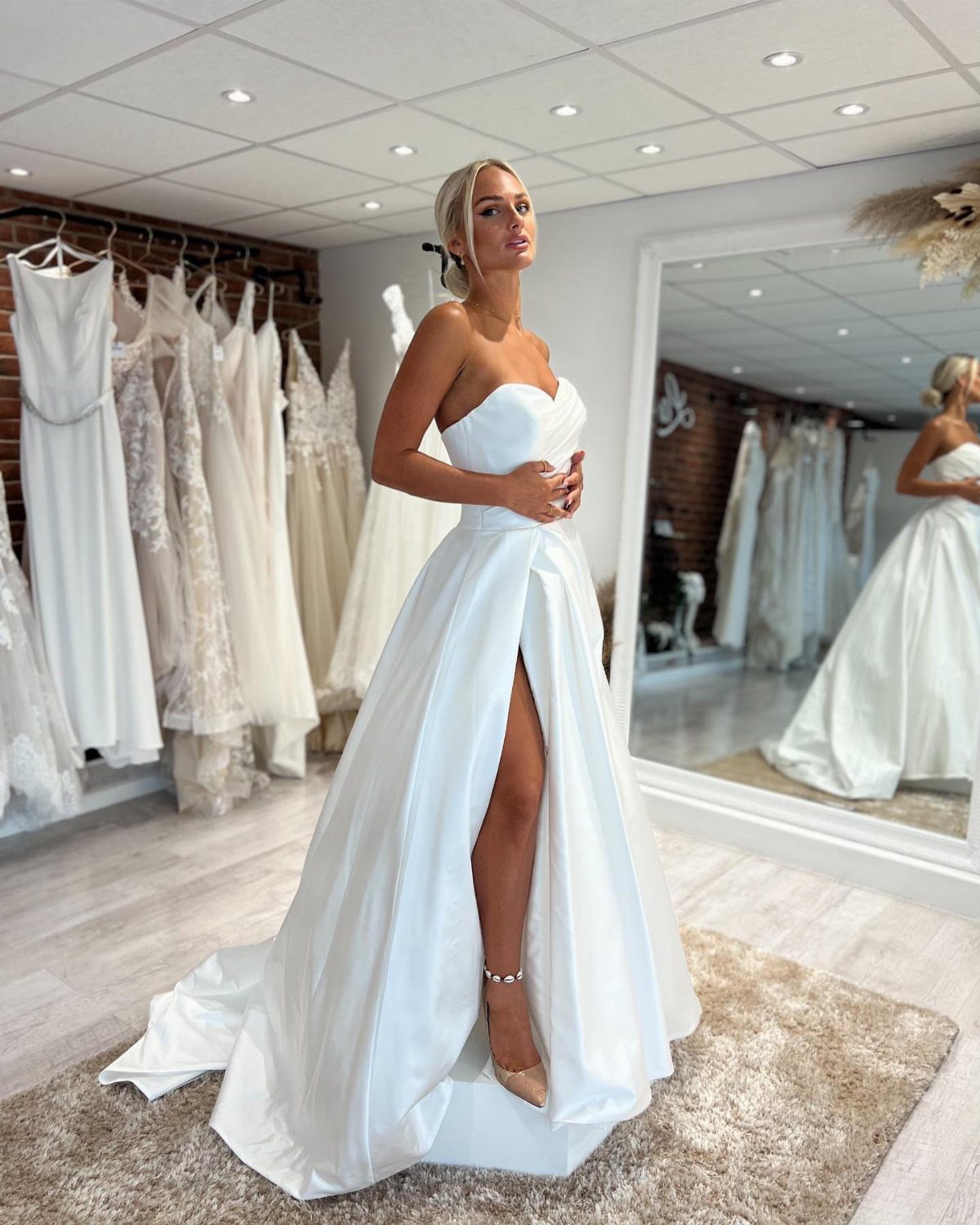
Bare shoulders and a clear collarbone are what a strapless dress is for. A high leg slit, as on this one, adds movement to a clean neckline without any extra trim.
Since nothing sits on the shoulders to hold the dress up, the bodice has to fit snugly.
I’d try it on, then raise your arms, hug someone and sit down to see whether it stays put. If you want a necklace, choose a delicate one so it doesn’t crowd the neckline.
Choosing the Right Silhouette
Start with how the day will feel, not with body-shape rules. Ask yourself whether you’ll be climbing stairs, walking outdoors or dancing for hours, and whether you want a flowing skirt or a sculpted shape.
At your appointment, put on 2–3 different silhouettes, and make one of them a style you never planned to try.
2 dresses with the same silhouette can feel nothing alike once the fabric, boning, seams and neckline change, so a cut that looked wrong online might work well in a different material.
Settle 3 things before you book: where the venue is, which body-shape preferences matter to you, and what overall mood you want. Walking in with those answers can cut your fitting appointments in half, which matters on a deadline.
Of the 6 primary silhouettes, I’d rank comfort over trend. Neckline and back details shape the mood as much as the skirt does, so judge the whole dress.
Neckline Options
Your neckline sits right beside your face, so it sets the tone before anyone looks at the skirt. It also changes how the whole silhouette reads, so I’d treat it as its own decision.
A high neck or halter pulls the eye up toward your face and gives the dress a bold, sculpted line. They read modern and confident, and they suit a bride who wants less skin on top without losing drama.
Classic necklines stay simple in different ways: a V-neck plunges, a square neckline gives clean lines, and a cowl drapes loosely. If you can’t decide, I’d start with one of these, since all three pair easily with veils and jewelry.
Try at least one neckline you wouldn’t normally pick. Necklines are easy to compare in a row of photos, so ask for pictures of each from the front and from the side.
Fabric Considerations
Fabric can rescue a silhouette you wrote off.
Match the material to the effect you want: layered fabrics build volume for a fairy-tale look, flowing ones drape for a bohemian feel, and structured ones hold their shape and look modern.
A stiff, structured fabric keeps its volume without lining, and a liquid-drape fabric gives real luxury.
Weight matters for comfort.
I’d pick the season and venue first, then choose silhouette and fabric together, and ask to feel swatches before you fall for a photo.
Frequently Asked Questions
What are the different types of wedding dresses?
Silhouettes include ball gown, A-line, mermaid, sheath, empire waist, tea-length, two-piece and jumpsuit. Fabric and style labels like boho add one more layer, so judge the whole dress rather than the cut alone.
How do I choose a wedding dress neckline?
Decide first what you want framing your face, shoulders and collarbone, because the neckline sets the mood before the skirt even comes into view.
A V-neck lengthens the torso, a sweetheart adds a soft curve, and a high neck or halter covers more while looking sharp and sculpted.