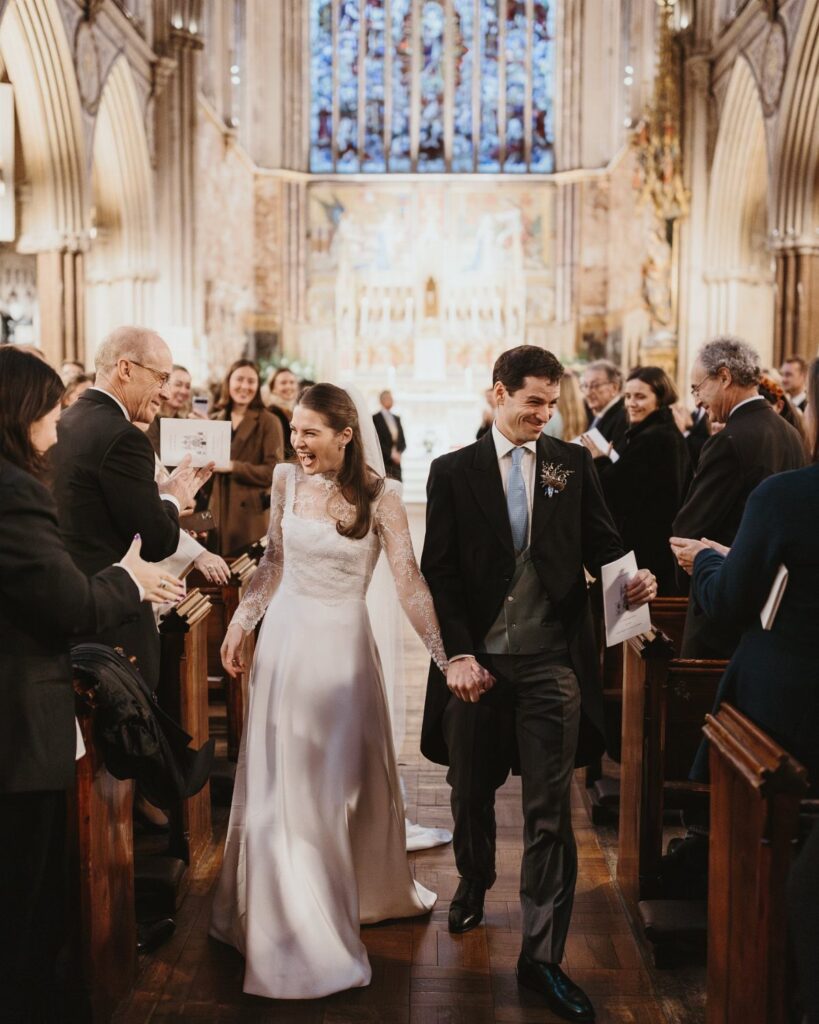
Skirt fullness settles this choice faster than any body-type chart: a ball gown sets a fitted bodice over big volume below the waist, while a subtle volume A-line narrows at the waist and widens gently.
Fabric changes the result too, and the Dress Fabrics section covers how the same silhouette can look soft in one material and sculpted in another.
1. Ball Gown for Hourglass and Pear Shapes
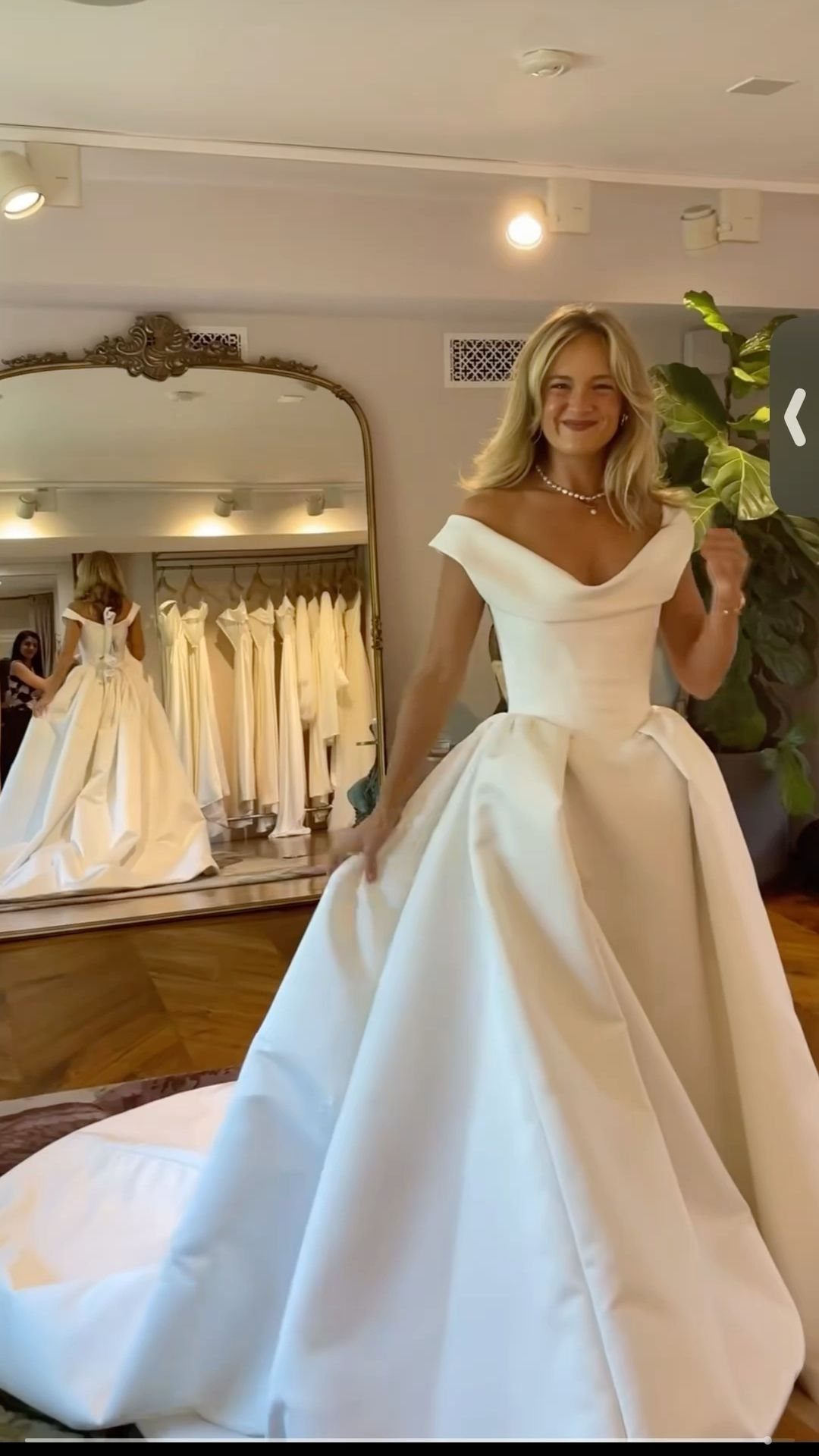
Hourglass and pear shapes are where a ball gown works hardest. The fitted bodice shows off a defined waist, and the full skirt covers the hips and thighs without clinging to them.
If your hips are your favorite feature to downplay, this is the silhouette I would try first.
Pick a satin or similar structured fabric and look at your waist in the mirror, because the seam placement matters more than the skirt volume.
2. Ball Gown
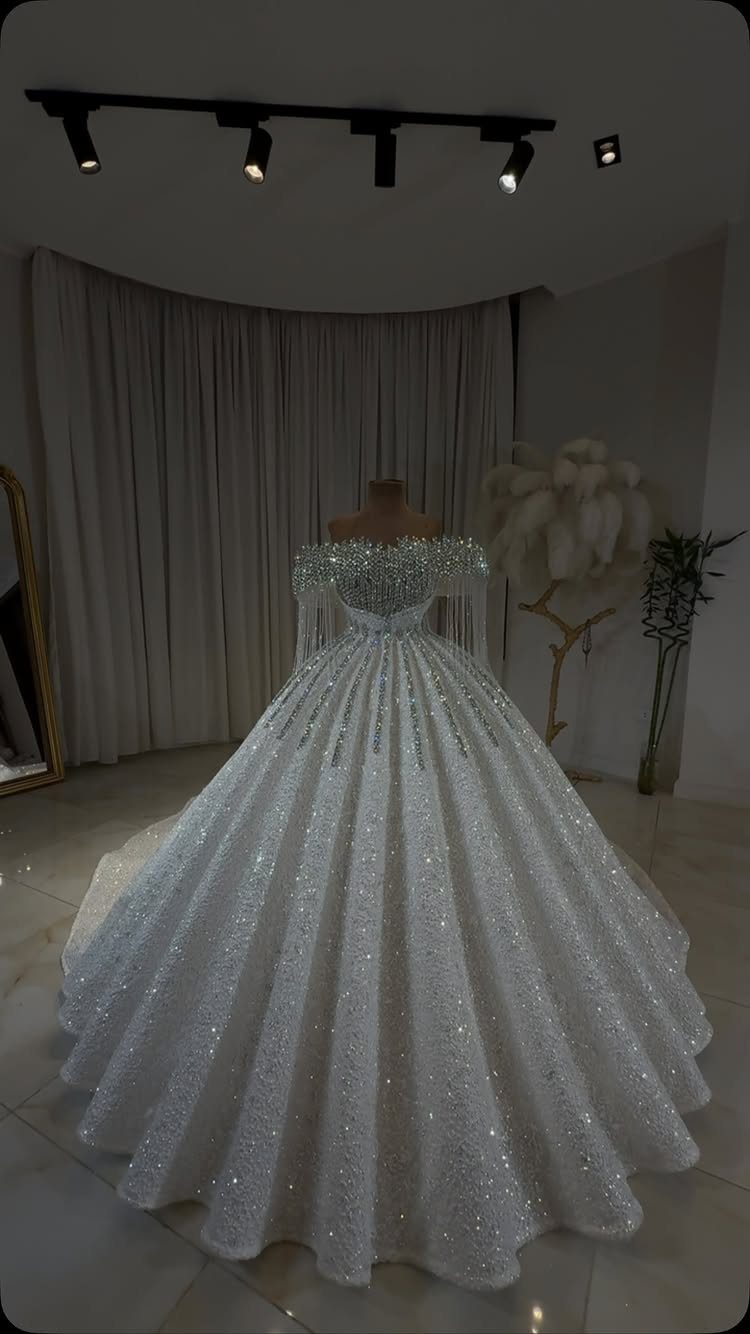
2 things define a ball gown: a close-fitting top and a skirt with serious volume below the waist.
This version adds an off-the-shoulder neckline and sparkle across the fabric, so the skirt is the only part that needs to carry the drama.
I would pick one feature to be the star. With a sparkling skirt this full, a simple neckline keeps the look balanced, and the off-the-shoulder cut does that well.
Expect to plan around the skirt’s width: doorways, car rides and dance floors all get tighter.
3. Subtle Volume A-Line Dress
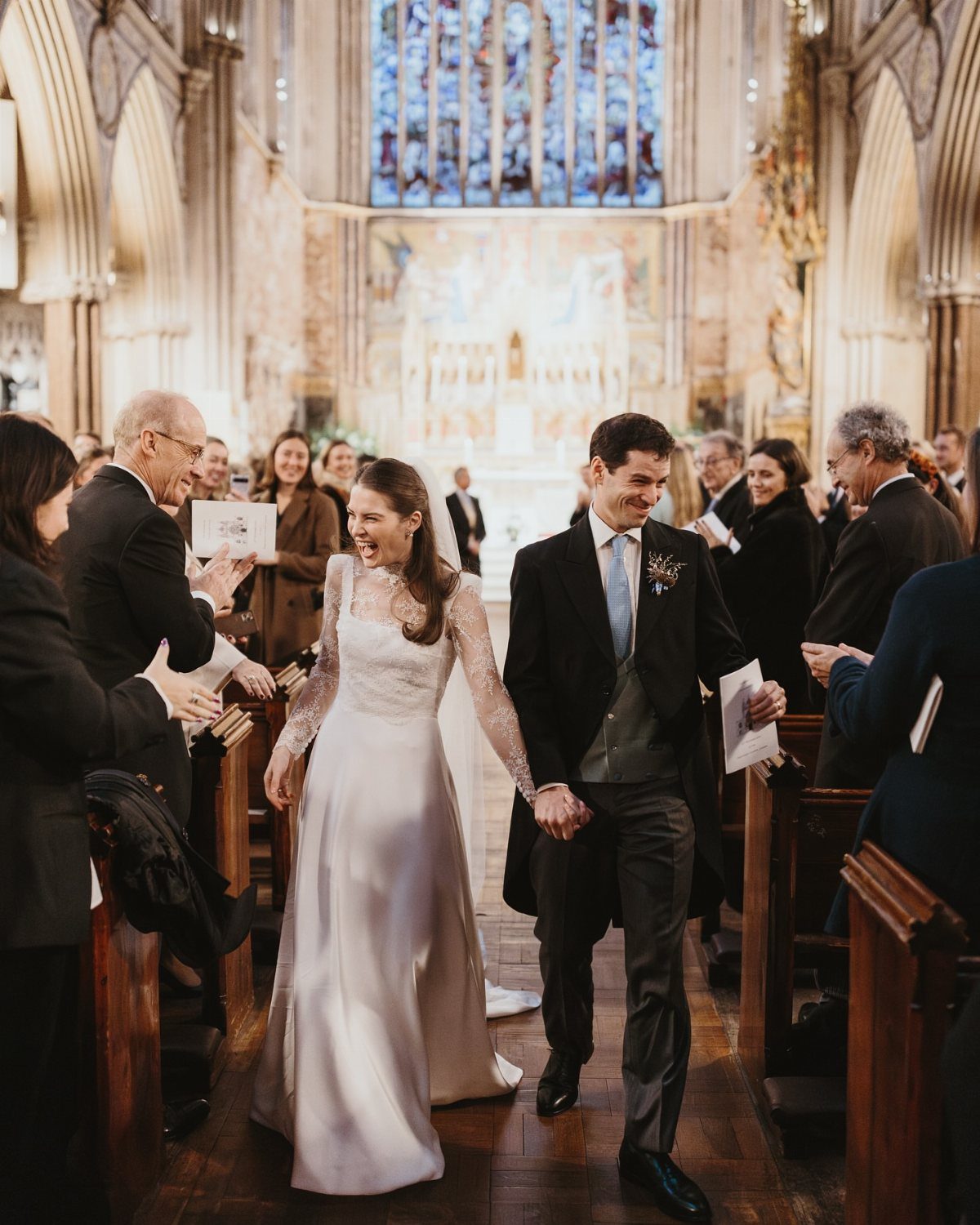
Some brides want shape without a skirt that takes over the room, and a subtle volume A-line is the answer. It narrows at the waist and flows outward gently, so it moves easily down a long church aisle.
Compared with a ball gown, I find it the calmer choice: less fabric to manage, simpler walking, and a look that pairs naturally with a formal morning suit.
Try both silhouettes in one appointment, because the difference in skirt fullness is easiest to judge on your own body.
Choosing the Right Dress
Body shape is a starting point, not a rule. Silhouettes shape the eye differently, yet none of them is reserved for one body type, so put on the cuts you wrote off before you decide they won’t work.
Venue and comfort should carry as much weight.
A formal ballroom pairs naturally with a ball gown, a casual garden reception often suits a sheath better, and since you’ll wear the dress from ceremony to last dance, the venue should weigh in.
In each fitting, check how your body reacts: whether you feel confident, polished, or boxed in. If you catch yourself wanting looser movement or a softer line, trust that instinct before any body-type chart.
Dress Fabrics
Fabric changes how a dress behaves as much as the silhouette does. Fabric can make 2 gowns with identical shapes look and move nothing alike.
Chiffon lets an A-line skirt float and flow with every step.
Satin gives a clean, traditional finish and holds crisp, sculpted lines. Organza brings a little texture and lift, while stacked layers of tulle add fullness to the skirt.
Stretch crepe, in a fitted dress, moves more freely than structured satin and drapes more softly. If you tend to feel hemmed in, ask to see the same cut in 2 fabrics.
Judge fabric and shape together rather than one feature at a time.
Accessories and Styling
Match your styling to the mood of the dress. A ball gown suits a traditional, fairy-tale look, and classic accessories fit that.
A-line gowns also cover several moods, so let the details guide you. Clean lines with minimal embellishment read classic and simple.
Lace and floral appliqués lean romantic. Flowing fabrics with bell sleeves or bold lace read bohemian.
Choose accessories that echo one of those moods rather than adding a second one. If the dress already has heavy lace, keep everything else quiet.
Frequently Asked Questions
How do you choose a wedding dress shape?
Treat body shape as a starting point, then let the venue and your own comfort decide.
Try on the shapes you ruled out ahead of time; no cut belongs to just one body type, and a dress you dismissed on the hanger can surprise you.
Pay attention to how each gown makes you feel in the mirror, whether sure of yourself, polished or squeezed in, and let that outweigh any body-type chart.
What body type looks best in an A-line dress?
An A-line flatters nearly every shape, with hourglass, pear, apple and rectangular figures named most often. The bodice sits snug, then the skirt opens gradually from the waist, so the shape reads long and tidy without hugging or ballooning.
Can A-line dresses be worn to formal weddings?
Yes. An A-line works for formal weddings, and the fabric and details set how dressy it reads.
A plain, streamlined version reads as timeless; add lace or floral appliqués and it turns softer and more romantic. The skirt glides along a long church aisle, and it looks right next to a formal morning suit.
Which is more comfortable, a ball gown or an A-line dress?
The A-line is the more comfortable pick.
It has less fabric to manage, so walking, sitting and dancing are easier. That wide skirt takes up real room, so doorways, car seats and the dance floor all get tighter; I’d plan for each of them before committing.
Is a ball gown or an A-line better for a pear or hourglass shape?
A ball gown works hardest on hourglass and pear shapes.
Look for satin or another fabric with structure, then check in the mirror where the waist seam lands on you. A subtle-volume A-line is a calmer option, so try both in one appointment.
When should you wear a ball gown?
Pick a ball gown for a formal ballroom or a classic, fairy-tale vision.
At a relaxed garden reception, I’d usually lean toward a sheath. You’ll be in this dress from the ceremony through the last dance, so let the venue help decide.