Extravagant gowns run from architectural cuts and Swarovski-covered embellishment to a ball gown skirt or a dramatic train, and your venue and your wedding date decide which of those you can actually wear.
A grand ballroom can carry heavy crystal and a wide skirt; a small room or a rustic barn asks for something quieter, like lace with a high neck or a vintage-inspired shape.
1. Luxury Wedding Dresses with Architectural Cuts
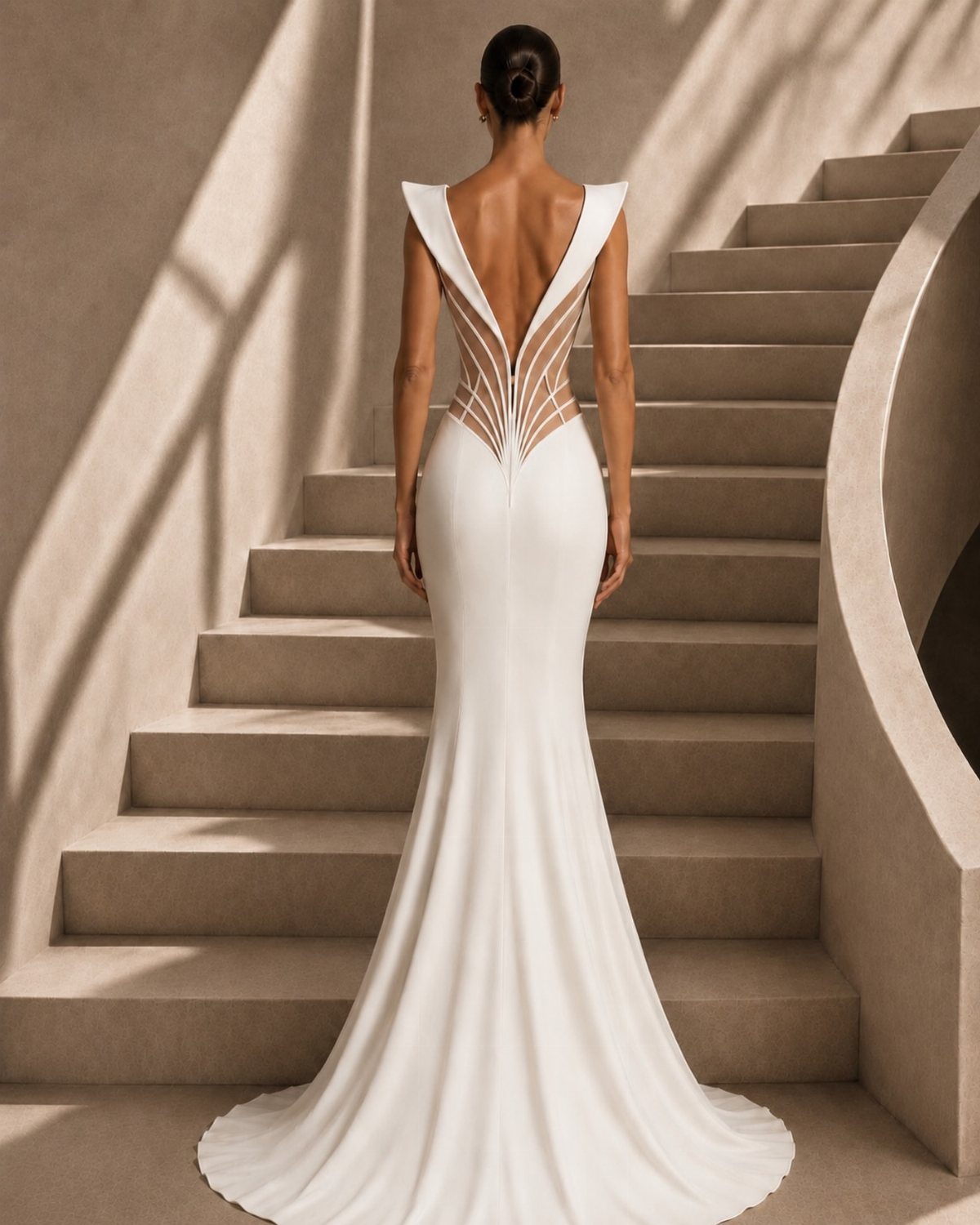
Sharp lines do the work here, so a dress with an open geometric back needs almost no extra decoration. A clean crepe or satin shows off the cut better than lace or beading would.
Skip heavy accessories and keep the veil simple, or leave it off.
Any busy detail at the back competes with the one feature people will photograph. Before you order, ask the designer how the open back is supported, because a cut like that depends on the structure underneath.
2. Ball Gown with Voluminous Skirts
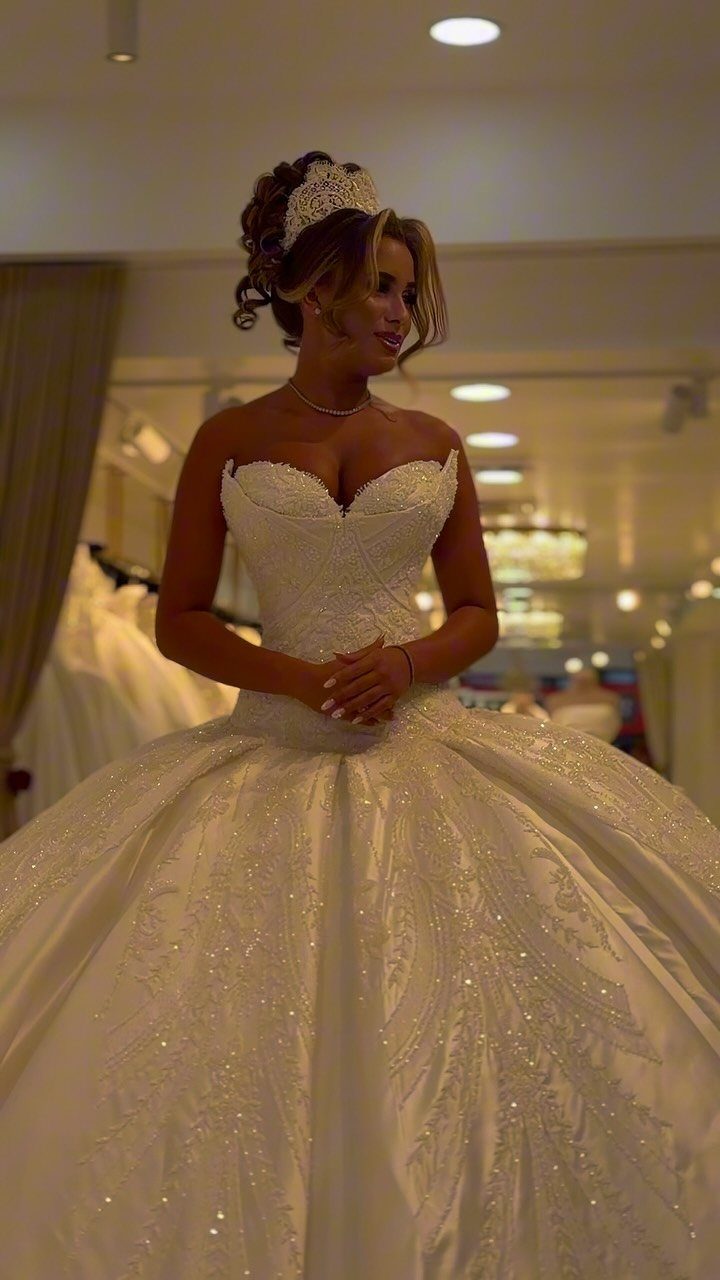
A full, sparkling skirt is the most dramatic silhouette you can choose, and a strapless bodice keeps the focus on all that volume.
Try it on with the petticoat or crinoline you will actually wear, since the skirt shape changes with the layers beneath it.
I would pair it with a tiara only if the gown is already this ornate; otherwise a plain headpiece looks better.
Budget for a larger fitting appointment, because a skirt this wide takes planning for the car, the doorways and the dance floor.
3. Vintage-inspired Designs
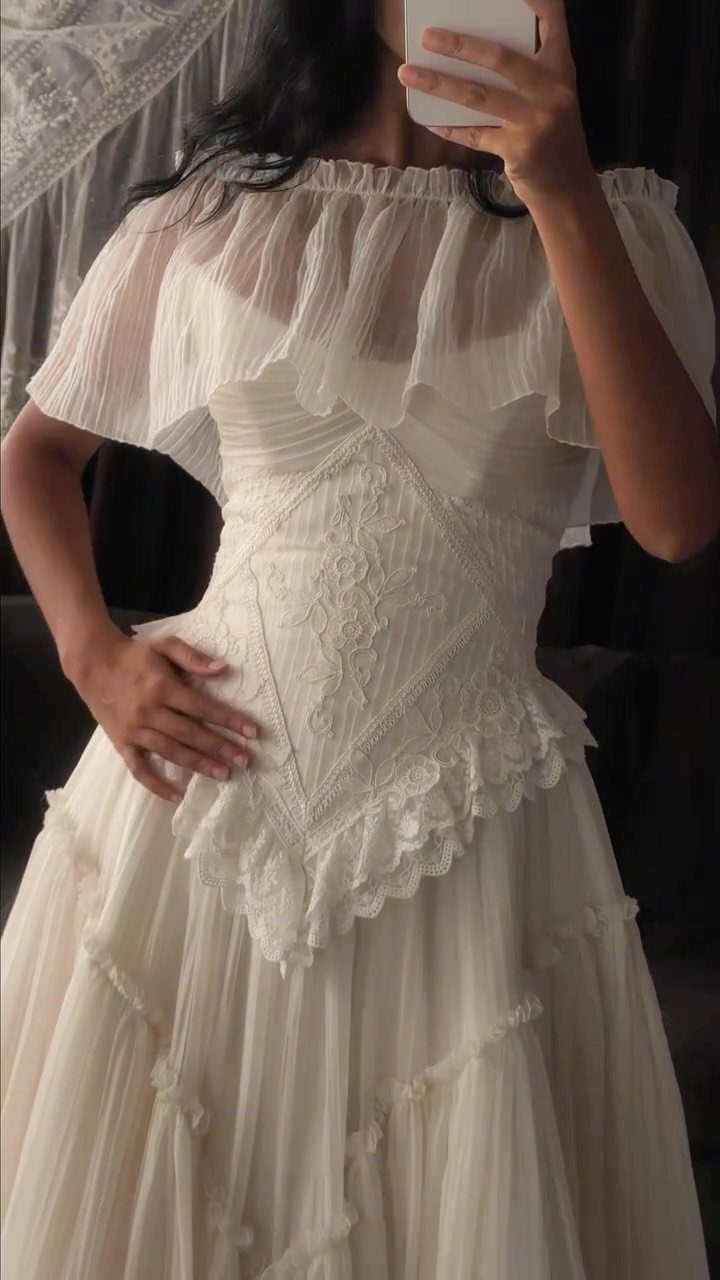
Choose one or two historical details and let the rest stay modern.
Tiers add fabric, and fabric adds cost, so ask for a quote on the exact skirt before falling for it. If the budget is tight, a lace bodice with a simpler skirt still reads as vintage.
4. Haute Couture Designs
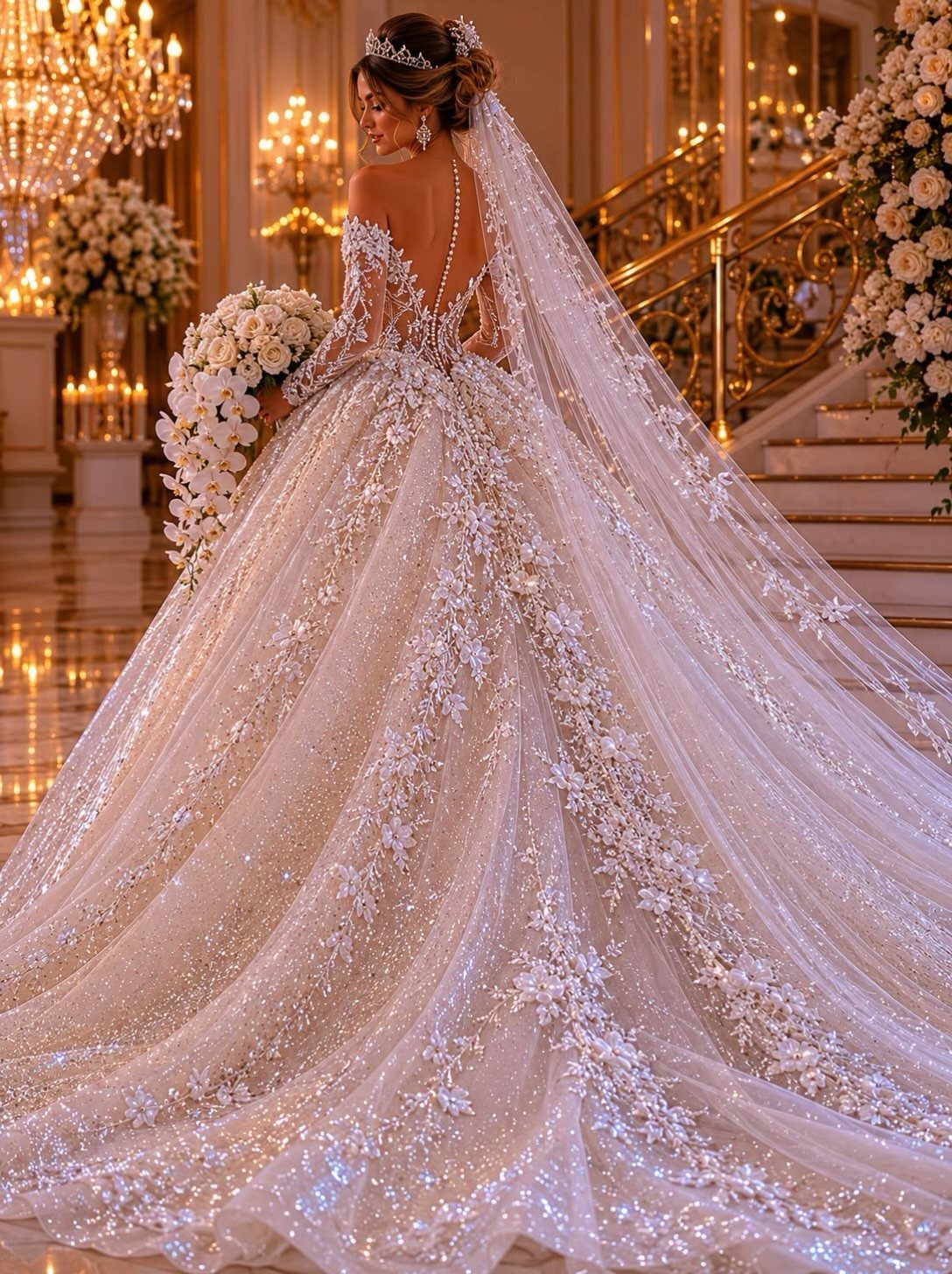
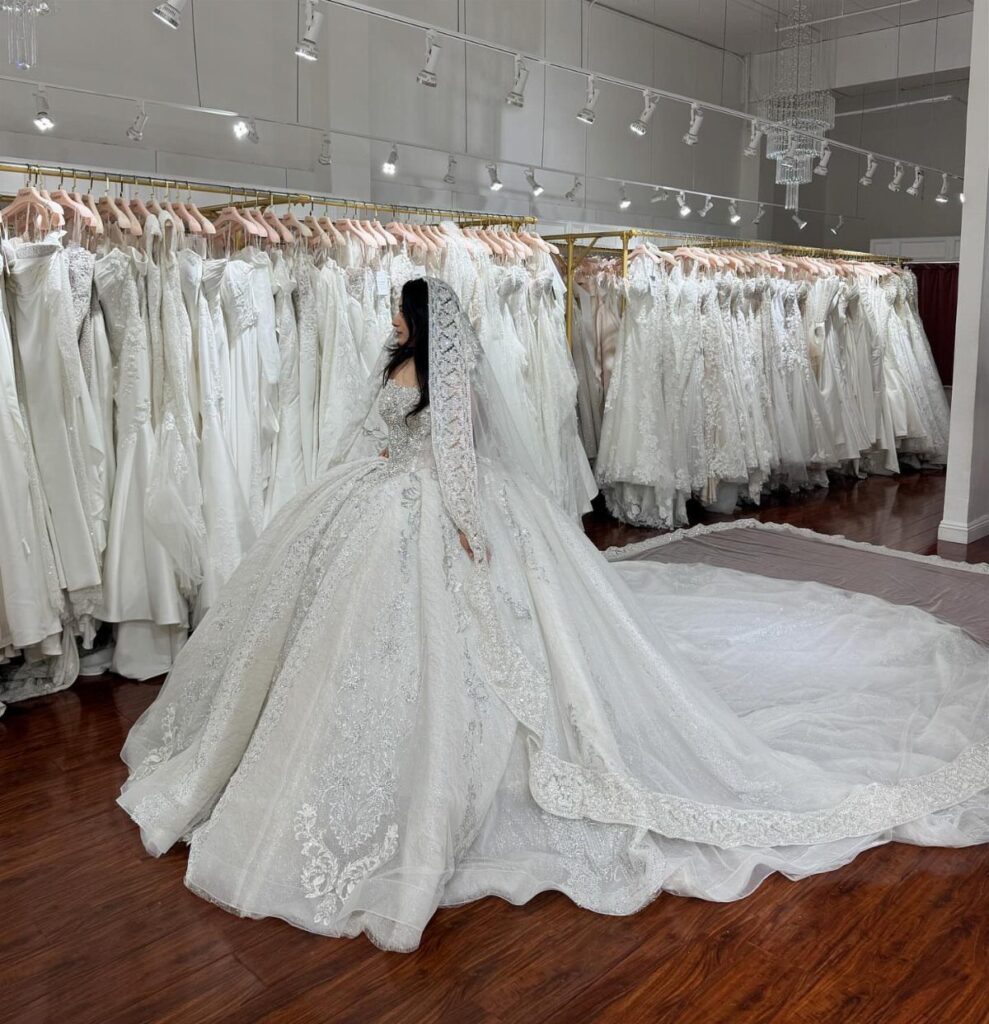
Couture means the gown is cut and finished around your measurements, which is why a dress like this one, with ornate sparkle and a long train, hangs so cleanly. Expect several fittings and a long lead time, so start early.
I would spend the money on the fit first and the beading second.
A plain couture gown that fits perfectly beats an overloaded one that pulls at the waist. Ask the atelier for a written timeline before you pay a deposit.
5. Extravagant Embellishments with Swarovski Crystals
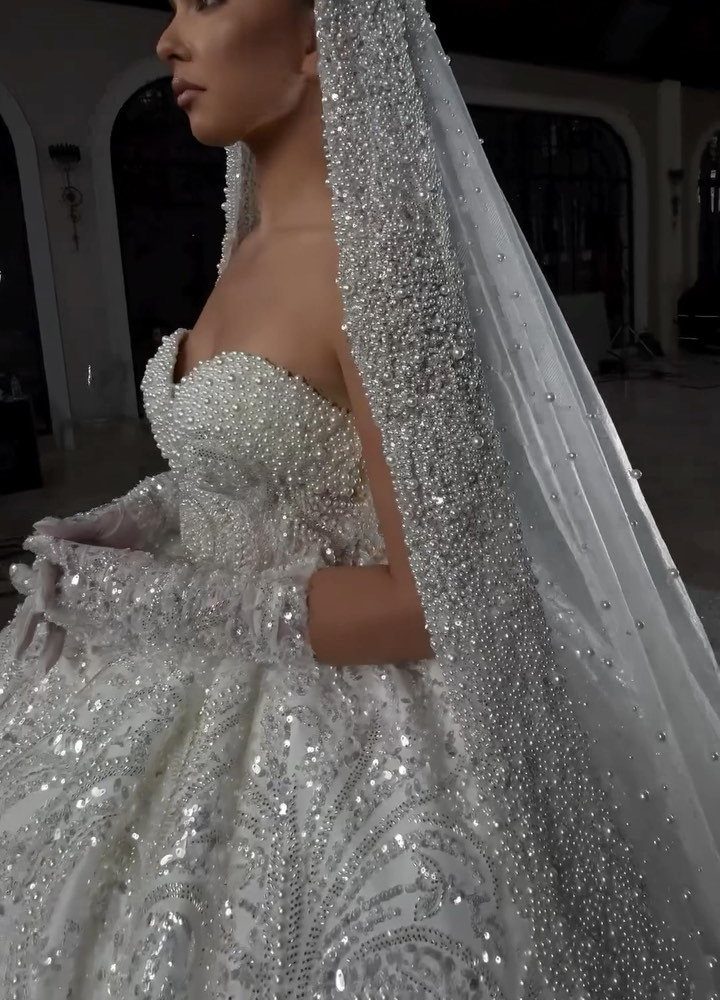
Crystal beading on a strapless gown catches every light in the room, so match the sparkle to your venue. A ballroom with chandeliers can handle a heavy dress; a rustic barn may fight it.
Matching gloves and a crystal veil make a full look, but I would pick two of the three if you want the gown to lead.
Ask whether the Swarovski crystals are hand-sewn, since that raises the price, and request a small swatch to check the color in daylight.
6. Dramatic Trains
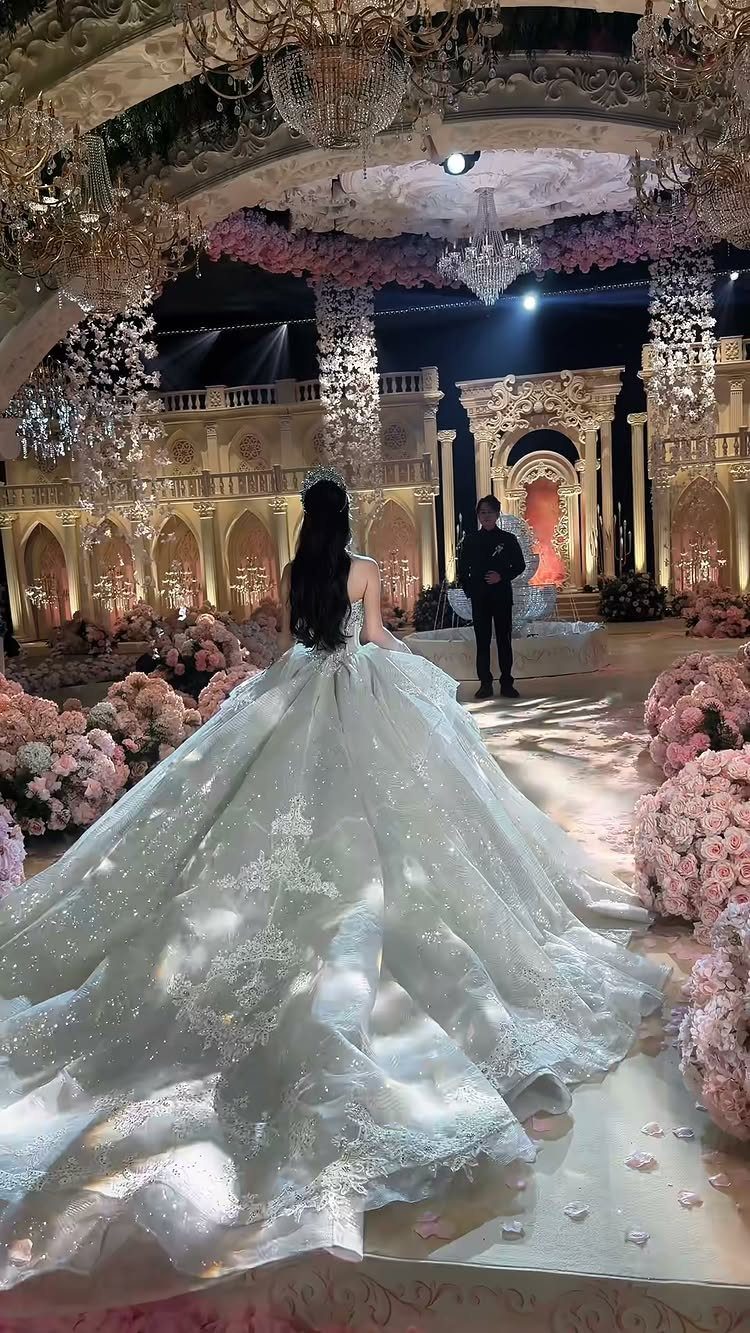
A long train is what guests remember from the aisle, and it earns its length in a big room like a ballroom. In a small space it just gets stepped on.
Ask for a bustle that is sewn in at your fittings, so the train lifts up in a few quick loops once the dancing starts.
Practice walking in it with the gown on, and plan on a helper to arrange it before photos. Cathedral-length trains also need extra steaming and care.
7. Sheer Off the Shoulder Floral Lace
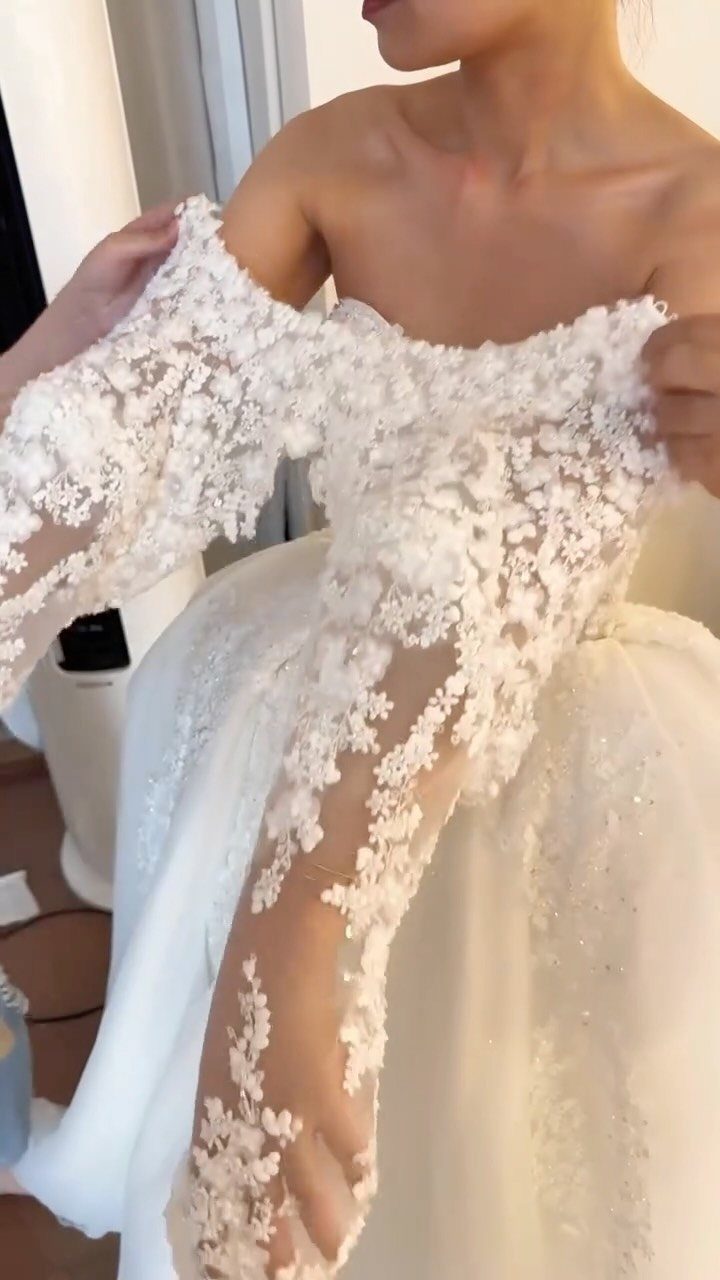
Sheer lace sleeves and bodice panels give an off-the-shoulder neckline softness that a solid satin version lacks. Floral embroidery gets more attention up close, so this gown suits a ceremony where guests sit near you.
Sheer panels depend on what sits underneath, so ask the designer which lining shade matches your skin tone.
Wear the undergarments to every fitting. Off-the-shoulder sleeves can restrict how far you lift your arms, so test a hug before you sign off.
8. High Neck Long Sleeve Lace Gown
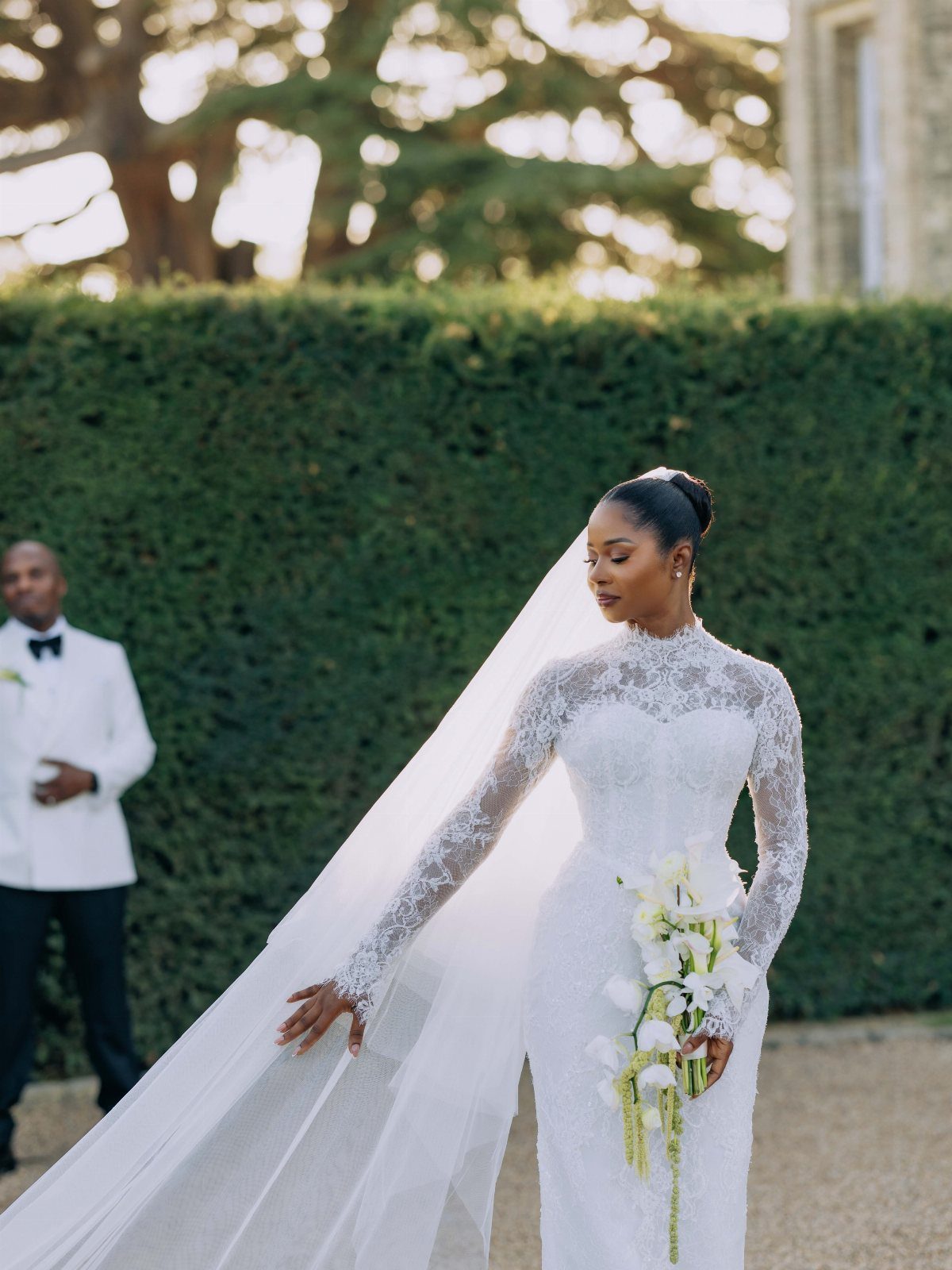
Lace covers the neck and arms completely here, which makes the gown feel formal without any extra decoration. I would let the lace carry the look and keep jewelry to simple earrings, since a necklace has nowhere to sit.
A long veil adds length, so choose one plain enough not to compete with the lace pattern.
Long sleeves also mean more fabric to fit, so ask for a sleeve try-on with your arms bent, and check how warm the dress feels in your venue’s weather.
9. Lace Wedding Dress with High Slit
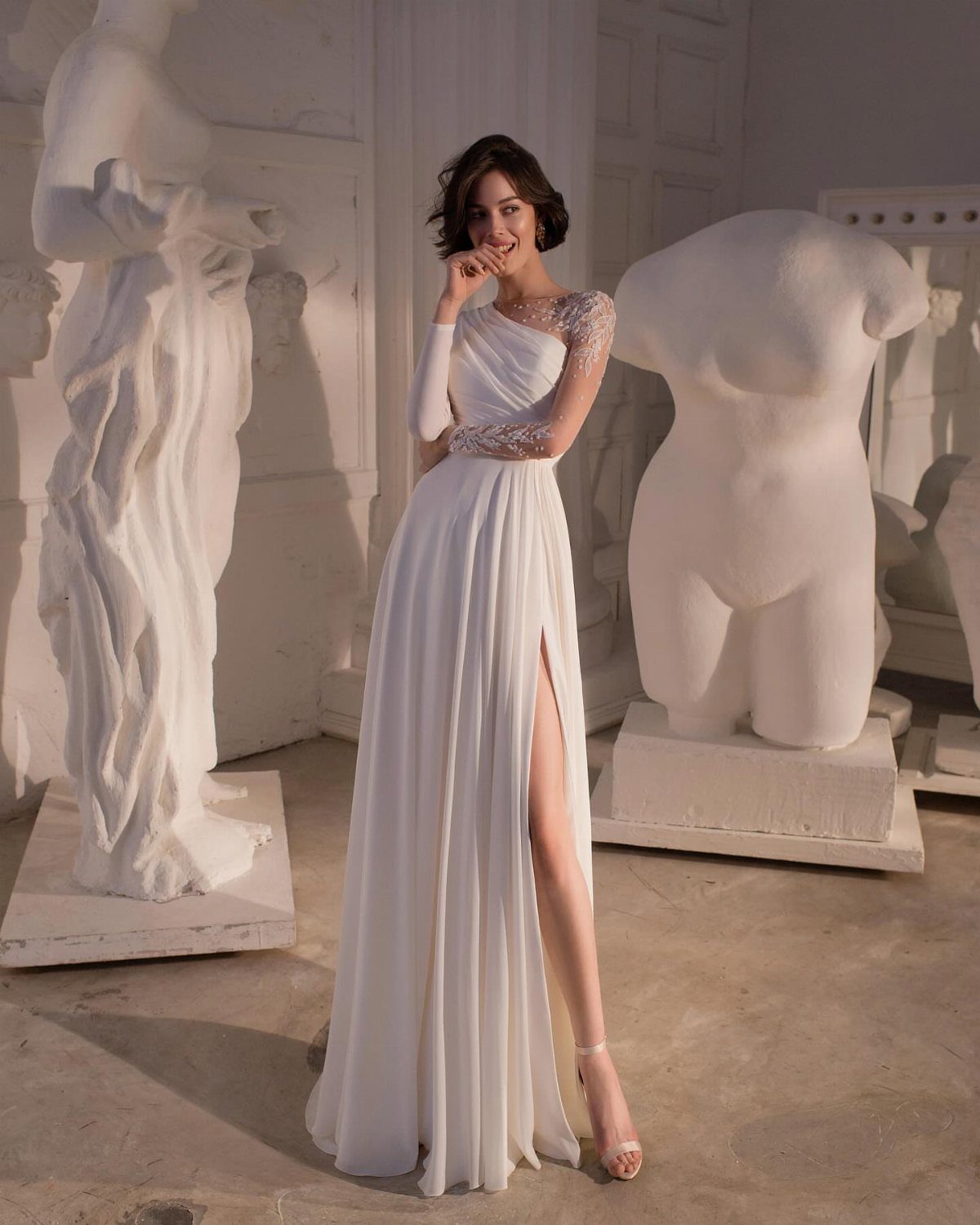
A high slit is the boldest part of this dress, and the lace keeps the look soft and balanced. Dresses like this reward a fitting where you walk, sit and climb stairs, because the slit moves with every step.
Ask the designer to set the slit height at your fitting, and whether the lace edge is finished to lie flat.
A lower slit keeps the same silhouette with less exposure and less risk of a wardrobe slip, so it suits a bride who wants the drama without the worry.
Pick shoes before the final fitting so the hem is cut for them.
Choosing the Right Gown
Start with silhouette, since it shapes everything else. A-line is the safest bet for nearly every body type, while mermaid hugs curves and suits an hourglass figure best.
Those are starting points, not rules. If you love a shape that "isn’t for your body type," try it on anyway, because a gown you feel beautiful in will photograph better than one chosen from a chart.
Comfort and mobility deserve equal weight.
Decide first how much you want to move on the day: dancing, hugging, climbing into a car. Then pick the gown that lets you do those things without thinking about it.
A one-sleeve couture design is another route for a look that reads as both current and traditionally glamorous, with the cut doing the flattering for you.
Make sure the wedding gown reflects your personality and fits your bridal aesthetic! It’s also crucial to move around in the dress to check for comfort and ease of movement, ensuring you can dance and mingle effortlessly on your big day.
Ordering Timelines
Luxury gowns are made slowly, by hand, so plan to order 6–9 months ahead of the date. That window is the minimum, not a cushion, and it has to leave room for alterations.
Count backward from your date and put the order deadline on your calendar before you start shopping. If you are already inside 6 months, ask designers directly whether they can deliver in time, and get the answer in writing.
Trends move faster than this timeline. A look that is everywhere today may feel dated by the time your gown arrives, so choose what you would still love in a year.
Accessorizing Your Gown
Use accessories to solve a specific problem or highlight a feature, not just to add more.
A one-shoulder strap or off-center detail draws the eye to your collarbone, while a train attached at the side of the waist emphasizes your waistline.
Shoes worth showing off get a place in the look with an asymmetrical hemline or a deep slit. Decide which feature you want noticed, then let everything else stay quiet.
Test every accessory with the full outfit on.
Move around, sit, and dance a little. If you can’t move easily or mingle comfortably, change it, even if it looks perfect standing still.
Finally, make sure the pieces suit your personality. A look that feels like you is the one that makes the photos.
Frequently Asked Questions
What styles of wedding dresses are trending this year?
Bold lace patterns, intricate beading and dramatic silhouettes are what brides are gravitating toward, with personal expression leading the choice.
A dress can feel luxurious without much decoration at all: heavy satin, mikado or crepe with a sharp, sculpted silhouette often looks richer than a bodice covered in crystals, pearls and lace.
Trends move faster than a gown’s lead time, so pick something you would still love in a year.
How do I choose the right wedding gown for my body type?
Start with silhouette. Treat those as starting points, not rules: try on a shape you love even if it "isn’t for your body type," because a gown you feel beautiful in photographs better.
What should I consider when trying on wedding dresses?
Fit matters, but so does the first minute you see yourself in the mirror: if the dress feels like you, that reaction counts for more than any measurement.
Before you commit, walk a few laps, sit down, hug someone and try a few dance steps, since a gown that looks perfect standing still can fight you the moment you move.
Bring the shoes and the bra or shapewear you expect to wear on the day, and check the dress against your venue and season, because a heavy skirt in July or a thin one in a drafty barn in December will wear on you.