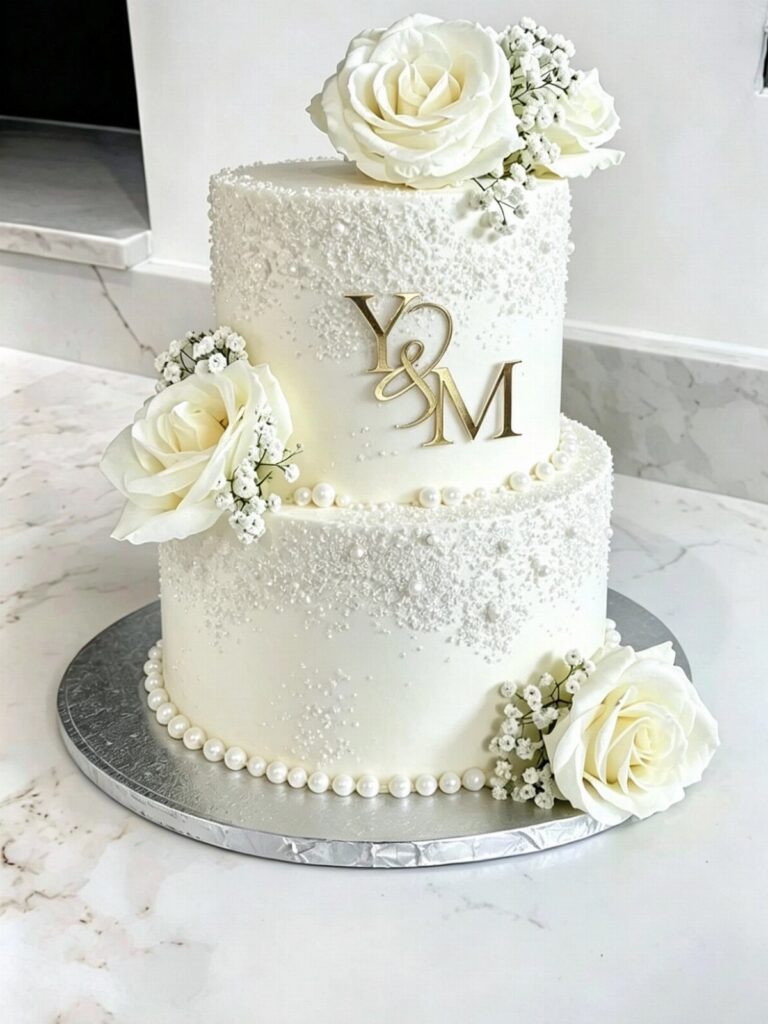
The list runs from a 10-inch round to a two-tier stack, with square cakes, sheet cakes with berries, and floral single tiers in between, and a cake for 30 guests usually costs $250–$500.
A single tier like the Floral Single-Tier Cake or the Single-tier Round Berry Cake can still serve as a centerpiece, while the Two-tier Cake adds height at a higher price and leaves less room to trim.
If money is tight, fresh raspberries and blueberries on a plain sheet cake do the decorating for you.
1. 10-inch Round Cake
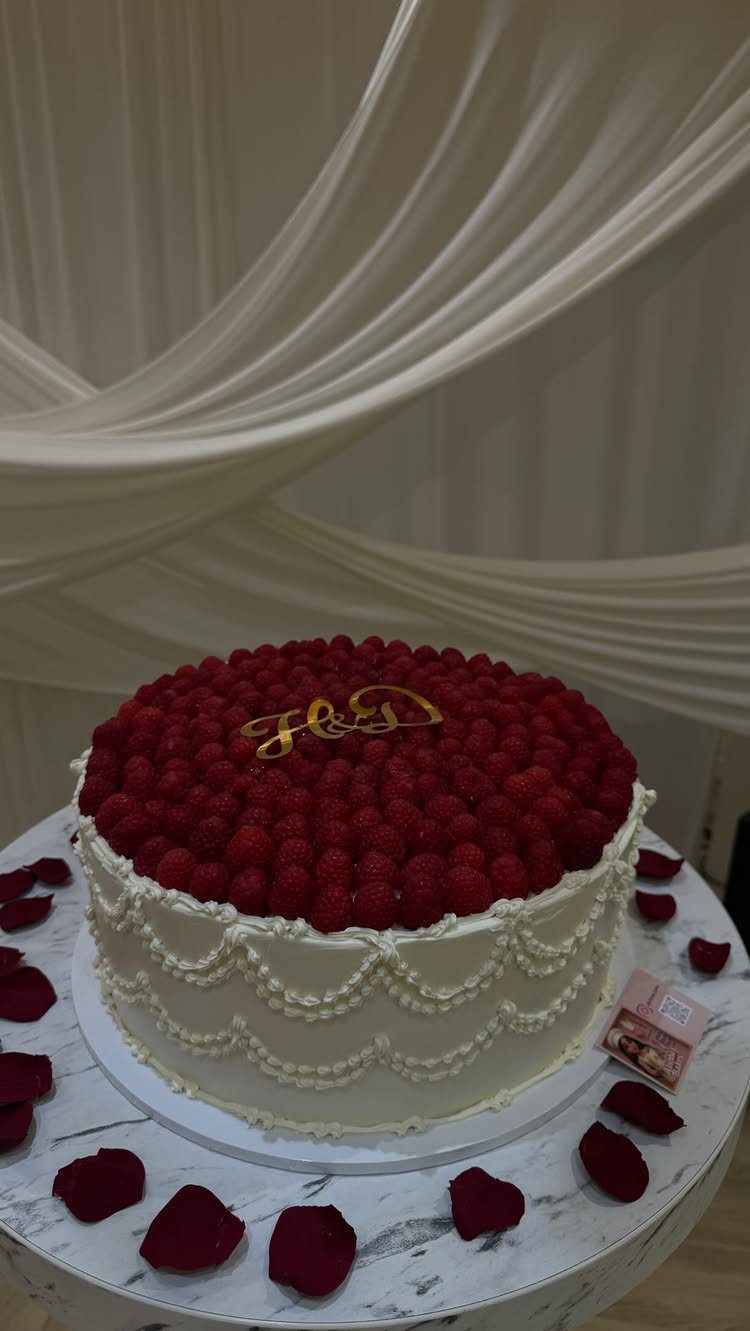
A 10-inch round feeds 30 to 40 people, so a guest list of 30 leaves a few slices to spare. That cushion matters if a surprise plus-one shows up or someone wants seconds.
Raspberries and a gold initial topper dress it up for very little money, and a single tier keeps the cake table simple. Choose this one if you want a single cake, a single flavor, and no stacking.
2. Two-tier Cake
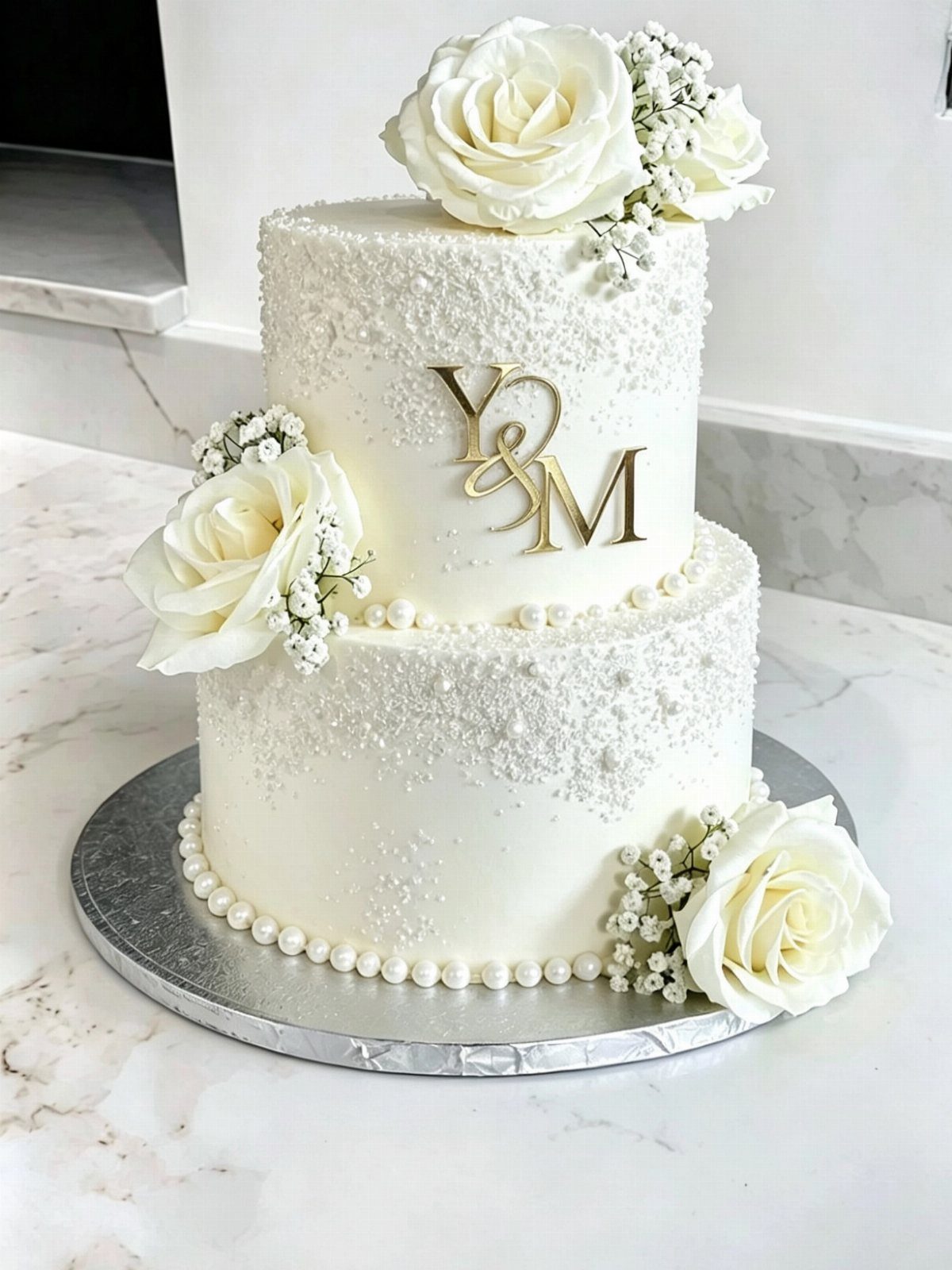
Two tiers can serve 30 to 35 guests, which fits a 30-person list with a small margin. You get the classic stacked look without ordering a cake meant for 100.
Ask your baker to confirm servings for the exact tier sizes before you order.
3. Square Cakes
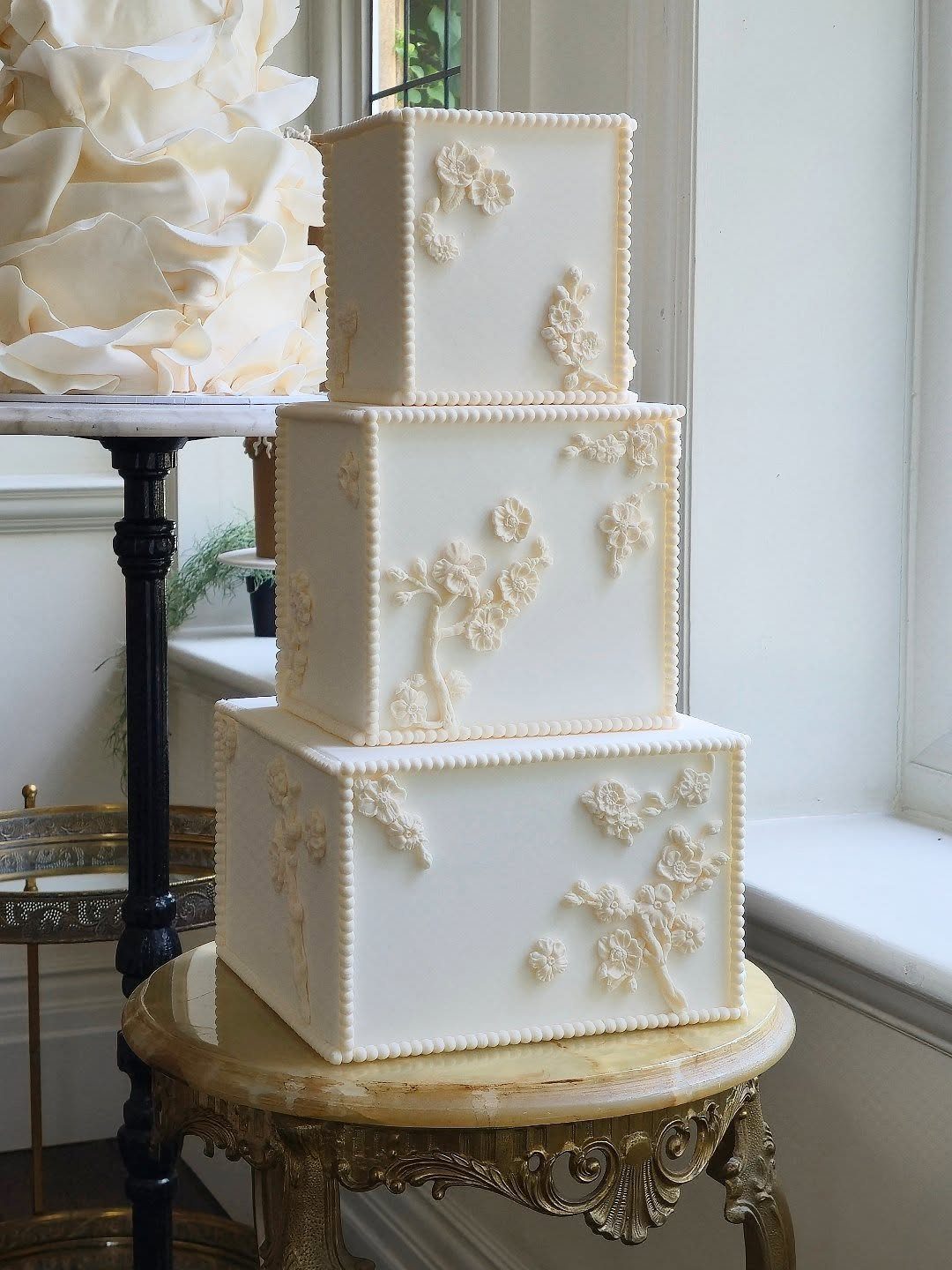
Square cakes yield more servings than round cakes of similar width, so they stretch a small budget further. Cut into grid-style slices, a square gives you more even portions, and fewer odd end pieces go to waste.
If your list sits right at 30, a square tier gives breathing room without a bigger footprint. I like the sharp edges for floral frosting work, since the corners make the stacked tiers look clean and deliberate.
4. Sheet Cake with Berries
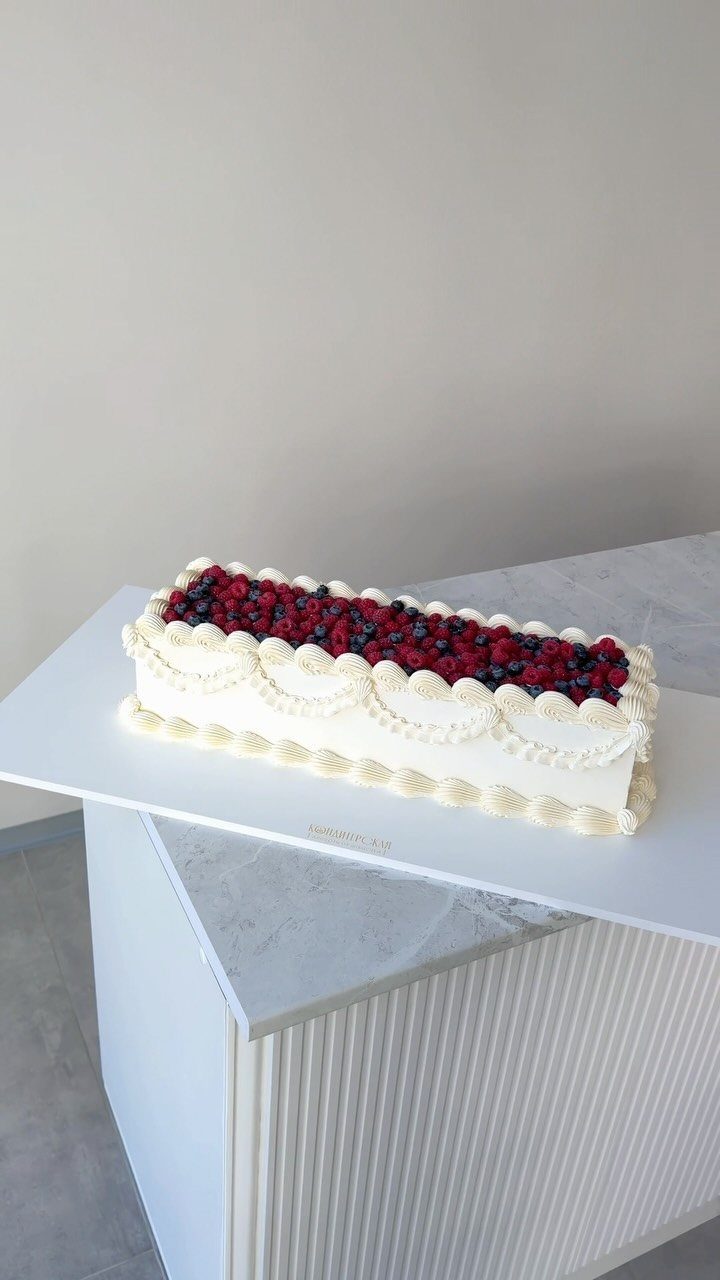
Fresh raspberries and blueberries over piped buttercream borders make a sheet cake look finished without any tiers or fondant. Berries do the decorating, so the bakery charges for little beyond the cake itself.
This is the version I would choose if money is tight. Buy the berries the day before and ask your baker to add them close to serving time, so the fruit stays bright.
5. Rectangular Sheet Cake
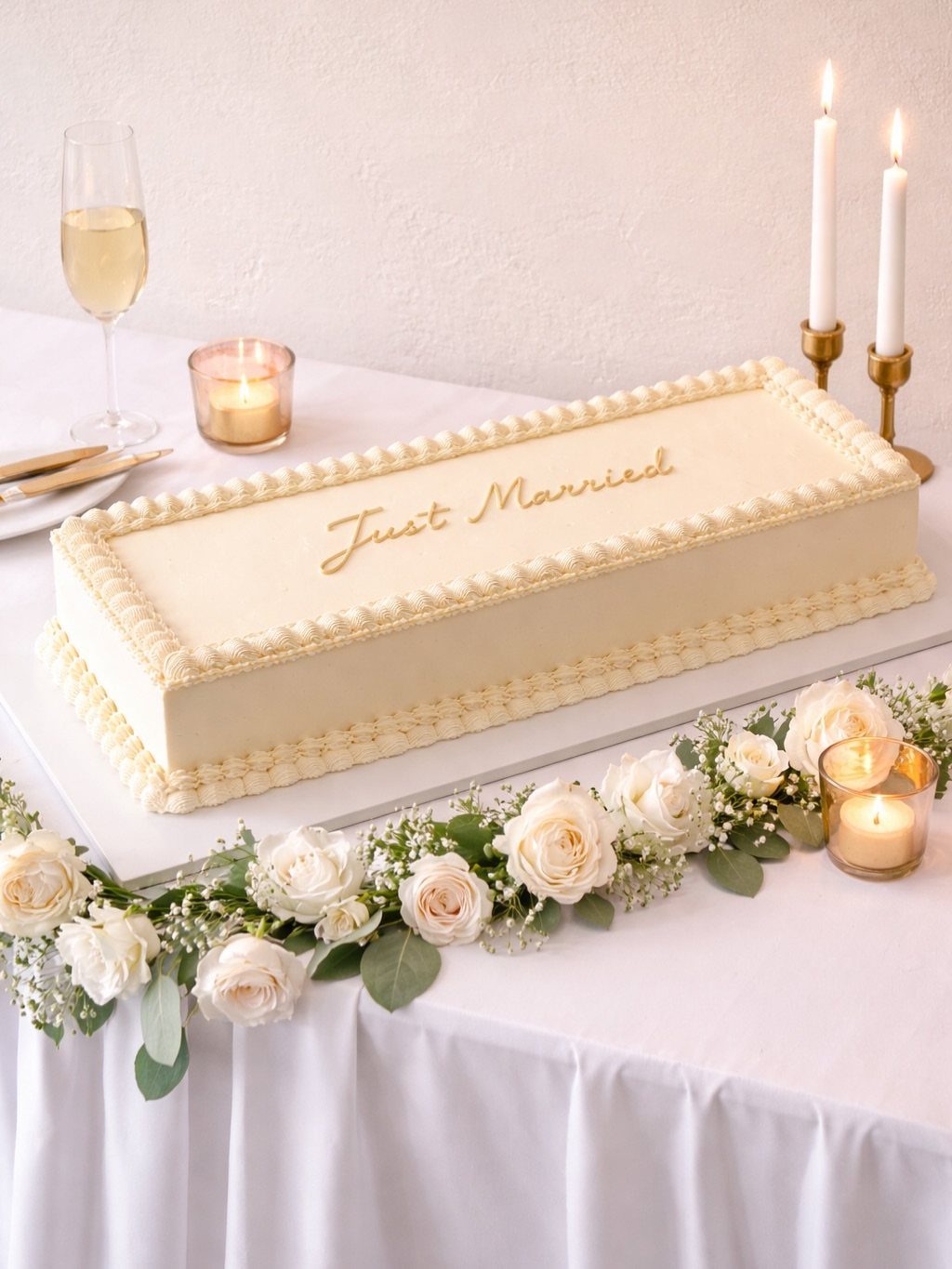
Gold lettering that reads "Just Married" turns a plain rectangular cake into the centerpiece, and the lettering does the work a second tier would. Set it on a table with candles and white roses and it needs nothing more.
Rectangles cut into uniform slices with little effort, which makes serving quick for a venue or a helpful friend. It is a practical pick for anyone short on time and counter space.
6. Single-tier Round Berry Cake
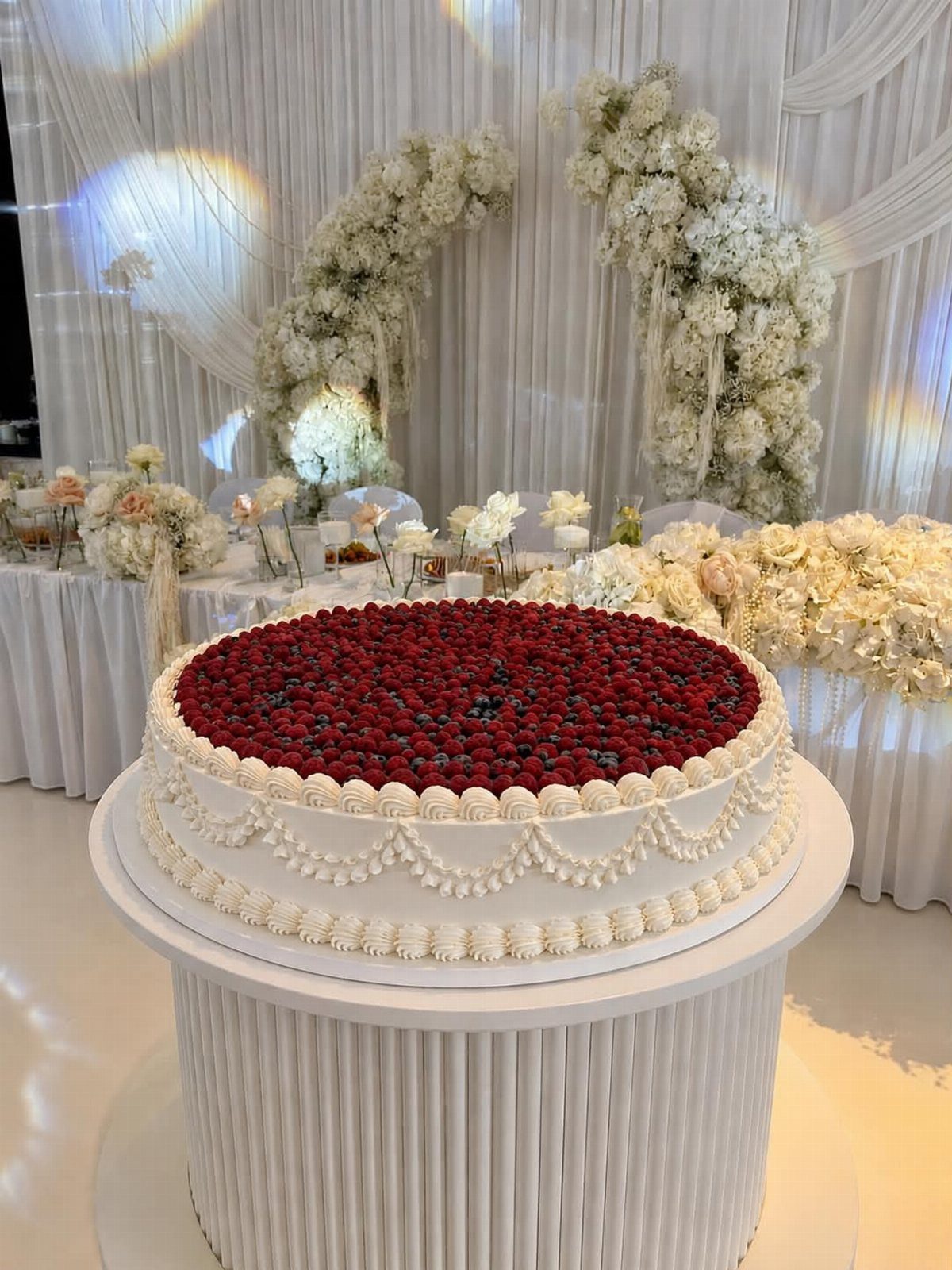
One round tier piled with raspberries and blueberries is the simplest cake of this style to pull off. A pedestal under a single layer gives it height, so it still reads as a centerpiece.
Skip extra decoration, since the red and blue fruit already supplies the color. Confirm the diameter with your baker so the servings match your 30 guests, and put the berries on late so they stay fresh.
7. Floral Single-Tier Cake
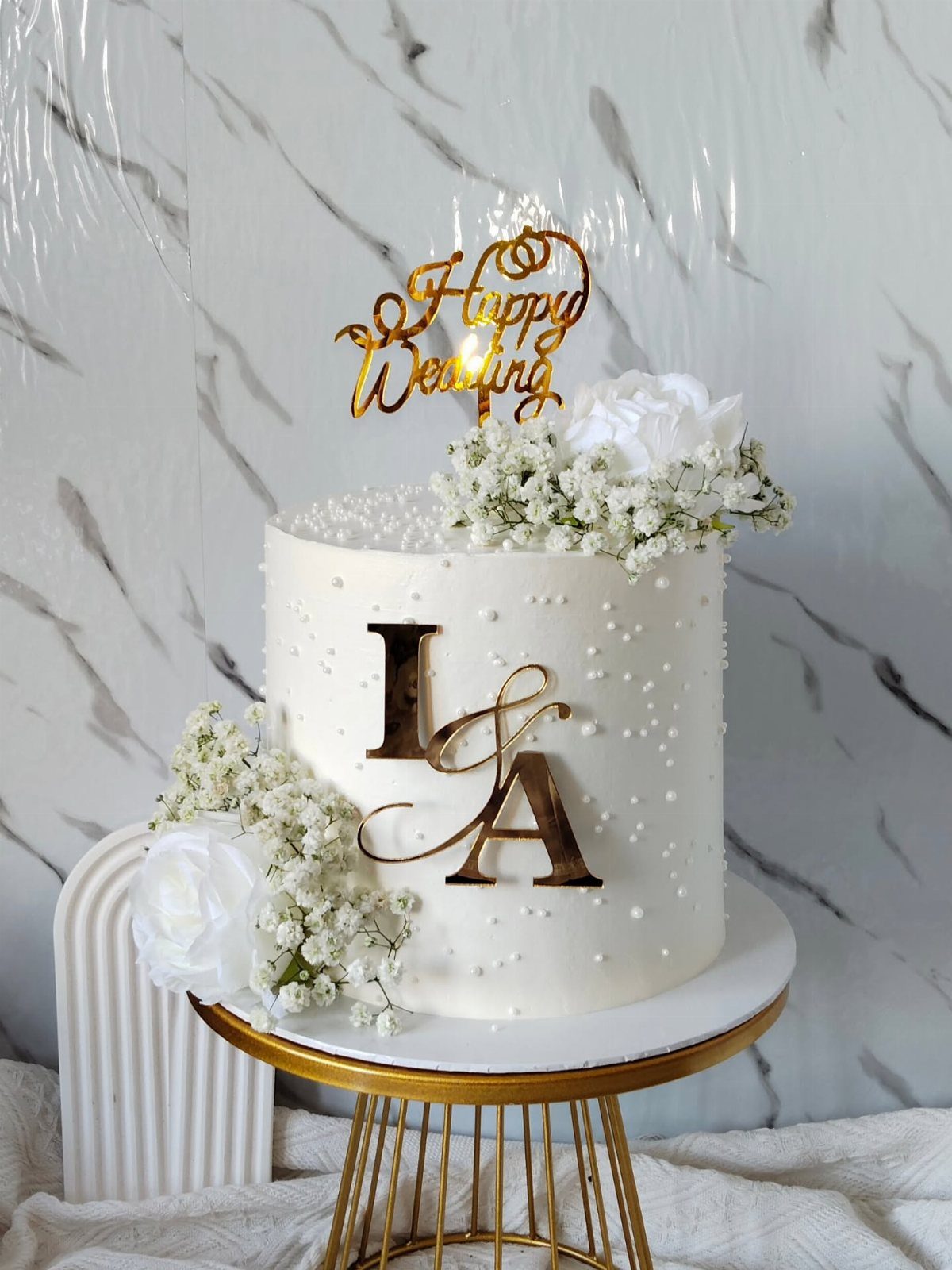
White roses, baby’s breath, and edible pearls give a single round tier the look of a bigger cake without adding a second layer.
Gold initials and a "Happy Wedding" topper personalize it, and a gold stand lifts the whole thing into centerpiece territory.
Florals do most of the decorating here, so ask your baker whether they will place fresh flowers or whether your florist should deliver them. Edible pearls are a small line item, and the initials are an easy add-on.
Confirm the tier’s diameter so the servings cover your 30 guests.
Factors Affecting Cake Size
Guest count sets the starting size, but 3 other questions adjust it. Will cake be the only dessert, or one of several?
Decide early whether you want a few extra slices boxed up for guests to carry out or saved for breakfast the next morning, because that changes how much cake you order.
A tall, dramatic centerpiece and a plain single-tier cake call for different sizes, so settle which look you want before you pick a serving count.
Flavor changes how much people eat. Fruitcake and other dense, rich cakes get cut into small slices, but a light sponge or chiffon usually gets cut generously, so plan for more servings from the heavy ones.
Budget Considerations
Budget around $10 to $15 per serving as a working figure. Design, ingredients, and where you live all move that number.
For a cake at this scale, expect a total between $250 and $500. Price swings with the bakery’s name and with what you add: fillings, decoration, and how the cake is displayed all move the total.
Each of those is a line you can trim. Simpler fillings, less decoration, and a plain stand will bring the total down faster than shrinking the cake.
Ask for a written quote that itemizes all three before you commit.
Cake Design Options
Your tiers do not all have to match.
Confirm the combination with your baker before you finalize it. Not every flavor and filling pair holds up equally well under the weight of tiers, so ask your baker which combinations stay stable.
Many bakeries show base prices online and then quote your specific design separately, so expect a call or email to go over details. Come with your flavors, your inspiration photos, and your budget in hand.
Also ask what kind of frosting they use and whether it is made in-house. Hand-finished buttercream that stays soft makes a noticeable difference at the table.
Frequently Asked Questions
What size wedding cake for 30 guests?
A single 10-inch round or a two-tier cake both work for 30 guests. The 10-inch round feeds 30 to 40 people, and a two-tier serves about 30 to 35, so either leaves a small margin.
For 30 guests, a 6-inch tier topped with a 4-inch tier is a pairing some bakers suggest, though serving counts shift with each bakery’s cutting style, so get the number from yours before you place the order.
Will a 10-inch cake feed 30 people?
A single 10-inch round can cover 30 guests and sometimes up to 40, and slice thickness is what moves that number.
With a guest list of 30, you get a few spare slices. Cutting generous party-size pieces pushes you toward the low end of that range, so tell your baker how you plan to slice it.