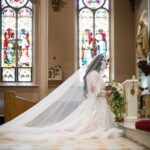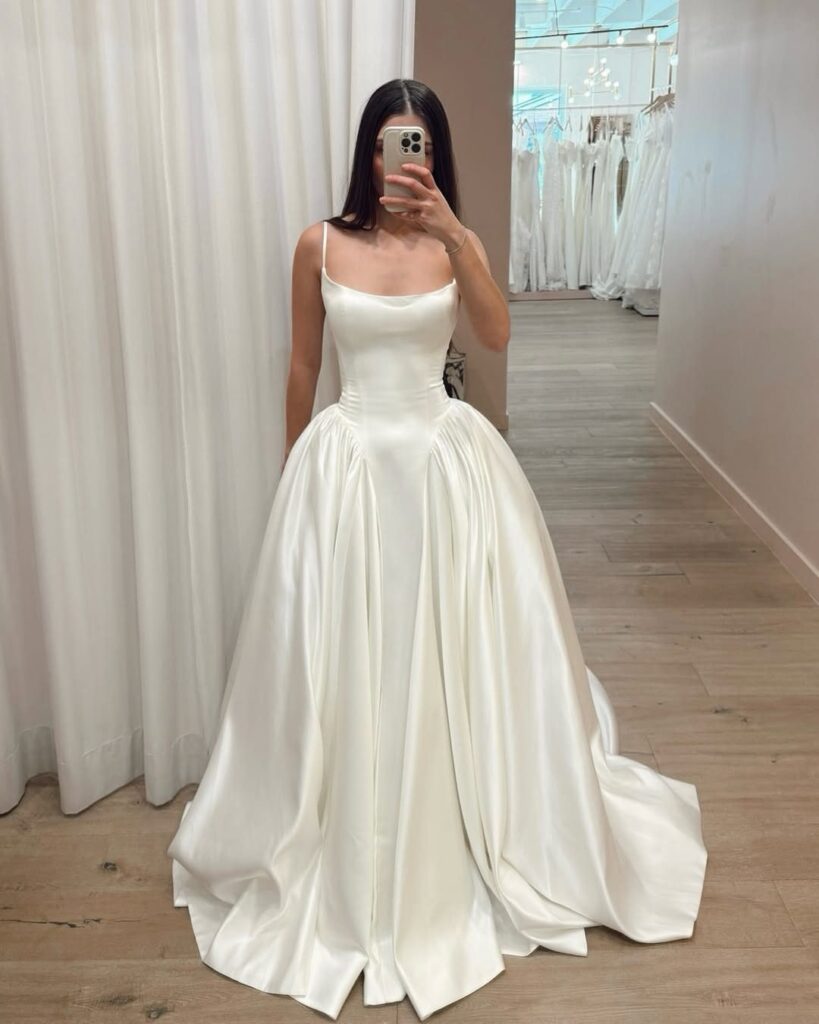
Basque waist dresses range from a simple gown with a structured point to a ball gown, a lace and beaded style, a corset boning bodice, a tiered ruffle dress, or a high neck puff sleeve, off-the-shoulder or detached sheer sleeve version, and the right one depends on how much your torso can take.
Placement of the point matters: set it too low and the legs look shorter, set it too high and the lengthening effect disappears.
1. Basque Waist Ball Gown
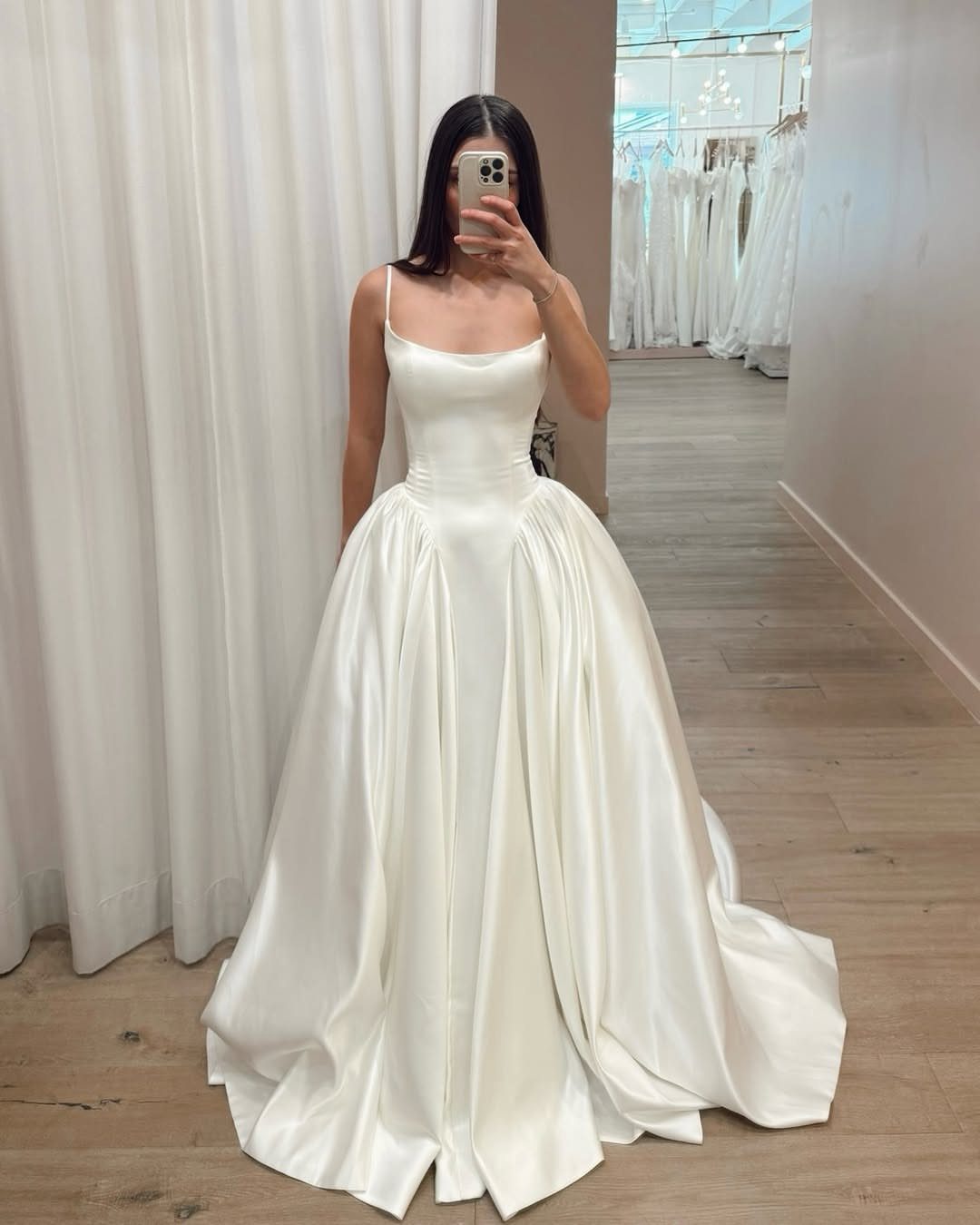
A basque waist ball gown puts the pointed dip at the front of the waistline and lets a full skirt do the rest. On satin, that single line is the whole design, so I would skip heavy embellishment elsewhere.
Try it on with the shoes and petticoat you plan to wear, since the skirt’s fullness changes how that point sits on your hips.
Satin also shows every pin and seam, so ask the shop about the lining before you buy.
2. V Shape Basque Waist
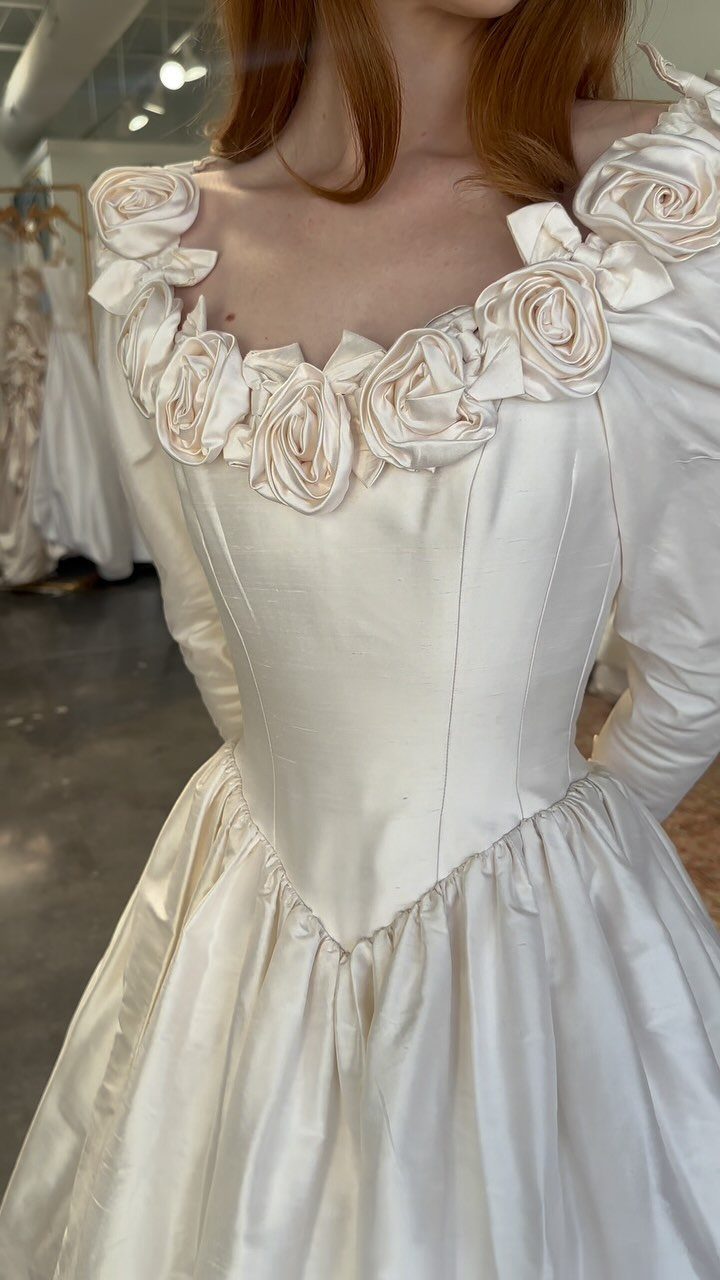
Of all the basque variations, the V shape is the one I would hand to a bride who can’t decide. The point draws the eye down the center of the body, which is why it suits so many different frames.
The maker of this dress calls it a ‘90s wedding dress. Satin suits the fabric roses at the neckline, which are easy to leave on for a period look or skip for something quieter.
Vintage finds like this are worth a fitting before you fall for the price tag.
A basque waist wedding dress is one of today’s most sought-after bridal silhouettes. Beloved for its flattering shape and timeless elegance, it blends vintage-inspired romance with modern couture details.
3. Lace and Beaded Options
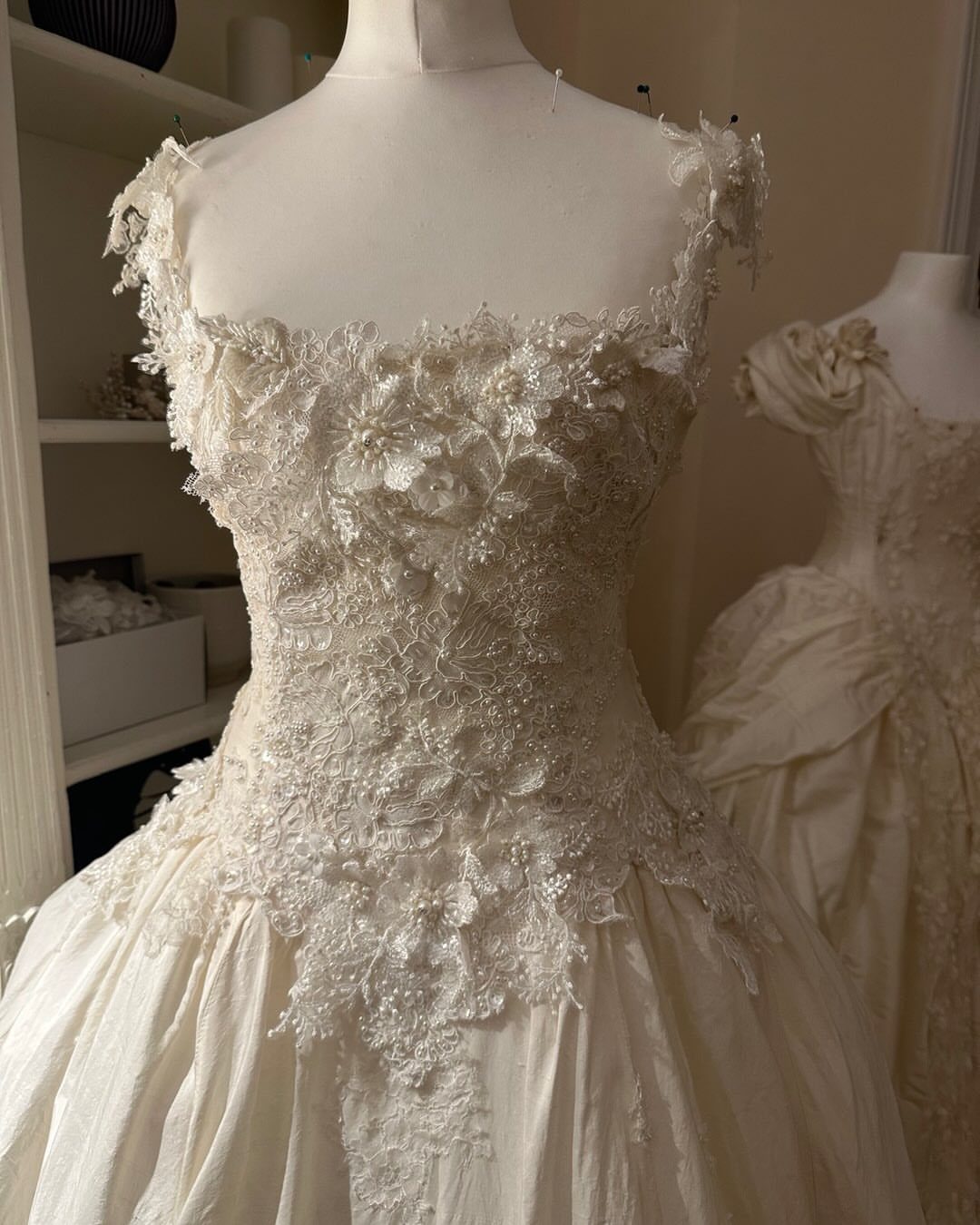
Lace and beading are what make a basque waist read as vintage rather than just structured. On an ivory bodice, a floral pattern in beads catches light in a way plain fabric can’t.
Check how the beading is attached. Loose beads on older or secondhand gowns are the usual weak spot, so run a hand lightly over the bodice and look at the seams.
I would keep the skirt simple here. The bodice already carries the detail, and the budget is better spent on alterations than on more decoration.
4. Corset Boning Basque Waist Dress
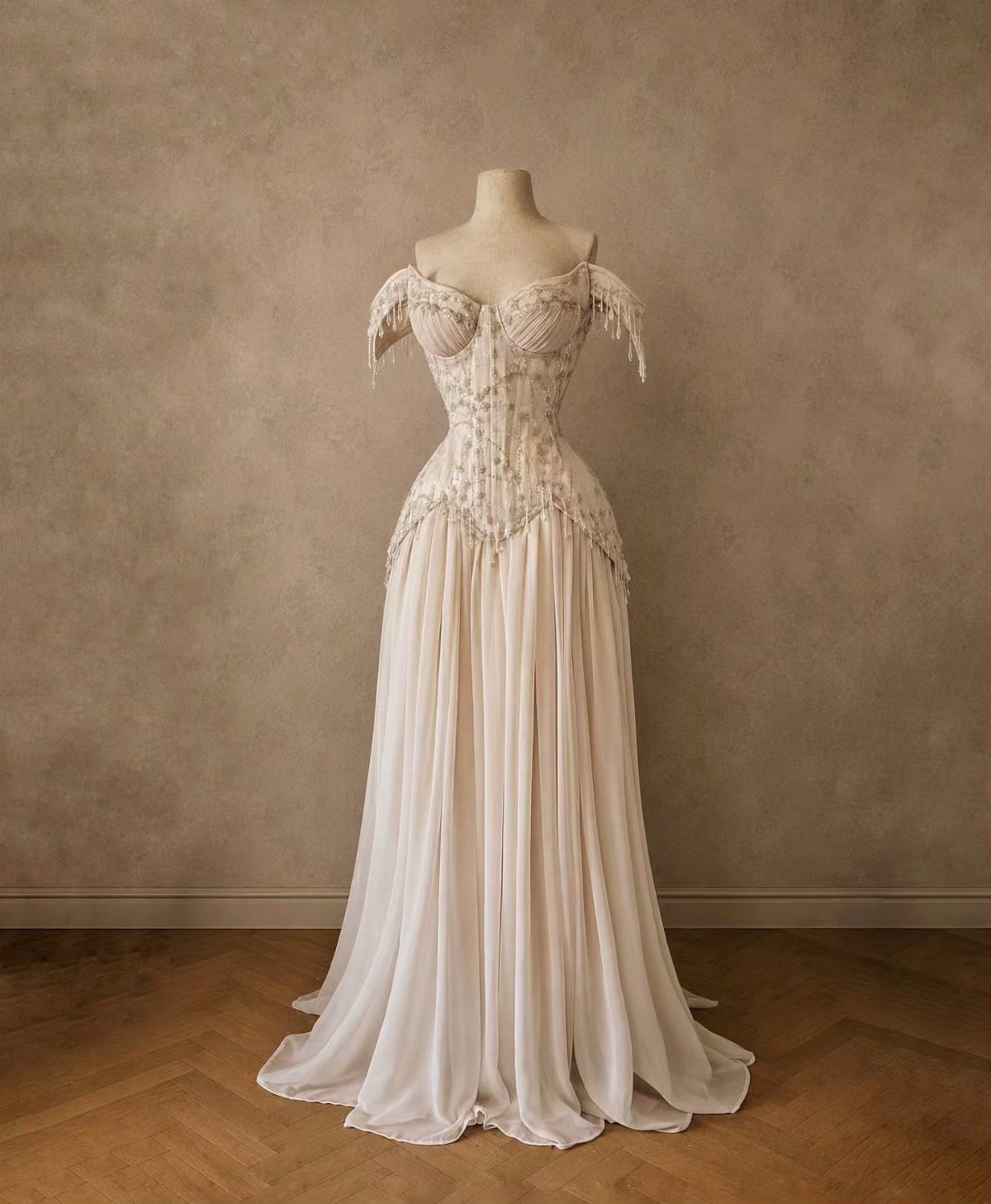
Boning is what separates a true corset bodice from a dress that only looks like one. Here it runs through a beaded, off-the-shoulder bodice, with the V-shaped basque point finishing it at the waist.
Structure like this holds your shape without much fuss, so I would choose it for a long ceremony and a dance floor.
Ask for a fitting after your final weight settles, because a boned bodice has little give once it is sewn.
A flowing skirt balances all that firmness nicely.
5. Simple Basque Waist Dress
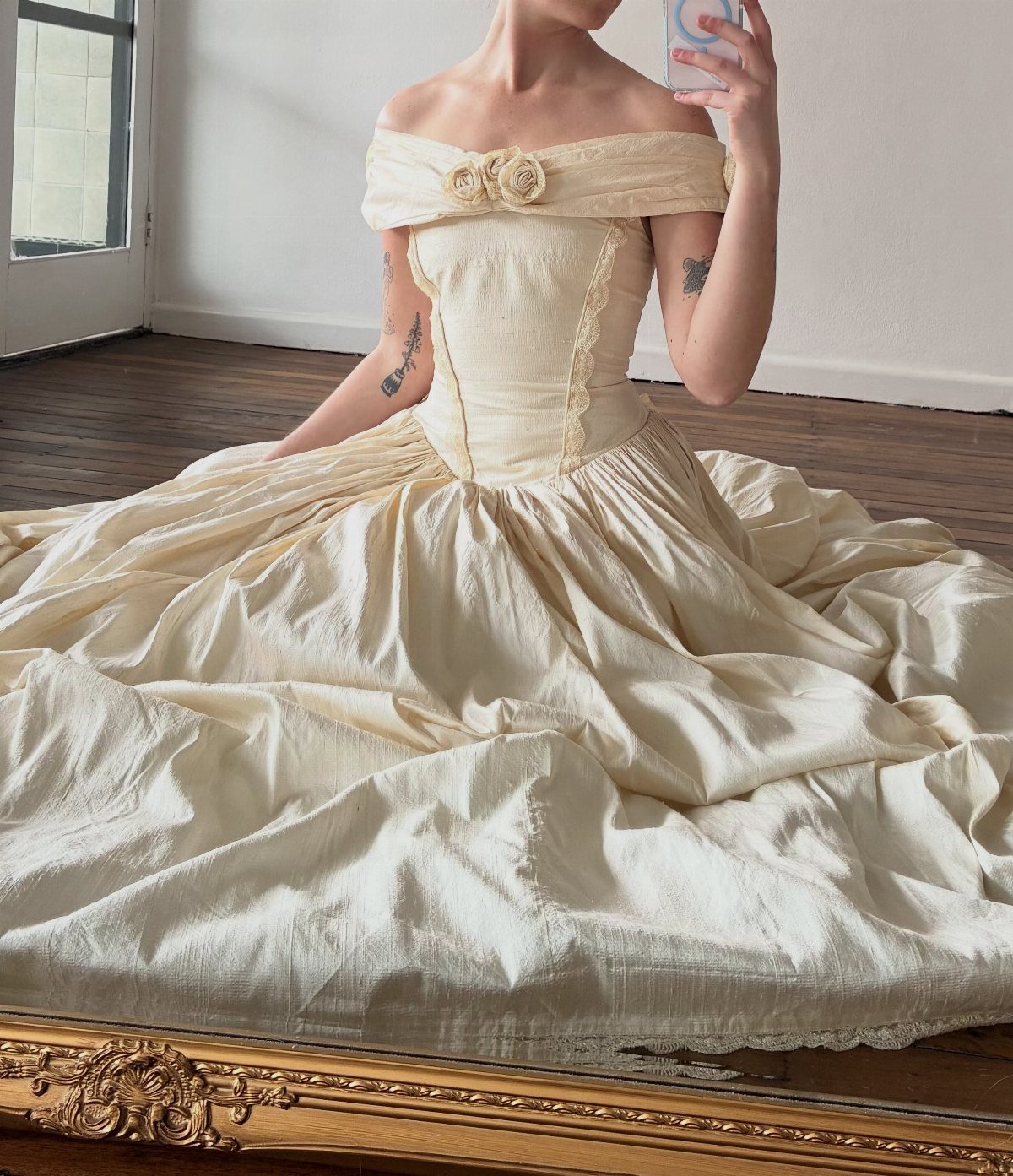
Simple is the version I trust most for a first-time dress shopper: cream fabric, an off-the-shoulder neckline, a structured basque waist and a full skirt, with nothing extra on top.
With so little ornament, fit does all the work.
Spend your money on tailoring the waist point to sit cleanly, then add personality through veil, jewelry and shoes. Those cost less than a dress full of detail and can change completely between weddings or photo styles.
6. High Neck Puff Sleeve Gown
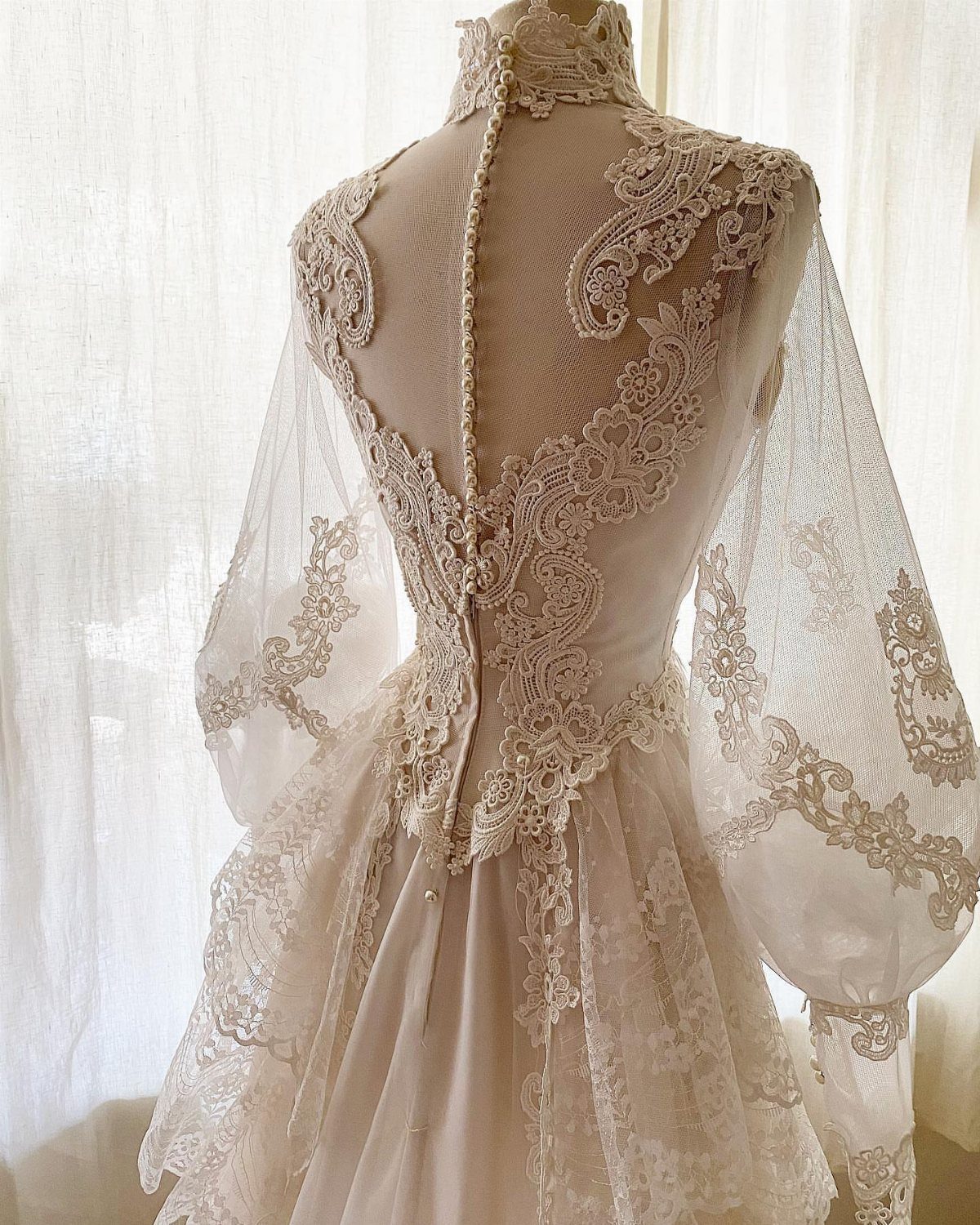
A high collar and sheer puff sleeves make this the most Victorian-leaning dress on the list, and the embroidered basque waistline gives that covered-up look a defined shape.
The back view, with lace running all the way up, is its best angle.
Wear your hair up so the collar stays visible. I would also skip a statement necklace entirely, since the neckline is already the focus.
It suits a ceremony where you want coverage without losing any romance.
7. Off-the-Shoulder Basque Dress
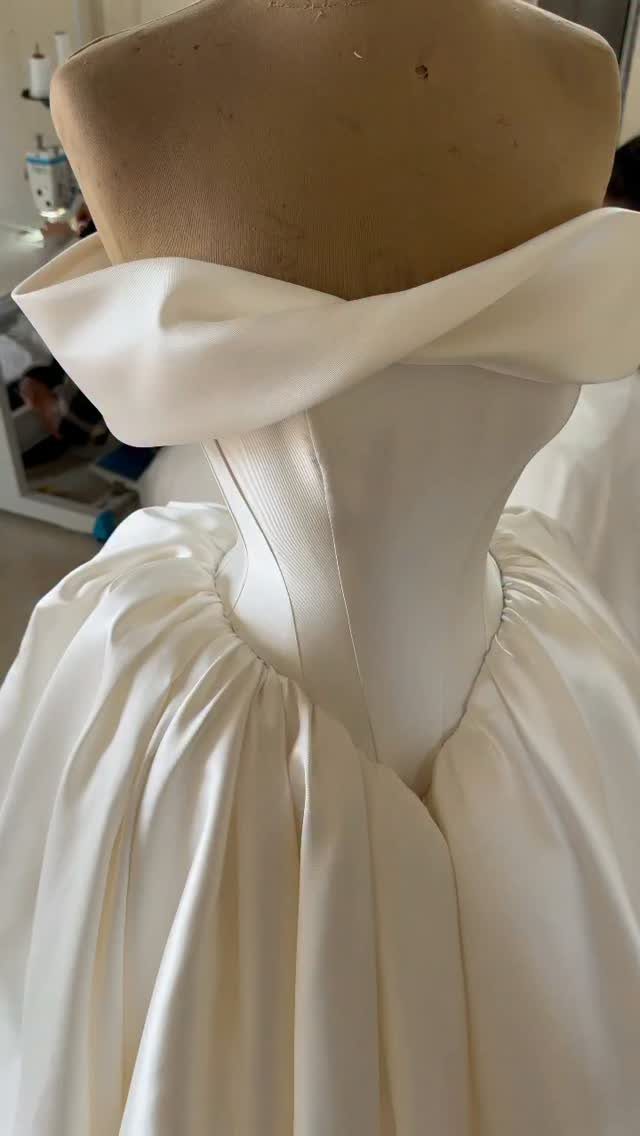
White satin on a structured bodice shows its seams, and an off-the-shoulder neckline leaves nothing else to look at. That makes this a dress where the cut does the work.
A mannequin is flattering to any bodice, so judge it on your own body. Check that the neckline stays put when you raise your arms, and that the basque point sits cleanly at your waist rather than pulling.
I would pair it with a simple updo and skip a necklace.
8. Tiered Ruffle Lace Dress
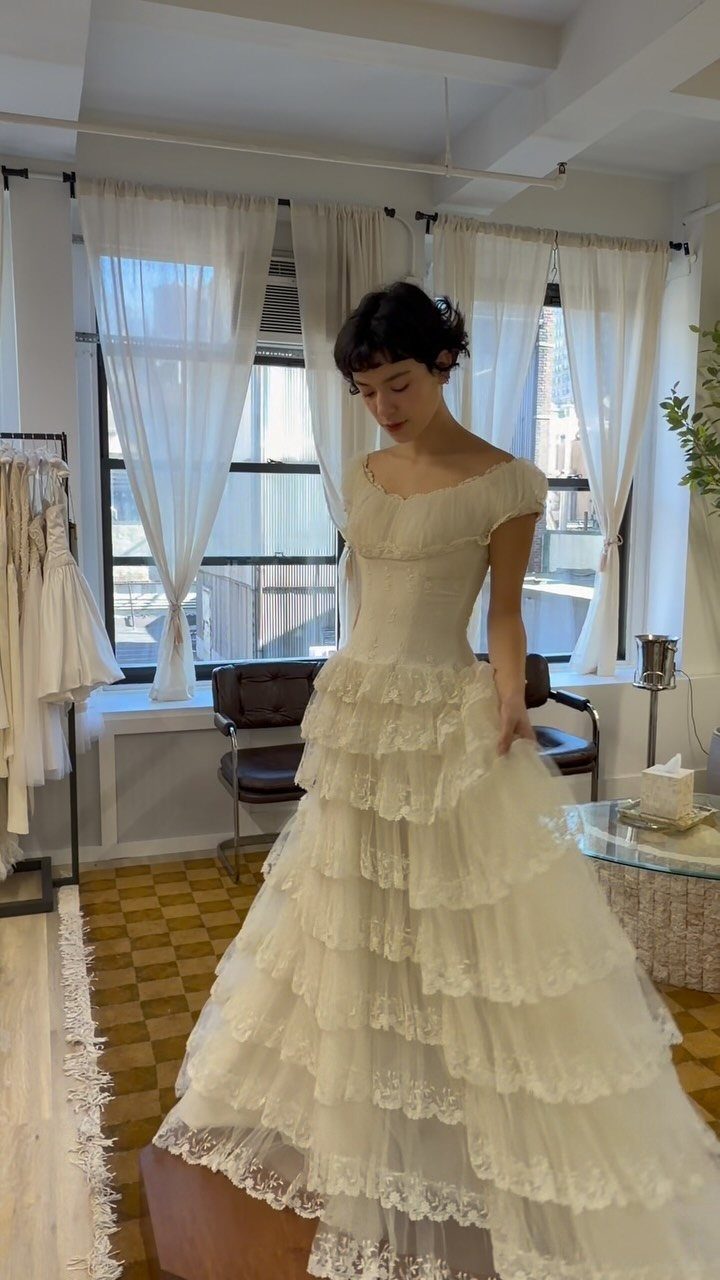
Tiers of lace ruffles give this basque waist its volume, and the fitted point above them keeps the skirt from swallowing you. Fullness is the vintage part here.
A skirt with this much layered lace adds weight, so stand and walk in it during a fitting, not just on the pedestal. Ask how the tiers are attached, since lace edges snag easily.
Keep the veil plain. The skirt already has plenty of texture, and a lace-trimmed veil would compete with it.
9. Detached Sheer Sleeve Gown
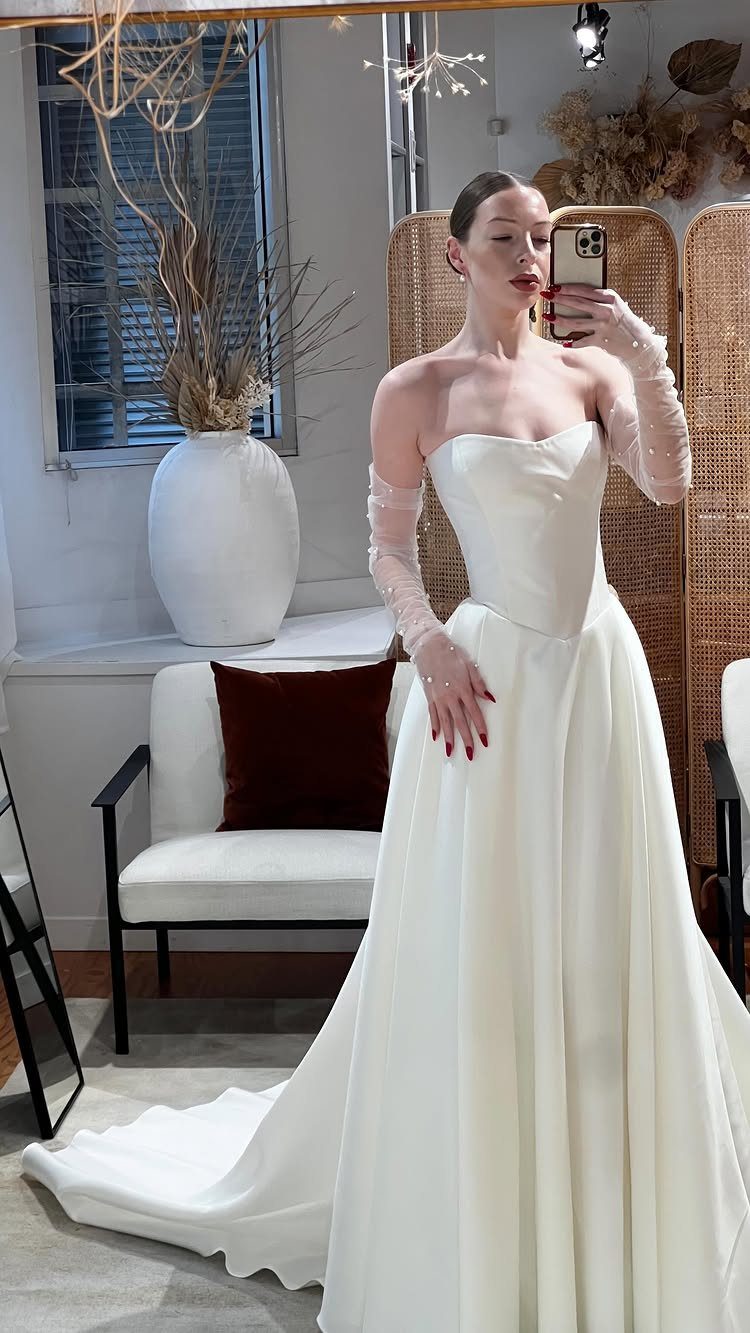
Detached sheer sleeves let a strapless basque waist gown change character. Take them off and you have a clean, bare-shoulder dress; put them on and the pearls add a softer, more covered look.
That flexibility is why I like it for a long day: ceremony with sleeves, reception without.
Ask whether the sleeves are sold with the dress or separately, and have them fitted at the same appointment so the arm openings sit comfortably.
Sheer fabric tears easily, so keep them away from jewelry clasps.
Why Choose Basque Waist
A basque waist works because it lengthens the torso. A basque waist drops the bodice to a V below your natural waistline, sometimes down over the hips, which pulls the eye lengthwise down the dress.
That shape defines your curves and balances your proportions, which is why it flatters so many bodies.
Fabric changes the mood.
Lace reads romantic, Mikado satin reads polished and architectural, and a simple crepe-style cut reads modern. Pick the material that matches your venue and your sense of formality.
Structured bodices also sit well with a full skirt or a fitted fit-and-flare shape, so you aren’t locked into one silhouette.
I would decide the skirt after the bodice, since the bodice is the part you will notice most in every photo.
Alteration Options
Placement of the V point decides whether this silhouette flatters or fights you. A point that sits too low can shorten your legs, and one that sits too high loses the elongating effect.
Before you commit, find out whether the seamstress can raise or lower the point to suit your torso length.
Some designers have you order the closest size from their chart and then reshape the basque point in their own studio, so I would ask who does that work before paying a deposit.
A seamstress who handles that gown style daily is a better bet than a general tailor.
Bring your wedding shoes and undergarments to the fitting, and stand, sit and raise your arms while the point is pinned. If it digs in when you sit, say so before the final stitching.
Current Trends
Structured bodices and sculpted silhouettes are in step with the rise of corset-inspired fashion, and they can still feel comfortable to wear.
For you, that means more choice at different prices. Basque waists now appear in intricate lace, luxurious Mikado satin and plain, simple cuts, so you can match the trend to your budget without copying one look.
I would pick the version that still appeals to you if the trend fades. A basque point is a historic shape, so the classic versions are the safest to keep loving in photos.