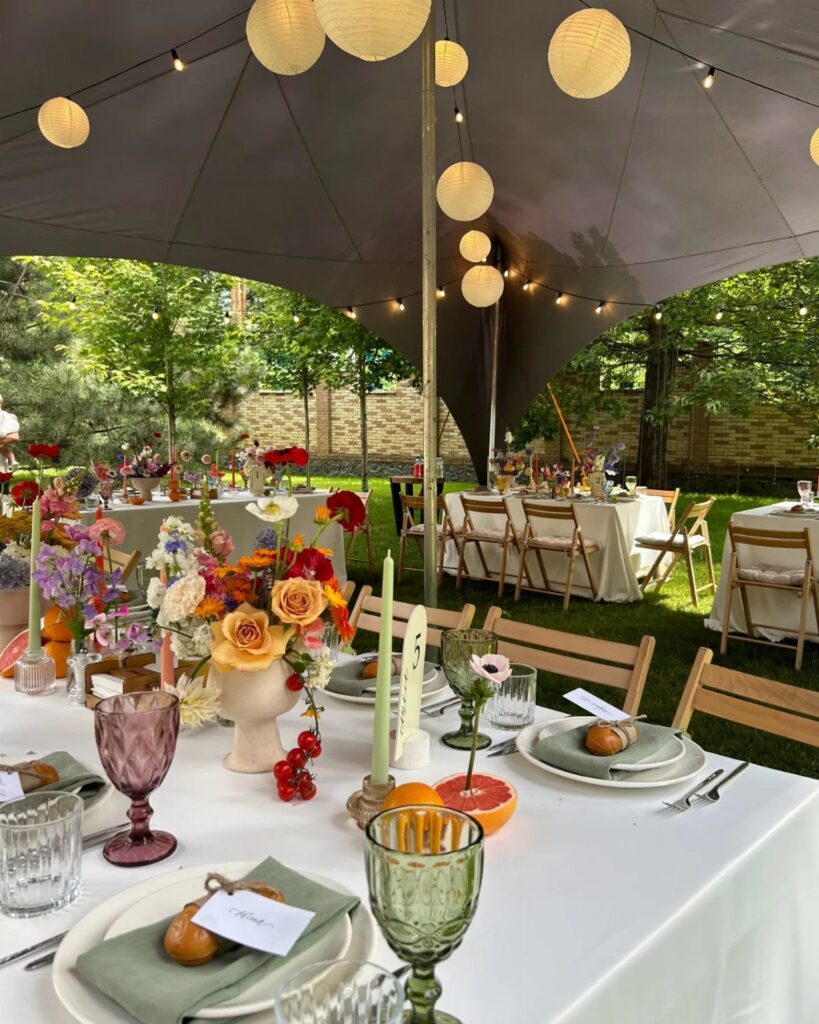
The ideas here run from a plain rug with a few cushions in a lounge corner to chandeliers hung over long wooden tables, and the cost climbs with every square foot of ceiling or floor you cover.
Guest count and the yard or field decide which end suits you, since a smaller list means fewer tables to style and fewer plates to pay for.
1. Floral Canopies
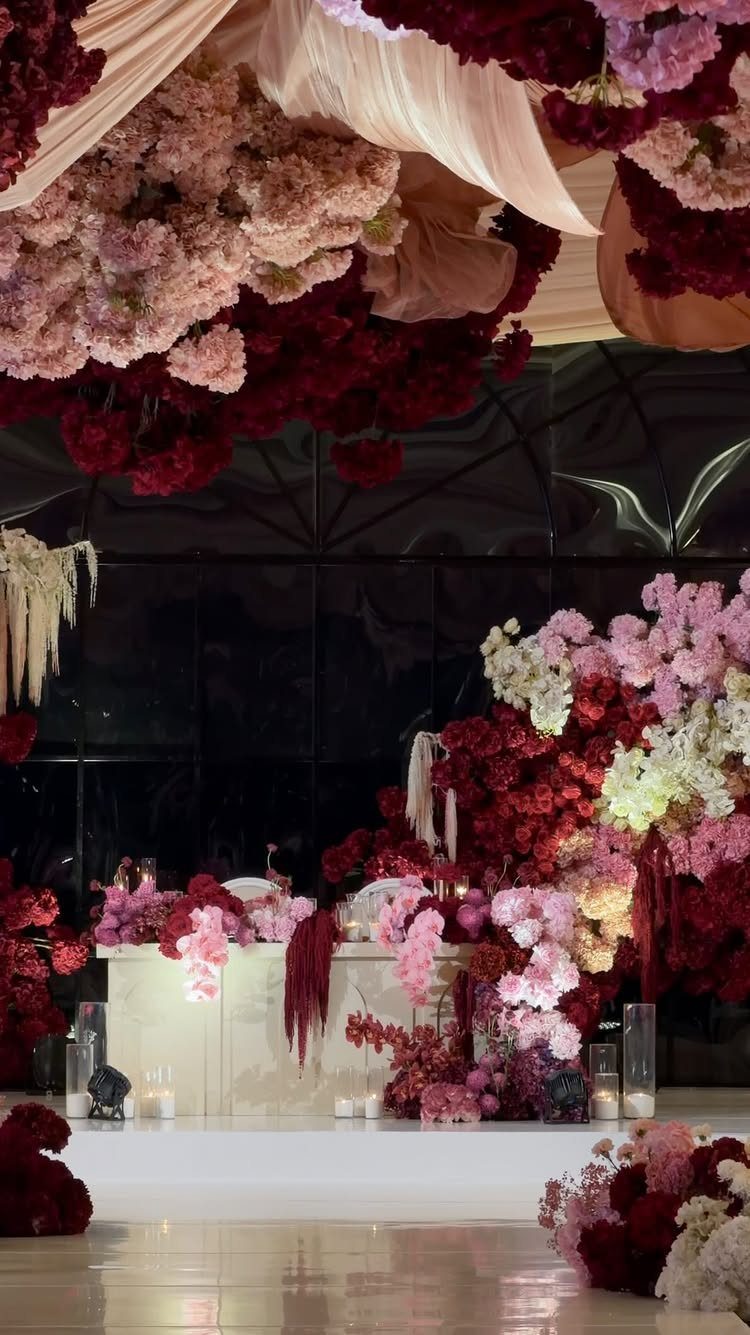
Flowers overhead change how a space feels more than any centerpiece can, because guests look up at them all night. Pink and burgundy blooms with cream fabric draped beneath keep the mass of color softer than flowers alone.
I would spend on one focal point, like the altar table or the head table, and keep everything else simple.
A big canopy over a single spot costs far less than flowers across the whole ceiling, and it still photographs as the main event.
2. Tent Entrance
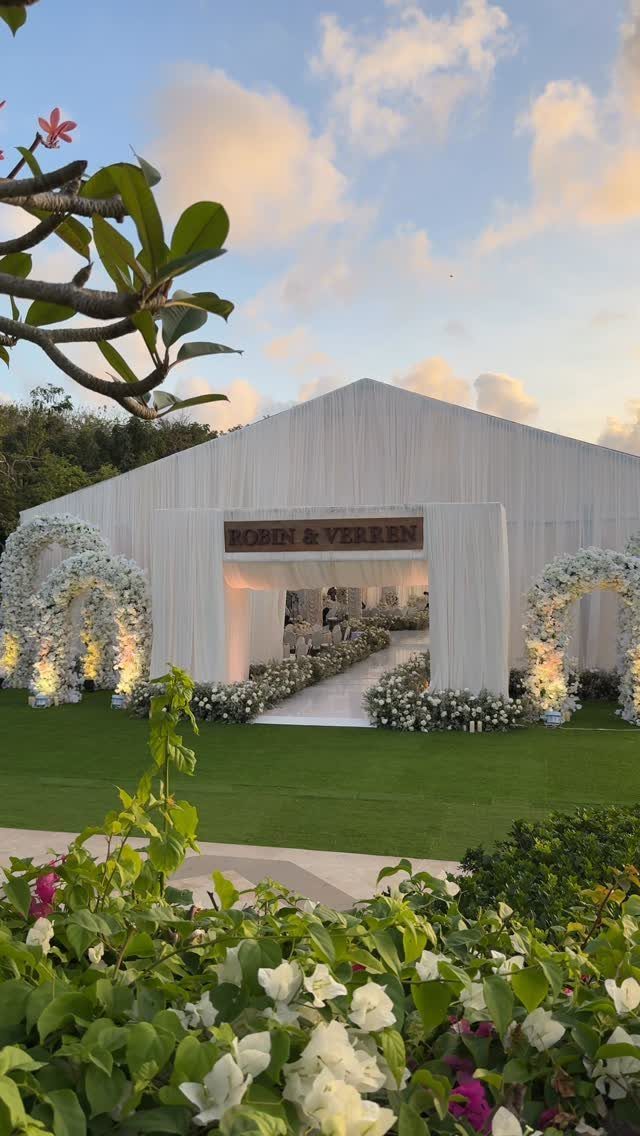
Guests form their first opinion of the wedding before they step inside, so the tent entrance deserves real attention.
Floral arches on each side of a white tent frame the doorway, and a sign with both names tells people they have arrived at the right place.
Keep the flowers at the opening itself and let the white canvas do the rest. A lawn setting like this one is mostly green, so one or two colors in the florals read clearly from the parking area.
3. Welcome Sign
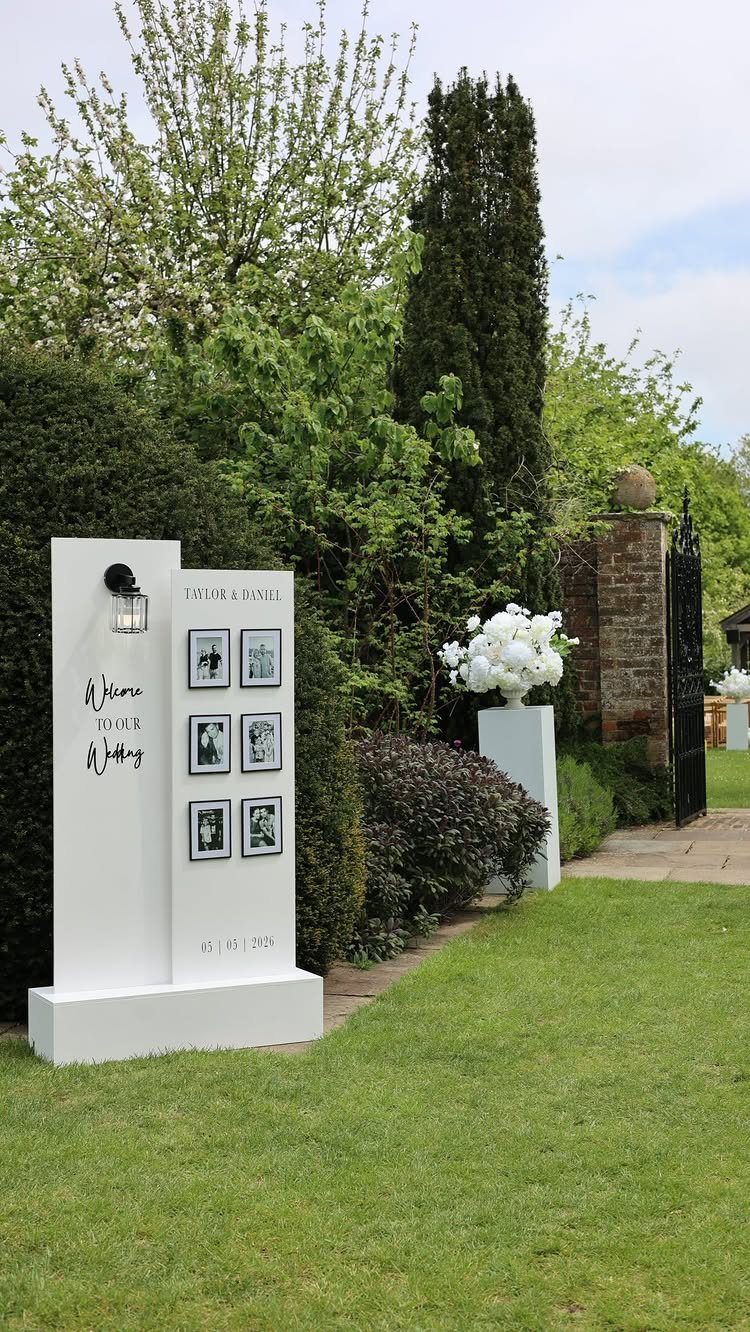
A welcome sign with photos does something a plain name board cannot: it shows guests the couple before they say hello. Names, a date written as 05|05|2026 and a few pictures fit neatly on a white rectangle.
Pick a spot where people pause, like beside a gate or hedge, and give the sign room so it is not crowded by other decor.
Choose 2 or 3 photos you truly like rather than a full collage; small prints get lost at arm’s length.
4. Hanging Greenery
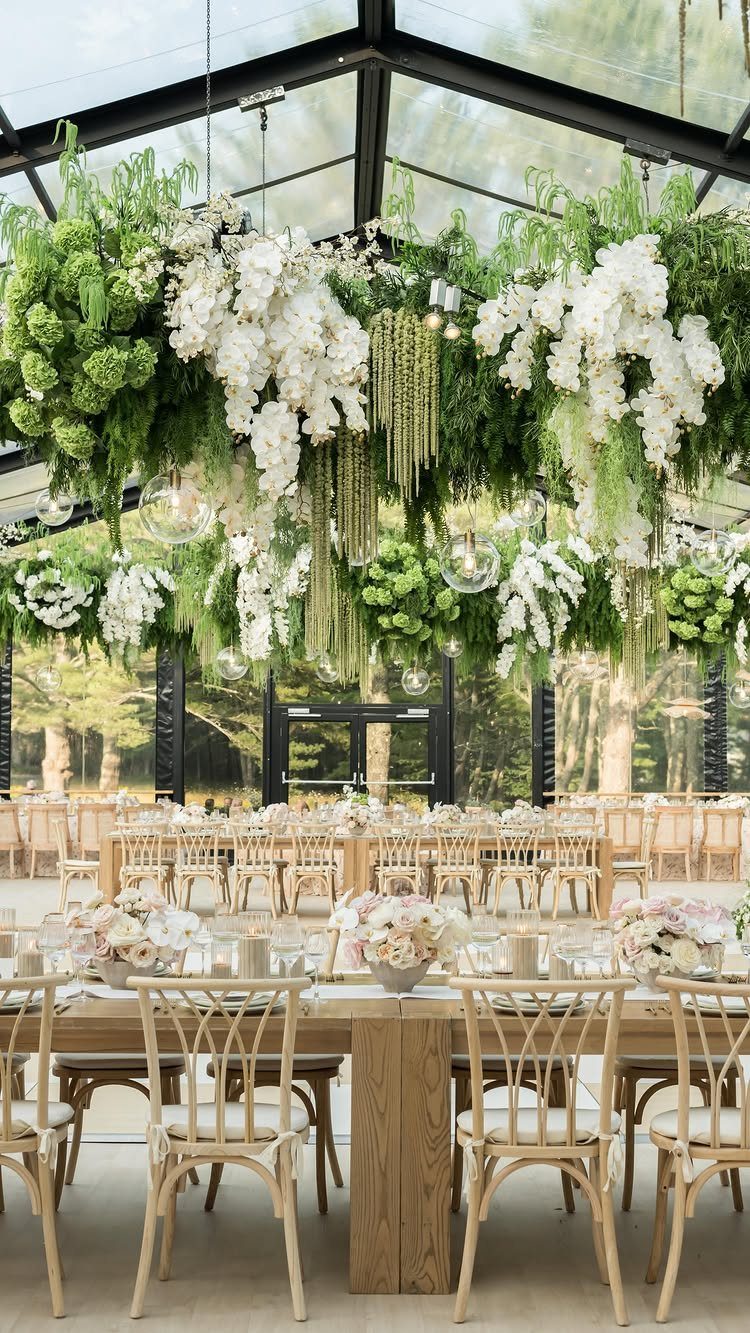
Long wooden tables look best with something above them, and hanging flowers and greenery fill that empty space under a glass-walled tent. White blooms mixed with leafy stems keep the look like a garden, not a florist’s display.
I prefer keeping the greenery fairly dense and the flowers white, so the daylight through the glass does the coloring. Check that the pieces hang above eye level, or guests across the table will lose each other behind the leaves.
5. Cozy Lounge Areas
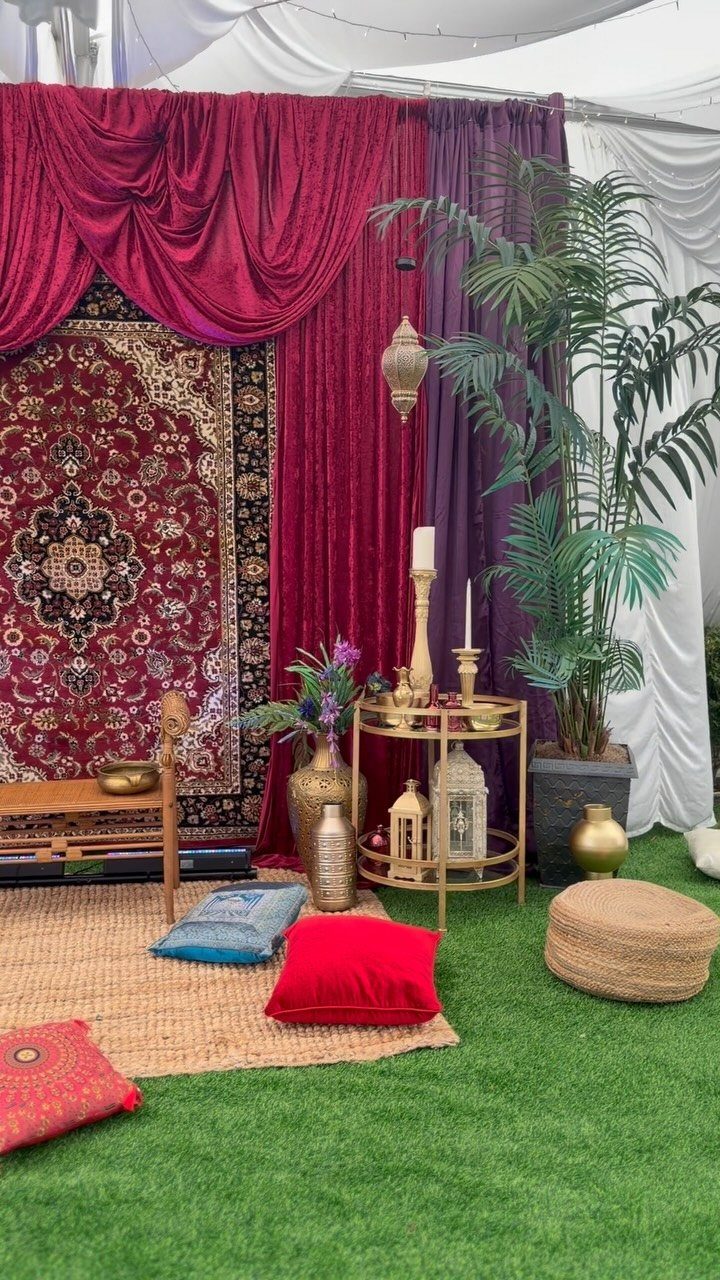
A lounge corner gives guests somewhere to sit that is not a dinner chair.
Floor cushions on a patterned rug, velvet curtains in red and purple, and a gold side table with lanterns make a nook that feels separate from the main tent.
Start with the rug and cushions, since they define the space cheaply. Add the drapery and a potted palm only if the budget allows, and keep lanterns on the side table so the walkways stay clear.
6. Outdoor Fire Pits
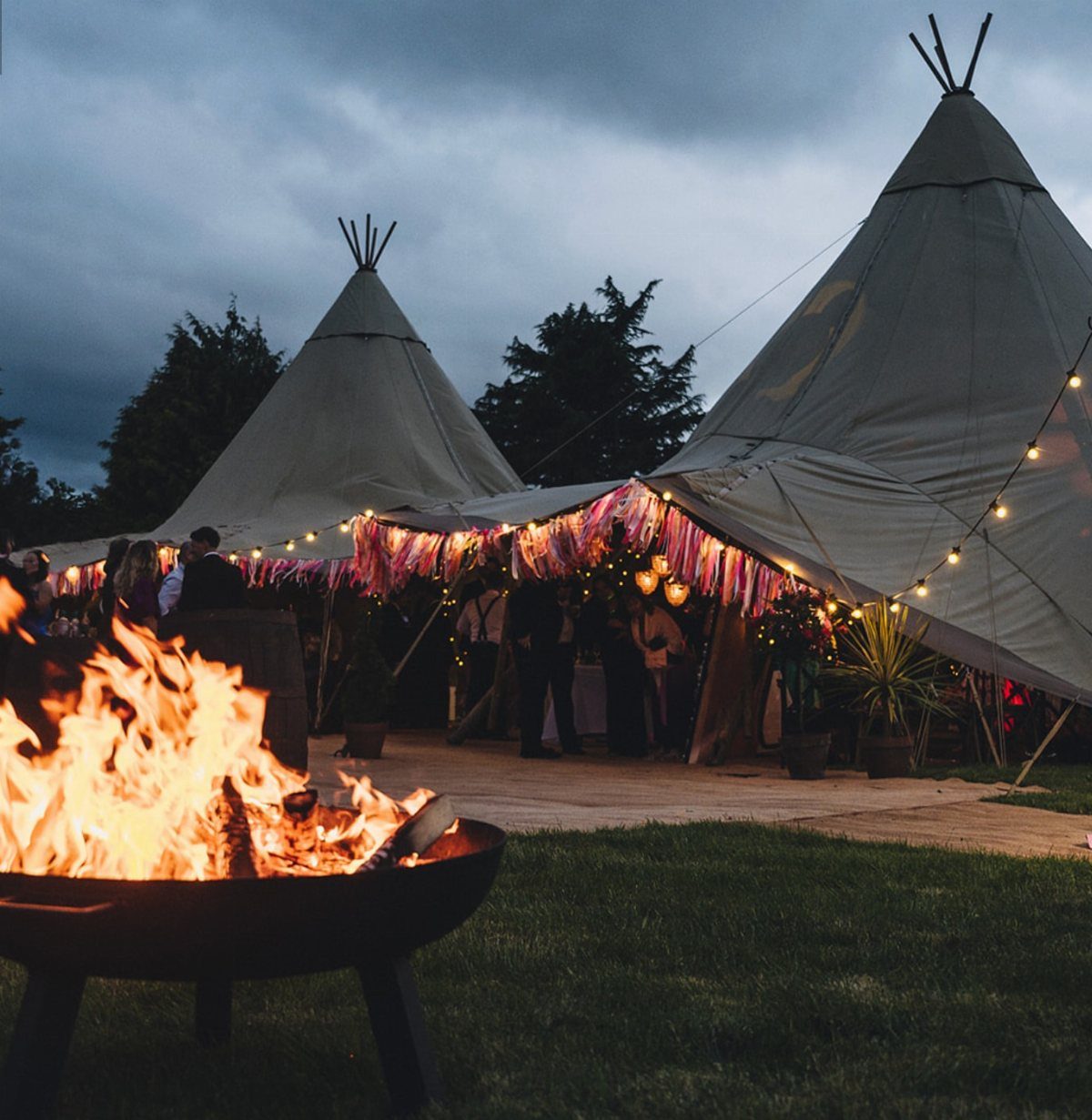
A fire pit gives guests a reason to drift away from the dance floor and talk. Placed in front of decorated tipis, it becomes a gathering spot where people naturally cluster.
Set it a comfortable distance from the tent walls and fabric, and leave open space around it so guests can circle it without bumping chairs.
Warm light from the flames pairs well with string lights and tassels, so you need little extra decor nearby.
7. Wooden Tables
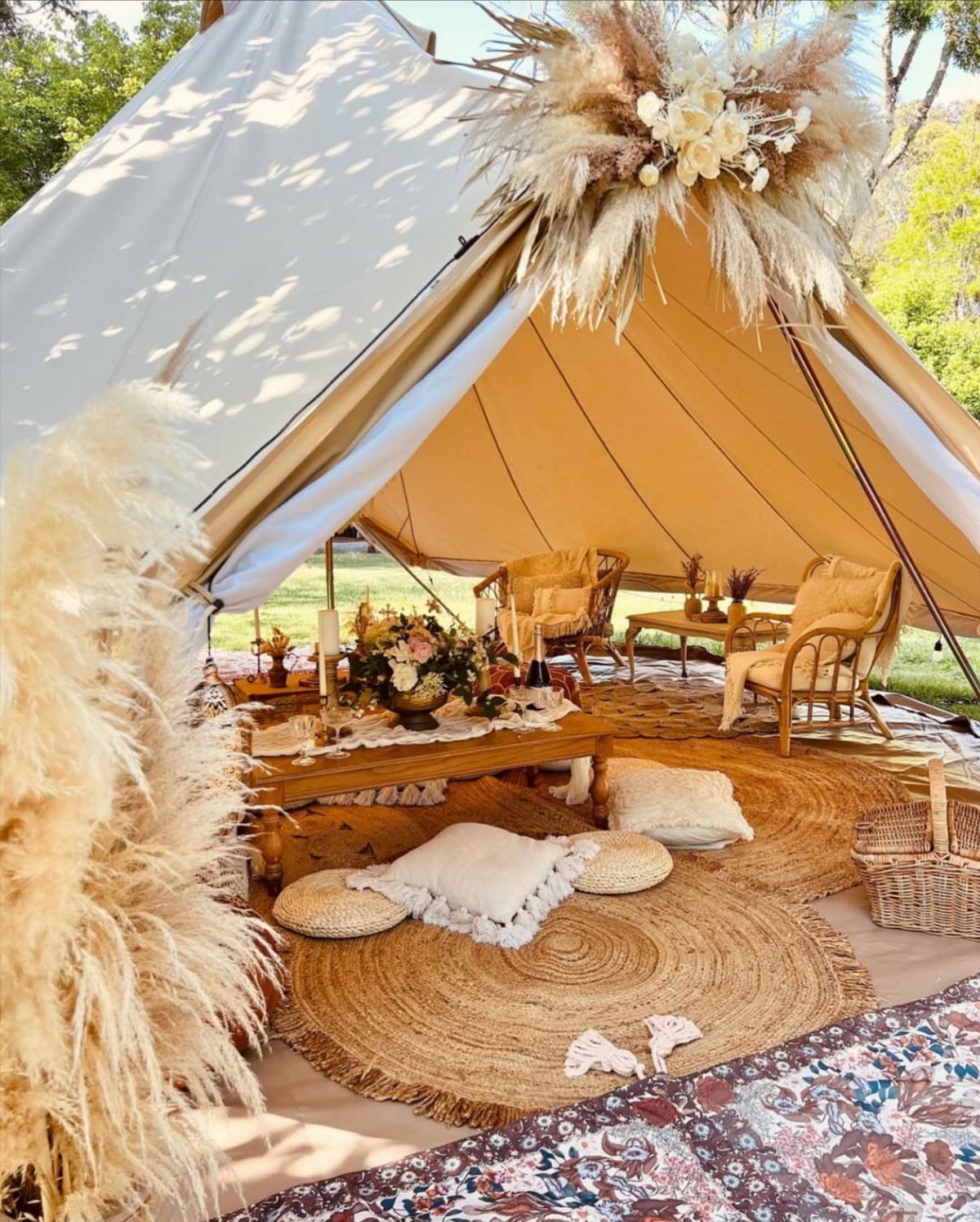
A low wooden table turns a bell tent into a place to sit on the floor, which suits a small group better than rows of chairs.
Wicker seating and jute rugs keep the materials in the same warm, natural family as the wood.
Keep the centerpiece flat and wide, since tall arrangements would block conversation across a table this low. Pampas grass can stand behind the table instead, out of the way.
8. String Lights
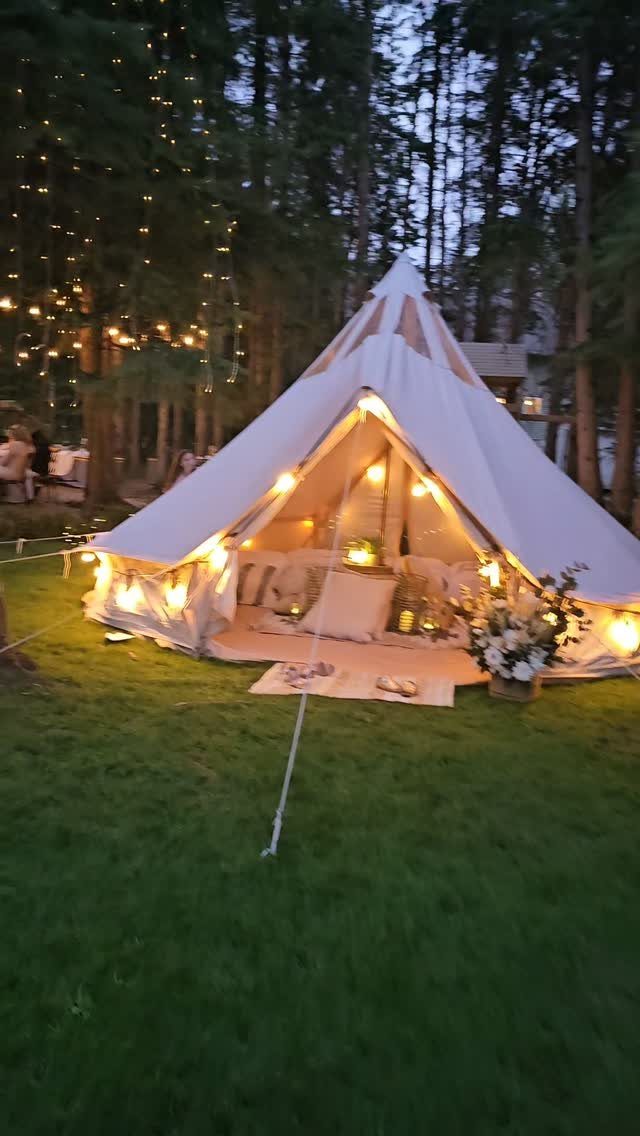
Warm string lights are the cheapest way to make a tent glow once the sun drops. Strung through trees around a white bell tent, they light the canvas from outside and make it look lit from within.
I would pick a warm white bulb over a cool one, because it flatters both the fabric and the flowers.
Hang the strands before the day itself, and test them after dark so you can fix gaps while there is still time.
9. Draped Fabric
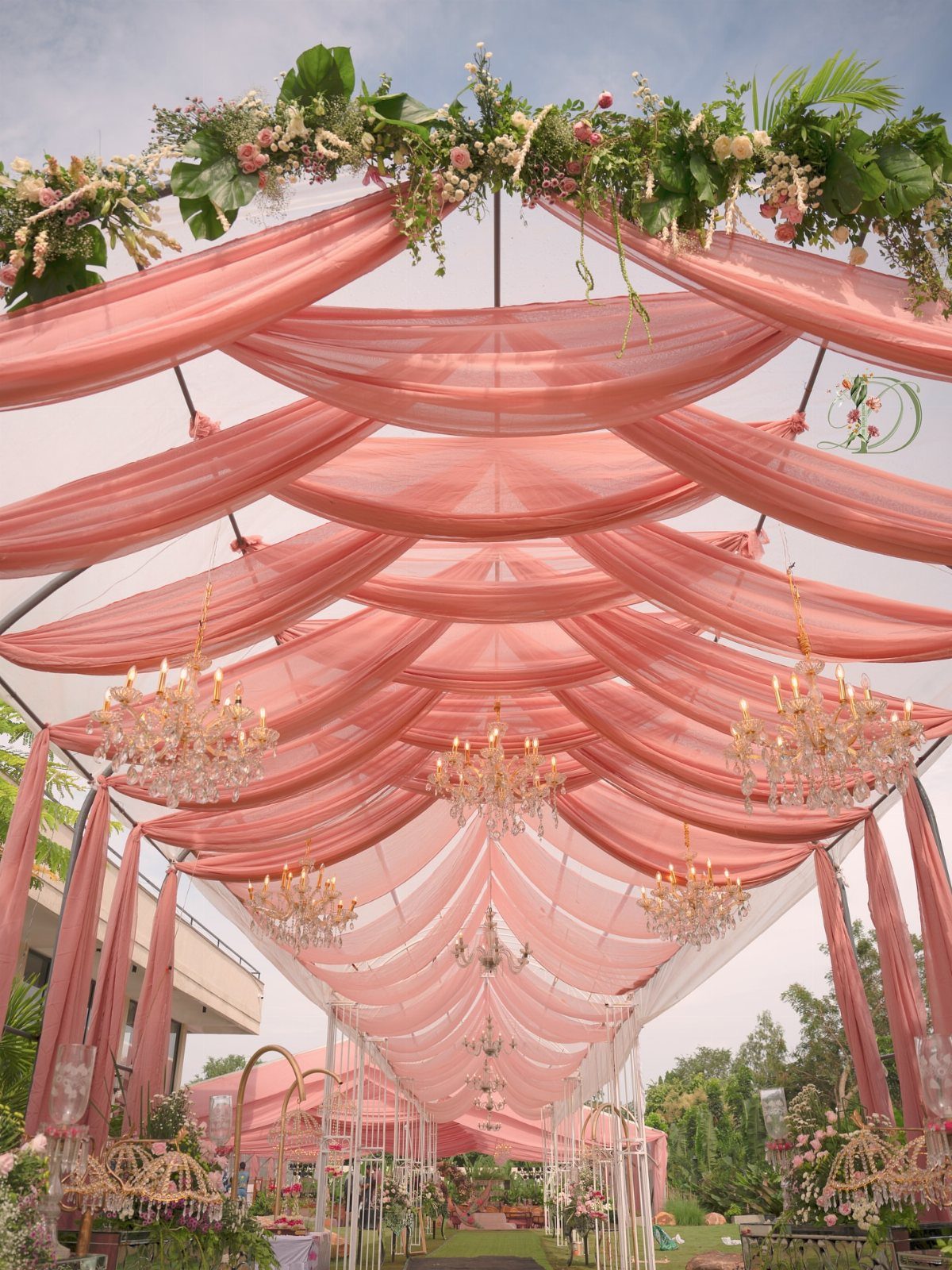
Draped fabric hides the bare ceiling of a tent and gives the room a soft, finished look. Peach is a gentle choice, and it looks especially good with crystal chandeliers hanging through the folds.
Use long, loose swags rather than tight, flat panels; the folds catch light and add depth.
Fabric over a whole ceiling adds up in cost and labor, so I would price it early and drape only the center if the budget is tight.
10. Hanging Lamps
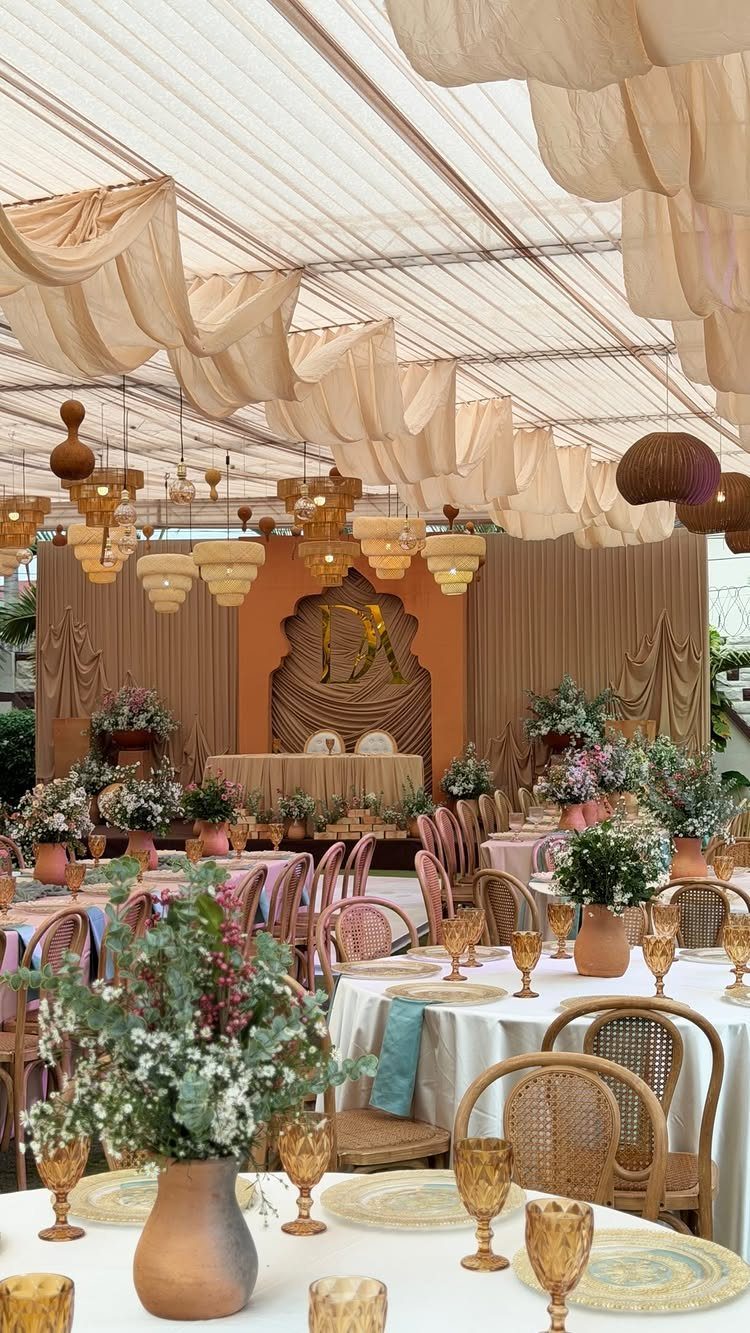
Woven lamps hung at different heights give a tent ceiling texture without adding any glitter.
Hung over round tables with floral centerpieces, hanging lamps bring a casual, handmade feel and soften the draped fabric overhead, so they work best when the ceiling is already covered in swags.
Vary the lengths so the ceiling reads as layered, not as a flat row of identical shapes. Keep the lowest ones clear of guests’ sightlines, and put the groups over the tables so the room feels organized.
11. Rugs
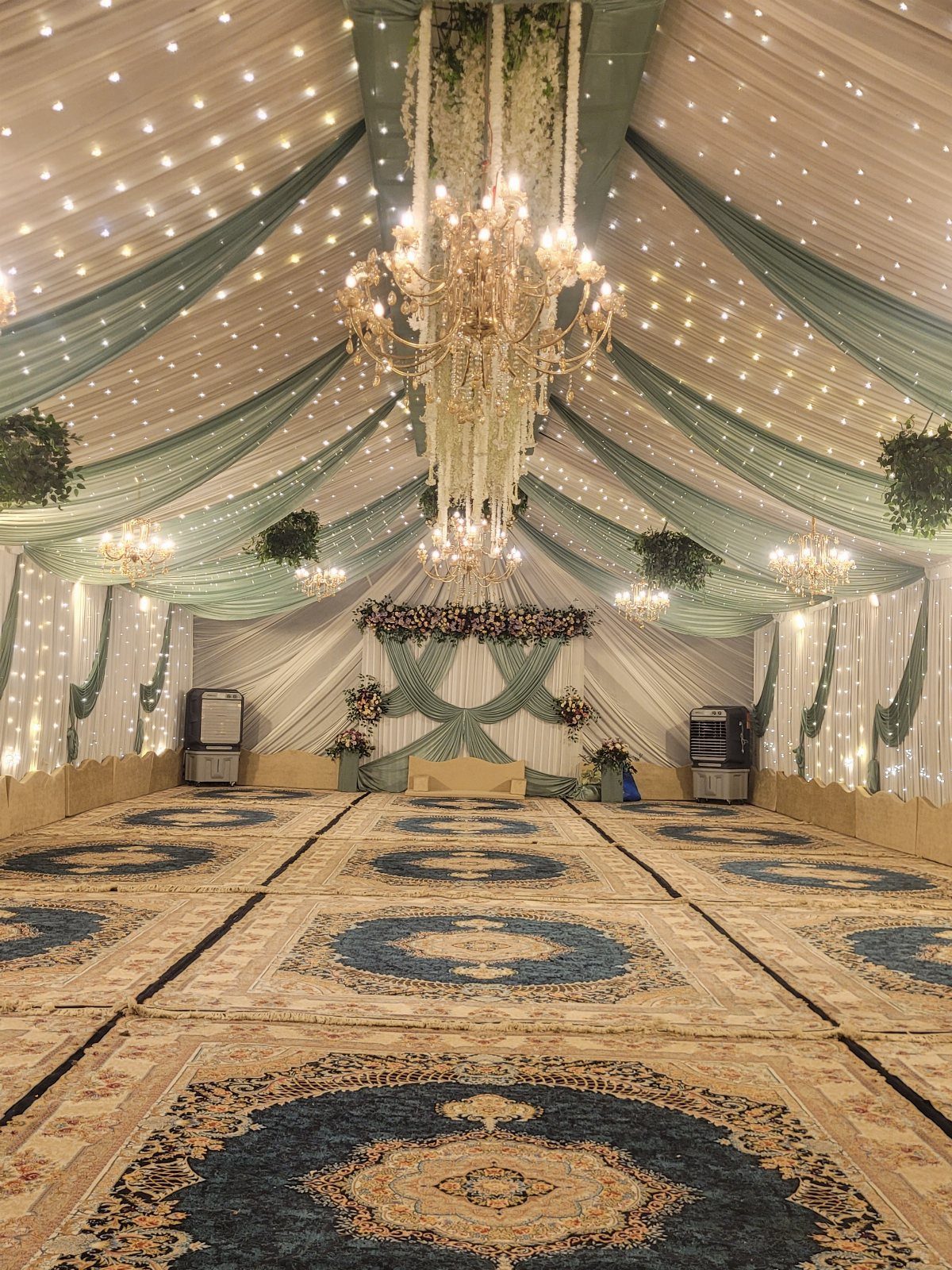
Rugs cover the bare floor of a tent, and patterned ones add color at a level guests see all night. Laid edge to edge across the whole floor, large rugs make the tent feel like an actual room.
Choose patterns that echo the colors already overhead, like the fabric and florals.
Overlap the edges slightly or butt them tightly so no one catches a heel. Rugs cost more than a few cushions, so cover the main seating area first if you cannot do the full floor.
12. Chandeliers
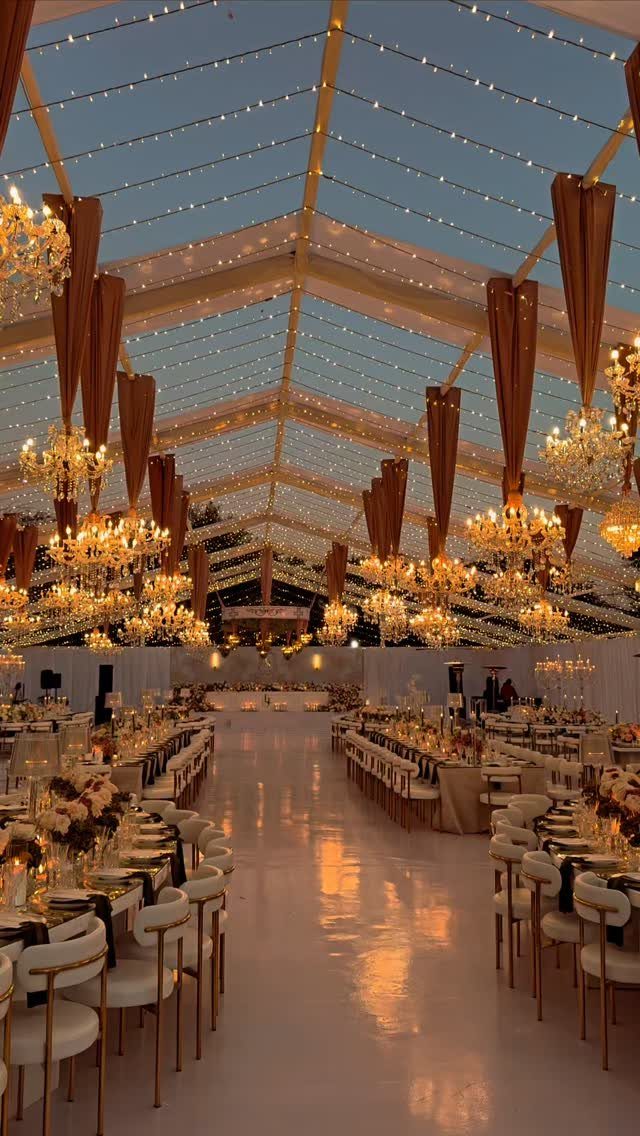
Gold chandeliers inside a clear-top tent look best at night, when the glass goes dark and the fixtures become the main light.
Hung in numbers over long dining tables, chandeliers give a tent a formal feel, and they look best with clean, pale furnishings like white chairs and a polished floor.
I would choose repeated fixtures of the same style rather than a mix, so the effect looks planned. Chandeliers need secure hanging points and a power source, so ask your tent rental company early what the structure supports.
13. Personalized Place Cards
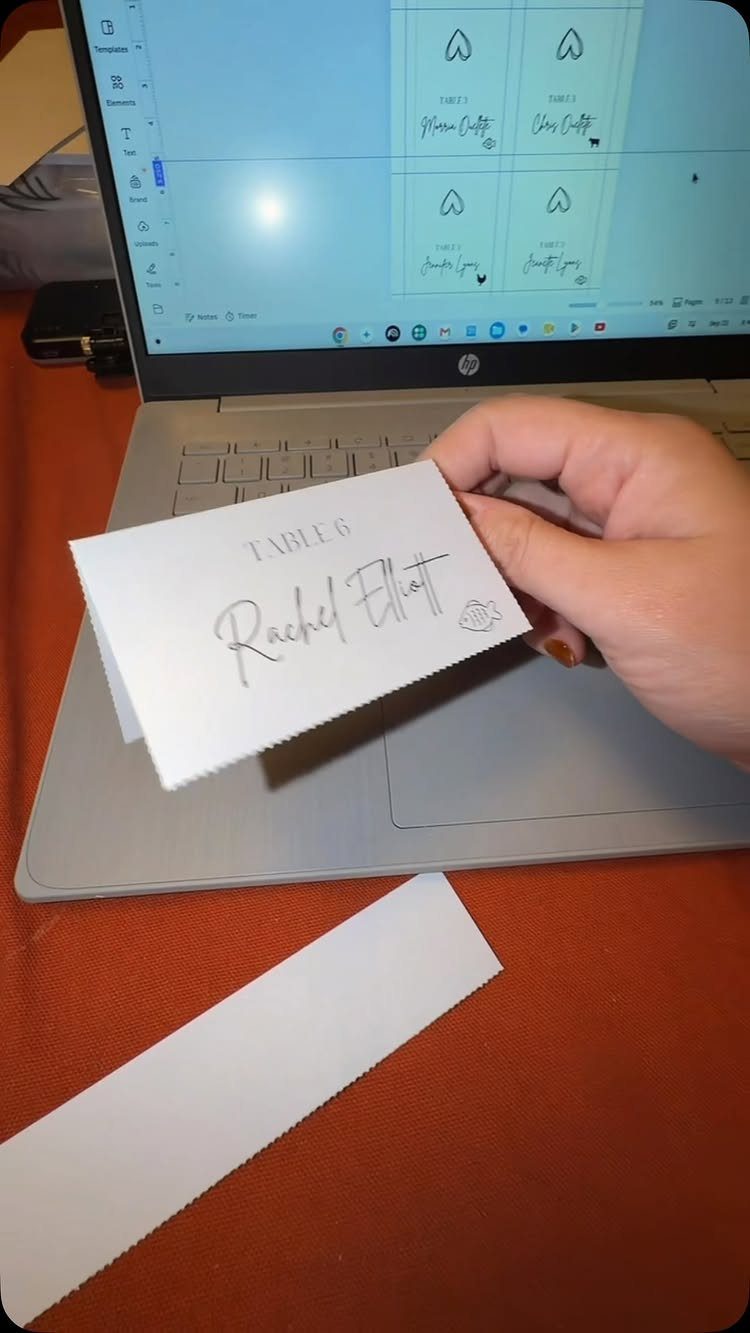
Place cards with a table number and a guest’s name tell people where they belong before they hunt for a chair. A folded white card, with "TABLE 6" above the name, reads clearly from a short distance.
Design the cards from a template on a laptop, then print them yourself to keep the cost low.
Proofread every name against your guest list before printing, since a misspelled name on a card stands out more than any other detail on the table.
14. Colorful Table Settings
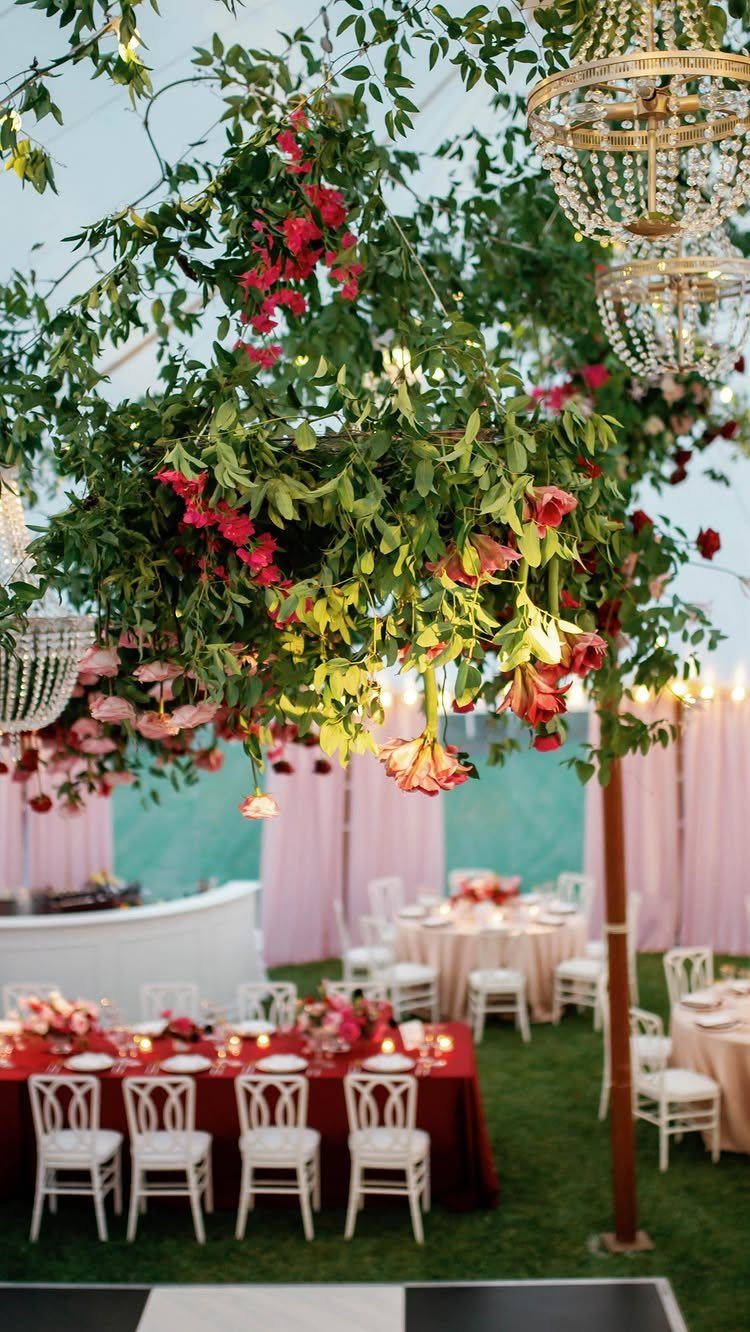
Red flowers overhead echo the table below and tie the 2 levels together.
Limit the bold color to one table or one accent, like the long head table, and let neutral linens carry the rest.
Chandeliers and greenery already fill the ceiling here, so a second or third bright color would crowd the room.
15. Candle Centerpieces
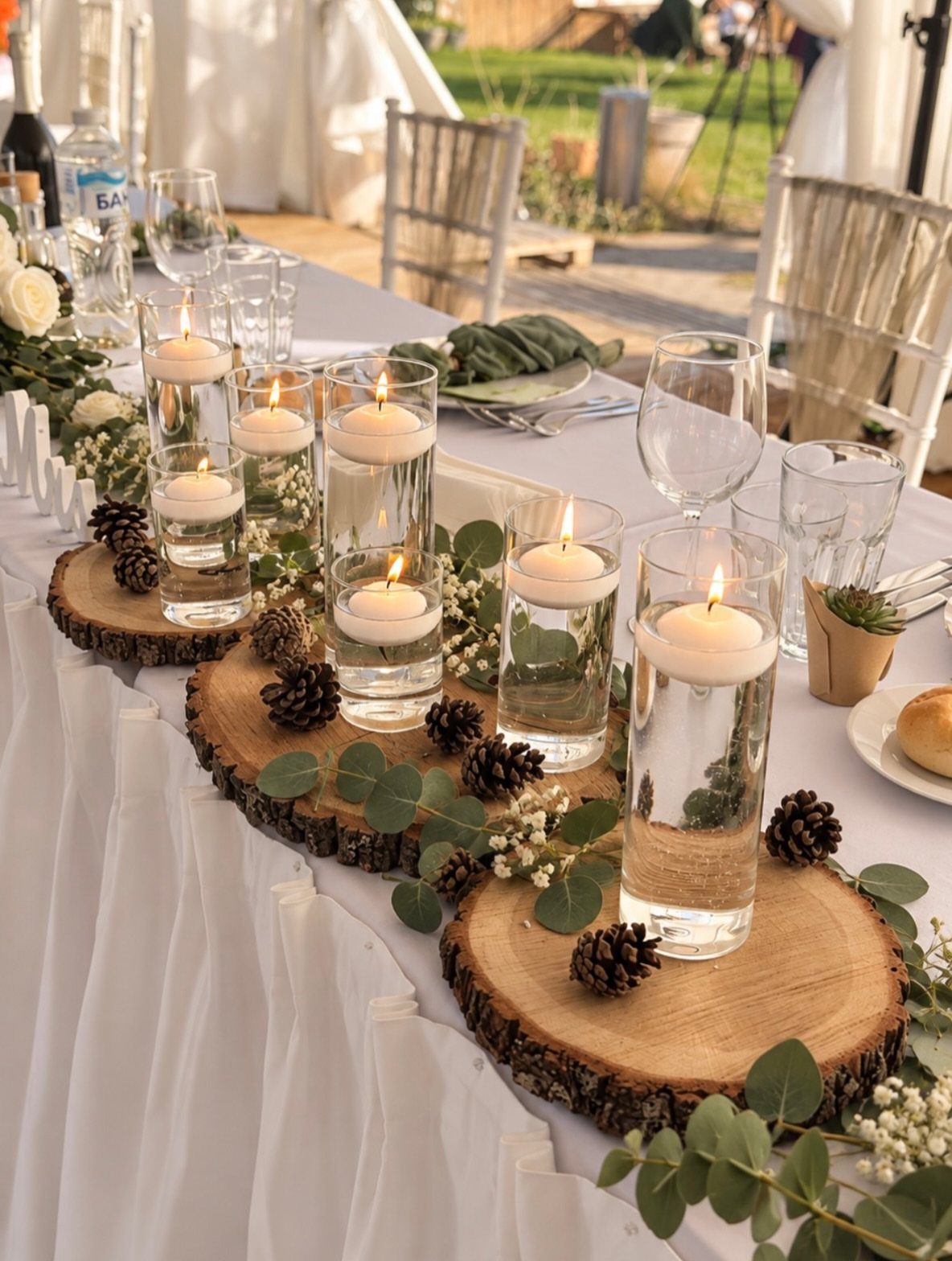
Floating candles in glass cylinders, set on wood slices, give each table a small, steady glow.
Greenery and pinecones around the base of each candle keep the look natural against a white tablecloth, and both are cheap to buy in bulk.
Keep the arrangement low enough that guests can see across the table.
Wood slices protect the linen from the glass, and repeating the same setup on every table looks planned. Buy the candles and cylinders in bulk to hold the cost down, and test one table before assembling them all.
16. Photo Booths
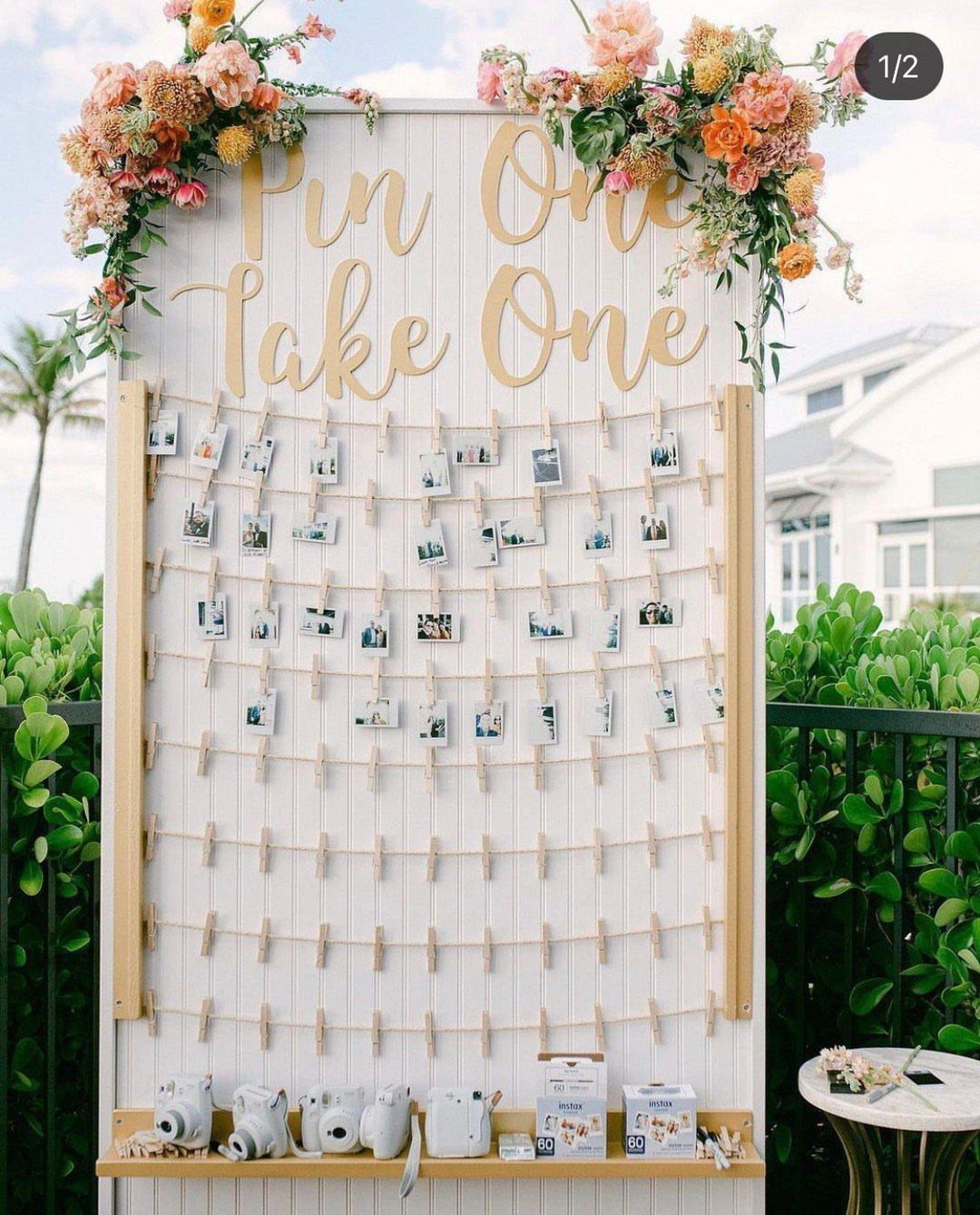
Guests will use a photo wall more readily when the instructions are right on it. "Pin One Take One" says everything: snap an instant photo, pin it to a string, and take a copy home.
Stock the shelf with several instant cameras so no one waits in line, and keep film on hand since it runs out faster than you expect.
I like a plain white backdrop with a few flowers, because it keeps attention on the pictures.
Choosing the Right Tent
Pole, clear span, and sailcloth tents each set a different foundation for the decor, so match the style to your theme before you pick anything else.
Pole tents read as traditional, clear spans look clean and modern, and sailcloth gives a softer, more relaxed feel.
Guest count and venue decide the rest. Match the tent to your headcount, then check it against the actual yard or field, because you want a few feet of clear ground around the edges for stakes, walkways and the caterer.
If the budget and space allow, you can mix styles. Pairing the main tent with an open-air area for drinks before dinner gives guests a second setting to move into.
Setting Up the Tent
Set the tent up a few days before the wedding. That gives you real time to decorate without rushing, and it shows you any problems while you can still fix them.
Walk the floor before anything goes in.
Walk the ground first and clear out any stones or bumps, since guests in heels will notice every one. A floor or carpet over the ground is better still.
Poles holding up a peaked roof can work as part of your decor instead of something to hide.
Wind garlands of greenery or flowers around them, or string them with small lights. If you want a woodsy look, cover them in bark-toned fabric and foliage so they read as tree trunks.
Anything guests will sit or swing on needs to be checked for the weight it will carry.
Budget Considerations
A tent wedding can cost less than a traditional venue, but only if you plan the spending. Set aside a clear share of the budget for decor and rentals, since the tent itself arrives empty.
Smaller guest lists help the most. A smaller guest list means fewer tables to style and fewer plates to pay for, so the same money can go toward better details.
I would list every rental and decor item before booking, then rank them. Fund the top few fully, and cut the rest before trimming any of those.
Frequently Asked Questions
What size tent for a wedding with 100 guests?
Your exact headcount, seating style, and layout decide the right tent size, so get a floor plan from the rental company before you commit.
Walk the actual yard or field before you sign anything, since stakes, walkways and the caterer’s setup all need clear ground beyond the tent’s edge.
What are some creative ways to decorate my tent?
Hanging greenery, warm string lights and draped fabric overhead change a tent the most, since guests look up all night.
Wrapping the tent poles in garlands or small lights turns them into part of the decor, and bark-toned fabric with foliage makes them read as tree trunks.
Add a personal touch with place cards or a welcome sign with 2 or 3 photos.
Which is better for a wedding, a pole tent or a frame tent?
It depends on the look and layout you want.
A pole tent reads as traditional, while a frame tent gives you more flexibility in how you arrange the space. Pick the style that suits your theme and guest count, then test it against what your venue allows.