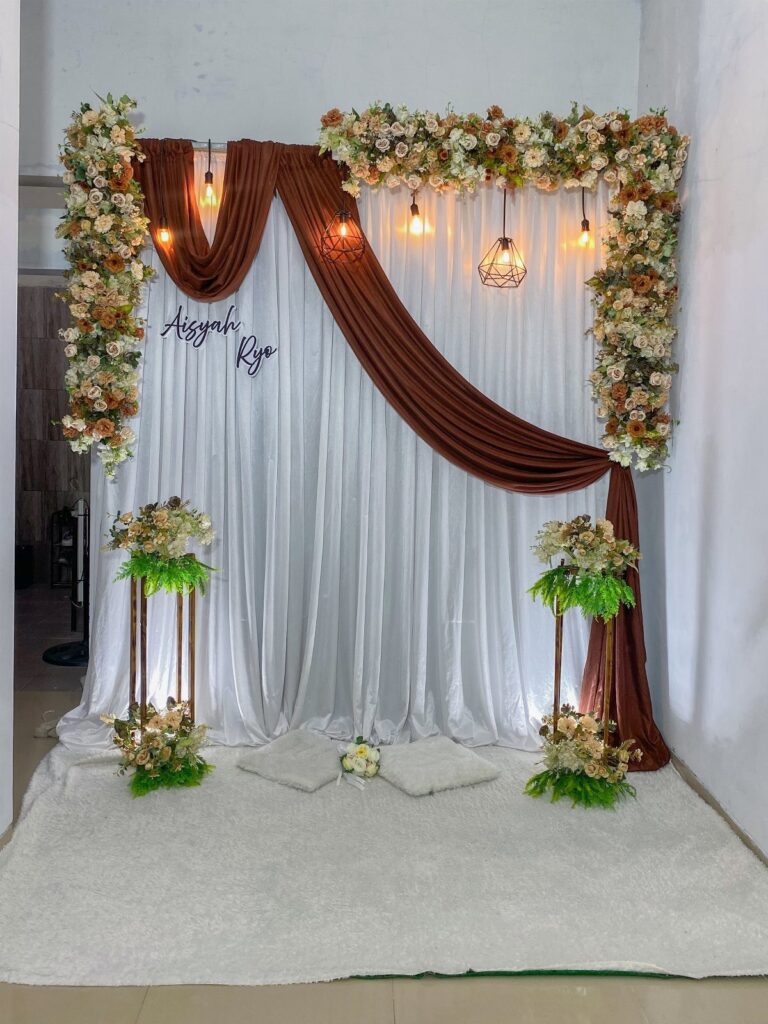
The ideas here run from draped fabric and a flower wall to hand-painted canvas, a large velvet heart, and a candlelit backdrop, and the cost gap comes mostly from what you hang versus what you build.
The rule that picks one is the room itself: measure the spot where the backdrop will stand, and match its material to the setting, whether that’s rough wood for a forest, driftwood for a beach, or white drape for a plain, dark-floored room.
A venue with a no-flame policy rules out the candlelit backdrop before taste ever comes into it.
1. Simple Draped Fabric Wedding Backdrop
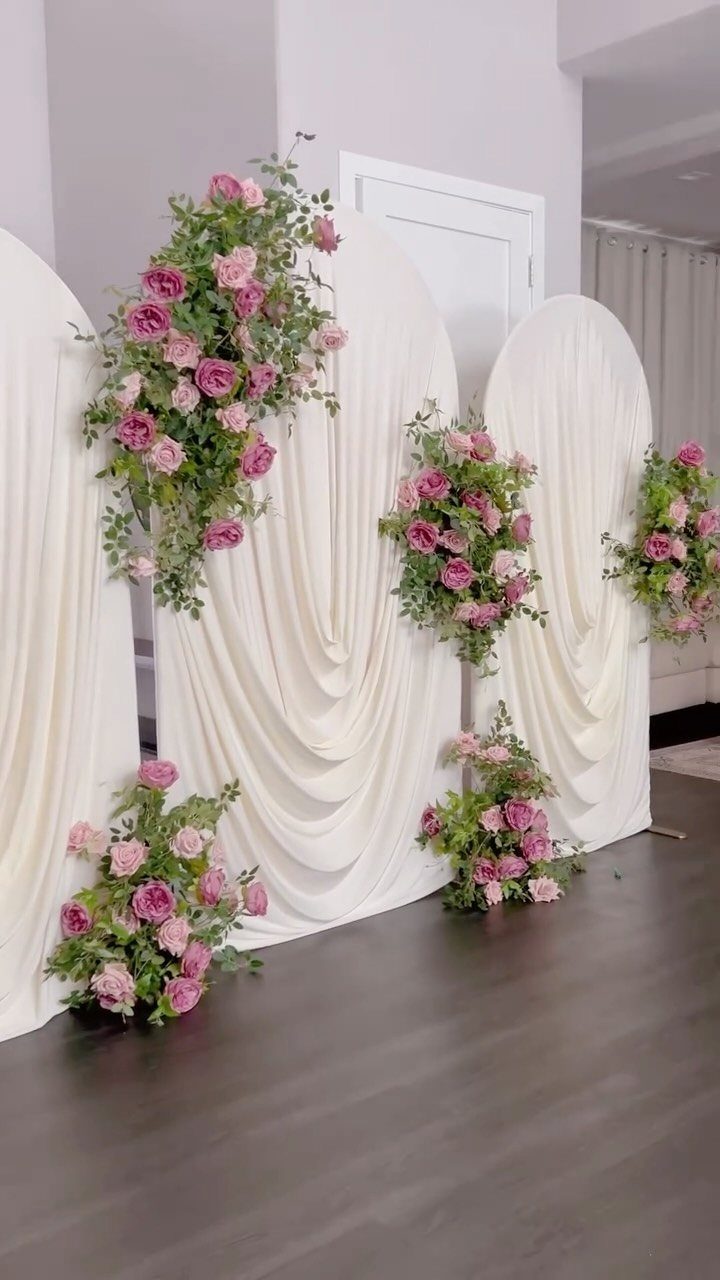
Three white fabric panels, hung side by side and dressed with a few pink rose and greenery arrangements, give a ceremony or photo corner a soft, finished look for very little money.
Fabric does most of the work, so spend your flowers only where the eye lands: the tops and bases of the panels.
For a plain room with dark flooring, white drape is the easiest way to add light behind you.
2. Neon Sign
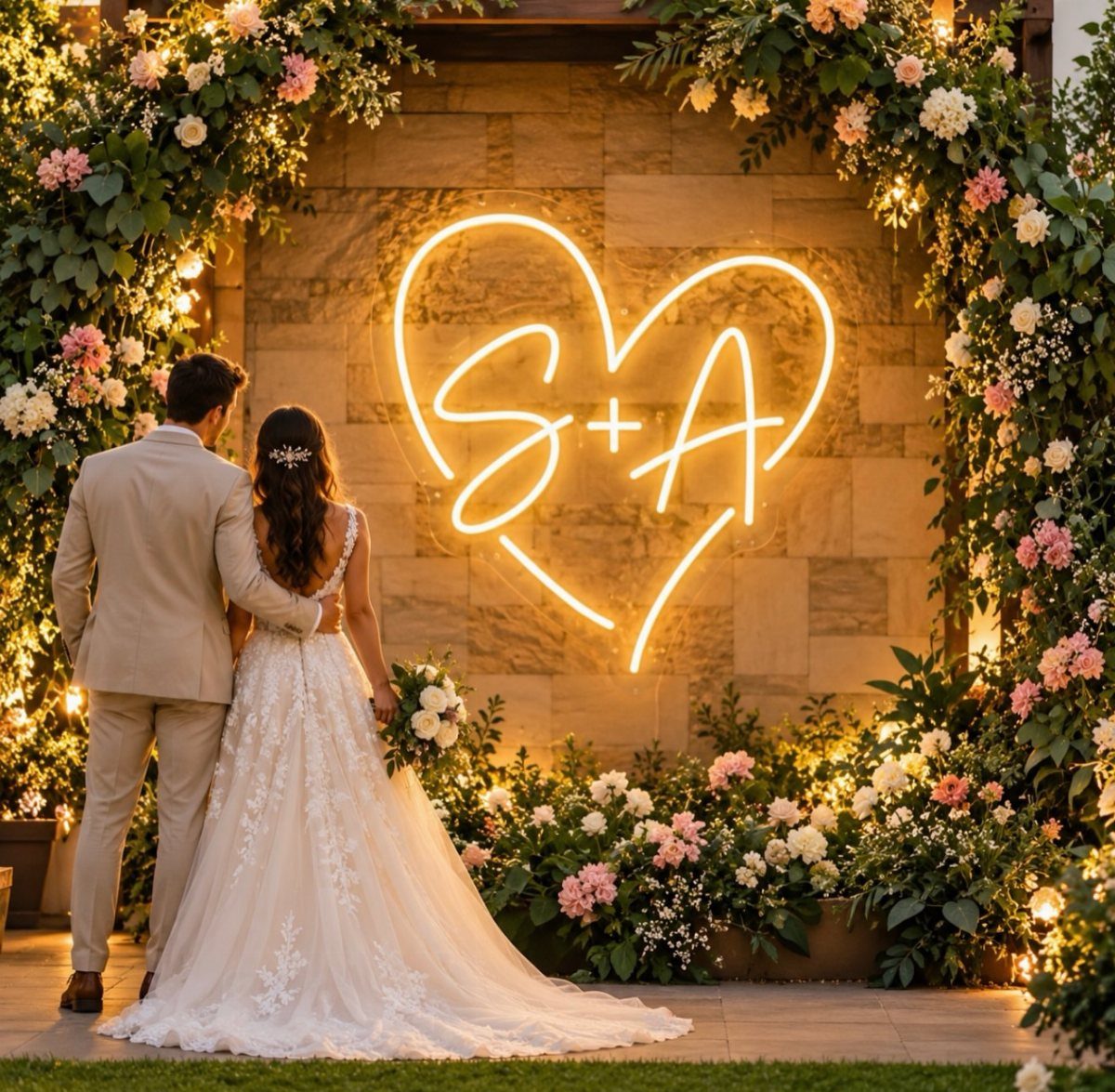
A neon heart with your initials, like the "S+A" here, turns a bare stone wall into the spot everyone wants a photo in.
Pair it with a few flowers around the edges so the glow feels warm instead of flashy.
Initials beat a long phrase: they read cleanly in photos, and the sign stays personal. Test it in the actual lighting, since a glowing sign looks different in a dim room than in daylight.
3. Artificial Flower Wall
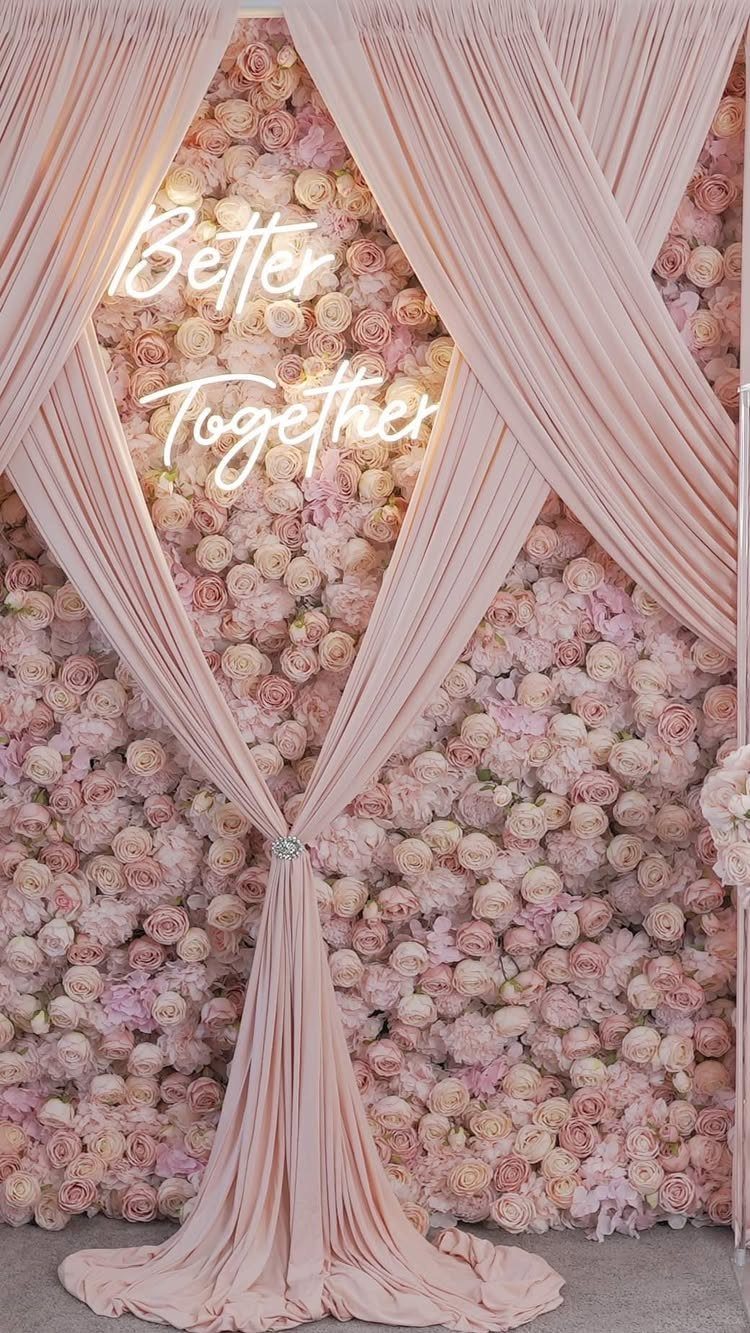
Pink artificial roses packed across a whole wall make a backdrop that looks full from every angle, and nothing wilts while you wait for the photographer.
Pink fabric draping softens the edges, and a neon line such as "Better Together" adds a message without any extra décor.
Fake blooms cost less than fresh ones in this quantity, which is the real reason I like this idea on a tight budget.
4. Greenery and Floral Hoop Wedding Backdrop
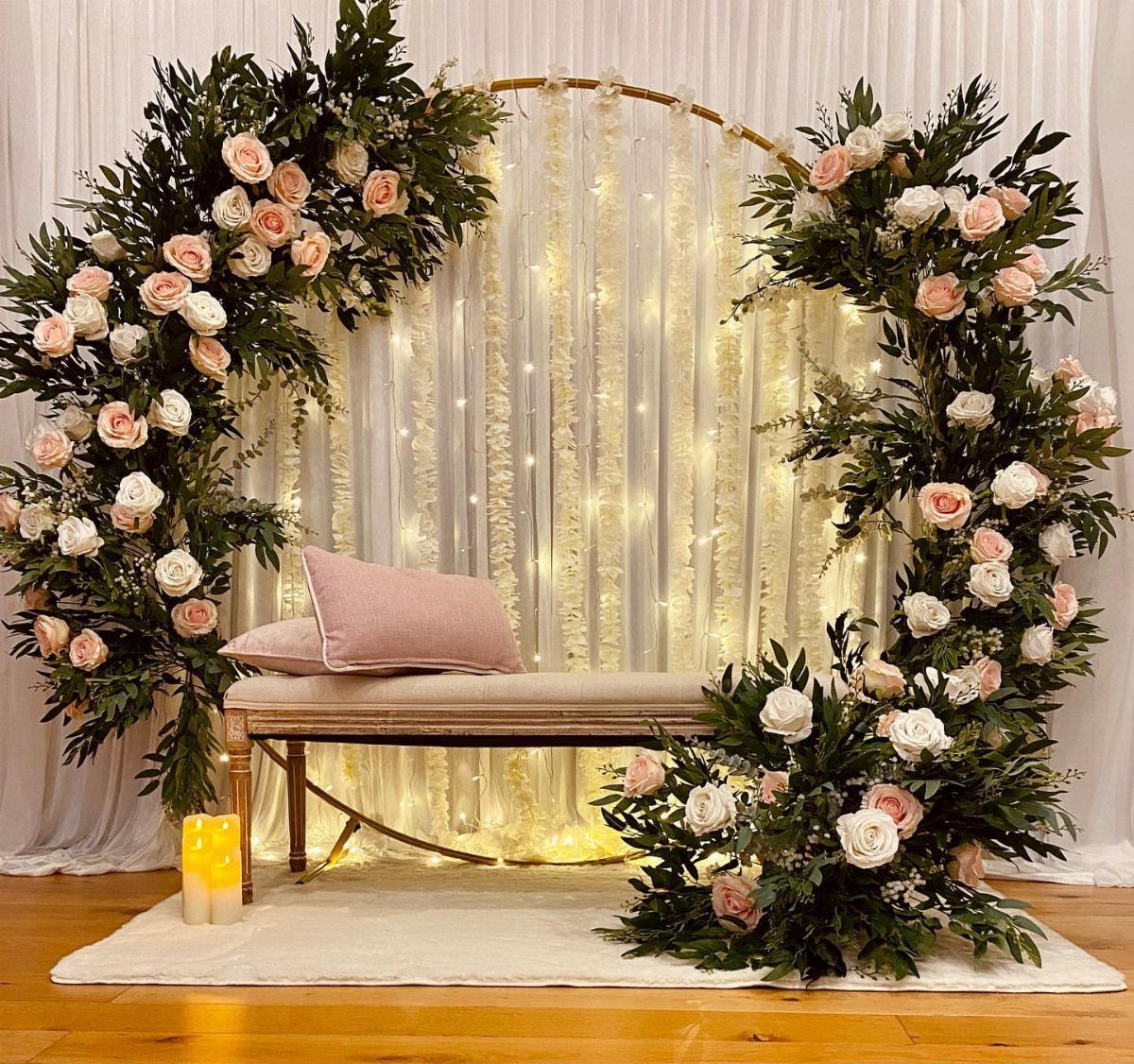
Round, gold, and wrapped in greenery with pink roses, a hoop feels lighter than a full flower wall. A white curtain strung with fairy lights makes a good base, and the circle frames the couple like a portrait.
A hoop also takes up far less floor space than a wall of flowers, which helps in a small room.
5. Balloon Garland and Fabric Wedding Backdrop
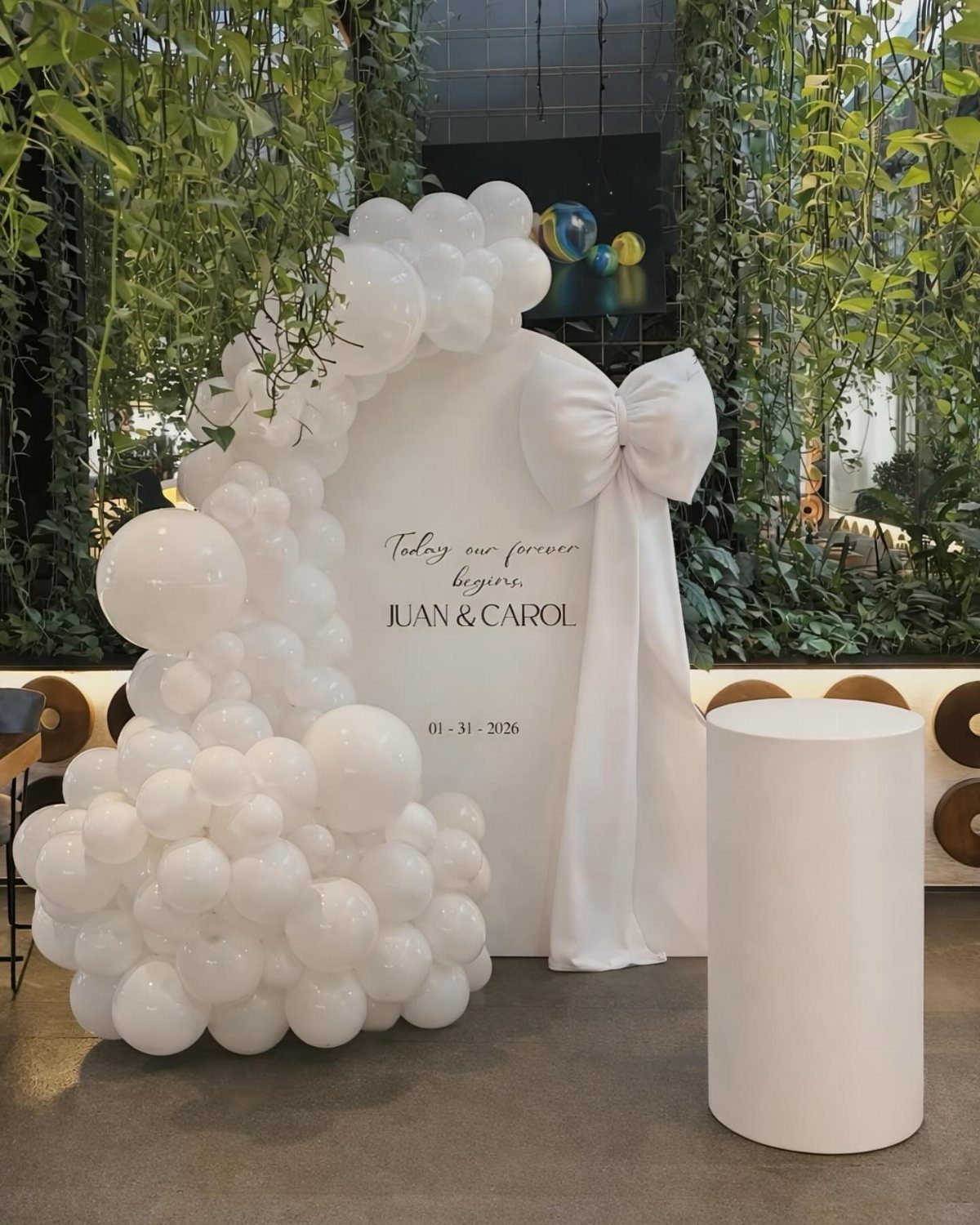
Balloon garlands look polished when the colors stay tight, and a single color goes a long way: an all-white organic garland with a large fabric bow is enough. Against a greenery wall, the white pops without any extra flowers.
Adding your names and date in lettering makes the whole thing feel custom, as in this "Today our forever begins" sign. To add more color later, pick one shade that already appears elsewhere in your décor.
6. Rustic Wooden Pallet Wedding Backdrop
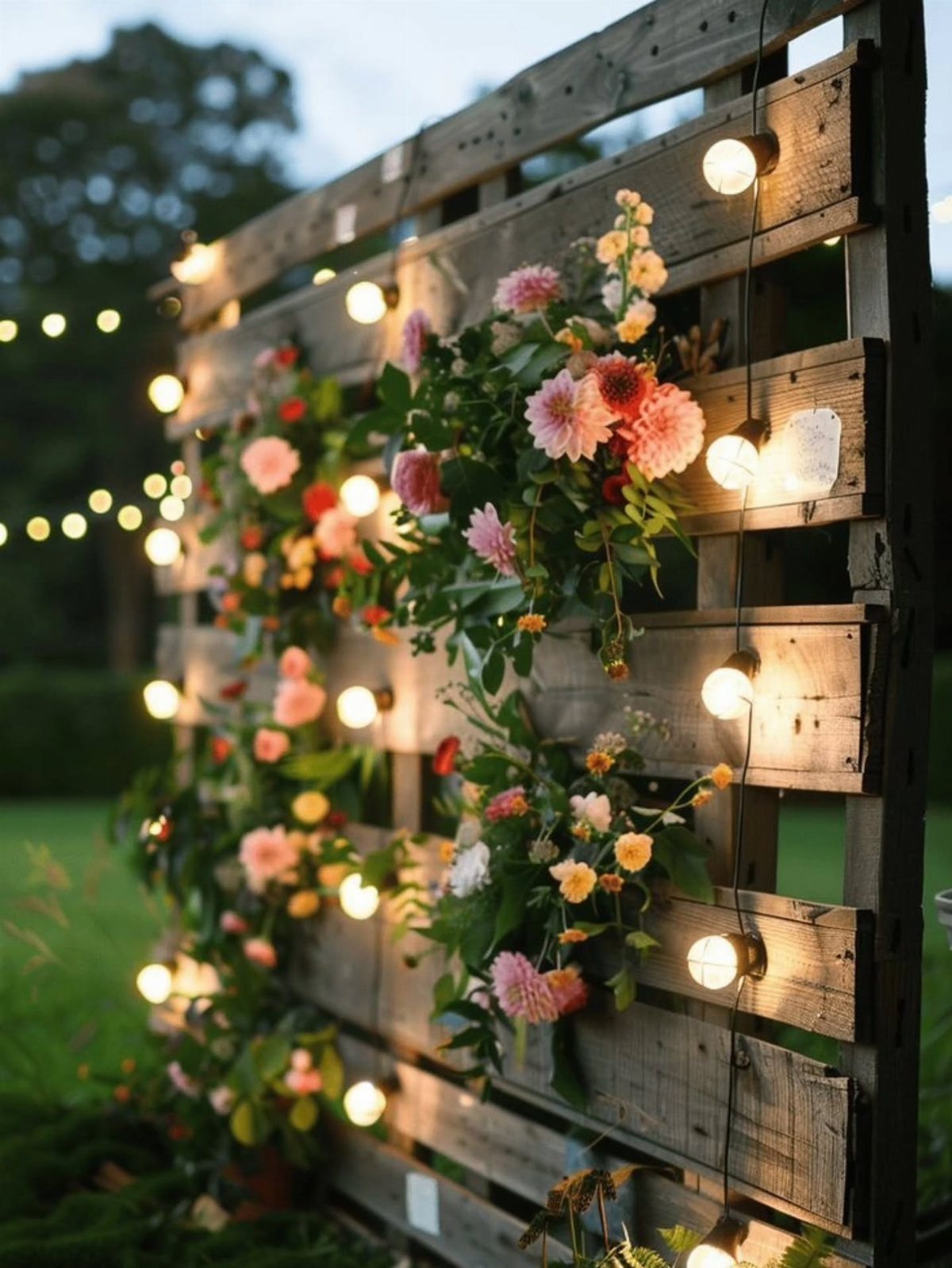
Wooden pallets stacked into a wall give you a sturdy, rustic frame for very little money. Tuck pink and orange flowers into the slats and wind string lights through them, and an outdoor grassy spot turns warm at dusk.
I like this best for relaxed, farm-style or backyard weddings, where raw wood belongs. Sand any rough edges before guests lean in for photos.
7. Hanging Ribbon or Streamer Backdrop
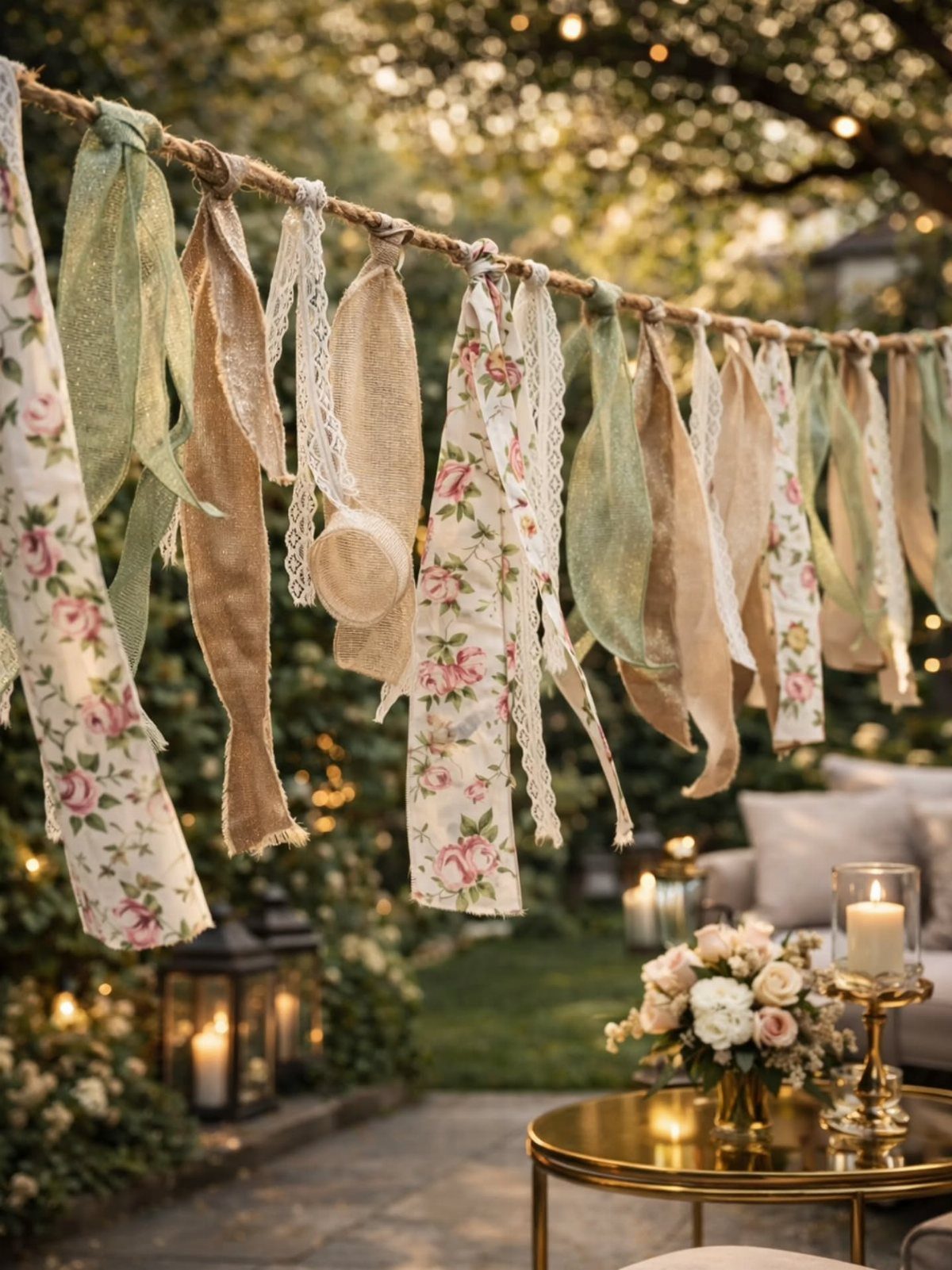
Ribbons in floral, burlap, and green prints, tied along a single rope, make a backdrop you can finish in an afternoon.
Mixing textures keeps it from looking like a party streamer wall, and the burlap gives the softer prints something to push against.
Hang the rope between 2 posts or branches in a garden, and let the strips fall at different lengths. Cutting them uneven looks more natural than a tidy row.
8. Candlelit Backdrop
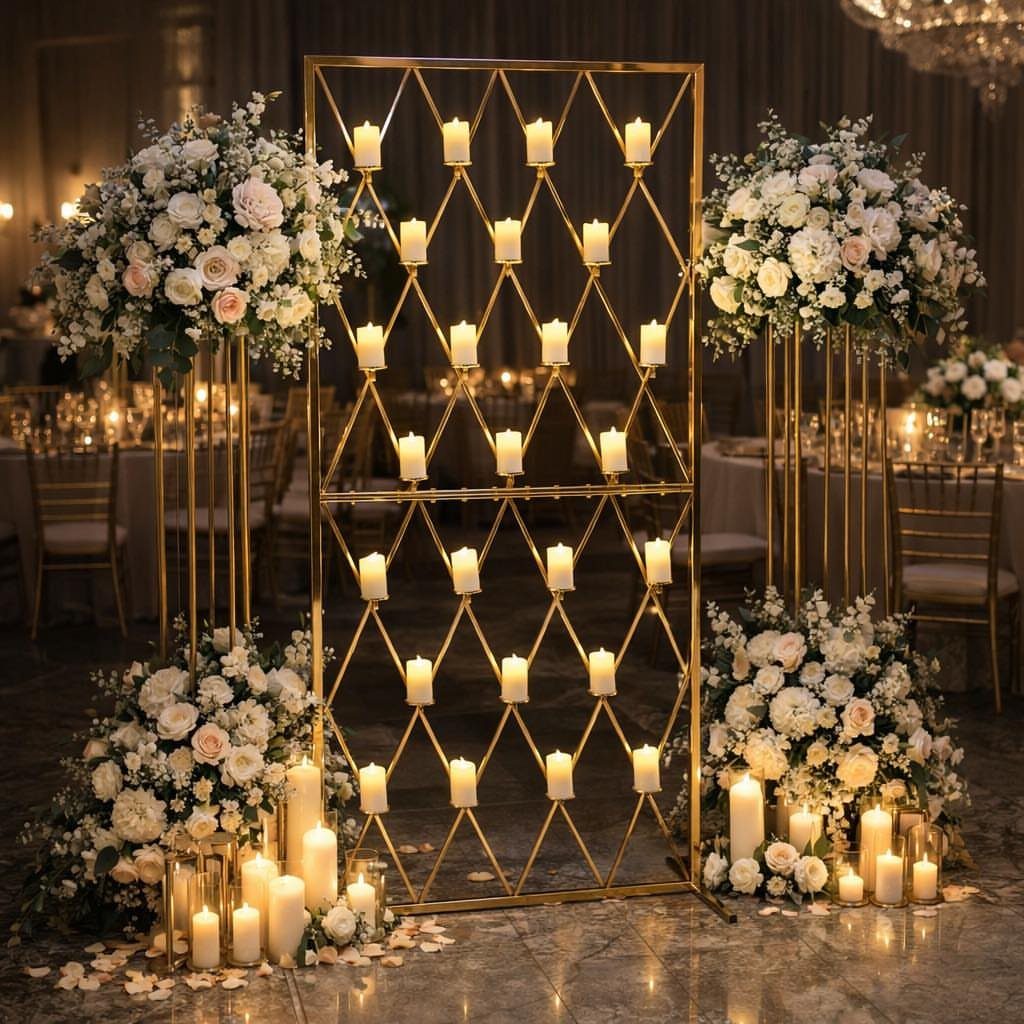
A gold geometric frame filled with white pillar candles gives a formal room a backdrop that glows without any extra lighting.
Candles in bulk add up, so buy simple white pillars and let the frame carry the design. Check your venue’s rules on open flames first; battery pillars are the backup if they say no.
9. Personalized DIY Wedding Photo Backdrop
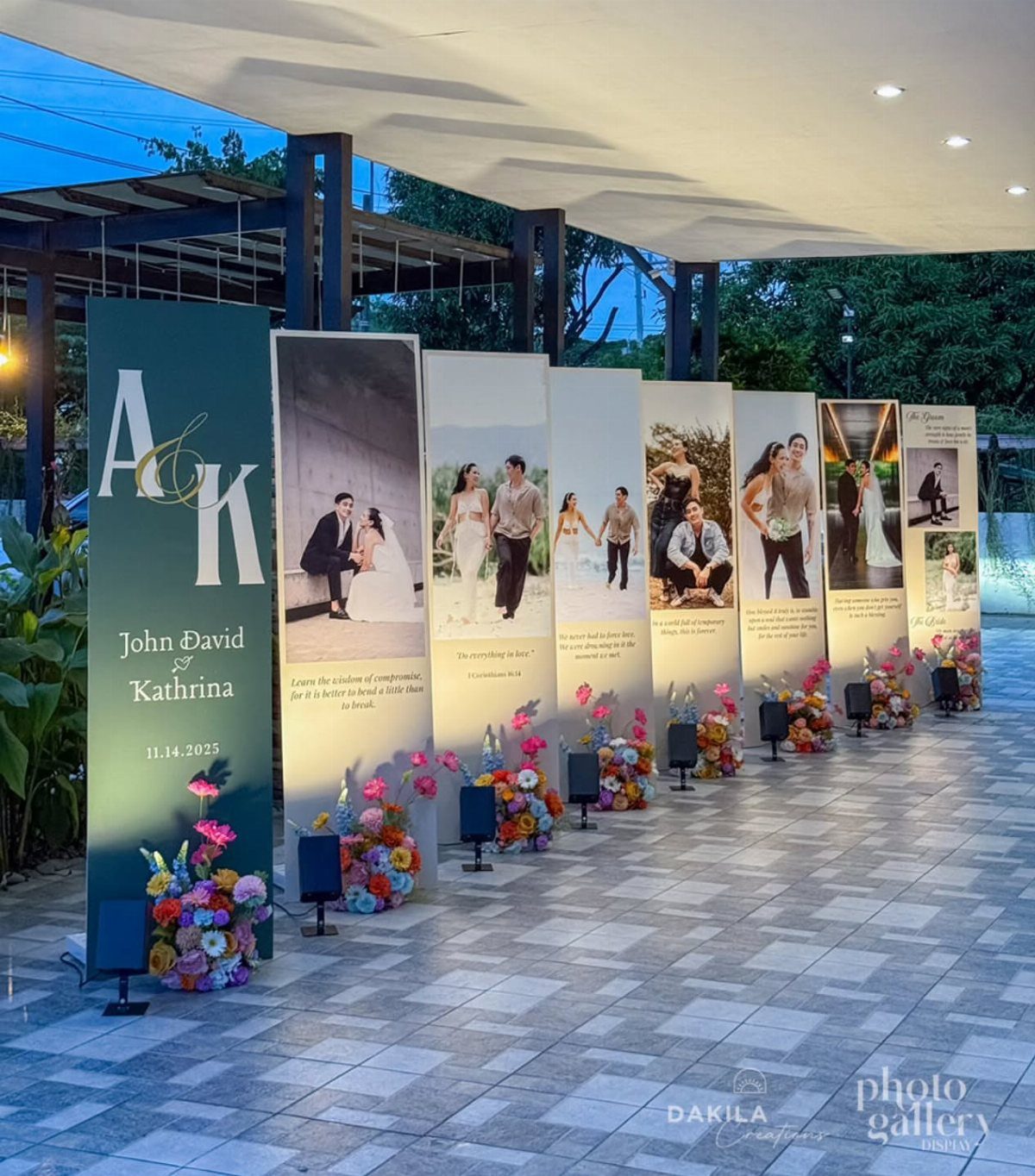
Tall vertical banners printed with your photos, names, the date, and a few favorite quotes work as décor and as something guests actually stop to read. People linger at them, which is rare for a backdrop.
Pick photos with plenty of open space so faces stay clear at that height, and limit the quotes to a few words.
A few flowers at the base, as here, anchor the panels on a patio. I would choose this over a generic sign if your budget allows only one custom piece.
10. Vintage Room Divider
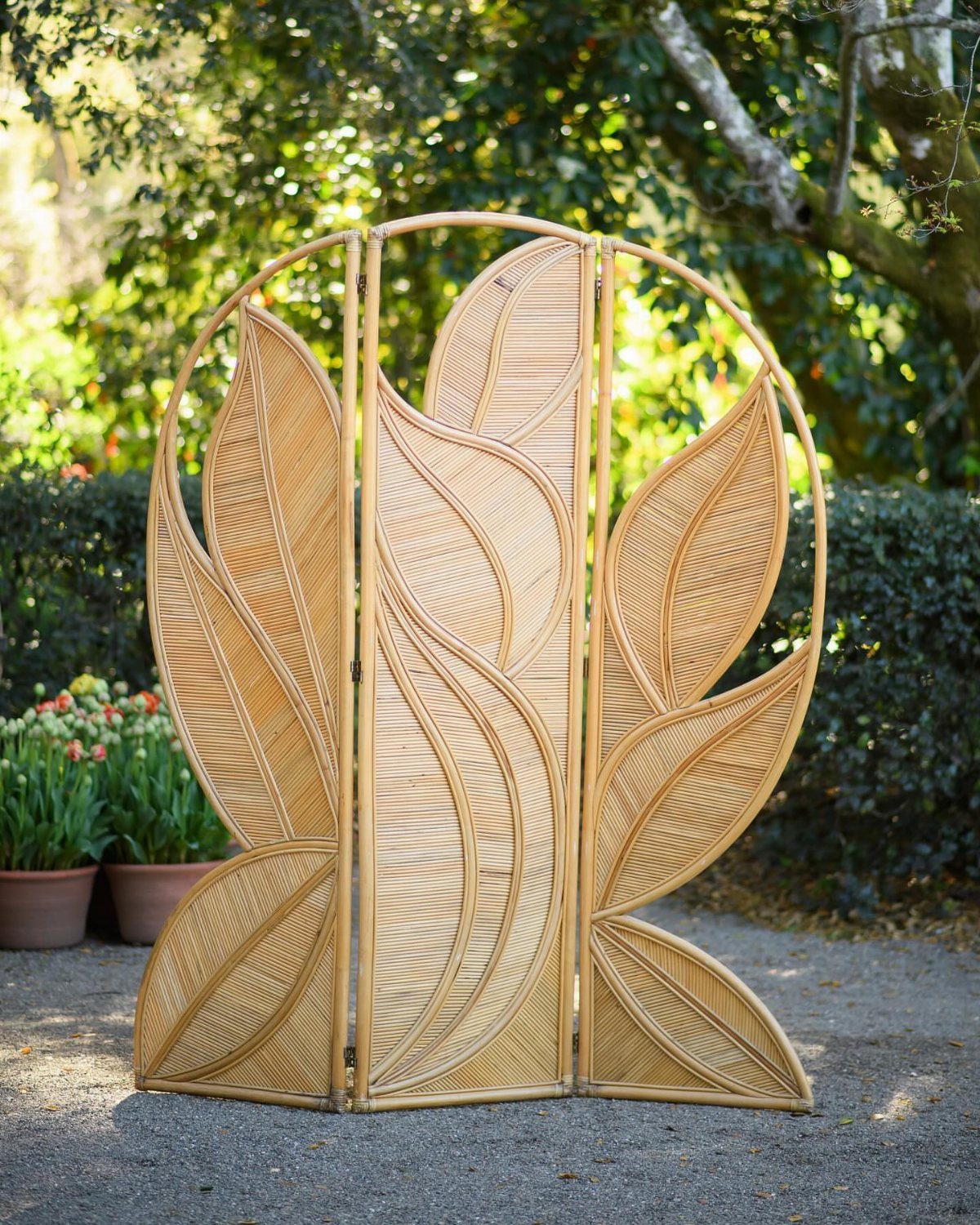
Secondhand shops and online resale listings are the places I would check first.
Set it on a flat, firm surface so the panels stay upright, and angle the sides slightly for stability. Add flowers at its feet if the weave feels too plain.
11. Fairy Light and Sheer Curtain Backdrop
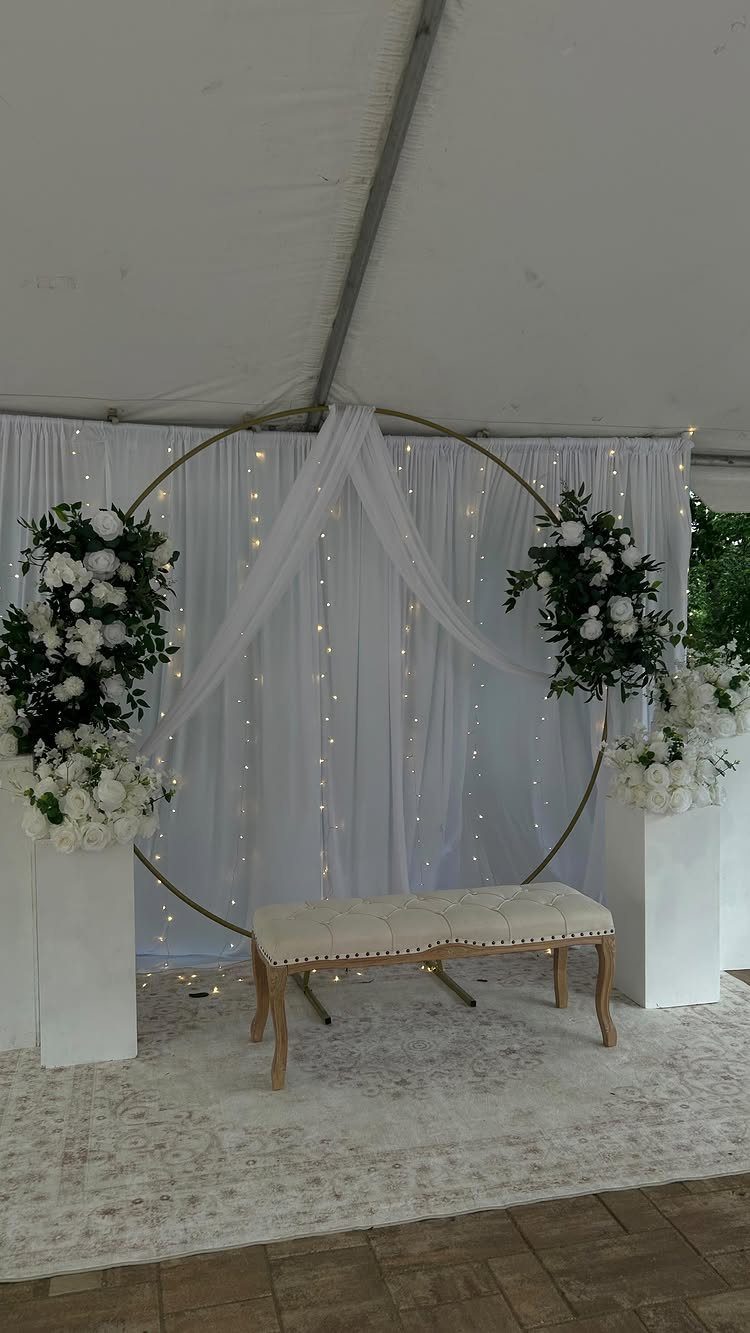
A gold hoop wrapped in sheer white fabric and fairy lights does a lot with soft materials. The light passes through the fabric, which gives the whole corner a gentle, romantic glow, and white flowers keep the palette quiet.
Inside a white tent, this works best with a bench and a rug in front, so the spot feels like a small room. Test the lights at dusk ahead of the wedding, since fairy lights read very differently in daylight.
12. Minimalist Wedding Arch Backdrop
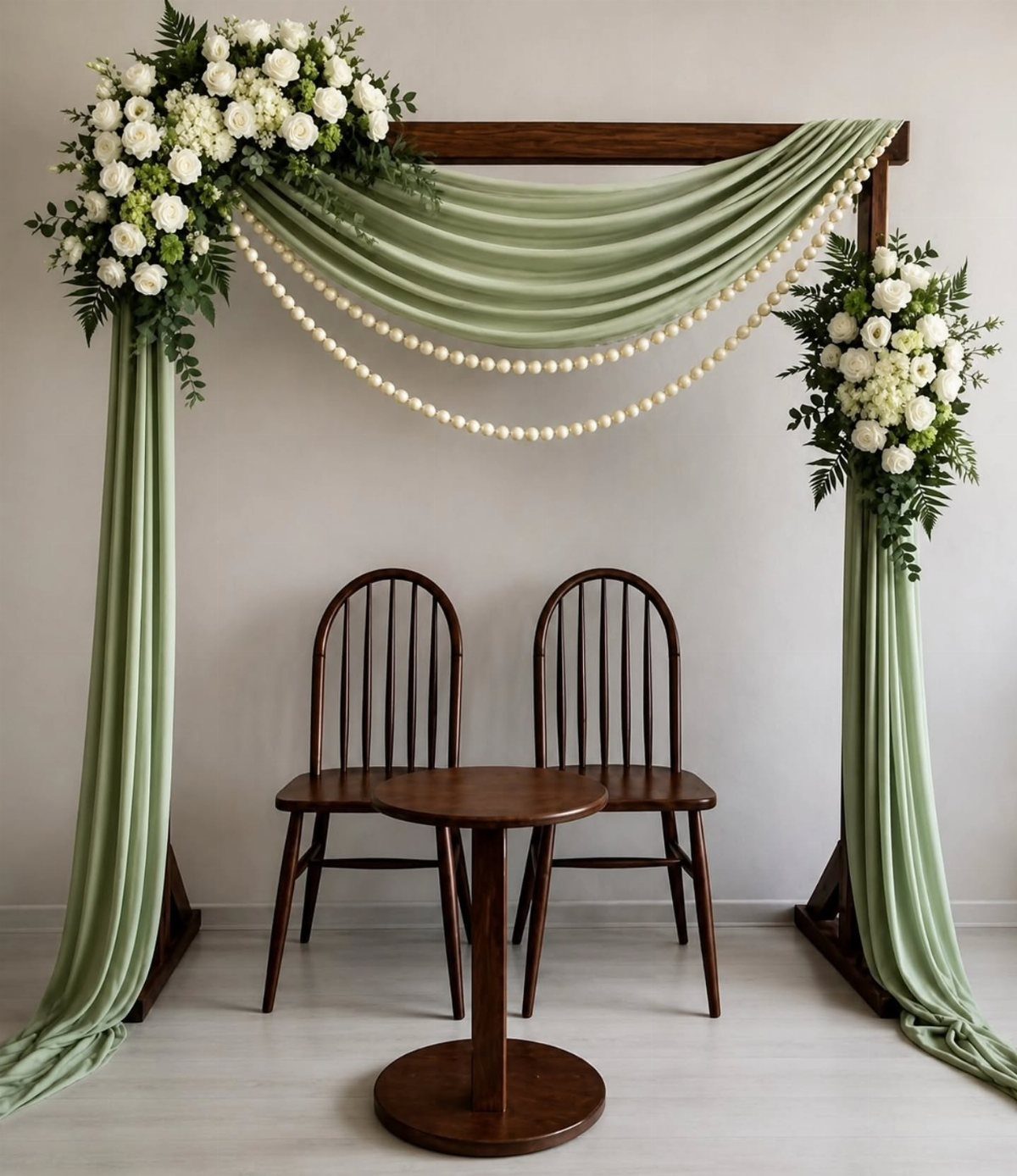
A plain wooden arch, draped in sage green fabric with a handful of white flowers, is the cleanest version of a ceremony backdrop. Against a white wall, the arch does the framing and the fabric supplies the only color.
Keep flowers to one or two spots rather than covering the frame.
That restraint is what makes it feel modern, and it keeps costs low. Add 2 chairs and a small table and the arch becomes a quiet photo corner.
13. Vintage Doors
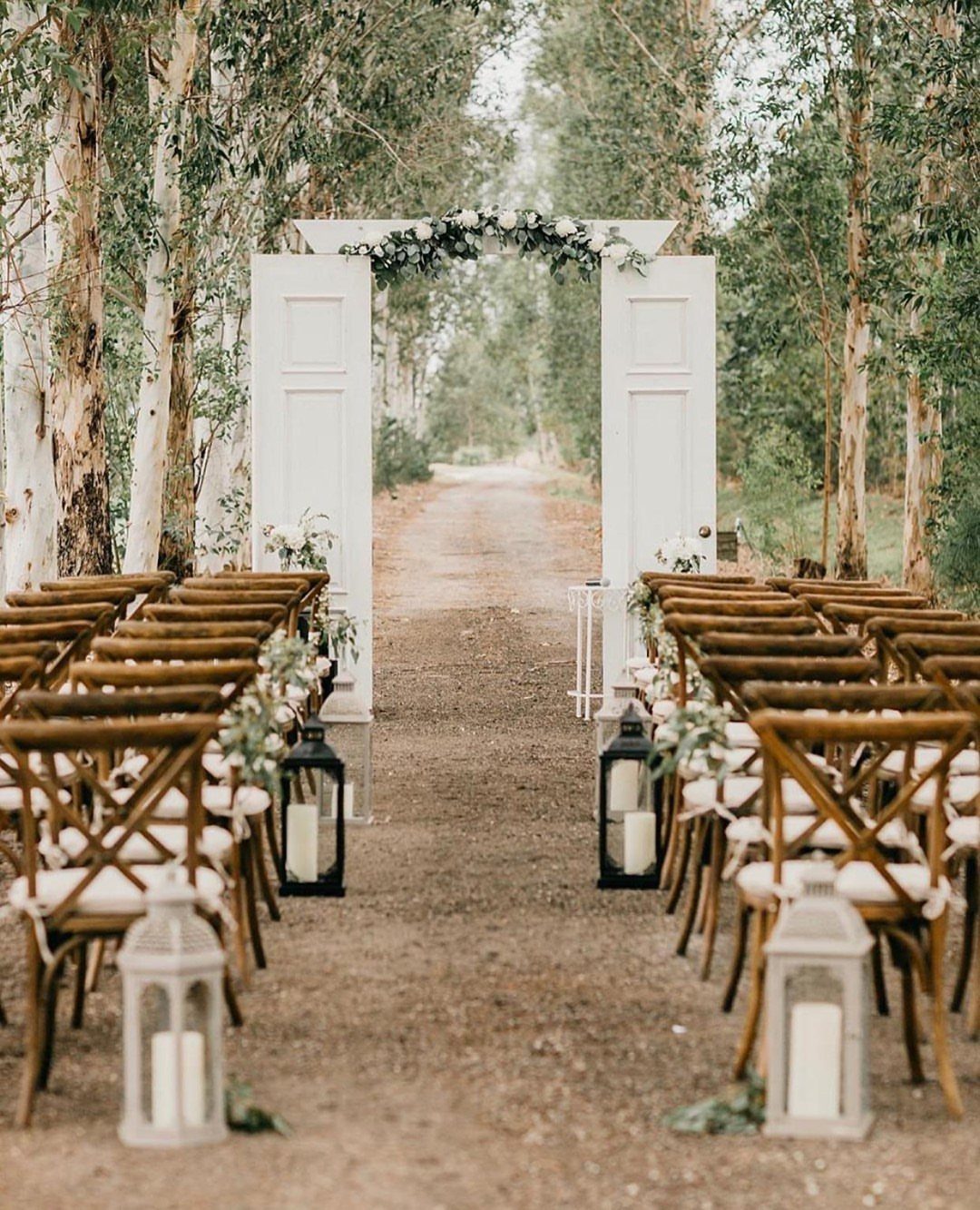
Two white vintage doors set side by side make a ceremony arch that says "stepping into a new life" without a word. Flowers across the top and down one side soften the hard edges.
Lanterns and plain wooden chairs set in front of an old door keep the look simple and cheap. Doors are heavy and flat, so I would plan how they stand up before anything else.
14. Fringe Streamers
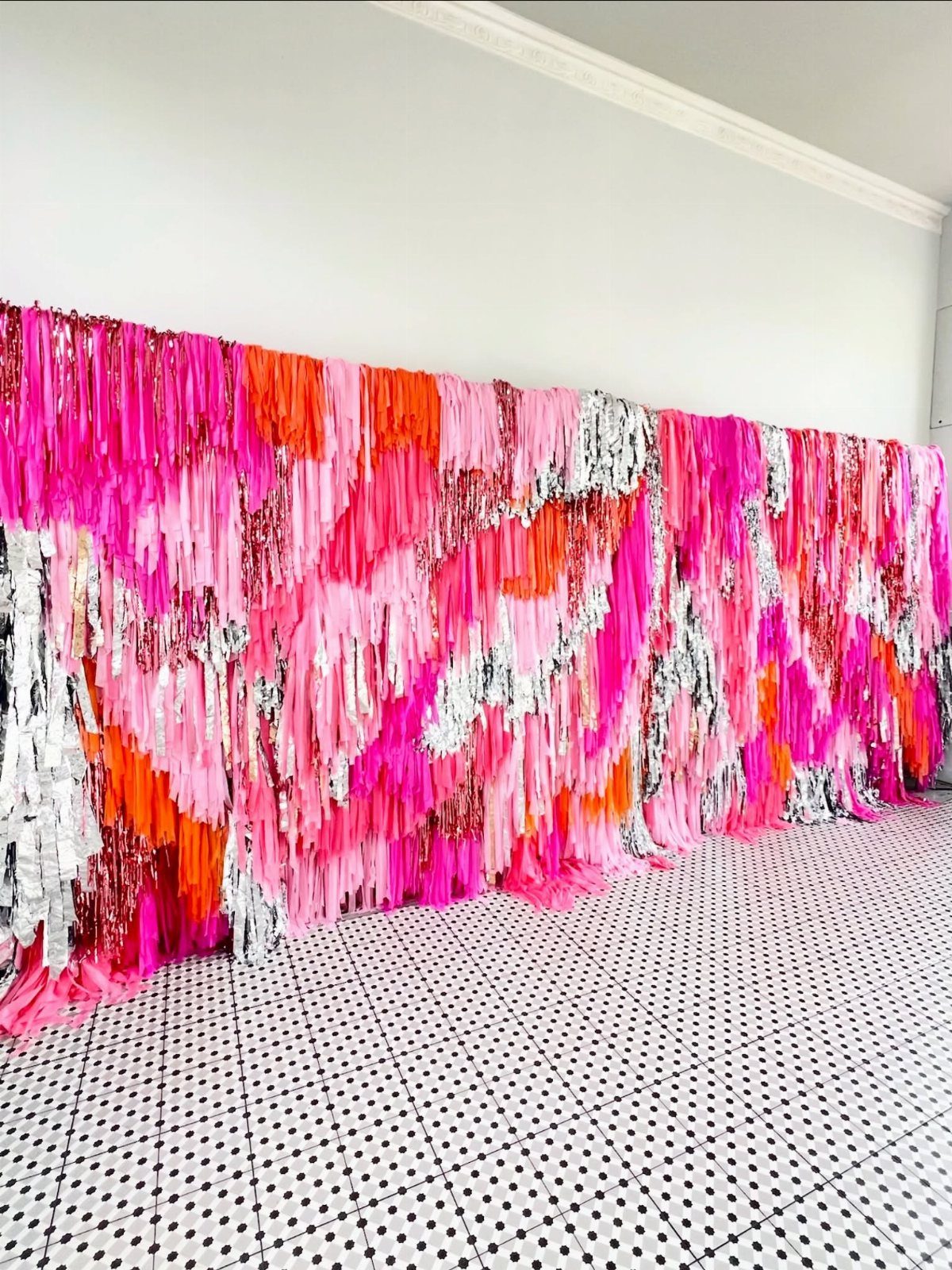
Fringe streamers in pink, orange, and silver, hung floor to ceiling in rows, turn a plain white wall into the loudest spot in the room. Nothing else is needed behind it.
Quiet décor everywhere else lets the wall stay the star. I would pick colors that already match your outfits or flowers, since a mixed palette like this shows up strongly in photos.
15. Hand-Painted Canvas
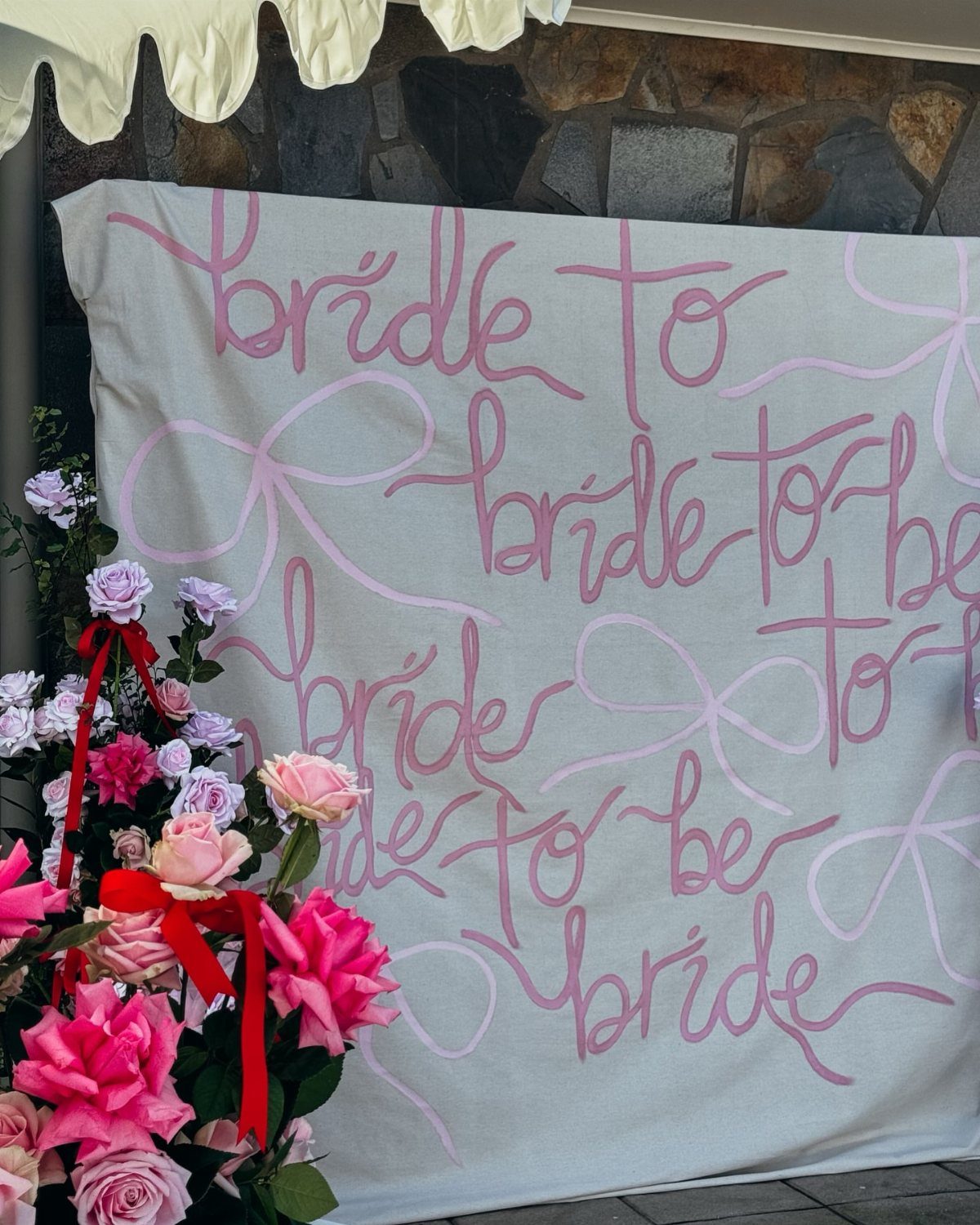
Paint your own lettering on a light canvas and you get a backdrop nobody else has. Pink cursive on gray, like this "bride to be," reads clearly from across a room.
Sketch the words in pencil first, then paint, so the spacing stays even.
Practice on scrap fabric before touching the real canvas. A bouquet beside it adds color without extra décor.
16. Large Velvet Heart
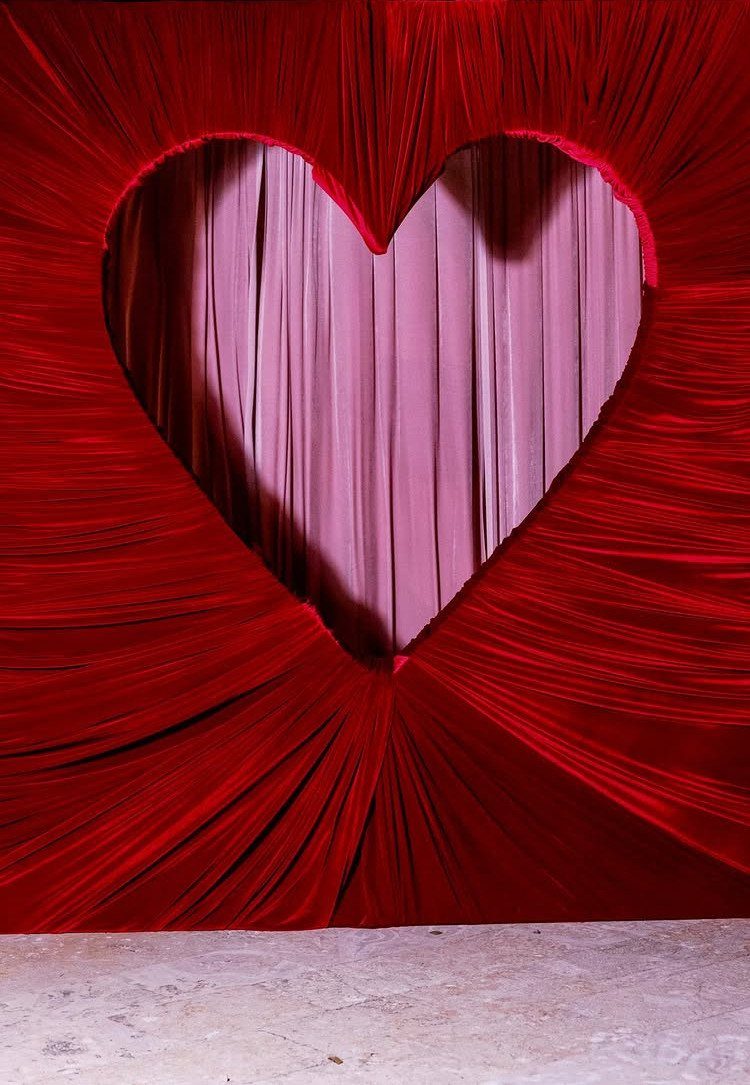
Red velvet draped around a large heart-shaped opening gives couples a frame to stand inside, and pink curtains behind it make a soft backdrop. It feels playful, and it asks for very little else.
Velvet has weight, so it needs a sturdy support behind the fabric.
A softer shade on the curtain behind makes the heart stand out, so I lean that way. Leave the floor bare.
17. Arched Panel with Balloon Garland
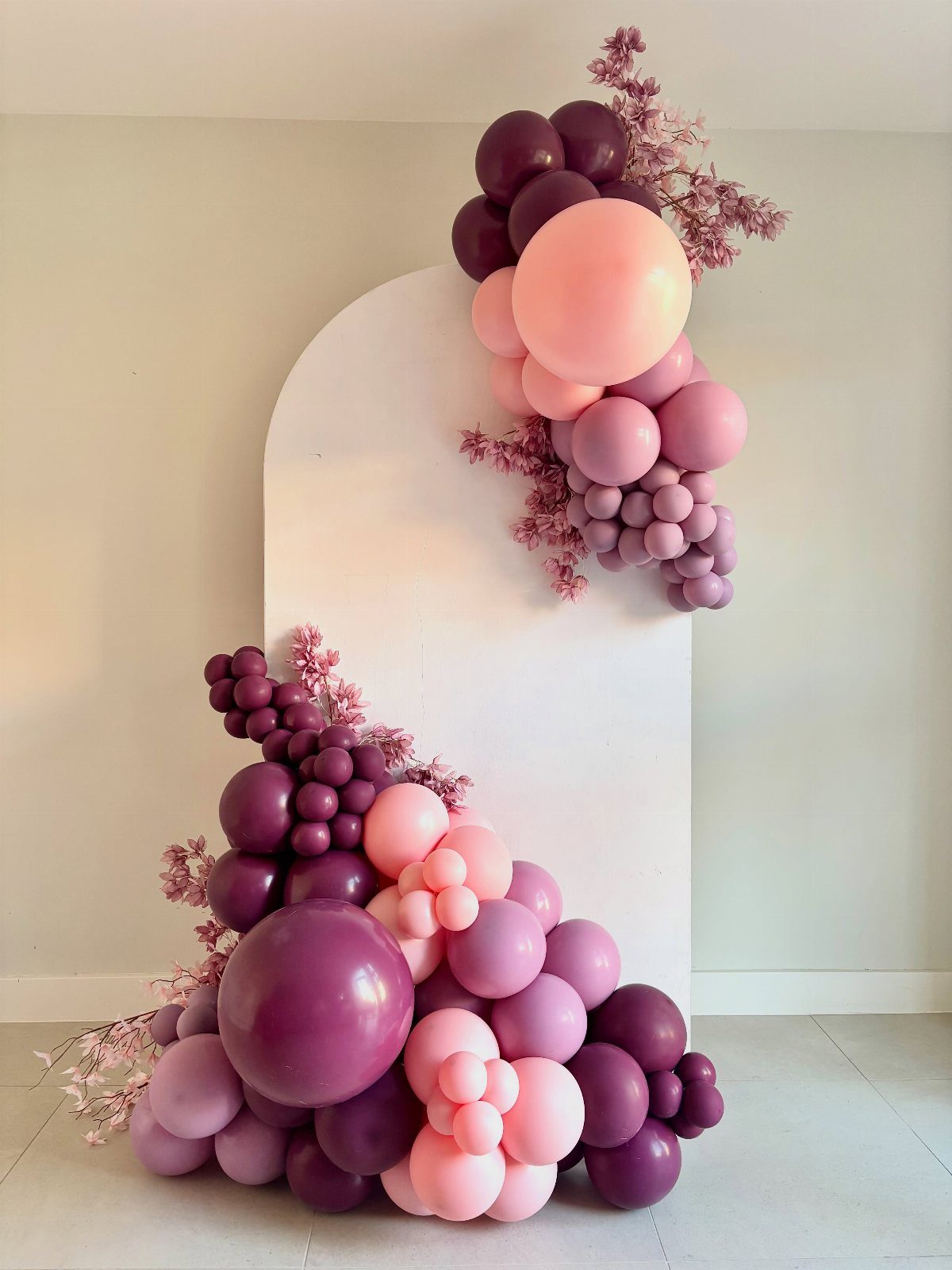
A white arched panel dressed with uneven clusters of pink, mauve, and purple balloons and a few small floral sprigs looks custom, though the panel itself is plain.
Stay within one color family, as here, so the cluster looks planned rather than random.
Vary the balloon sizes and push the sprigs in between them. Against a plain white wall, the shapes show up well.
18. Embroidered Umbrella and Draped Fabric
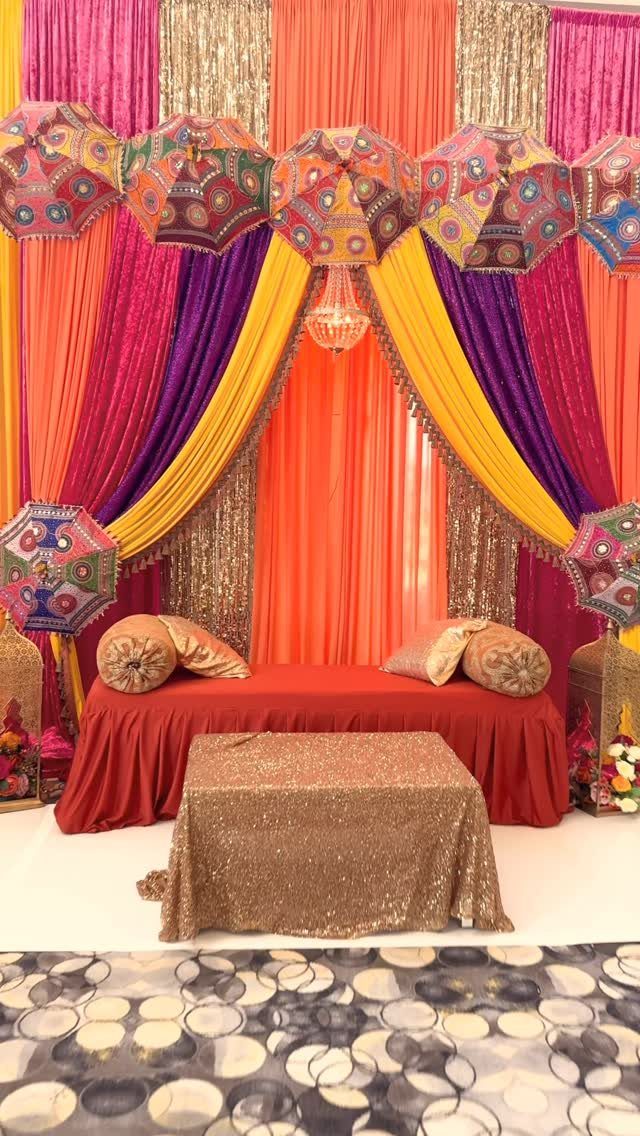
Orange, pink, and purple fabric draped in layers, with embroidered parasols above, gives a seating area real color.
I would spend on the parasols and use inexpensive fabric underneath, since the embroidery is what people notice.
Hang the parasols at different heights. A sequined table in front gives you a spot for drinks or guest favors.
19. Floral Arch with Suspended Umbrella
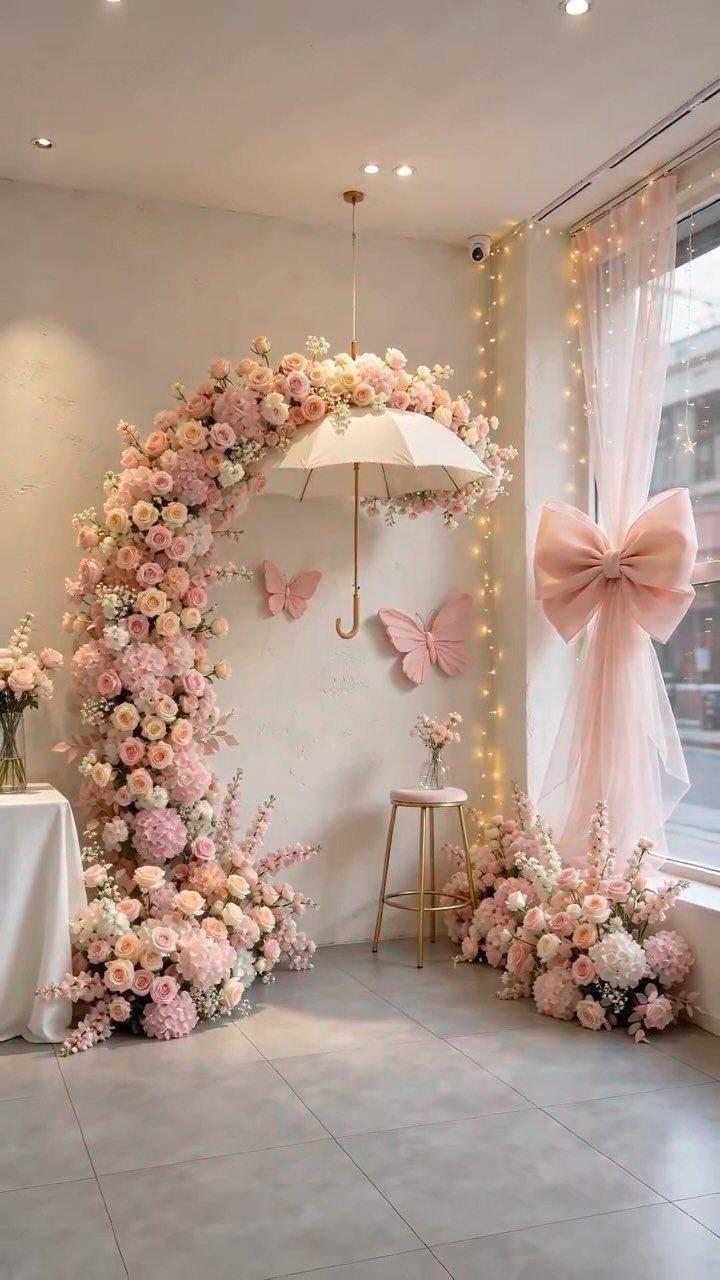
A curved rose arch with an upside-down umbrella hanging from its center is a ceremony backdrop that costs less than a full flower wall and still looks designed. Pink and cream roses on a white umbrella keep the palette soft.
Hang the umbrella from a hook or line anchored to something solid, and let the roses frame it rather than cover it. Butterfly decals on the wall are the cheapest way to add whimsy, and they peel off afterward.
Leave everything else in the room plain; a small table and a stool are plenty.
Choosing the Right Backdrop Design
A backdrop should work with the room instead of competing with it, so settle on where it will stand before you buy anything. Measure that spot, then check that the installation leaves tables, walkways, and guest traffic clear.
Match the style to the mood you want, whether romantic, rustic, modern, bohemian, or minimalist.
Two or three complementary colors that echo your flowers and table linens will hold the look together. If balloons are involved, buy them in coordinated shades from one source so the tones don’t clash.
Ceremony and reception areas also call for different designs. I would keep a ceremony backdrop cleaner, and save the extra lighting, signage, and small details for the reception or photo corner.
Think about the portraits too. Favorite places and personal touches make the photos feel like yours, and a symmetrical layout photographs calmly.
Making a Simple Backdrop Look Expensive
Polish comes from styling, not price. Fabric placement, lighting, color balance, and hidden fasteners are the details that make a budget setup look planned.
Choose one fabric color and one main material instead of mixing several.
Let the setting pick the material: rough wood and draped fabric sit right in a forest, driftwood or bamboo belongs on a beach, and copper pipe looks at home in an industrial space.
Pull the backdrop a few feet off the wall or hedge behind it, because that gap lets the frame read as its own piece instead of blending into the background.
Before buying a single stem or yard of fabric, look at what the space already has and decide whether any of it pulls the eye away from you or the view. If it is, remove it.
Backdrop Size Considerations
Size the backdrop to the camera frame, not to the wall.
Size it to fit the two of you plus its own decoration, and keep it wide and tall enough that no bare wall or stray corner of the venue peeks out around the edges.
Too small, and it gets lost in print. Too large, and it overpowers the portrait, which should be about the two of you.
If family or group photos will happen there, widen it so everyone fits comfortably in the marked area. When you’re unsure, go bigger: a photo wall that’s too large is easier to live with than one that’s too small.
Frequently Asked Questions
What is the cheapest way to make a wedding backdrop?
Fabric is the cheapest place to start. White drape hung in panels adds light to a plain room, and you only need flowers at the tops and bases.
Artificial blooms in bulk cost less than fresh ones, wooden pallets and a single rope of ribbon strips are also low-cost. A simple wooden arch with fabric draped over it and a handful of flowers keeps spending down too.
What are some unique backdrop ideas for a wedding?
Vintage doors, neon signs, and hand-painted canvases all feel personal.
2 white doors set side by side make a ceremony arch, a neon heart with your initials gives guests a photo spot, and a canvas with your own painted lettering is something nobody else will have.
Sketch the lettering in pencil before any paint or thread touches the cloth, and rehearse the whole phrase on a scrap piece so the letters land evenly spaced.
How big should a wedding backdrop be?
Size it to the camera frame, not the wall.
Planning group shots at the same spot? Add width so the whole crowd fits in frame.