Before picking a shade, think about how much of it you’ll still want to look at in the photos years from now, because that answer sets how bold the dress can go.
Texture and fabric change how a shade lands, too: layers of tulle filter color softly, while a flat solid can look much louder in person than it did on a phone screen.
1. Floral Gowns
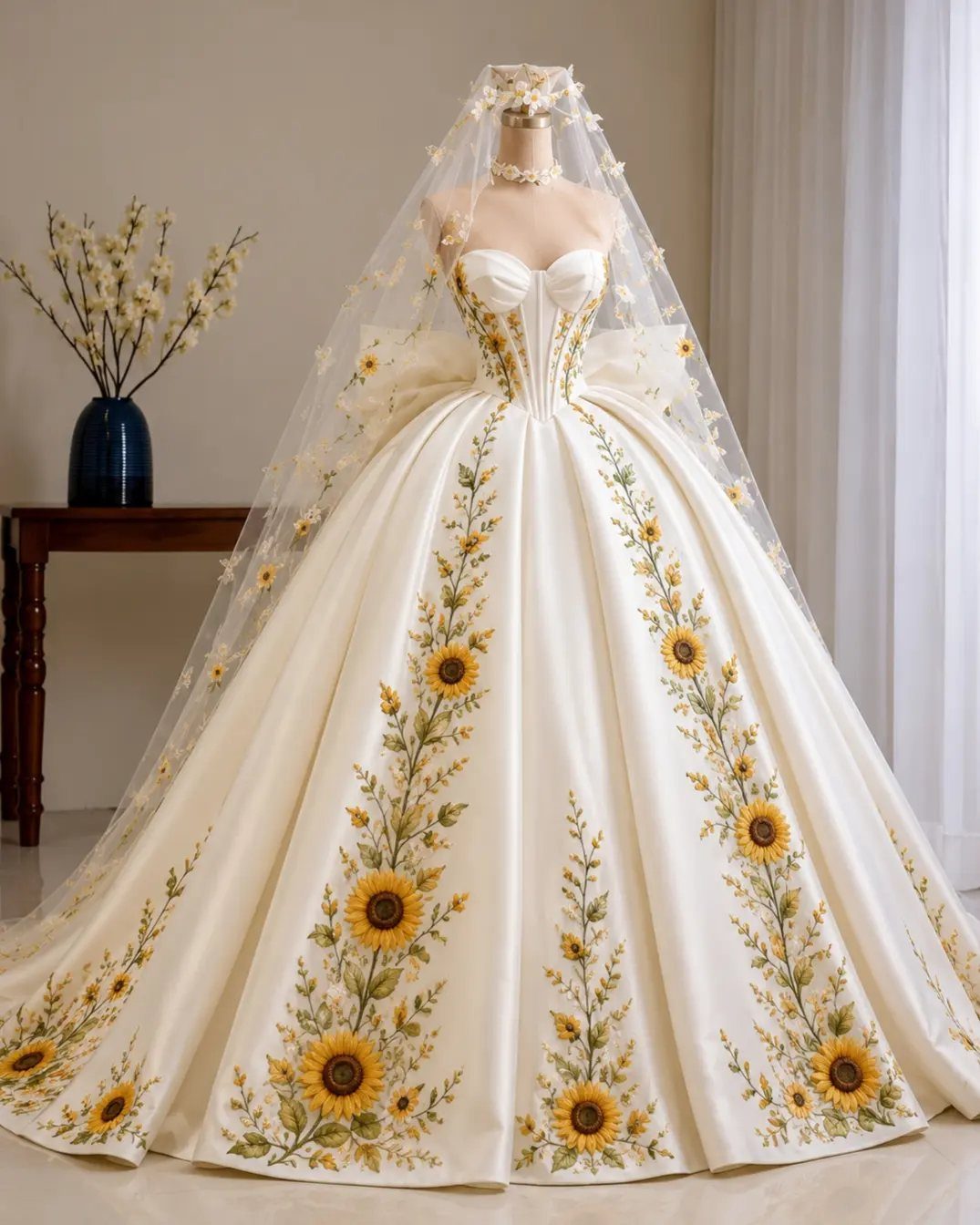
Color placed only on the skirt and bodice leaves the silhouette classic, so the gown still reads as traditional from across a room.
A floral veil adds a second layer of pattern. Between the two, plain everything else works best: simple shoes, minimal jewelry, a low bun or sleek waves.
If you want color without a full dress in a shade, this is the gentlest way in.
2. Bohemian Flowing Wedding Dresses
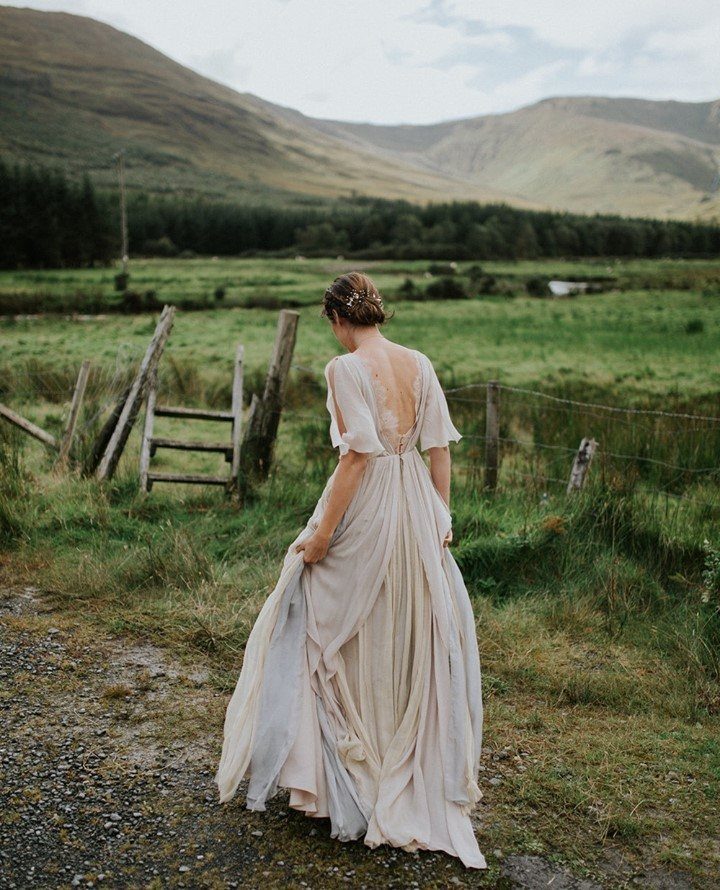
Champagne beats stark white for a bohemian dress, especially outdoors. Against grass, a wooden fence and mountains, a warm cream tone looks softer and more natural.
Look for a skirt that moves when you walk. Fluid fabric is the whole appeal here, so I would skip heavy structure and stiff layers.
Pair it with loose waves, a few wildflowers and flat sandals or bare feet. Fewer accessories keep the look easy.
3. Rainbow Gradient Wedding Dresses
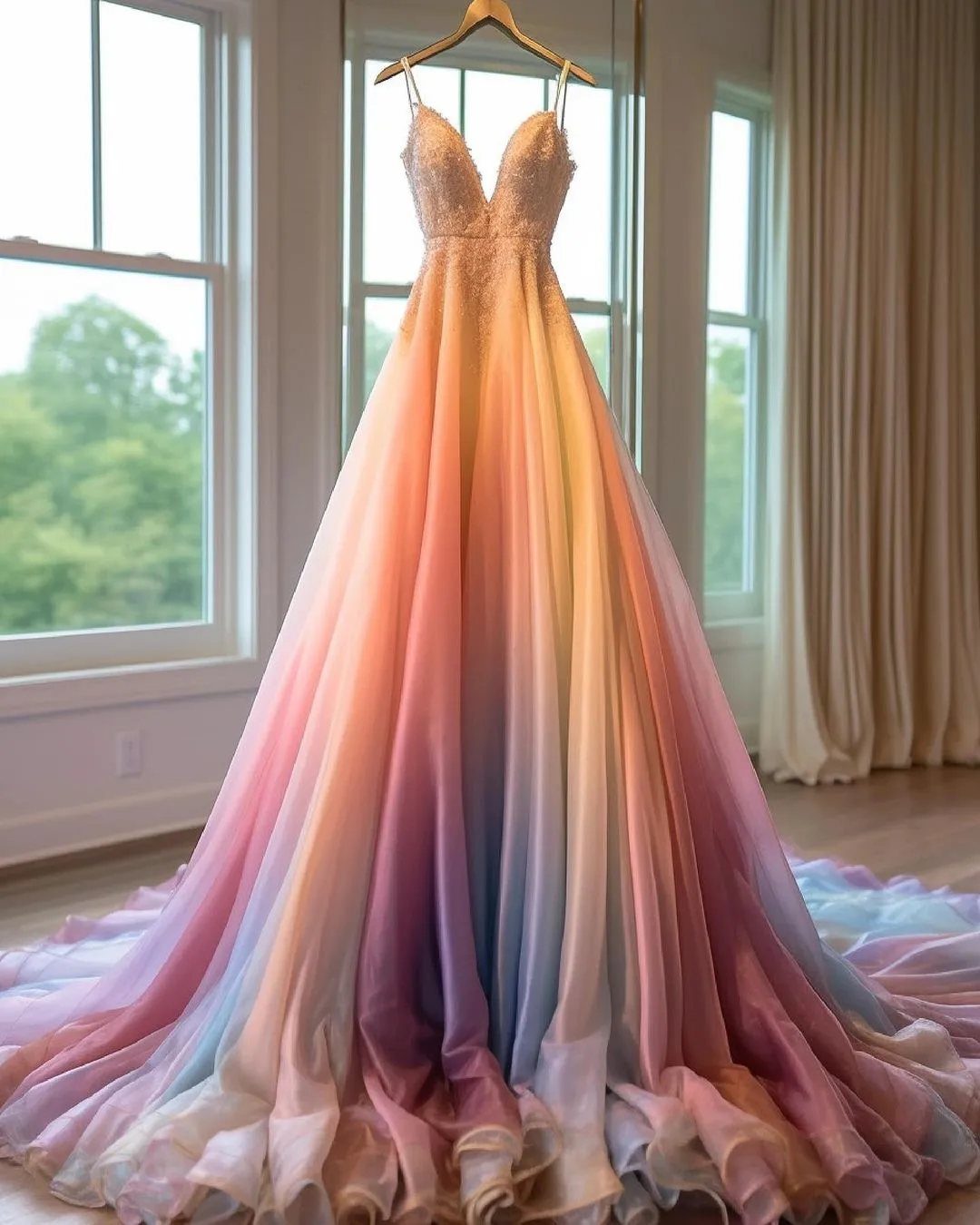
A white bodice with a rainbow gradient tulle skirt keeps all the color below the waist. That split is what makes it workable: the top stays bridal while the skirt carries the personality.
Tulle suits this idea because layers let the shades melt into one another instead of stopping in hard stripes. Pastel versions feel softer than saturated ones.
Let the dress carry all the color and pare down everything around it. With a skirt this bright, I would choose simple jewelry and a plain veil, or none at all.
4. Emerald Green Lace Gown
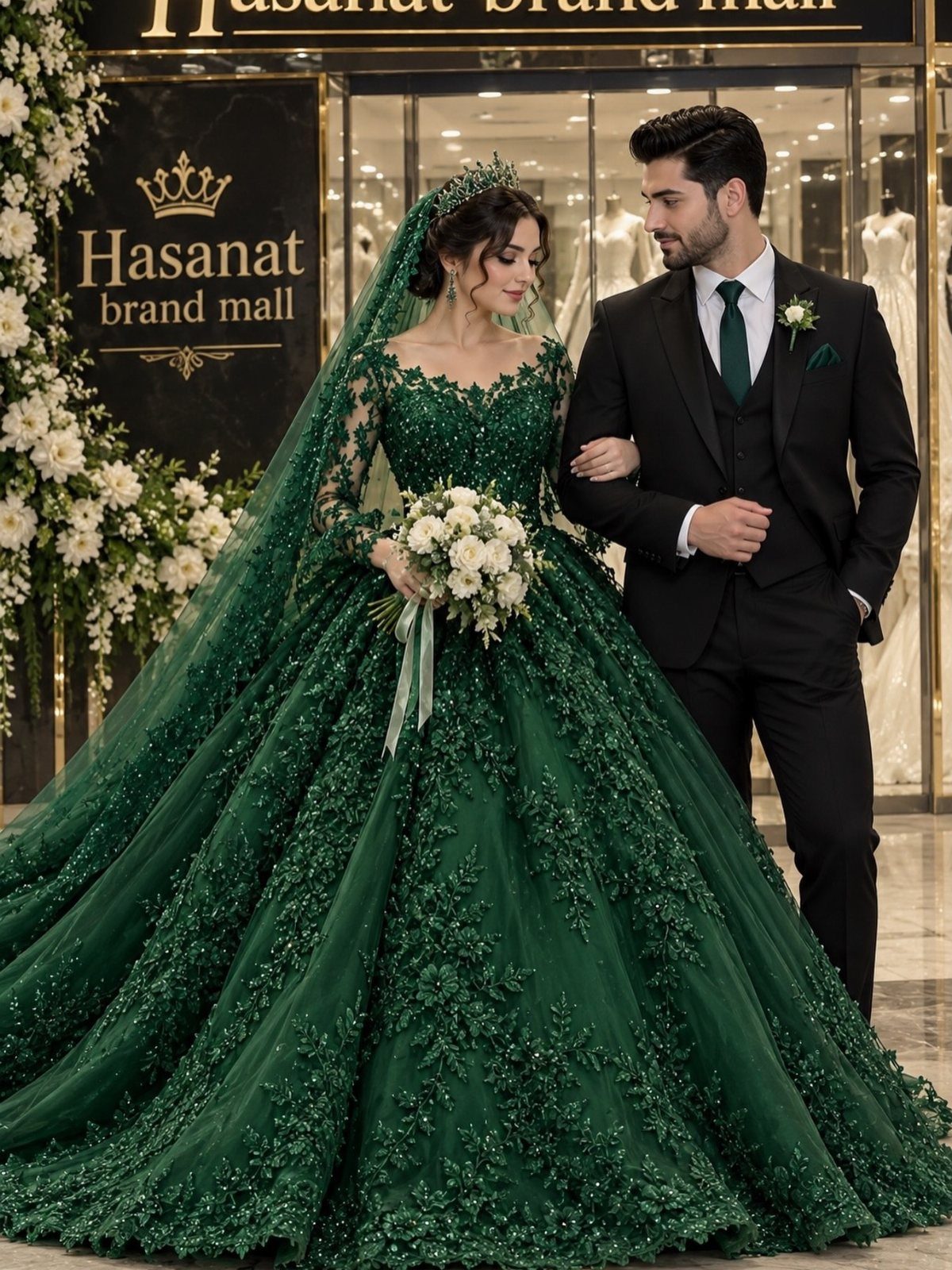
Dark green lace is a bold pick for a formal ceremony, and it is the strongest color statement among these gowns. A voluminous skirt and a matching veil turn emerald into a full bridal look rather than an accent.
A black suit on the groom pairs well, since both outfits stay deep and dramatic. White flowers would stand out nicely against that green.
Minimal jewelry works best here, since the lace and the color already do the talking. The lace and the volume already do the talking, and busy accessories compete with them.
5. Light Blue Tulle Wedding Dress
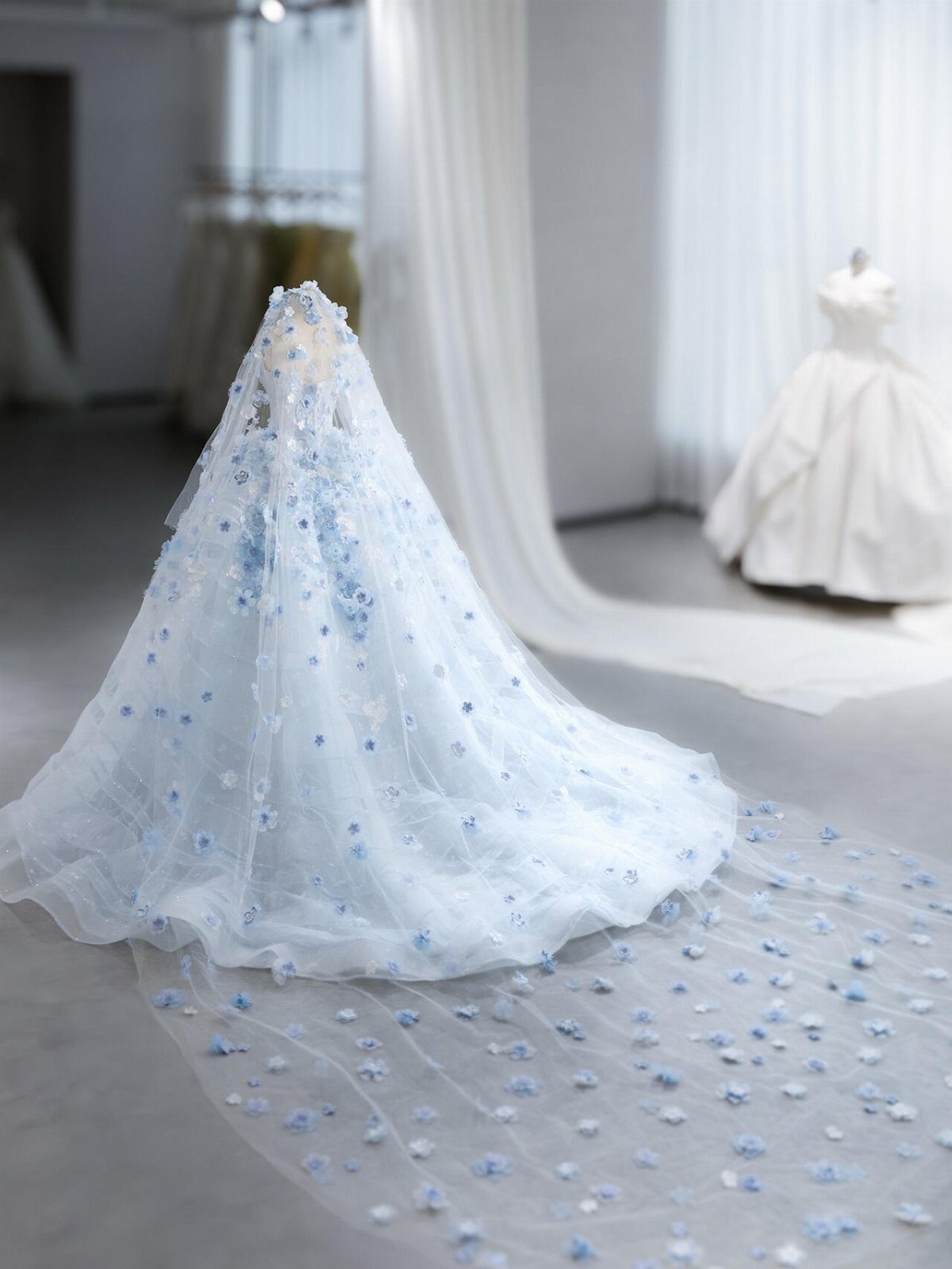
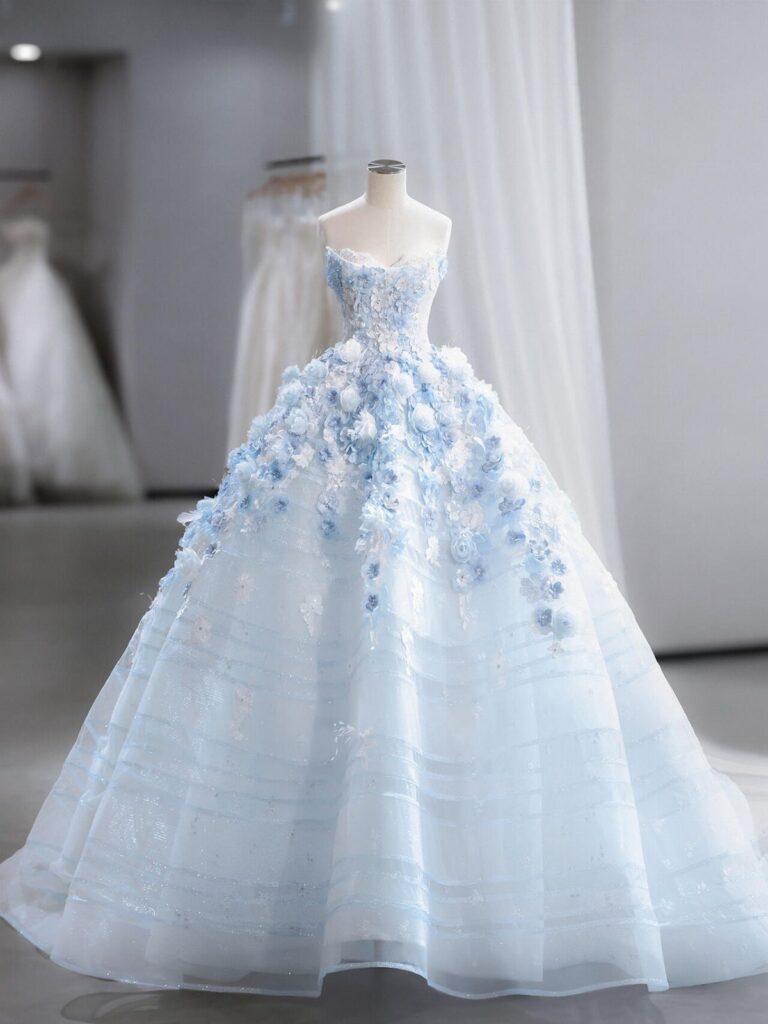
Light blue tulle with 3D floral embroidery and a long train is a pale, romantic way to skip white. The color is soft enough to feel traditional while still reading clearly as blue.
The raised flowers add texture, so I would leave the neckline and sleeves simple and let the embroidery lead.
A long train looks best with room to spread, so plan for a bustle or a helper for photos. Silver or pearl accessories keep the palette cool.
6. Blush Pink Bridal Gown
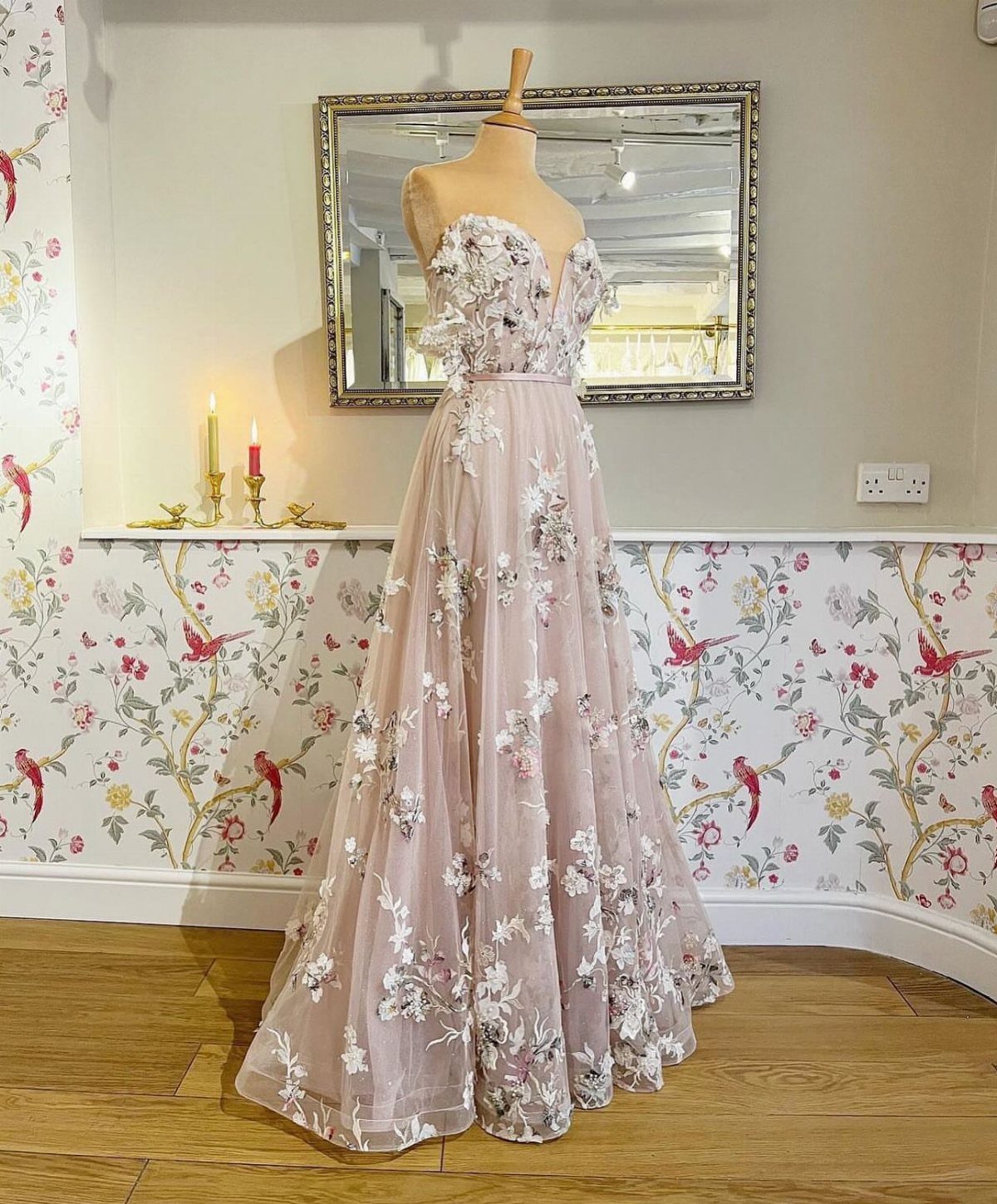
Blush pink with white floral embroidery is the easiest colored dress to say yes to. The pink reads as a warm neutral, and the white flowers keep a nod to tradition.
Because the embroidery is white on pink, the pattern shows without shouting. I like this for brides who want color but expect to feel uneasy in anything bold.
Gold or pearl jewelry suits the warm tone. Cool silver can look harsh against it.
7. Sparkling Turquoise Ball Gown
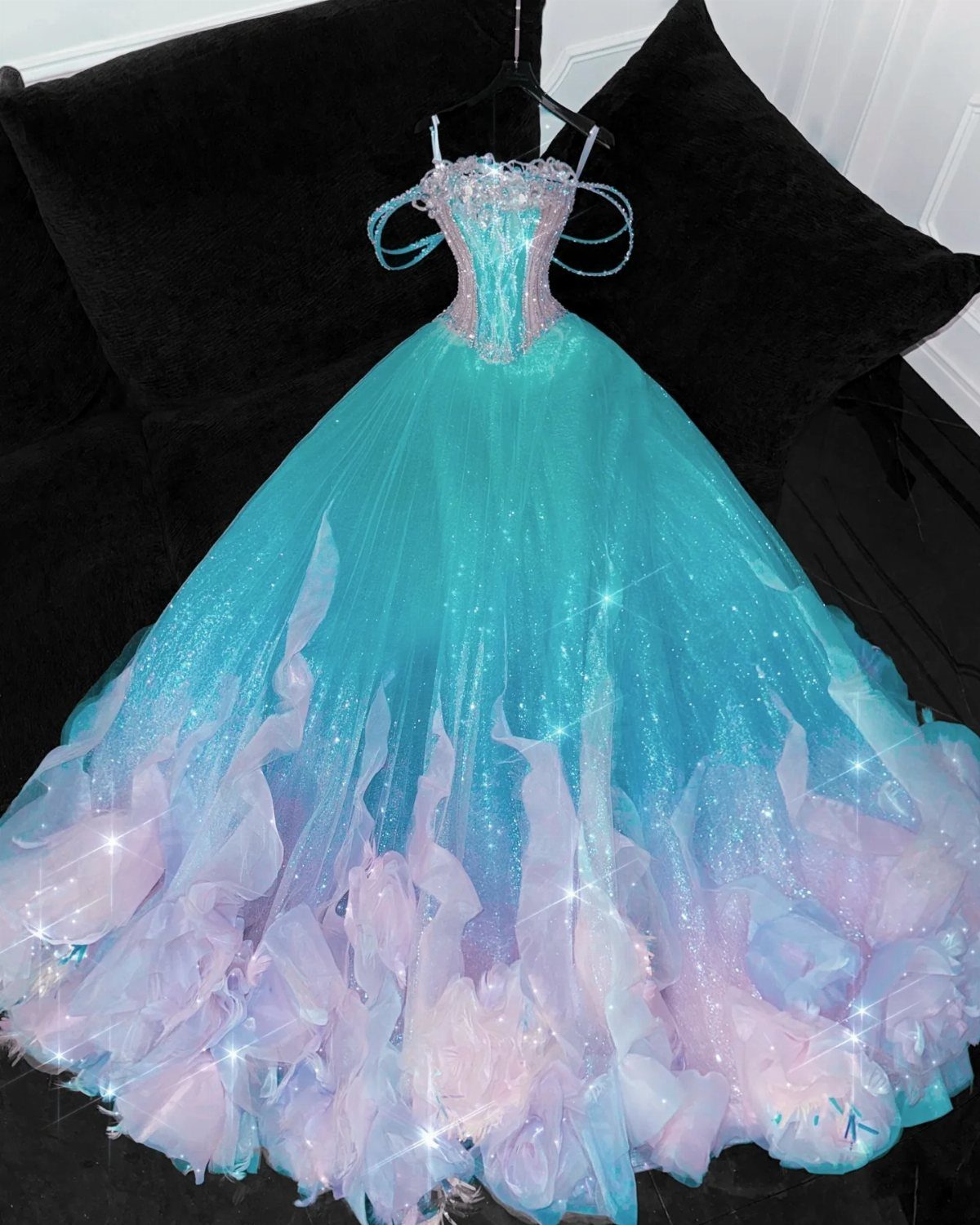
Turquoise paired with pink is the loudest color combination you can put on a bride, and a sparkling ball gown pushes it further. A full skirt gives the sparkle plenty of surface to catch light.
With 2 colors and shine already on the dress, everything else should stay quiet: neutral shoes, simple jewelry and a bouquet in white or soft green.
Simple earrings, a plain updo and no heavy necklace let the gown do the work.
Choose flowers in white or soft neutrals so they don’t fight the pink.
A bold bride who wants a dress guests talk about for years will love this style; anyone who wants a subtle shade is better off with a blush gown.
Choosing the Right Color
Start with the venue and the theme, then pick the shade. A color that suits a garden ceremony can feel off in a ballroom, so hold swatches up in the same kind of light your wedding will have.
Shades run from barely-there pink and gray to neon, and the quieter end is easier to wear in photos that will sit on a wall for decades.
Go bold only if you will still enjoy it on a random Tuesday long after the wedding.
Show your partner and your photographer the color before you buy. A good photographer can tell you how it will read next to your venue’s walls, flowers and greenery.
Order fabric swatches if the shop offers them. Screens change color, and a dress that looks soft on a phone can look much louder in person.
Accessorizing Colorful Dresses
Choose one accent to carry the color story and let the rest stay neutral. Shoes are the easiest place to do that, since a pair in a shade drawn from the dress adds flair without competing with the gown.
Metals matter too. Gold, silver and rose gold each warm or cool a color differently, so hold your jewelry against the fabric in daylight and see which one flatters it.
Bring the actual shoes and jewelry to your final fitting. Hem length, neckline and sparkle all change once the full outfit is on.
Keep a backup pair of comfortable flats in the dress’s color or a neutral. You will want them by the reception.
Fabric Choices
Lightweight fabrics such as organza or tulle give a gown movement, and they suit warm weather and outdoor ceremonies. They also let color look softer, because the layers filter it instead of stopping it flat.
Texture adds depth where a single color might look flat. Mixing a smooth layer with a sheer or beaded one gives a solid shade more dimension in photos.
Ask to see the fabric move, because a swatch on a hanger tells you very little. Walk, turn and sit in a sample, since sheer layers can wrinkle or cling in ways a hanger never shows.
If you plan to dance, pick the lighter option. A heavy skirt gets tiring by the second hour.
Frequently Asked Questions
What are the best colors for wedding dresses?
Blush pink is my safest pick: it behaves like a warm neutral, and white embroidery across it still nods to the classic bridal look.
Champagne suits a bohemian dress outdoors, and light blue is a pale, romantic step away from white. Let your venue and theme set the shade, then check fabric swatches under the same kind of light your ceremony will have.
Are colorful wedding dresses trendy?
Yes, more brides are stepping away from white, and the notes from boutiques show gowns with pops of color, metallics and textured details becoming common.
Soft tones like blush and pale gray age better in portraits you will frame for decades, while neon is a bolder bet.