Ceremony start sets the clock for every other slot in a traditional wedding schedule, so the order of your day follows when the music begins, not which events you want most.
The list runs from getting ready through the grand exit, and it covers fixed moments like the ceremony start and grand entrance as well as flexible ones like the first look and sunset photos.
If the ceremony lands close to dusk, build backward from sunset photos; if the afternoon is open, a first look buys back couple portraits time before cocktail hour.
1. Ceremony Start
A ceremony that starts on time sets the pace for every hour after it. Guests should be seated 15–30 minutes early, so the doors open, or the aisle clears, well before the processional music begins.
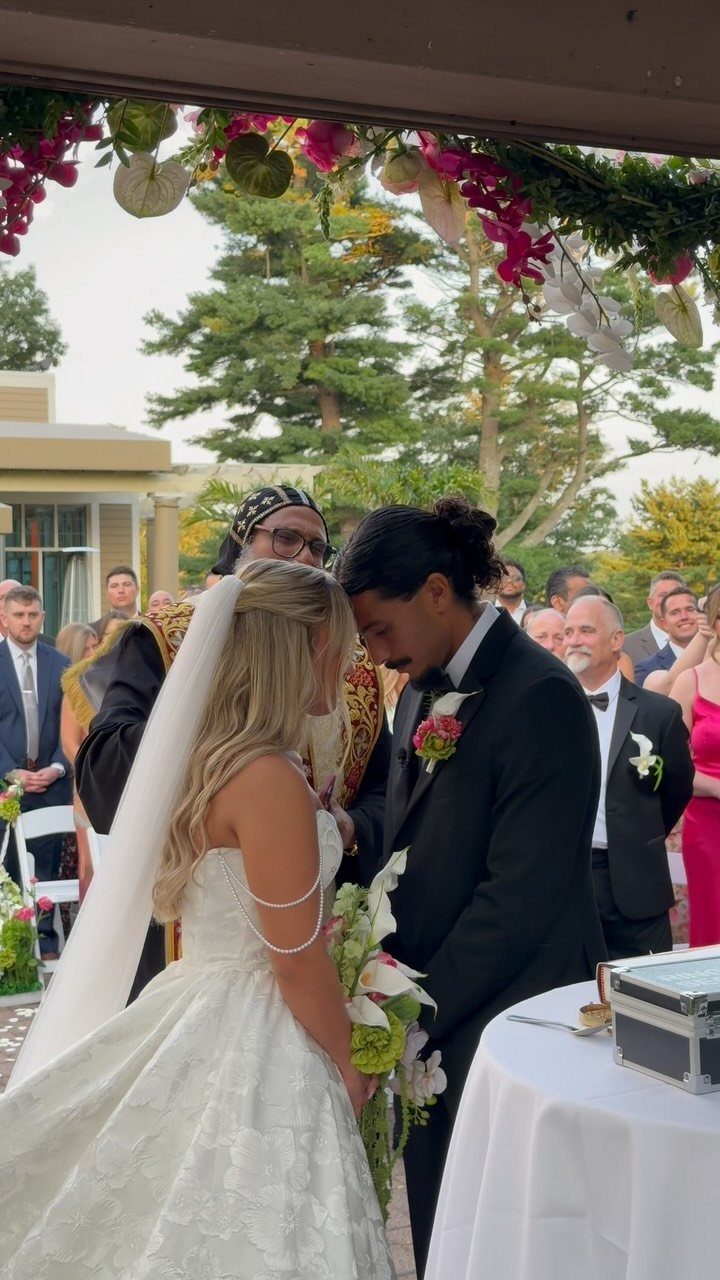
An outdoor setup like this one, with a floral arch and an officiant waiting, needs one person to cue the music and one to hold back late arrivals.
Settle on them well ahead of the wedding, since a decision made that morning tends to get rushed.
Keep the ceremony itself short if the schedule is tight. Every minute you add here pushes cocktail hour and dinner later.
Ceremony lengths can vary based on personal and religious preferences, but basic wedding ceremonies last approximately twenty minutes.
2. Grand Entrance
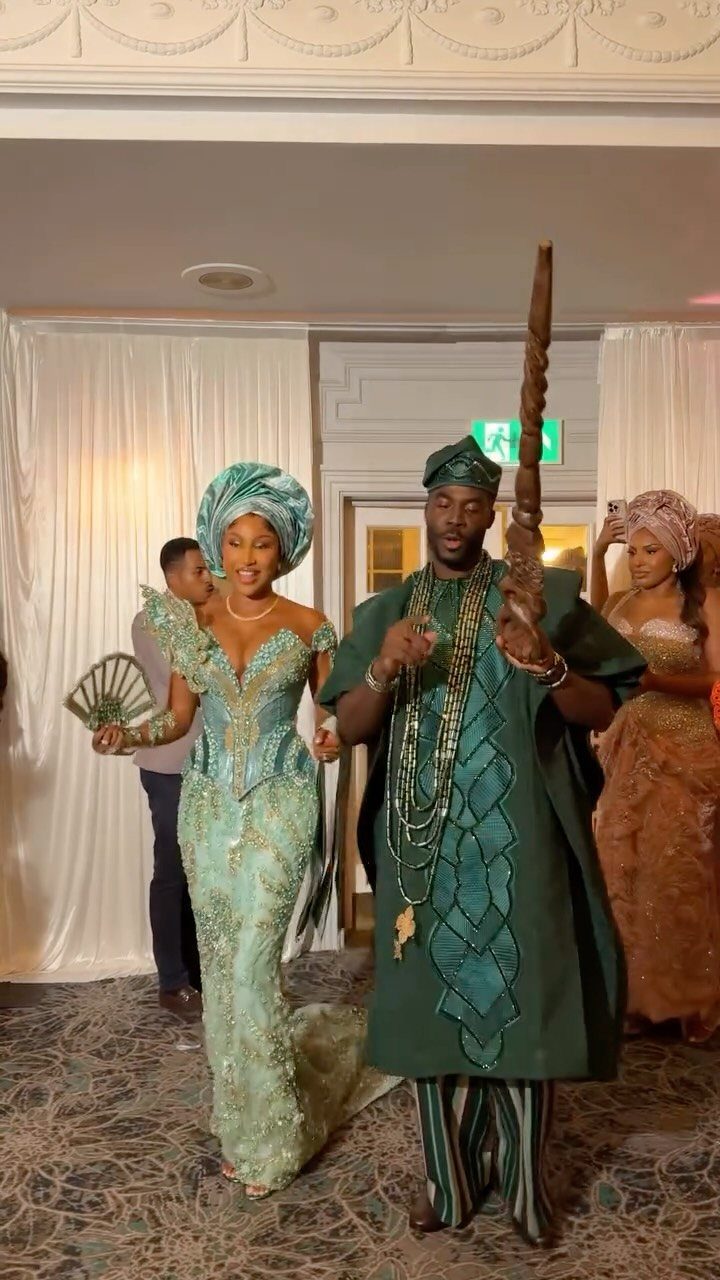
Walking into the reception together gives the couple a moment of their own in front of everyone, and the entrance can follow your culture’s dress and customs.
Traditional attire, like the green outfits in this procession, tells guests exactly where they are before anyone says a word.
Ask the DJ or emcee to announce you and agree on the song ahead of time. Doors should open only when the room is seated and the cameras are in place.
Plan the entrance for right after cocktail hour ends, so guests don’t wait around hungry.
3. First Look
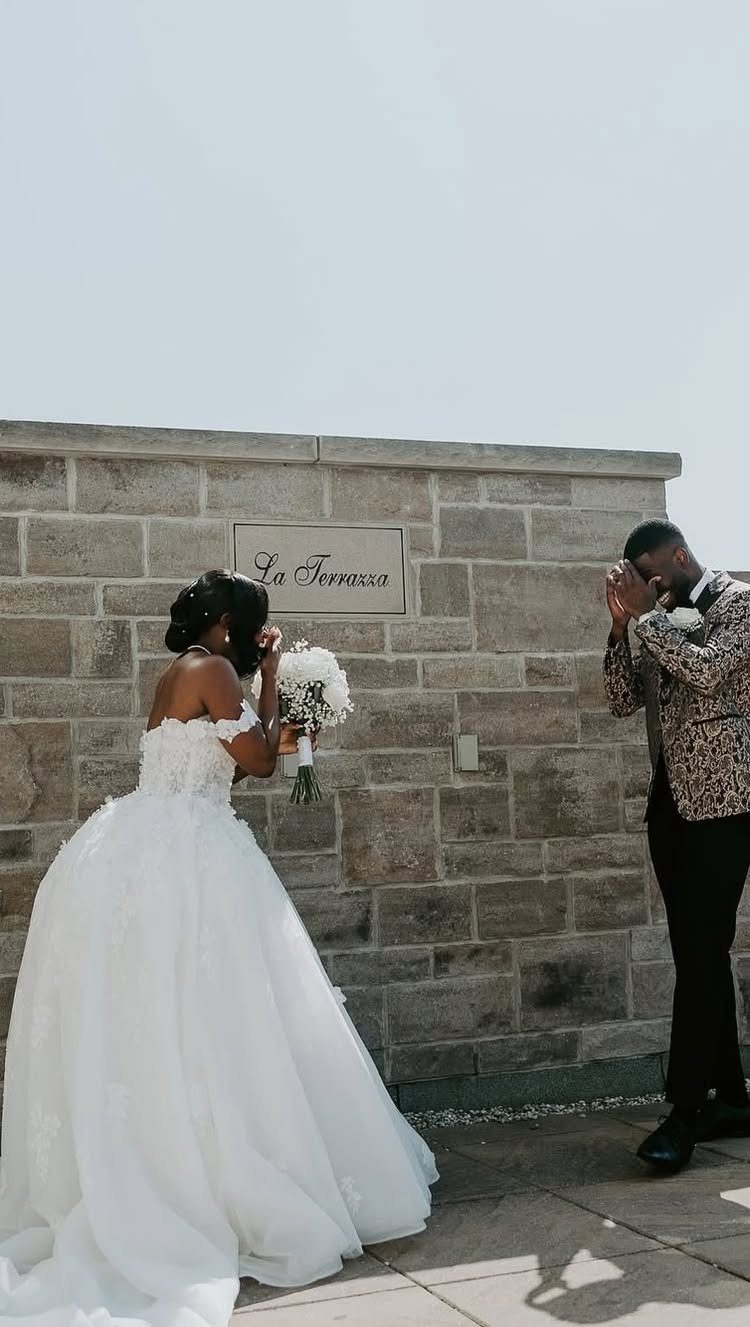
Seeing each other before the ceremony takes the nerves down and gives you quiet time that the rest of the day rarely allows.
Seeing each other early also buys back photo time, because couple and family portraits can be finished ahead of the ceremony and cocktail hour stays free for mingling.
Pick a spot with some privacy, like a wall or corner away from guests, and have only the photographer nearby. Schedule it after hair and makeup are done.
To keep the aisle moment a surprise, skip it. I would still do it for the calmer timeline.
4. Couple Portraits
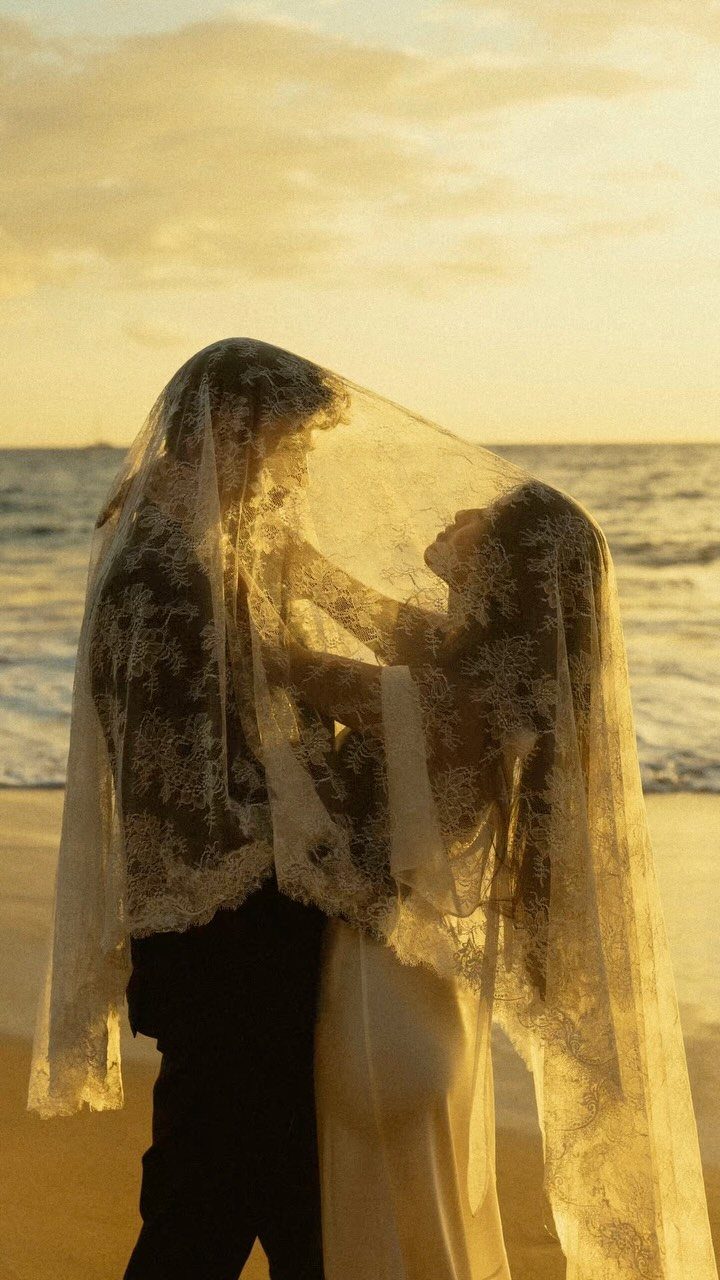
Couple portraits work best when they get their own block of time, not scraps left between other events. A beach at golden hour, with a veil catching the light, is the kind of shot that rewards giving yourselves room.
Set aside a block of time for just the two of you, and ask your photographer which hour has the best light at your venue. Eat something beforehand, since the portraits come right before dinner.
Stay close, move slowly, and ignore the camera for a few minutes. Those frames often beat the posed ones.
5. Traditional Wedding Schedule Flow of Events
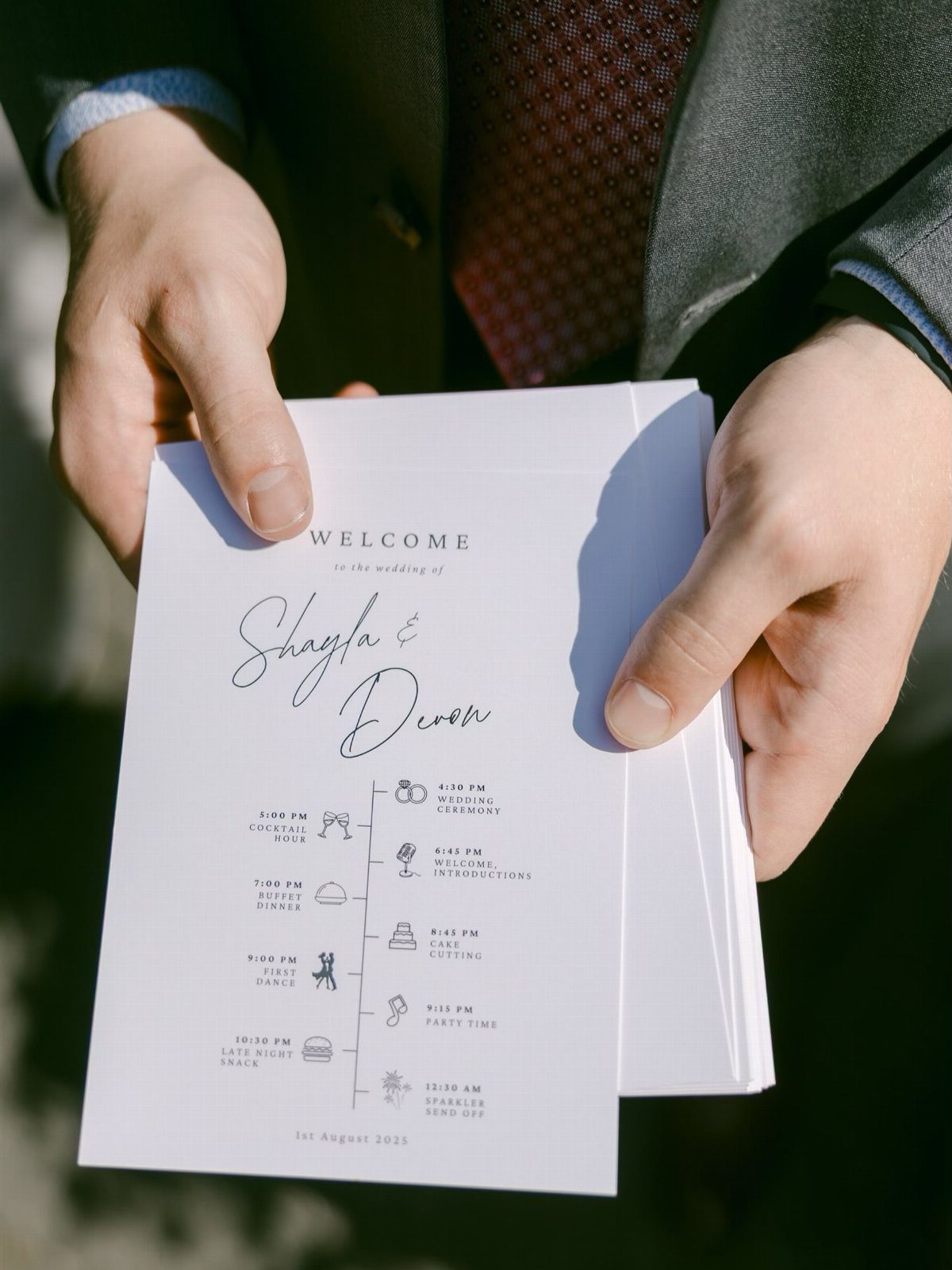
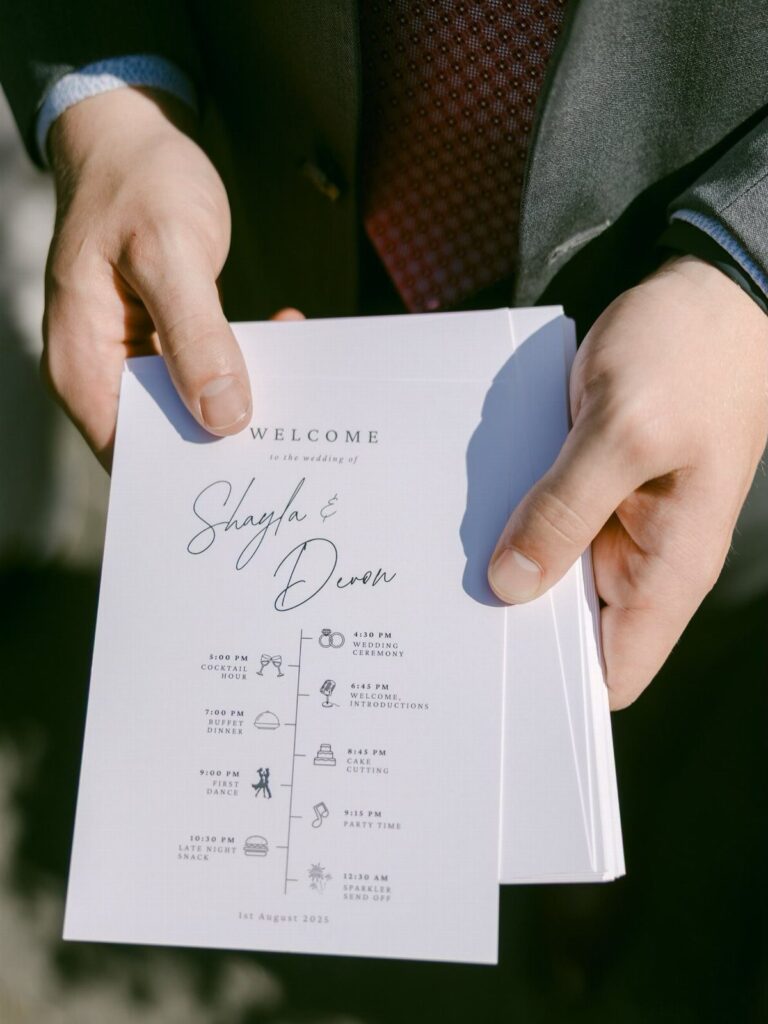
A printed timeline works only if the whole team can read it at a glance.
The card here runs from the ceremony all the way to a sparkler send-off, which is a clear model: each event gets a start time, in order.
Work backward from the ceremony and leave buffer between events, because something always runs late. Give copies to your photographer, DJ, planner and wedding party.
A card for guests can be simpler, listing only the big moments. Keep the detailed version for vendors.
6. Getting Ready
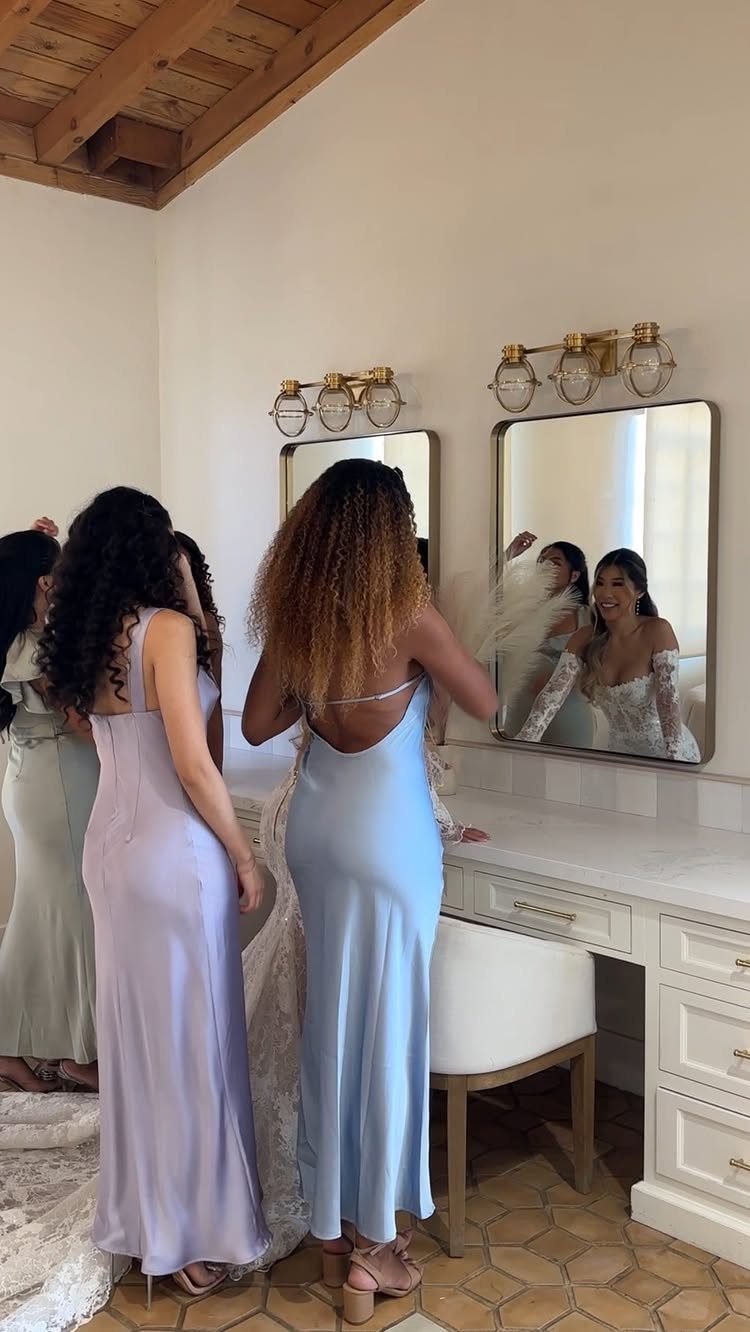
Hair, makeup and dressing take longer than most couples expect, so this block deserves a generous slice of the morning. With several people sharing one bathroom and vanity, as in this setup, a staggered order keeps everyone moving.
Start with whoever needs the most time, and put the bride’s makeup early enough that photos can happen before the dress goes on.
Build in a buffer before the first look or ceremony, because hair, makeup and buttons always run long.
Ask your stylist how long each person needs, then add up the total.
7. Cocktail Hour
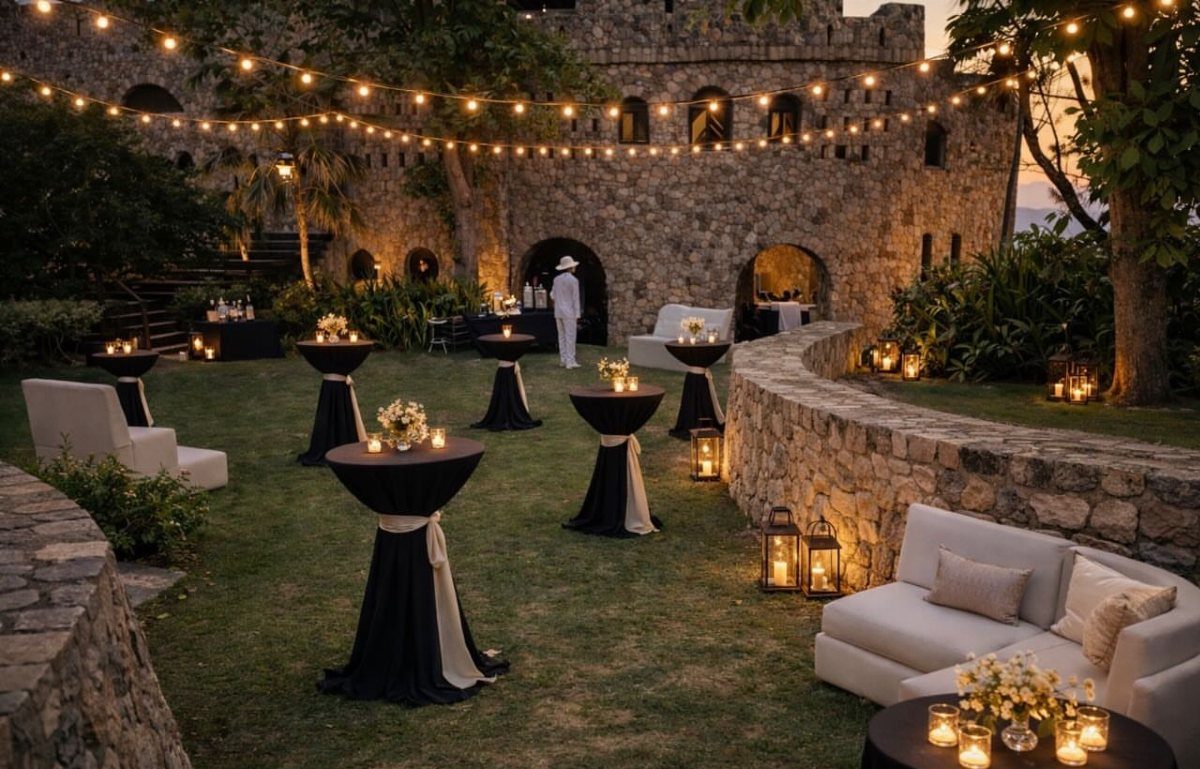
Cocktail hour gives guests somewhere to relax while the couple finishes portraits, and a setup like this one, with high-top tables, white sofas and string lights, lets people mingle or settle in as they please.
A mix of standing and seated spots matters, since older guests and anyone in heels will head for the lounge furniture first.
Plan for roughly an hour, and keep it close to the ceremony so no one waits long. String lights earn their place at dusk, so ask your venue where they can plug in.
Drinks and light bites should be out before guests arrive.
8. Grand Exit
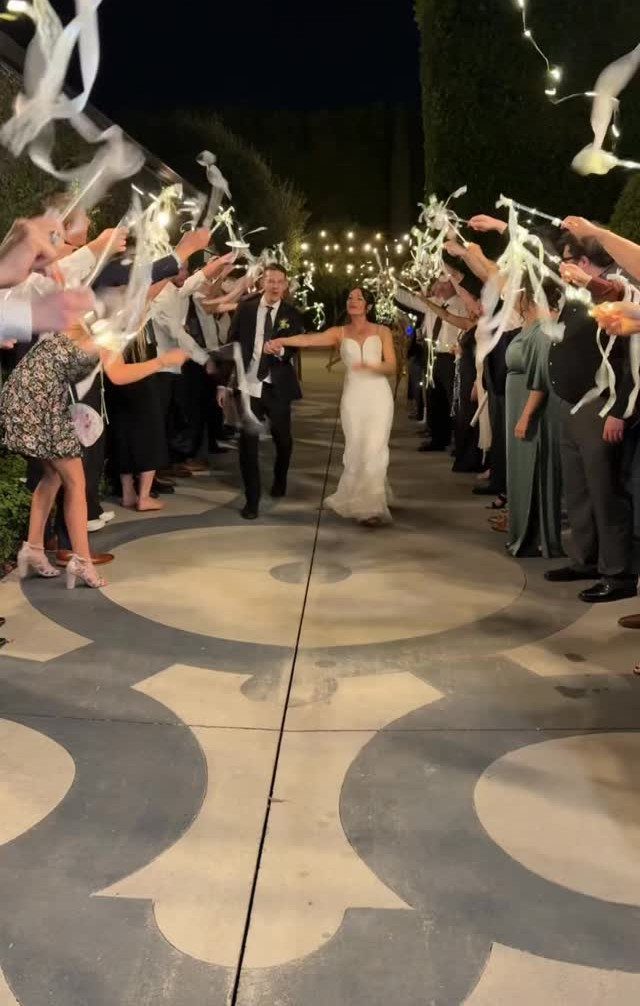
A tunnel of guests waving white ribbons gives the night a clear ending, and it photographs well in the dark. Ribbons cost little, last through the whole send-off, and are easy to hand out from a basket by the door.
Line guests up in 2 rows facing each other, with enough space between them for the couple to walk through side by side. Ask your DJ or planner to announce it so people gather before the last song ends.
At night, check that the walkway has light, so no one trips on the way out.
9. Sunset Photos
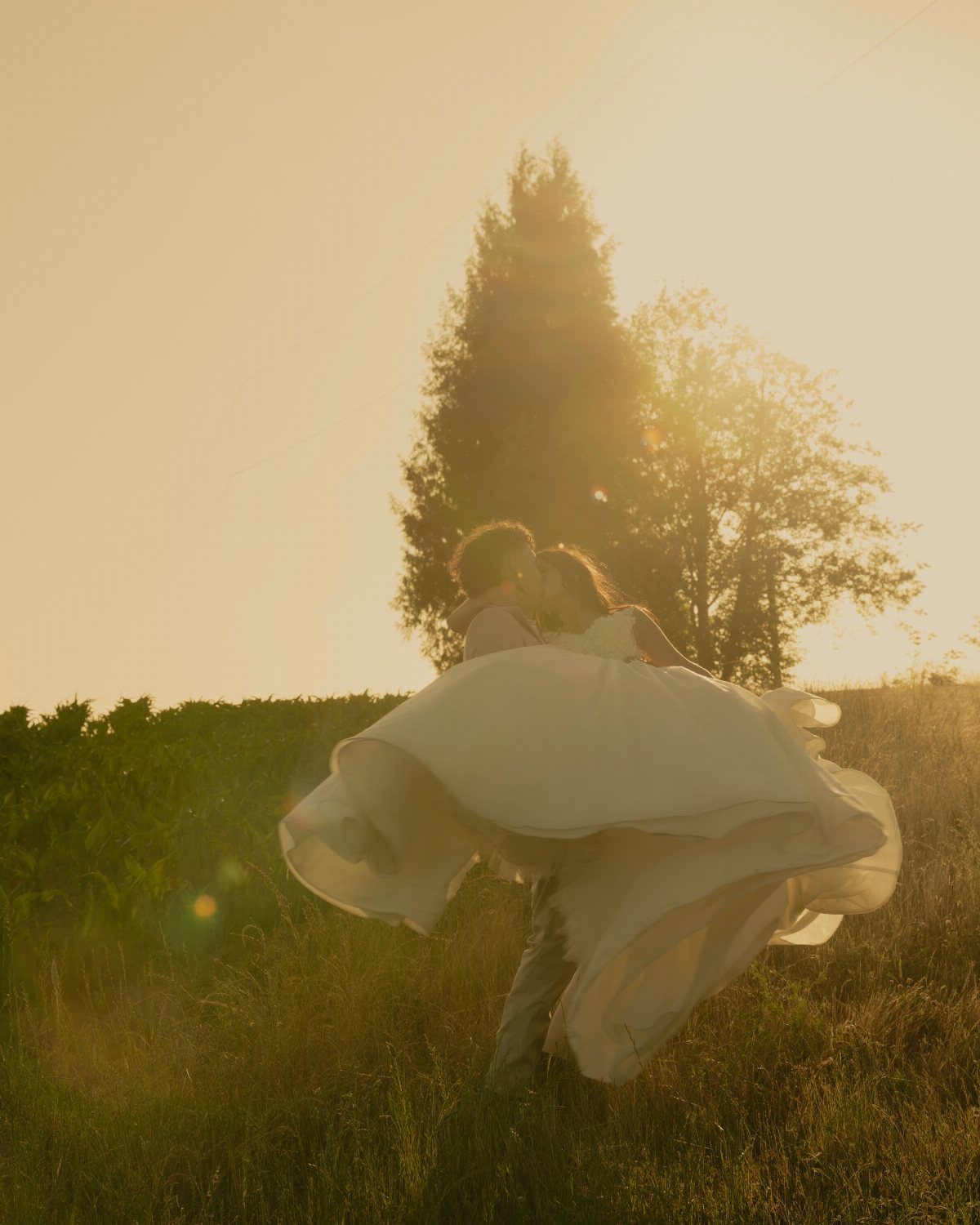
Sunset photos are worth stepping away from the party for, because golden hour light makes a simple grassy field look like a film still. Plan on a short window, then slip out during dinner or just after it.
Ask your photographer when the sun sets on your date, and build the schedule backward from that time. Bring a small bag with water and a touch-up kit, and wear shoes you can walk in across grass.
I would pull the couple away for sunset photos, since the break is short and the guests barely miss you.
Importance of a Wedding Timeline
One late start can push everything behind it. A delayed ceremony eats into portrait time or pushes dinner back, so the ceremony start time is the first number to settle.
The reception’s start and end times matter just as much. They set how much room is left for dinner, speeches, toasts, dancing and dessert before the night closes.
Give each step more time than you think it needs. If one or two things run long, the day can still land on schedule, and you spend it enjoying yourselves instead of watching a clock.
Adjusting the Timeline
When the day slips, choose the next fixed moment, whether that’s the ceremony start or the grand entrance, and guard it. Vendors and guests all plan around the ceremony start, so I would never trade that one away.
When you fall behind, tell your photographer and coordinator right away. Between them, they can tighten the portrait schedule or pick which groupings get shot first.
Hair and makeup almost always run longer than planned, so pad every section of the day. Don’t force in extra photo sessions at the cost of a relaxed morning.
Sharing the Timeline
A timeline only helps if the people running the day have it. Send it to caterers, hair stylists, the DJ and any entertainers.
Bring your photographer and coordinator in while the schedule is being drafted, rather than handing it to them finished.
The photographer knows how long portraits take at your venue, and the coordinator knows how long the caterer needs to turn the room.
Learning 6 weeks ahead that family formals need 45 minutes instead of 20 is far better than learning it mid-day.
Frequently Asked Questions
How long should a wedding reception be?
Plan on 4–5 hours.
That usually breaks down to about an hour of cocktails, 1–1.5 hours for dinner, and 2–3 hours of dancing and entertainment. Dinner, speeches, toasts and dessert all share the time between the reception’s start and end, so settle those 2 times early.
What are the parts of a wedding day?
A typical day runs through getting ready, the ceremony, couple and family portraits, cocktail hour, the grand entrance, dinner with toasts and dancing, and a grand exit. A first look and sunset photos are optional additions.
What do you call a schedule for a wedding?
It’s called a wedding day timeline, or sometimes an itinerary.
It’s a time-blocked schedule that gives each event a start time, in order, from getting ready to the send-off. Vendors and the wedding party get the detailed version, while guests can get a simpler card listing only the big moments.
What are the typical wedding traditions?
Common traditions on the schedule include the ceremony, a grand entrance into the reception, cocktail hour, and a grand exit such as a send-off with sparklers or ribbons.
Skipping the first look is a fair choice if you want the aisle to be the moment your partner sees you for the first time. Your entrance can also reflect the dress and customs of your culture.