Reception rooms in this list range from a free-standing lawn under a tent to a historic ballroom with painted ceilings, and the right one depends on how much the space already does for you: a plain room like a community center sends your money into decor, while a gilded one leaves almost nothing to add.
Guest count settles the rest, since the average hourly rate runs from $235 for small spaces to $414 for large ones.
1. Outdoor Wedding Venue
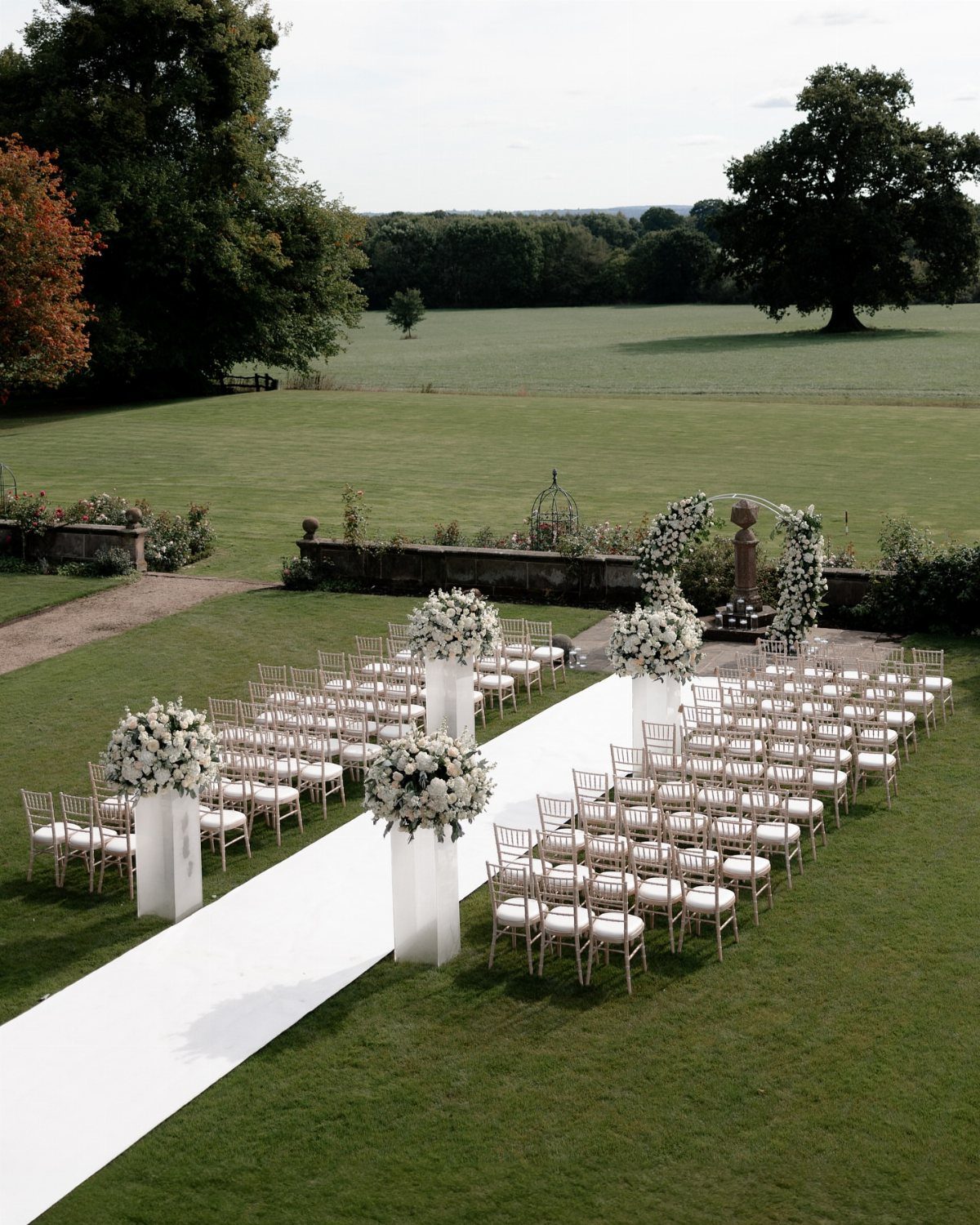
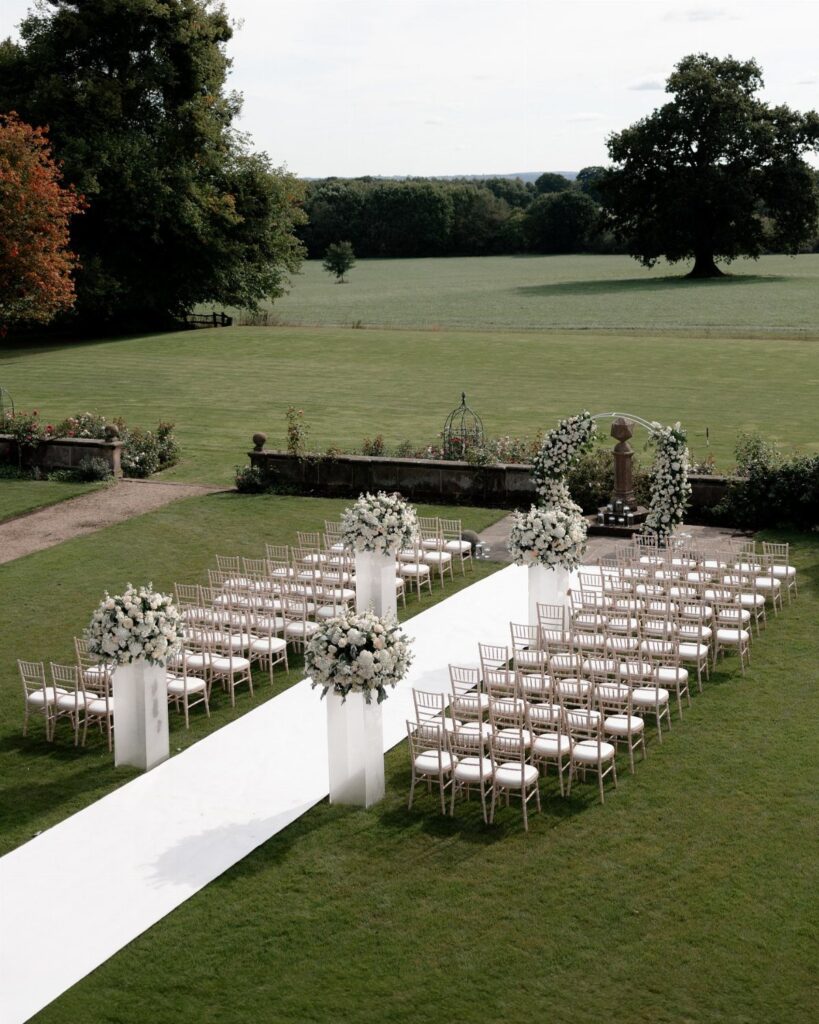
A park, garden or beach does the decorating for you, so more of the budget can go to food and music.
Choose a spot where the ground is level enough for chairs, since a white aisle runner like this one lies flat only on firm turf.
Without them, an open field can swallow the ceremony.
I would pick the place first and the flowers second.
2. Barn or Farm
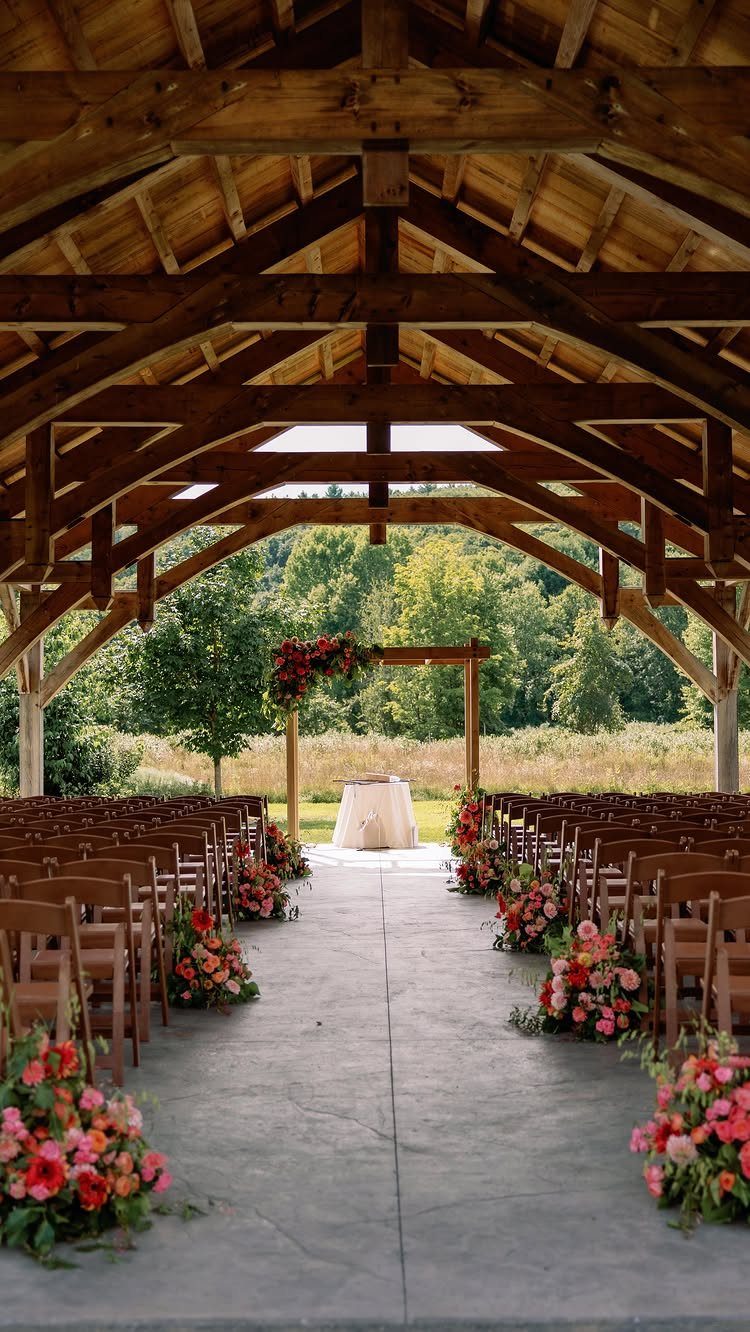
Wood, open sides and a field behind it: a barn or farm gives you texture before a single stem arrives. A barn already has plenty of texture, so keep florals modest: a floral arch plus a few arrangements is enough.
Rustic is a look many couples want, and I find it easiest to keep warm when the chairs and tables stay in natural tones.
Ask what happens if the weather turns. A covered pavilion like this one answers that better than an open meadow does.
3. Museum or Library
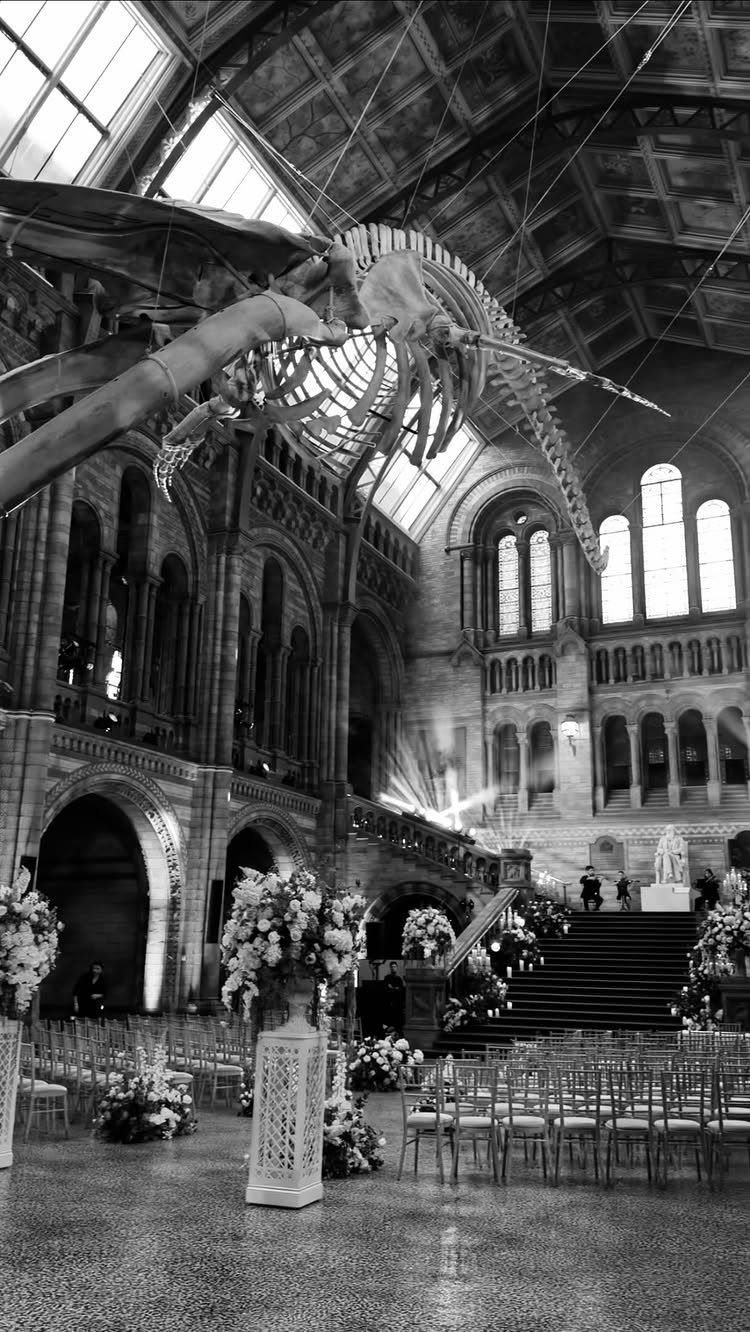
A dinosaur skeleton overhead means you barely need decor. A museum or library hands you the backdrop, so keep flowers pale and simple and make the building the loudest thing in the room.
I like this idea for couples who want guests talking about the setting for weeks. Expect the venue to set its own rules on layout and vendors, so ask early.
4. Craft Brewery or Distillery
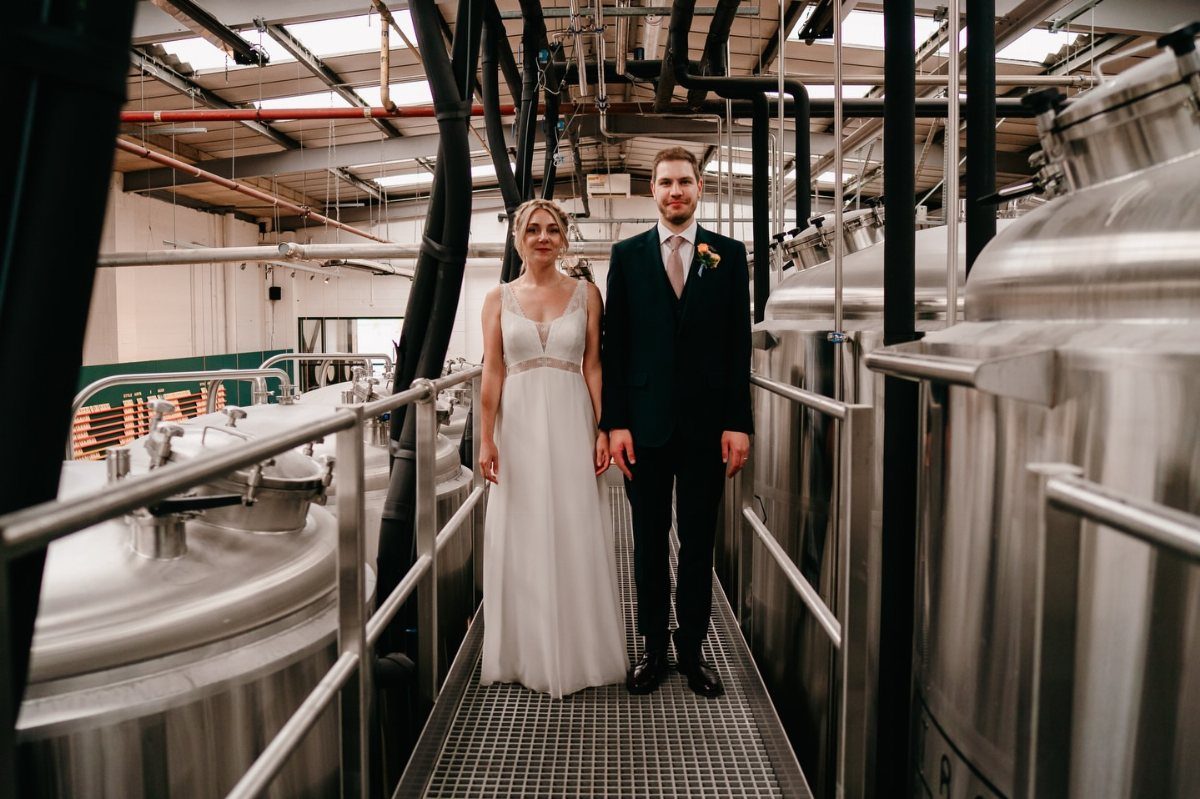
Stainless steel tanks make a striking photo backdrop, and a brewery or distillery gives the day an easygoing feel. Guests tend to relax faster in a working space than in a formal hall.
The metal walkway between the tanks makes a strong photo spot, so tell your photographer ahead of time. Ask what the venue includes with a booking, drinks especially, because that shapes your budget more than the rental fee.
I would choose this for a laid-back crowd over a black-tie one.
5. Vacation Rental
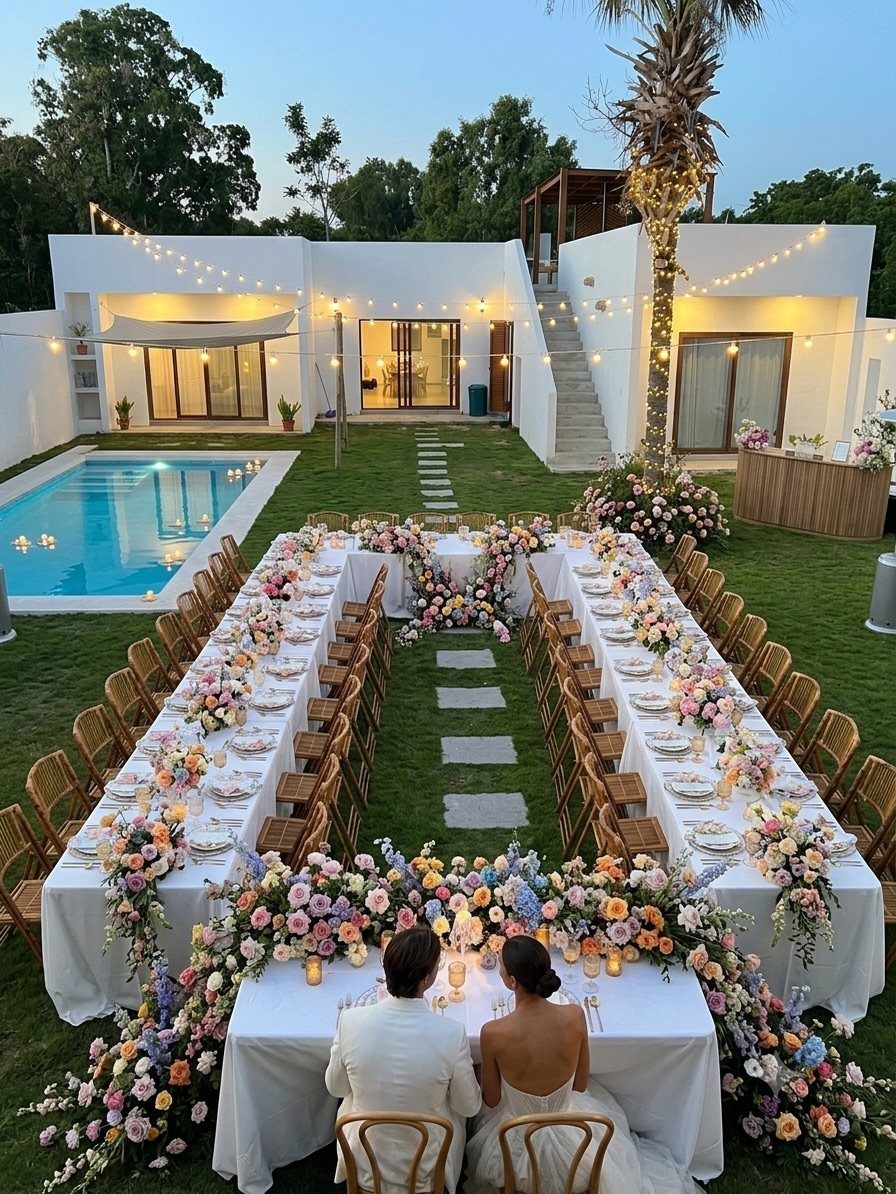
With a vacation rental, the house, pool and lawn are yours for the event, which suits a smaller guest list far better than a large one.
String lights over the lawn handle evening ambiance cheaply.
Check the rental’s rules on events and guest counts before you book, since many hosts restrict both. Then count the seats the yard can hold.
6. Country Club
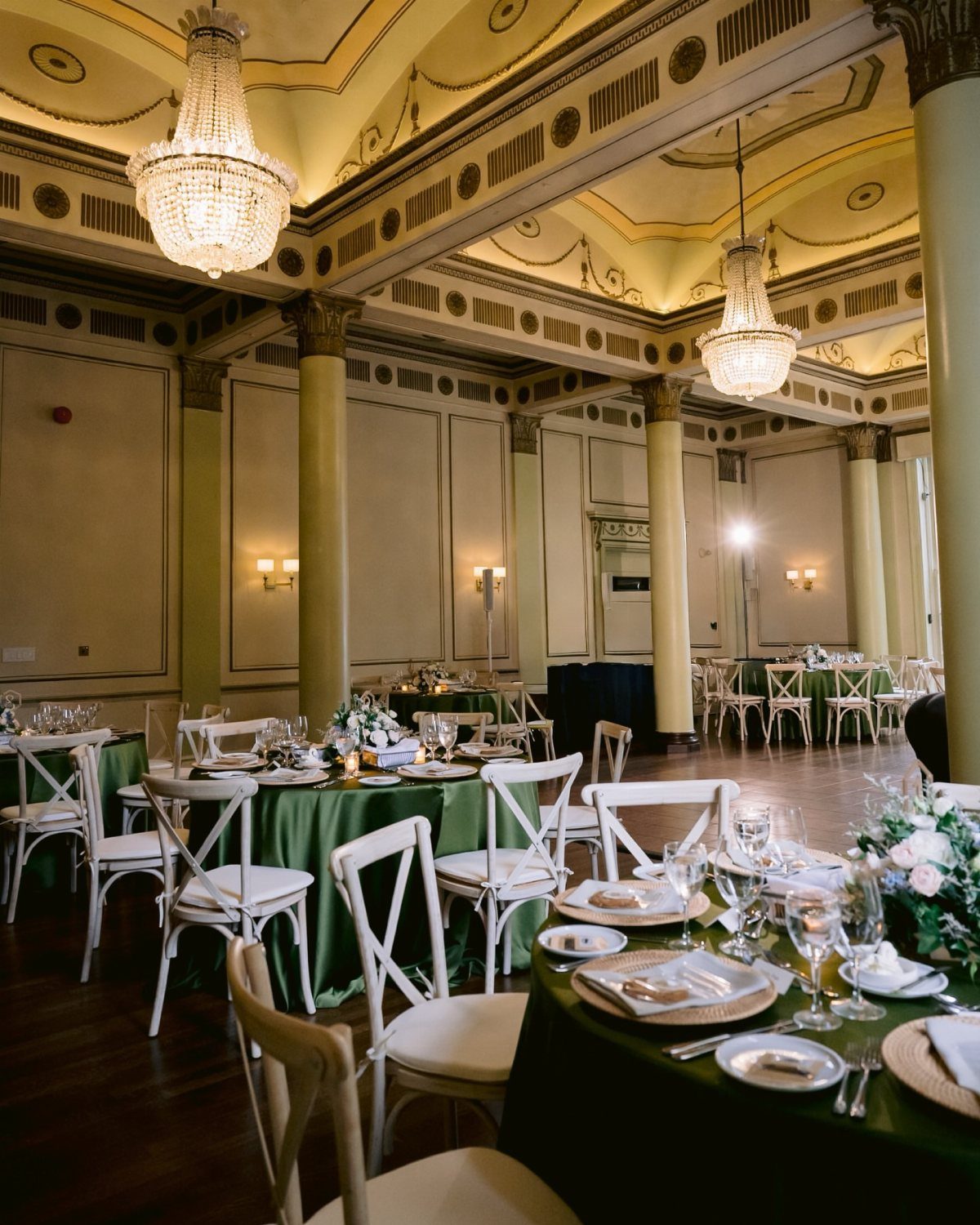
Linens, chairs and full floral centerpieces are the only layer you need to add, so pick a tablecloth color that suits the room.
I would ask about food and beverage minimums first, because clubs often build costs around them. Ask too whether members-only rules affect your date.
For couples who want polish without building it from scratch, this is hard to beat, as long as the price fits.
7. Warehouse
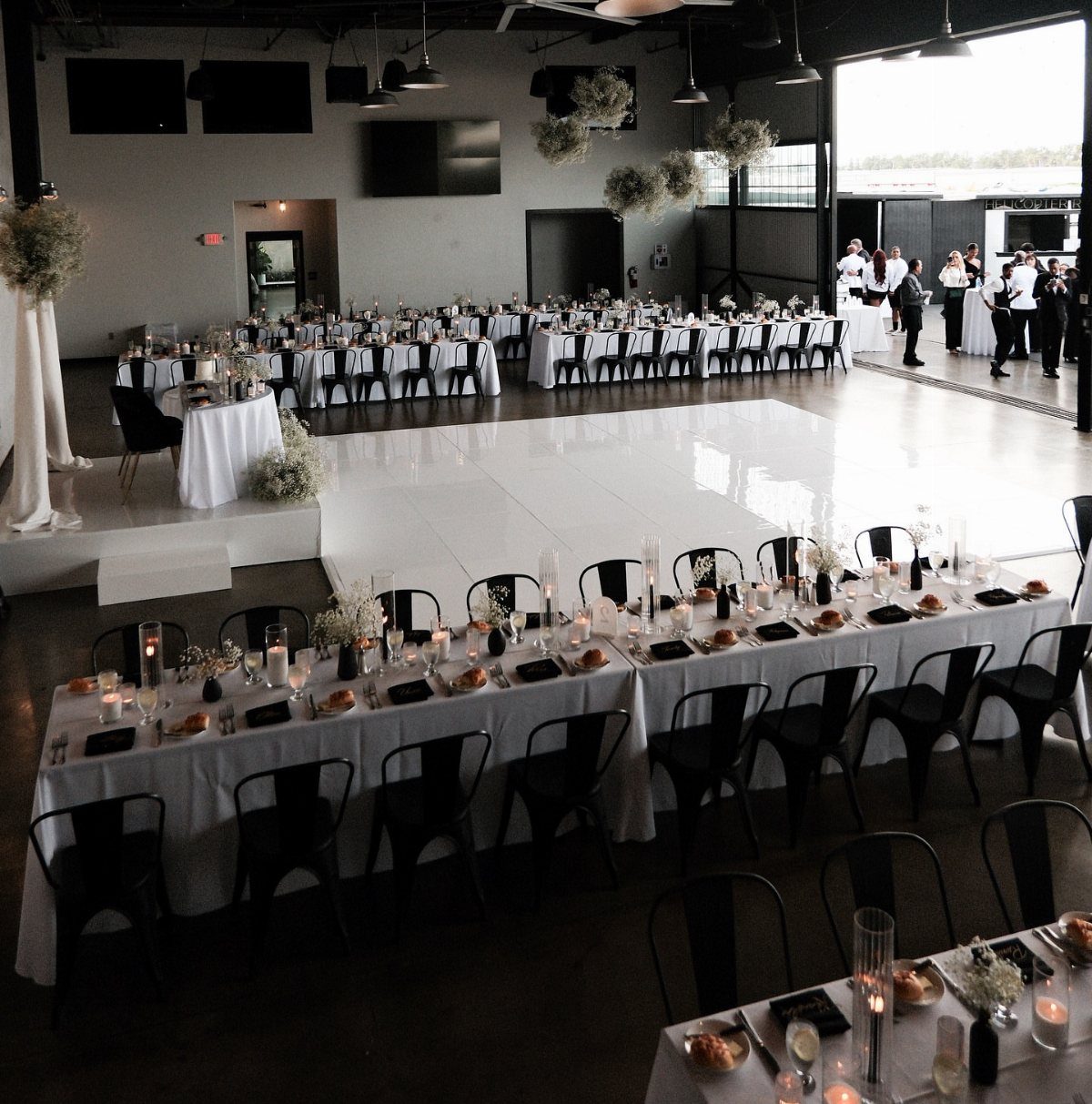
The Westside Warehouse sits in Atlanta’s west-midtown creative district, and its pricing runs $3,750 to $6,250 for a wedding.
Because the walls stay plain, flowers do the work. I would set them down the center of each long table so the room stays open.
Ask what the rental price includes before you compare it to other venues.
8. Community Center
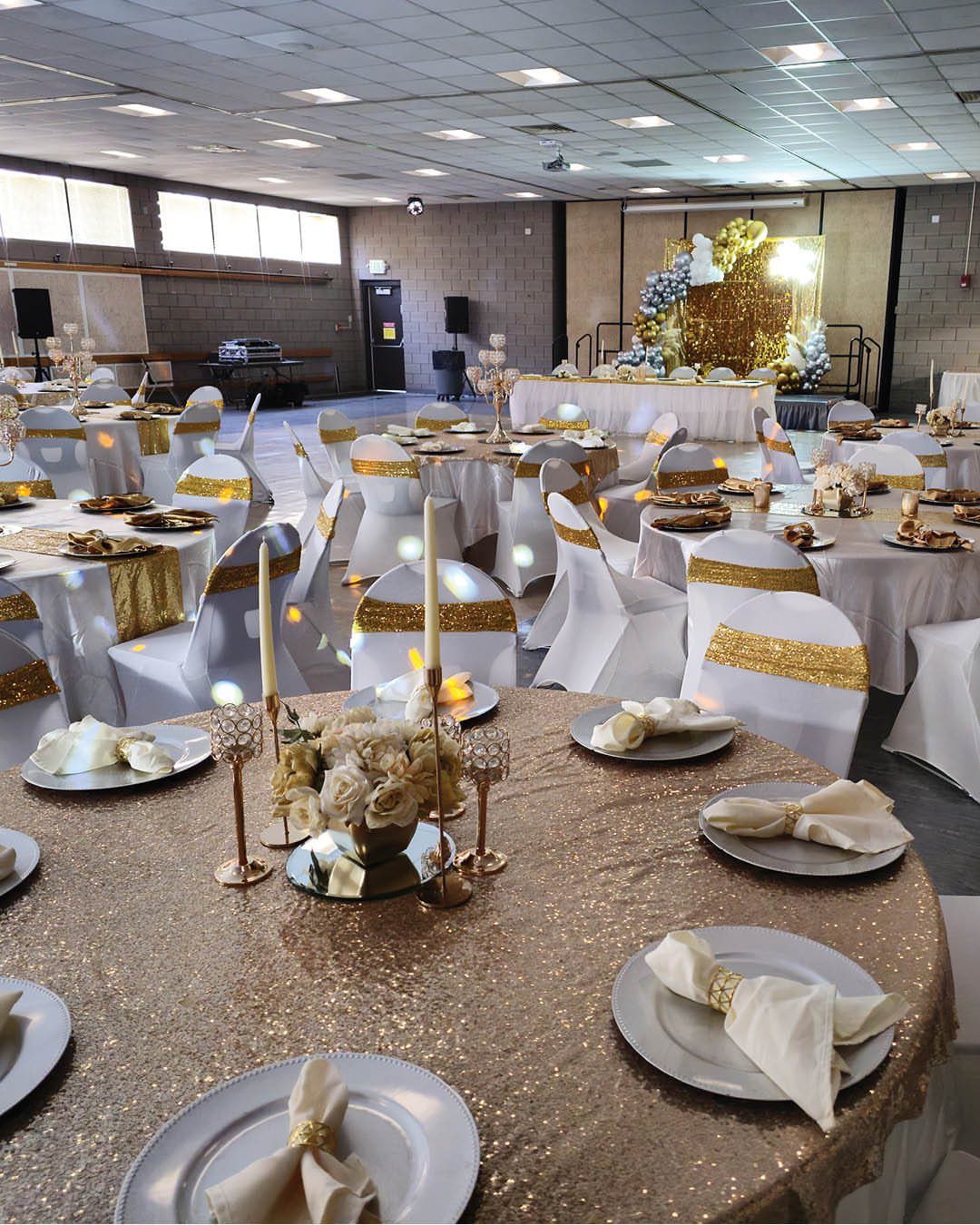
That is the case for a community center: the room is basic, so your money goes into decor.
I would choose one color family and repeat it, as above, rather than mixing several.
9. College or University
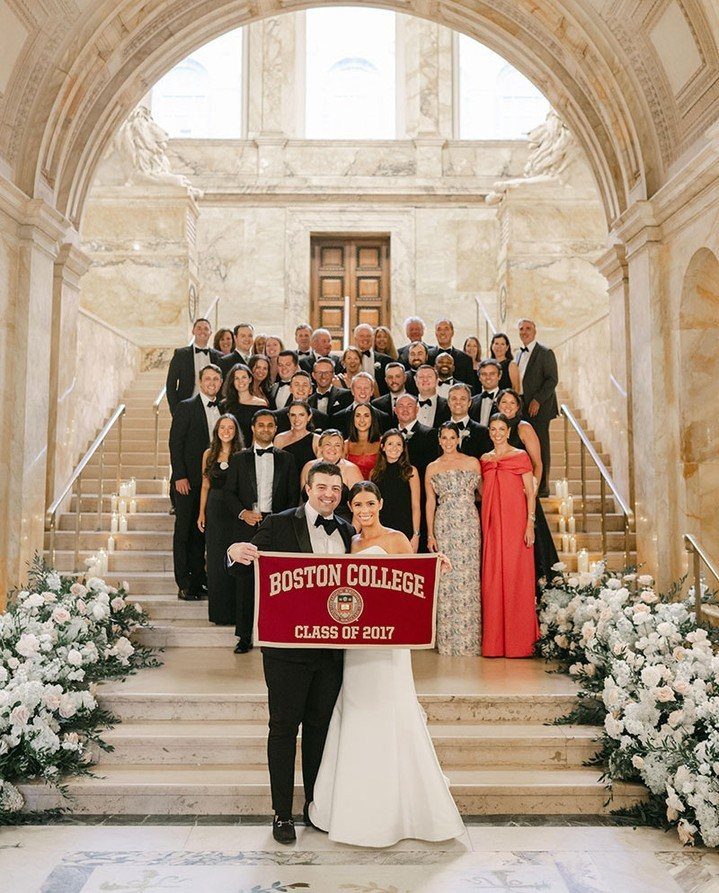
If you met on campus, a college or university venue lets the building tell your story.
Ask the alumni office or events team early about which buildings are open for weddings, and what rules they set for vendors and decor.
This venue suits couples whose guests all went to the same school and share those memories.
10. Aquarium
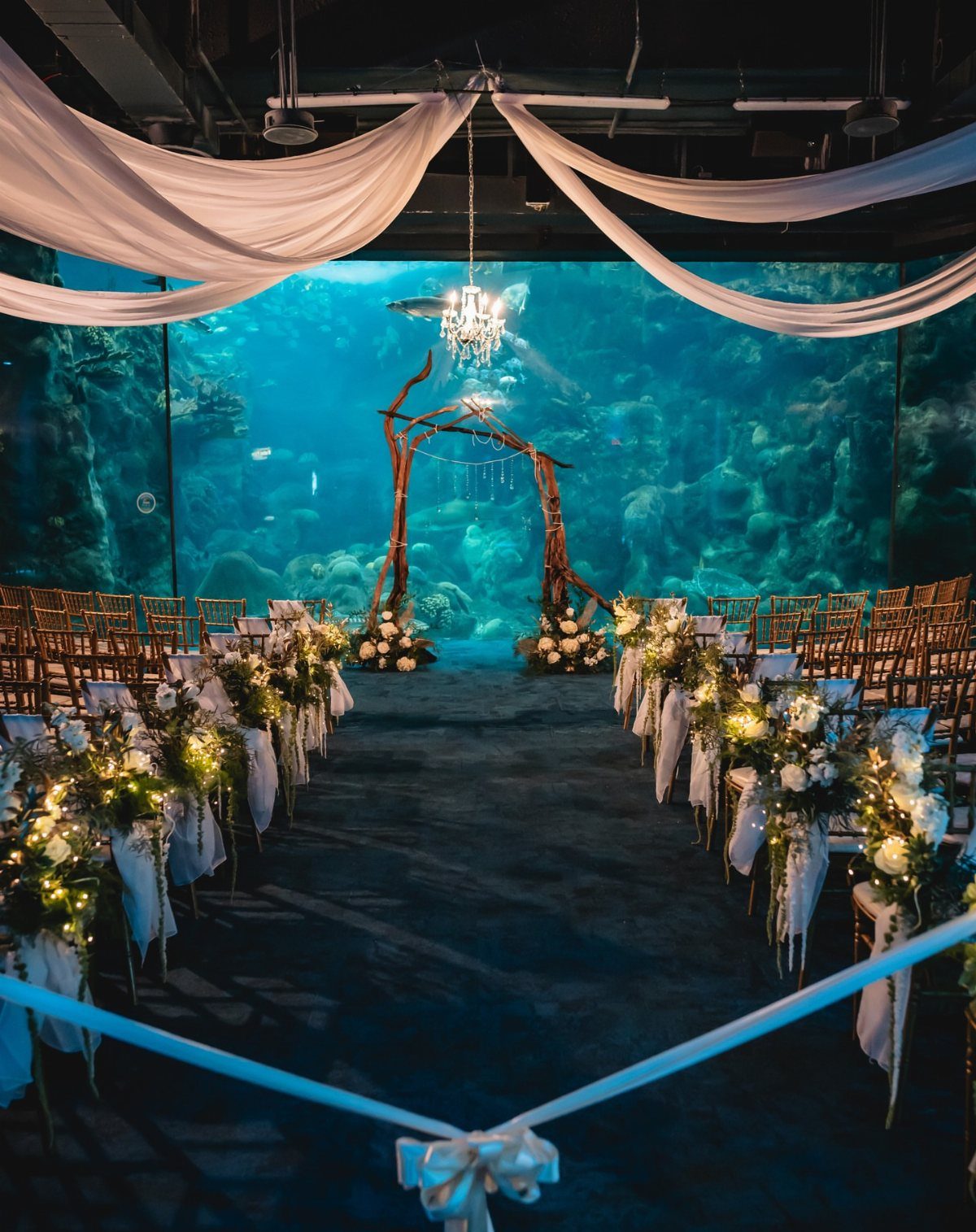
A wall of blue water and fish behind the ceremony means the aisle needs almost no styling.
Keep the arch low and simple so it frames the tank rather than blocking it. I would also ask the aquarium which areas can hold chairs and where guests can stand, since the exhibits stay the main attraction.
Animal lovers will get the most from this one.
11. Stand-alone Banquet Hall
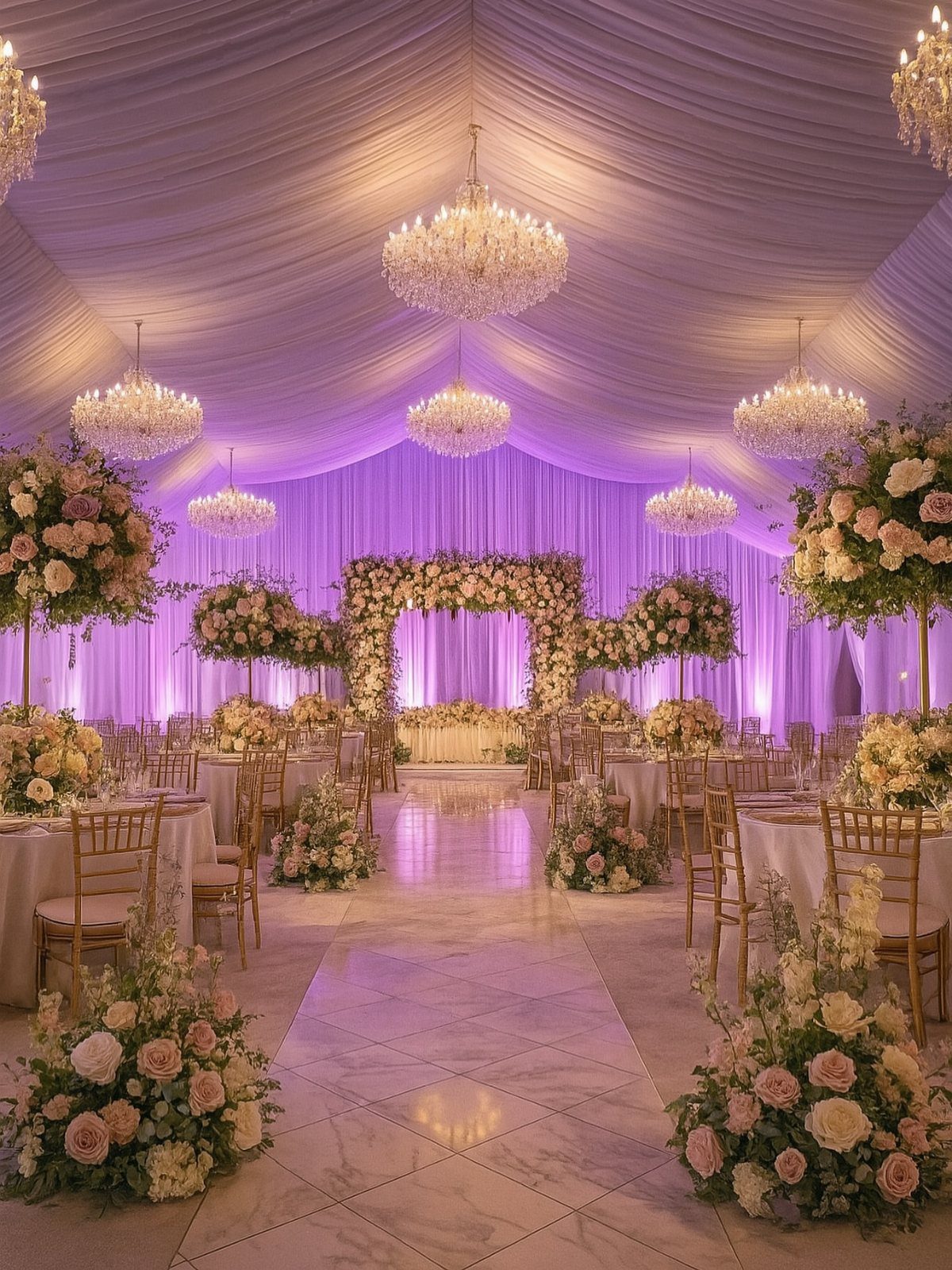
A stand-alone banquet hall is built for the job, and it works for large or intimate celebrations.
I would put the budget into flowers and style everything else lightly, because the room is already busy.
Ask how the hall handles a smaller guest count, so the space does not feel empty.
12. Theme Park
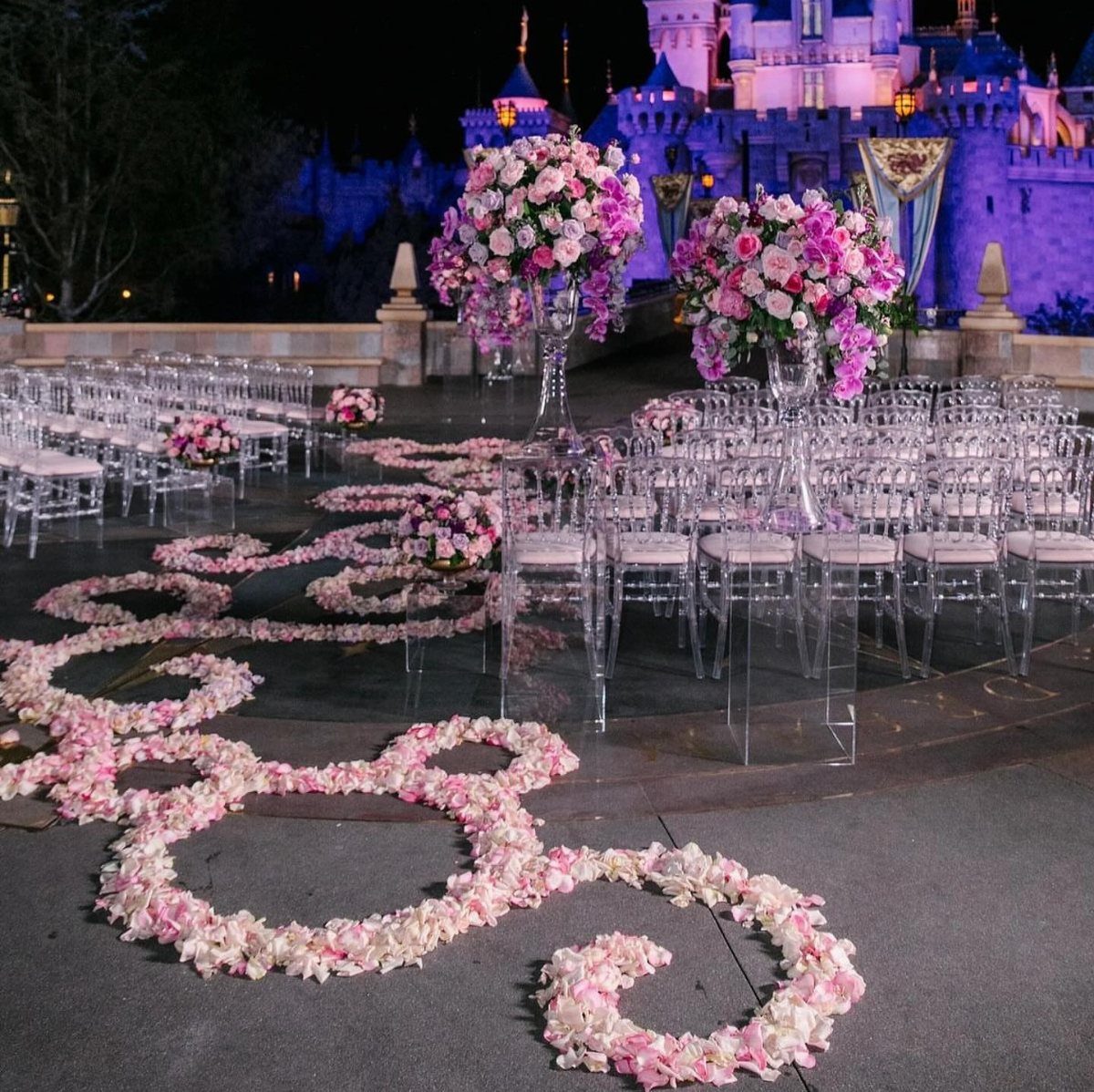
A lit castle at night does what no decor budget can, and a theme park gives you a fun, whimsical backdrop for the whole evening.
Clear acrylic chairs keep sightlines open, and pink blooms along the petal path pick up the park’s glow.
I would plan the ceremony for after dark so the castle lights carry the photos.
Ask the park early about guest access and vendor rules, since parks set their own terms.
13. Chateau or Castle

Stone towers behind the chairs mean the setting carries the fairytale, so the styling can stay quiet. Cane chairs and white florals already suit the stonework, and I would stop there rather than add more color.
Keep the aisle arrangements low enough that the castle stays in every photo.
14. Greenhouse or Glasshouse Venue
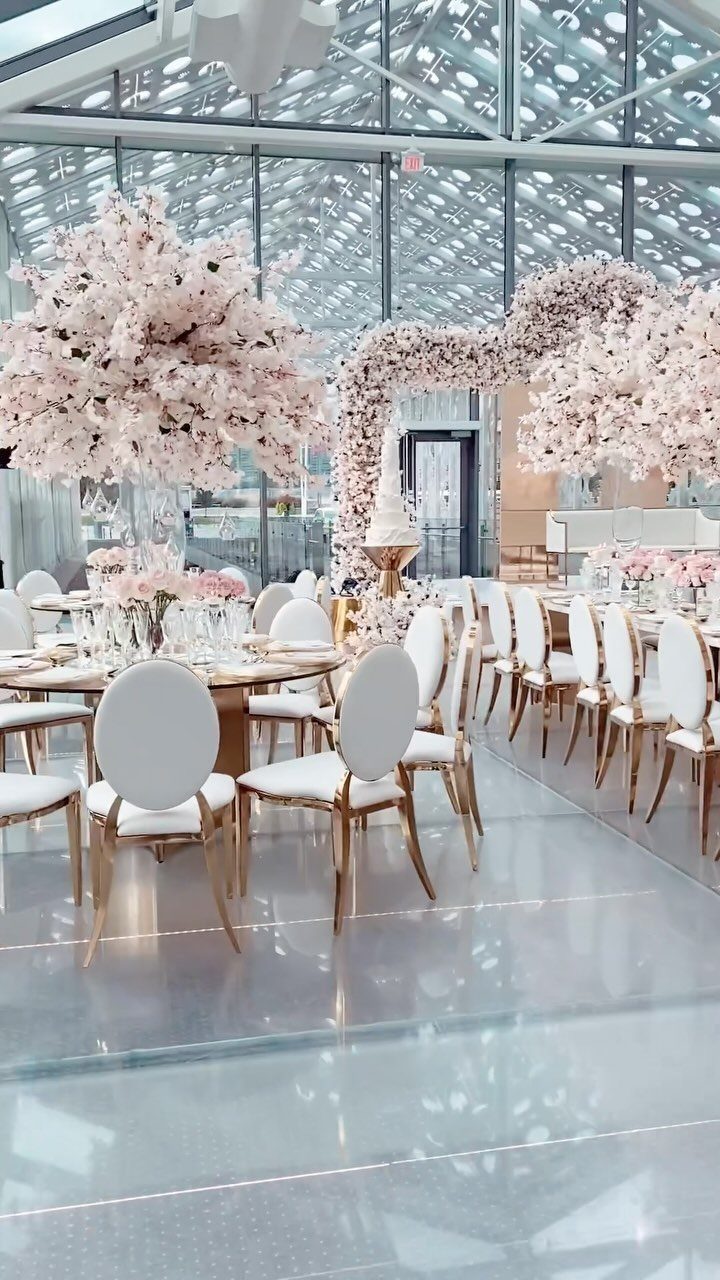
Glass walls and a glass ceiling fill a reception with daylight, so the room barely needs lighting or backdrops.
Large blossom arrangements like these pink ones can be the single big statement, and I would keep the chairs and linens plain to let them lead.
Ask how the space handles heat and glare at your time of day, since a glasshouse is all window.
Plan for evening too: the glass will reflect your lighting back at you.
15. Historic Ballroom Venue
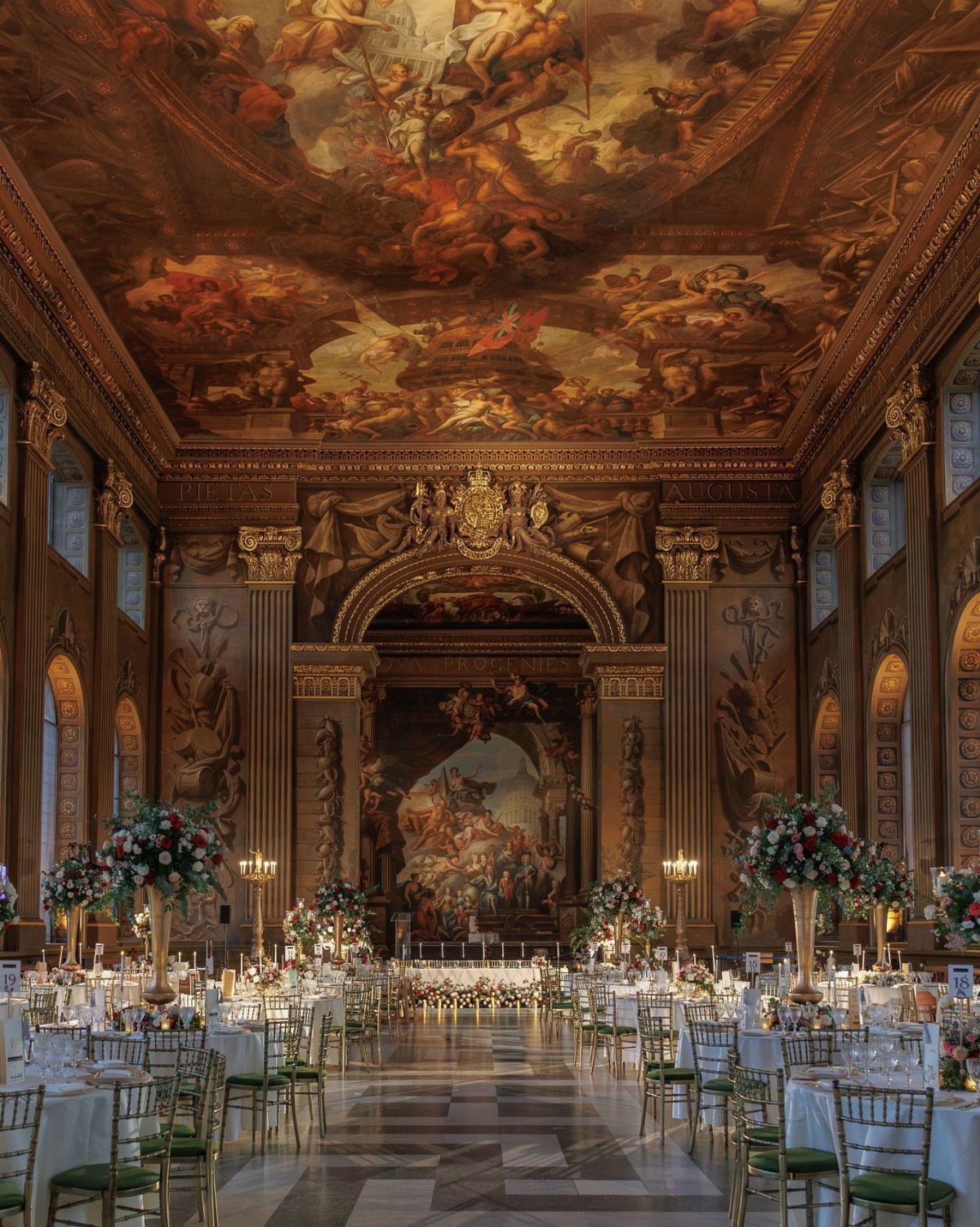
Painted ceilings, gilded columns and marble floors leave very little to add. Plain white linens and modest centerpieces let the room stay the star, which is the approach I would take.
Spend on the one thing the building cannot supply, usually food or music, and skip extra decor.
Ask what the venue includes and what it restricts. Historic rooms often limit candles, hanging items and floor protection, so get the rules in writing before you plan the layout.
16. Scenic Mountain View Venue
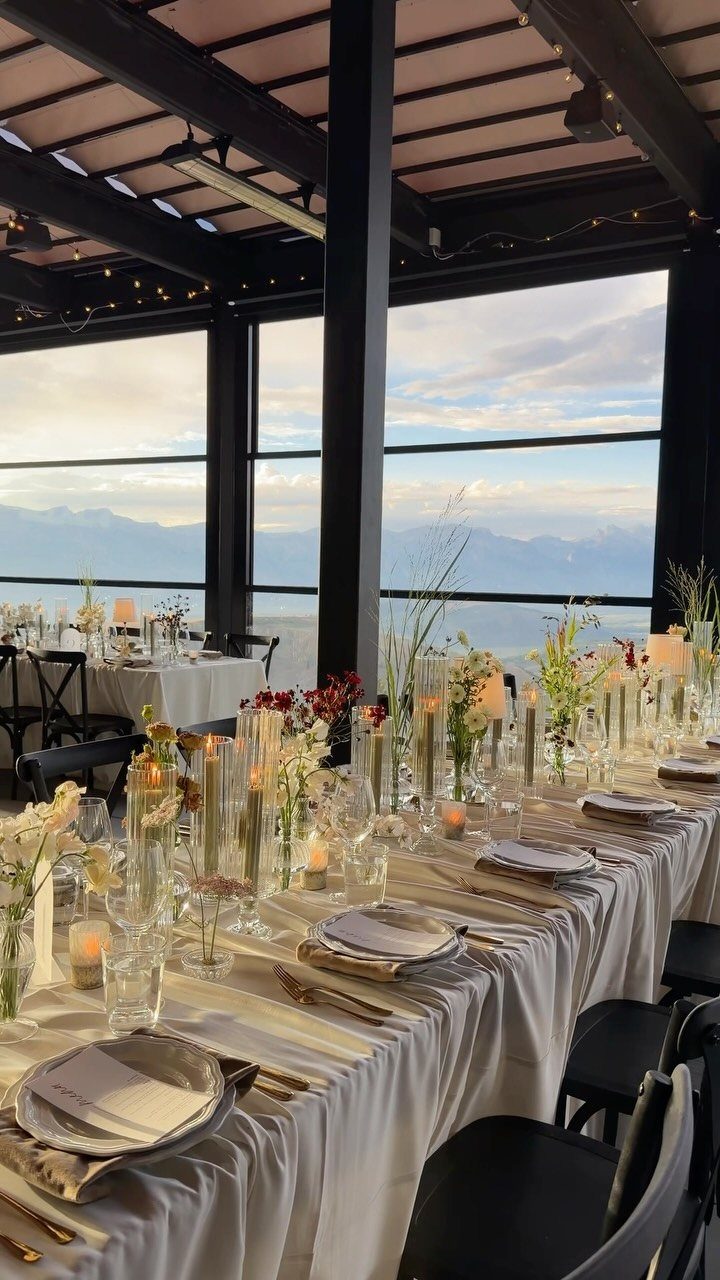
Tall windows facing a mountain range turn the view into your centerpiece. A single long table with candles and low flowers keeps sightlines open, so guests can see the peaks over the arrangements.
I would pick low florals over tall ones every time here. Anything high blocks the very thing you are paying for.
Ask where the table can sit so every guest has a window view. Then compare the room’s seating capacity with your headcount, including a plus-one for anyone who will need one.
17. Tent Wedding Venue
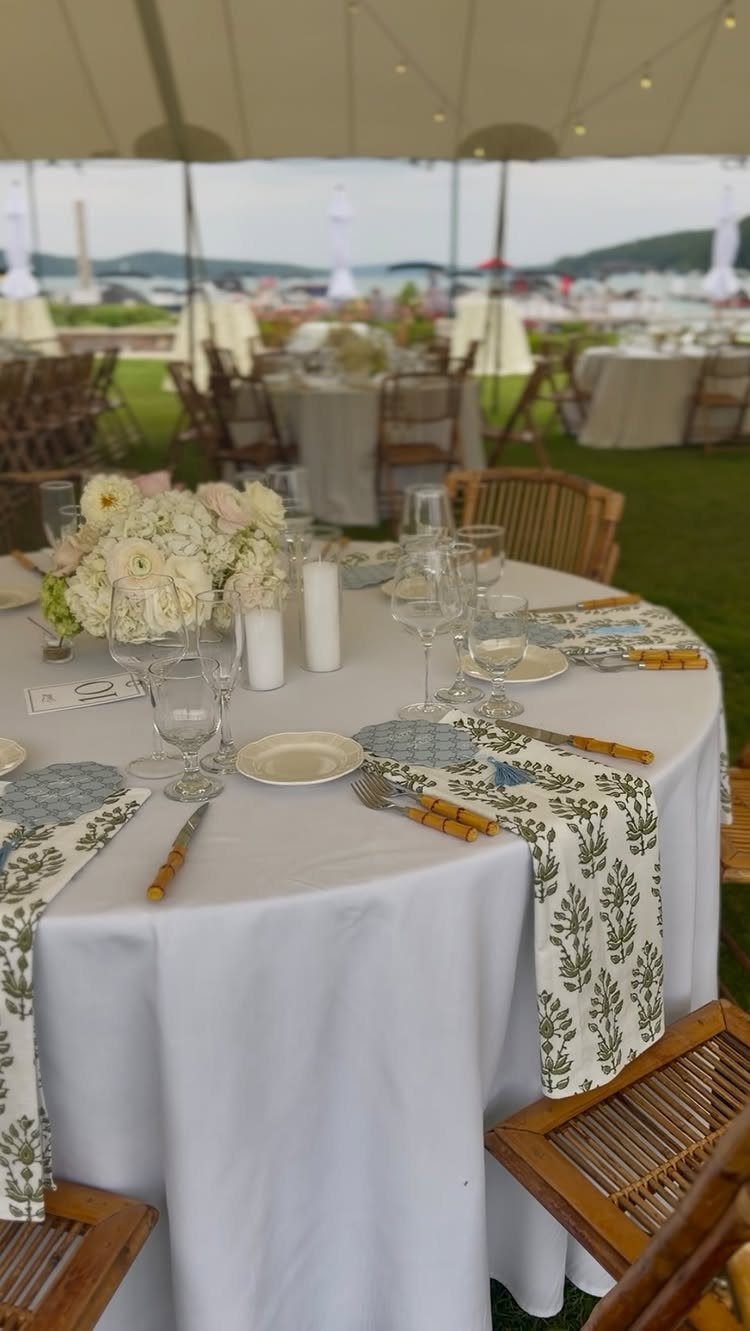
A tent gives you a roof on any lawn, which makes it the practical answer for an outdoor reception with a weather plan.
A white linen and one floral centerpiece on each round table give the space a clean, uncluttered feel under the canvas.
Because a tent starts as an empty shell, the cost is in what you rent to fill it: tables, chairs and lighting. Get a full quote before comparing it with a hall.
I would choose a tent for couples who want the open-air feel without the risk of rain.
How to Choose a Venue
Plan on seeing 5–7 venues in person before you sign anything. Book two or three in a single weekend, because the first few tours reshape what you ask for at the next ones.
Distance can make that hard.
Pay attention to how fast and how thoroughly the manager answers. A slow or vague reply during the tour stage is a fair preview of how planning will go.
Style, guest count and budget should be settled before you tour, so you can rule rooms out quickly.
Average Venue Costs
Renting a reception venue costs about $291 an hour on average. Small spaces tend to land near $235 an hour, while large ones climb to roughly $414.
Multiply by the hours you need, setup and cleanup included, before you compare a venue to a flat-fee package. A cheap hourly rate can add up fast once the clock covers the full evening.
Your guest count decides which tier you fall into, so lock the headcount early. If a room at the larger rate looks tempting, check whether a smaller one at $235 per hour would hold your guests comfortably.
Planning Tips
Book the venue first, since it decides what every other step needs. Ask whether it has preferred vendors, because using them may bring you a discount.
Next, line up food and drink. Some venues offer their own options; others expect you to hire a caterer, and that changes your budget.
Third, book entertainment. A DJ or band is the usual choice for a reception.
Fourth, plan the decor: table centerpieces, wall decor and entryway decorations. I would leave this for last on purpose, because the venue, menu and music tell you what the room still needs.
Frequently Asked Questions
What is the average cost of a wedding reception venue?
Across the country, renting a reception space typically costs around $291 per hour.
Where is the cheapest place to have a wedding reception?
Parks and backyards are often the most affordable options.
Walk the site first to see whether the ground is flat enough for chairs and a dance floor, and ask the parks office or landlord about permits and rules ahead of signing anything.
Is $5000 a good budget for a wedding?
It can work for a small wedding if you keep the venue and guest count modest.
At $235 an hour for a small space, the room alone eats into that total quickly, so a park, backyard or vacation rental with a short guest list stretches it further.
Get a full quote on everything the venue includes before you decide.