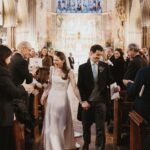
Planning a Catholic wedding mixes choices you control, like how you decorate the church and what you wear, with ones the parish controls, like your preparation timeline, your paperwork and the priest’s role in the ceremony.
Interfaith considerations sort the two: if your partner is not Catholic, the bishop’s permission or a dispensation enters the plan, and I would raise that at your first meeting with the priest or deacon.
I would start there, 9 months to a year out, before any deposit is paid.
1. Exchange of Vows
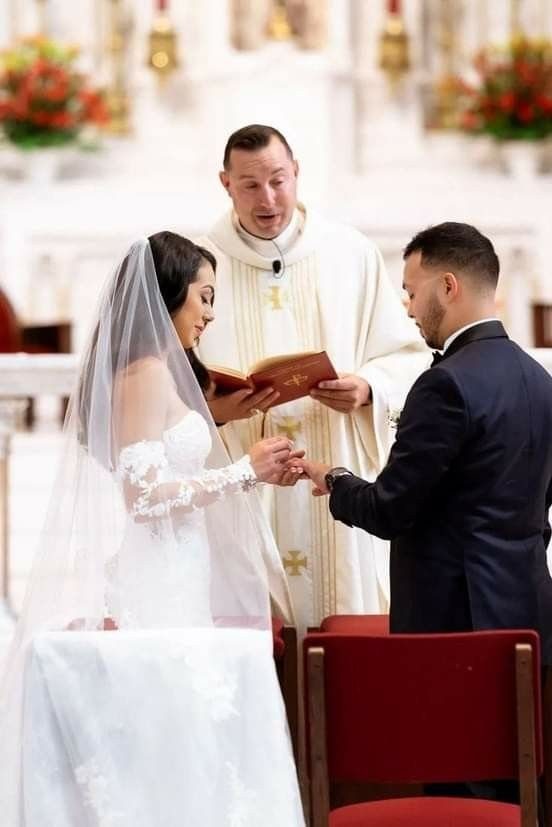
Vows and the ring exchange are the center of a Catholic ceremony, and the priest guides both. Couples usually repeat the words after him, so memorizing a script is not the hurdle people expect.
Ask your priest for the exact wording before the rehearsal, and practice saying it aloud together at least once.
Rings can wait in the best man’s pocket or on a small cushion; either way, decide who hands them over so the moment stays smooth.
The Church’s own vow wording is what most parishes expect, so ask your priest what your parish allows before planning anything personal.
2. Decorating the Church
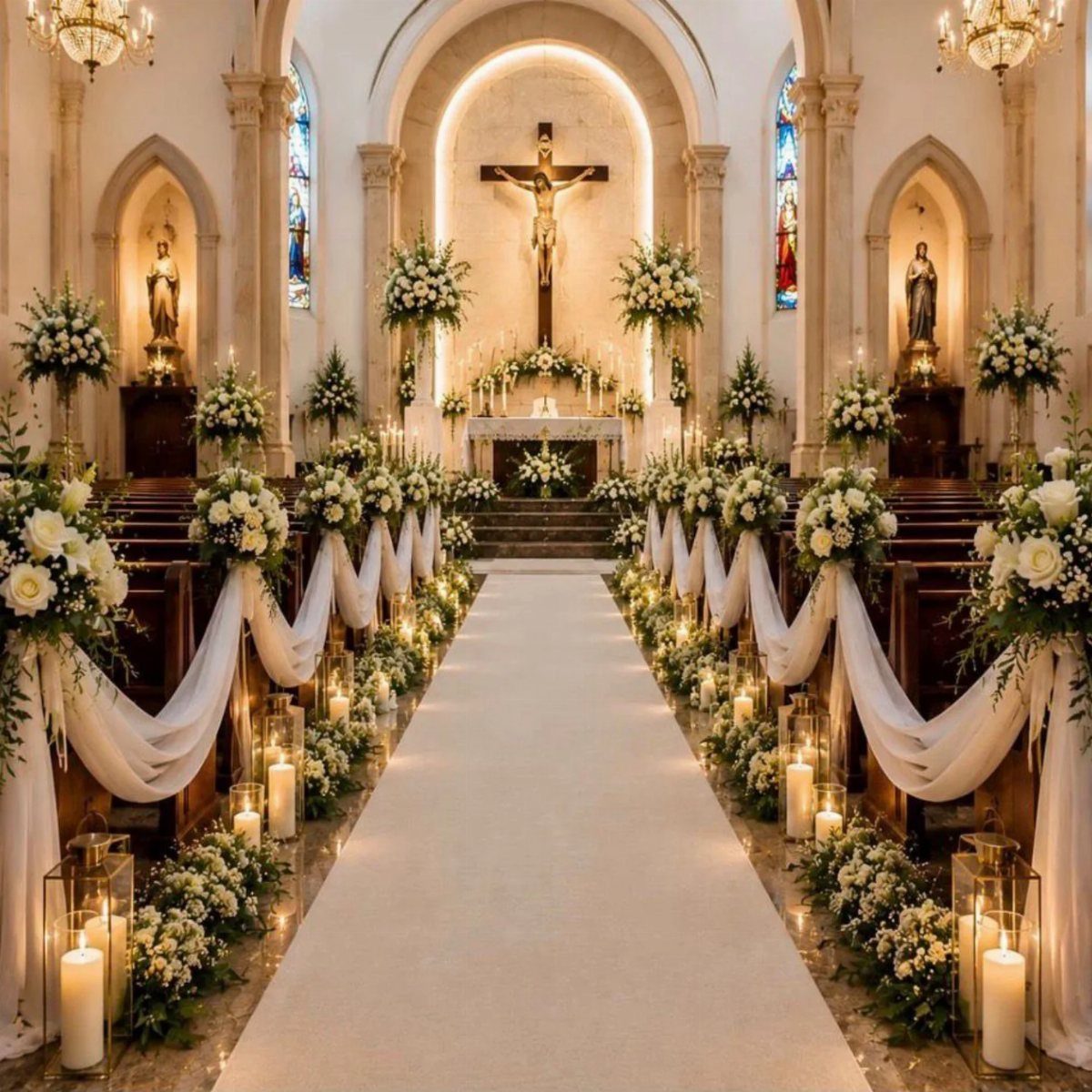
White flowers, lantern candles and fabric swags on the pews give a church plenty of style without pulling attention from the crucifix on the altar wall, and 1 color keeps the look calm.
Check with the parish first, since many churches limit open flames and restrict what can attach to the pews. Keep the altar itself as it is and put your budget into the aisle, where guests and photographers look most.
Before you order anything, ask the parish office what is allowed. Open flames, aisle runners and anything attached to the pews are common sticking points, and a florist who has worked in that church will already know the rules.
3. Wedding Attire
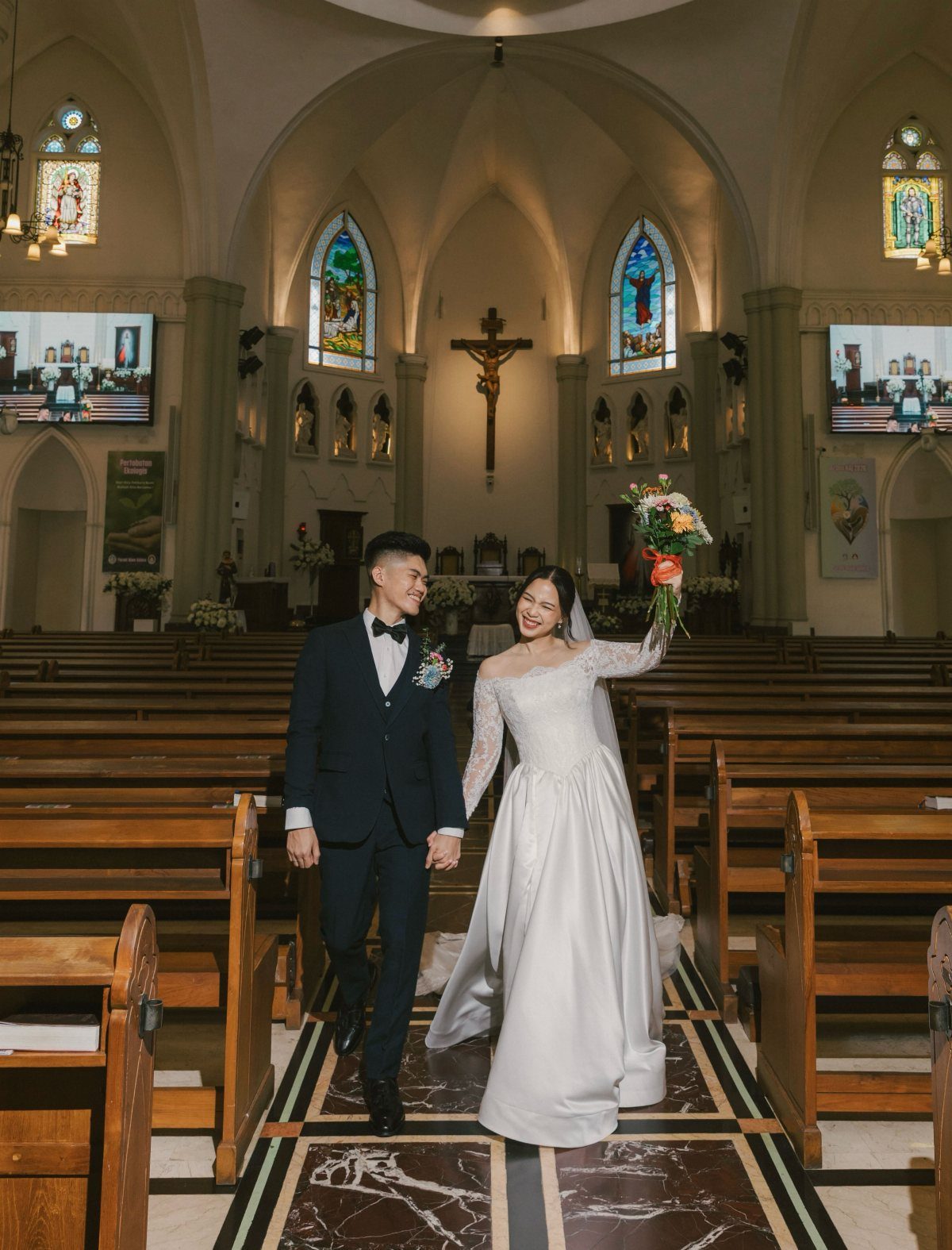
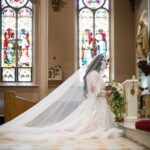
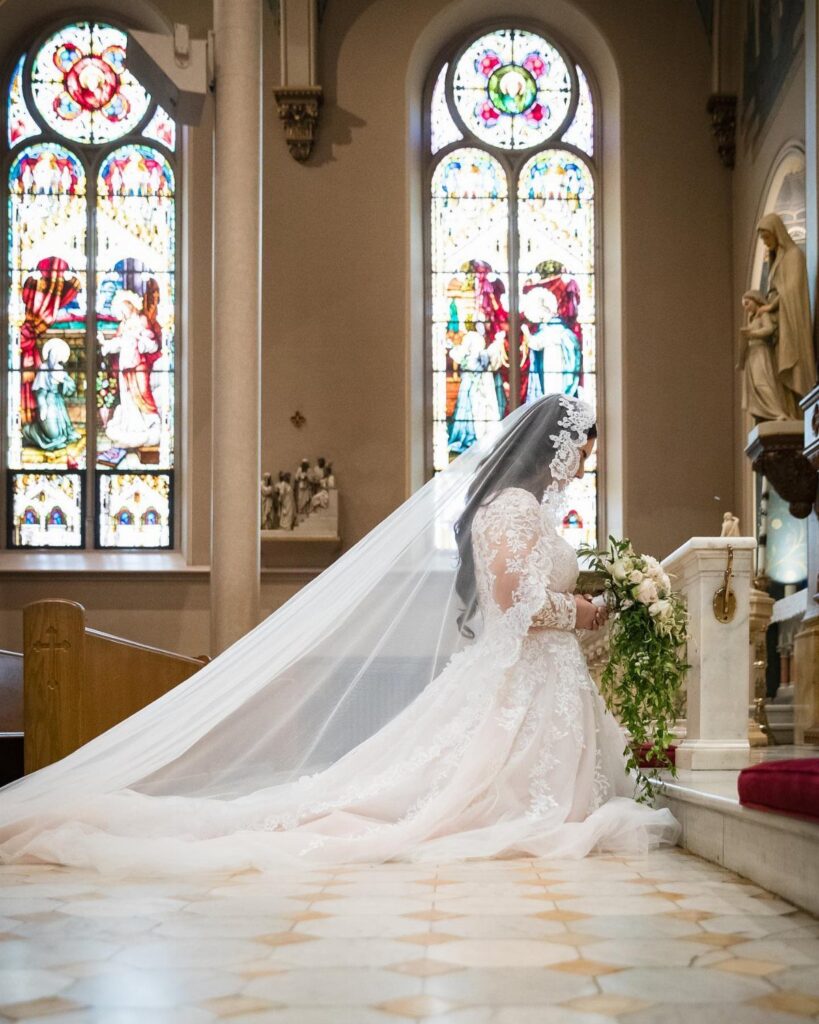
A white lace gown and a navy tuxedo suit a church ceremony well, because both look traditional without feeling costume-like.
Choose the gown with the church in mind: a cathedral-length train looks lovely on a long aisle, but it needs a helper to manage it.
Ask your parish whether shoulders need to be covered. If they do, a lace bolero, wrap or sleeves can be added to a strapless dress, and you can take it off for the reception.
Timeline for Preparation
Call the parish before you set a date or book a single vendor.
Plan on 6 months of preparation at minimum, since most parishes insist on it and a few ask for a longer runway, which means the parish gets a say in your date.
9 months to a year is the range I would aim for. Popular parishes fill their calendars fast, and the preparation takes months on its own, so book early.
At that first sit-down, the priest or deacon will check whether you’re eligible to marry in the Church and walk you through how that parish handles preparation.
Each diocese sets its own rules, so ask the parish directly instead of guessing.
Holding off on deposits until that conversation is over can save you from losing money on a venue or photographer for a date the church cannot give you.
Because of this, the process of getting married within the church can be quite long and complex: At a minimum, you should expect to spend at least six months preparing.
Role of the Priest
Canon Law, the archdiocese and the individual parish all shape marriage preparation, so I’d treat the priest or deacon as your guide through every step, well beyond the role of officiant at the altar.
Expect honest conversations about difficult questions, meant to open communication between you two before the wedding.
Even if the wedding will be held in another town, start with your home parish priest or deacon. Bring your ideas for the date, time and location, and expect some forms to fill out at that first meeting.
Some churches add steps.
A cathedral, for example, may ask you to attend an introductory marriage class led by a deacon, followed by Pre-Cana. Bring your wedding questions to that class; it’s a good place to get them answered.
Interfaith Considerations
The Catholic partner must sincerely promise to do all in their power to have any children baptized and raised Catholic.
The partner of another faith has to be clearly told about that promise, so have the conversation at home before the meeting with the priest.
Permission is also required.
For a baptized non-Catholic, the local bishop’s permission is needed for the marriage to be formally recognized. An unbaptized partner means you’ll need a dispensation, or the marriage won’t be valid in the Church.
You do not have to chase this paperwork alone. The priest or deacon handling your preparation will help you obtain it, so raise the interfaith question at your first meeting.
Frequently Asked Questions
What are the requirements for a Catholic Church wedding?
Expect at least 6 months of marriage preparation with the priest or deacon, plus paperwork such as baptismal certificates and freedom-to-marry affidavits, and a civil marriage license.
Some parishes add a premarital inventory called FOCCUS or a Natural Family Planning class. Rules differ from one diocese to the next, so a quick call to your own parish beats any general checklist.
How much does it cost to get married in a Catholic church?
Fees vary by parish. One church charges $1,400 total: a $200 non-refundable date deposit, a $200 refundable security deposit, and a $1,000 church fee covering the building, priest stipend and a coordinator.
Another charges $1,500, which includes a one-hour rehearsal the night before. Music from the organist or a cantor can cost extra, so ask the parish office for its full fee sheet.
How far ahead should I plan a Catholic wedding?
Plan on 6 months at minimum, since most parishes require that much preparation. I would aim for 9 months to a year, because popular parishes fill their calendars quickly.
Can I marry in the Catholic Church if my partner isn’t Catholic?
Yes, with permission.
If your partner is unbaptized, you need a dispensation. The Catholic partner also promises to do all in their power to have any children baptized and raised Catholic, and the other partner must be told about that promise.
Can I write my own vows for a Catholic wedding?
Ask your priest first. Most parishes expect the Church’s own wording, so personal written vows depend on what your parish allows.