Your ceiling decides which dress is yours: at the top sit the Elie Saab and Monique Lhuillier gowns, priced by hand beading and custom embroidery, and at the other end is the satin gown with a statement bow, where the money buys cut and fabric instead of hand sewing.
Pre-owned designer gowns sit at the low end, with listings like the $999 Allure Couture.
Choose the one detail you would actually pay for, whether that is beadwork, a lace train, or a sculptural ruffle skirt, then spend there and keep the rest simple.
1. Luxury Boutiques
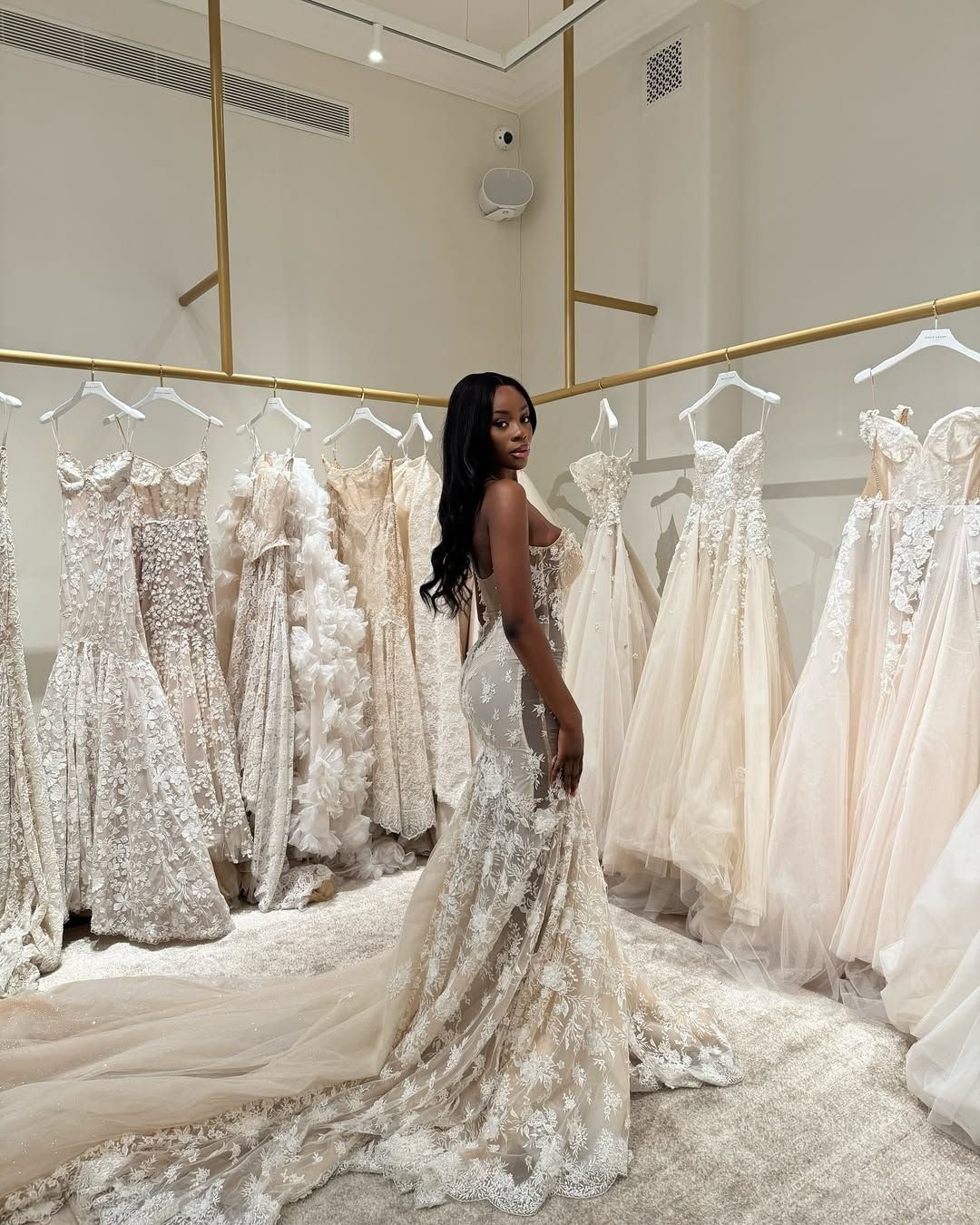
A luxury boutique sells the appointment as much as the gown, and the gold racks and gallery layout are part of what you pay for.
Go in knowing your ceiling, because a sample you love at a price you can’t reach is a hard thing to unsee.
Lace with a long train is a good test piece to try on first. It shows you quickly how much detail you’re actually willing to pay for.
I’d treat the visit as research, then compare what you saw with what fits your number.
2. Elie Saab
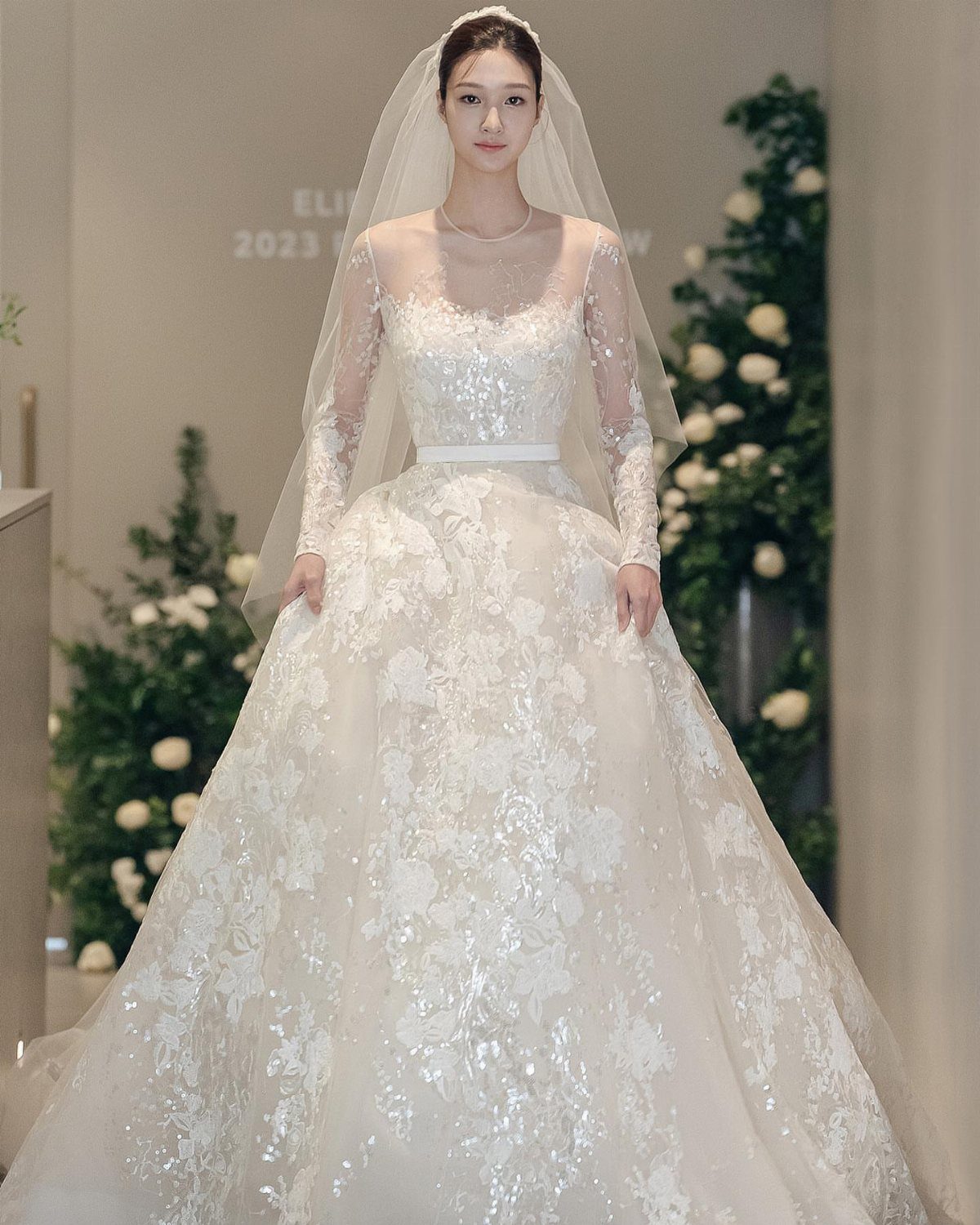
For ethereal glamour with a lot of detail, Elie Saab is the label I’d point a bride toward, as long as she accepts that the detail is what drives the price.
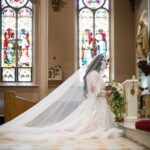
The Lebanese couturier is known for intricate work, and a gown with a long sheer veil like this one shows why.
Expect the price to match. If the budget is tight, try one Saab gown on purely as a benchmark for what fine lace and delicate construction look like.
Then you’ll know what to look for in a less expensive dress.
3. Monique Lhuillier
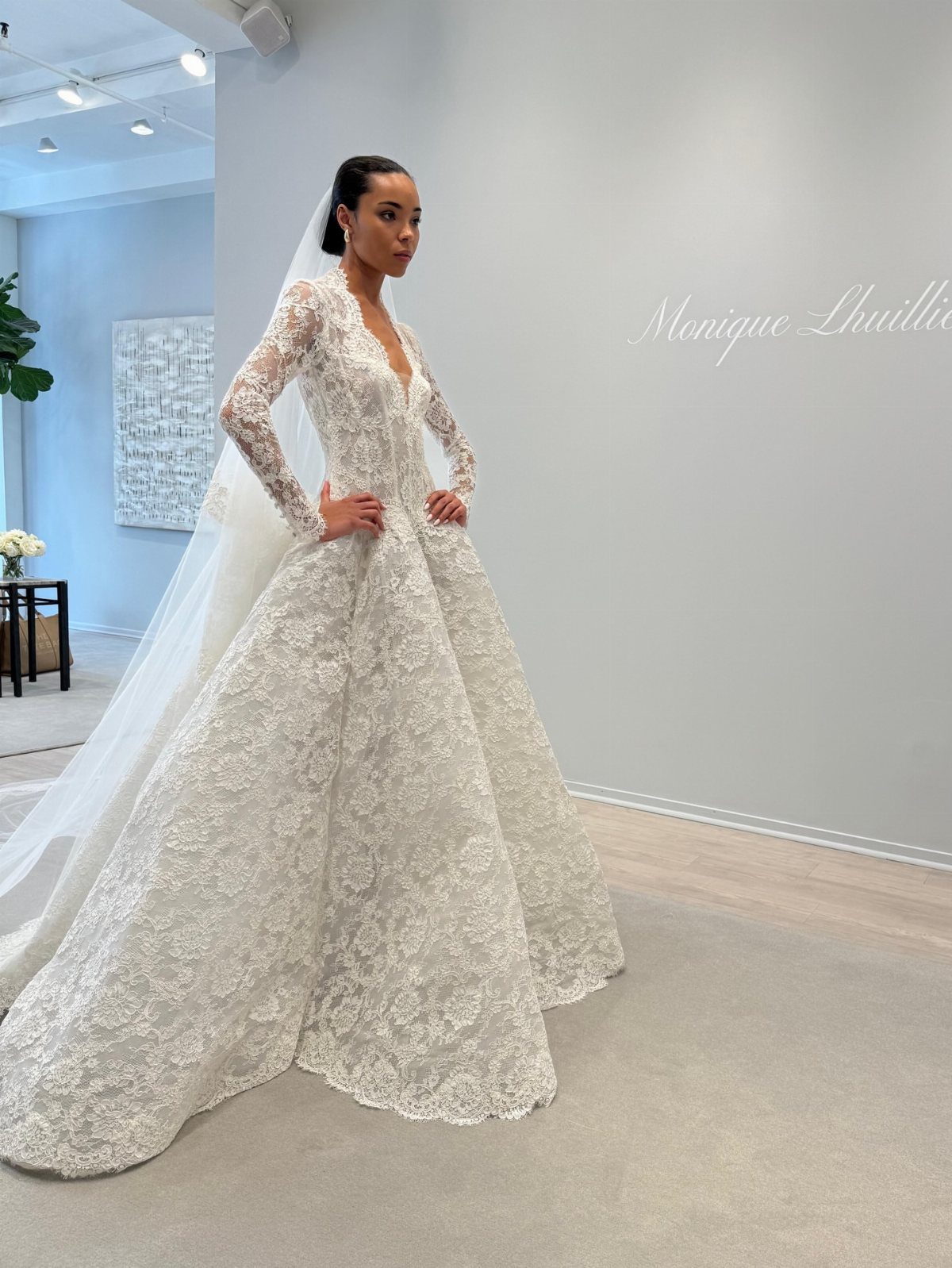
Long sleeves in lace can look heavy, yet a Monique Lhuillier gown keeps them romantic. Monique Lhuillier is known for modern romance, with soft, airy detailing set against sharp, sculpted construction, and that mix is what the price tag covers.
I like it for brides who want softness without a fussy silhouette. A long veil adds drama without extra embellishment, which is a cheaper place to spend than on the dress itself.
4. Intricate Beadwork and Custom Embroidery
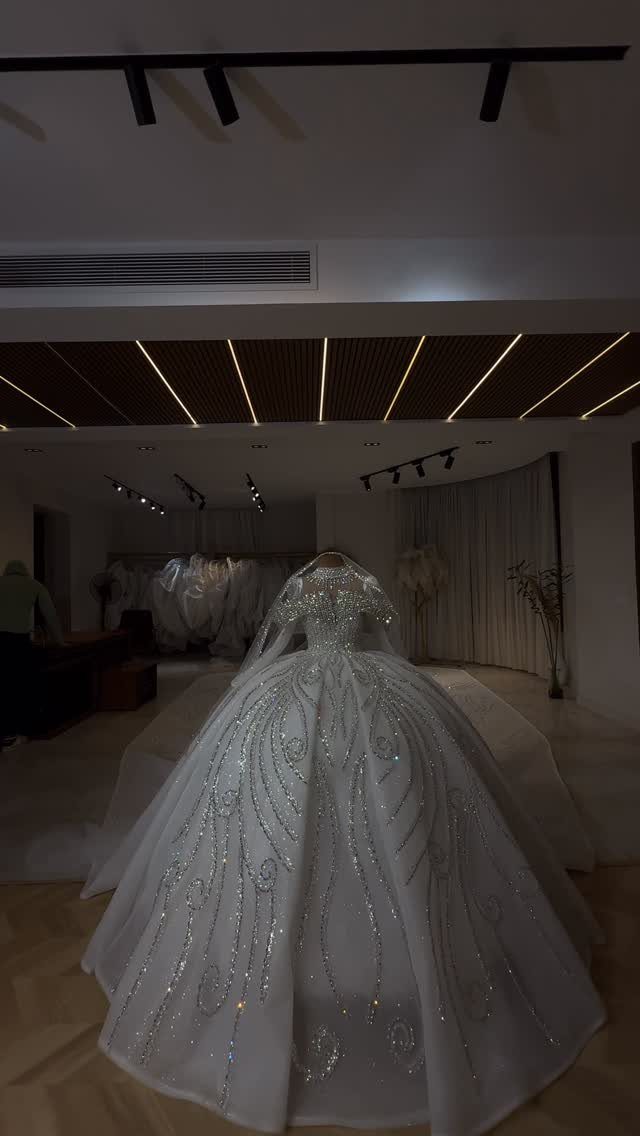
Beadwork and custom embroidery are where an expensive dress earns its price, since the labor is in the detail. A ballgown covered in shimmering silver beading is a clear example.
Find out how much of the dress is finished by hand, and get a quote on what a custom change would add, before you sign anything.
Beading can also add weight, so wear it through a full appointment and move around before deciding.
If the budget is tight, I’d choose beadwork on the bodice only.
5. Heavy Satin Ballgown
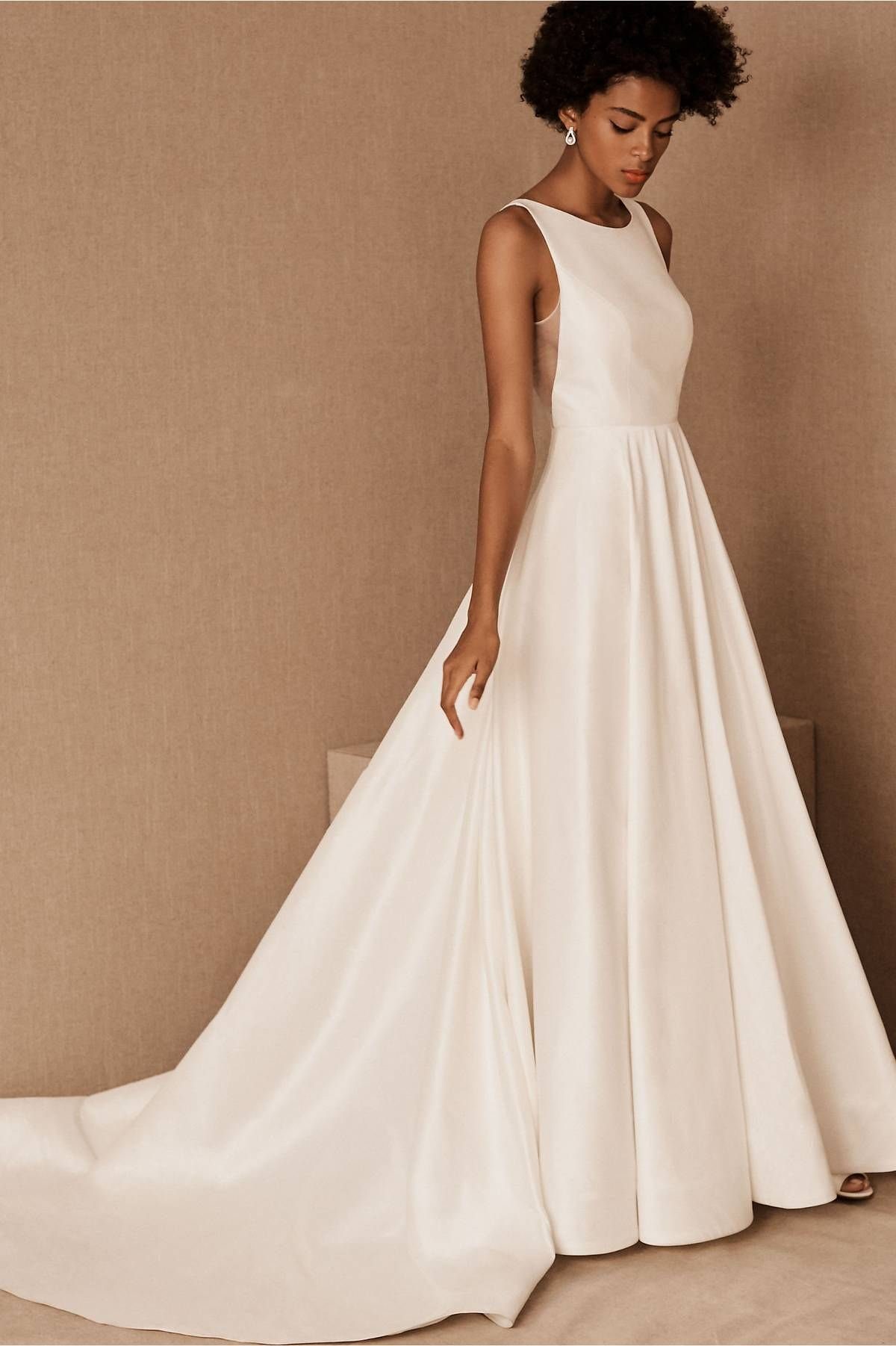
Satin makes a quiet case for spending more: with no lace or beading to hide behind, the fabric and the cut do all the work.
A structured skirt and flowing train in plain white satin look best when the finish is clean.
I’d pick this over heavily decorated gowns if you want your money in fabric and shape. Look closely at seams and hem in person, since plain satin shows every flaw.
6. Full Lace Sweetheart Gown
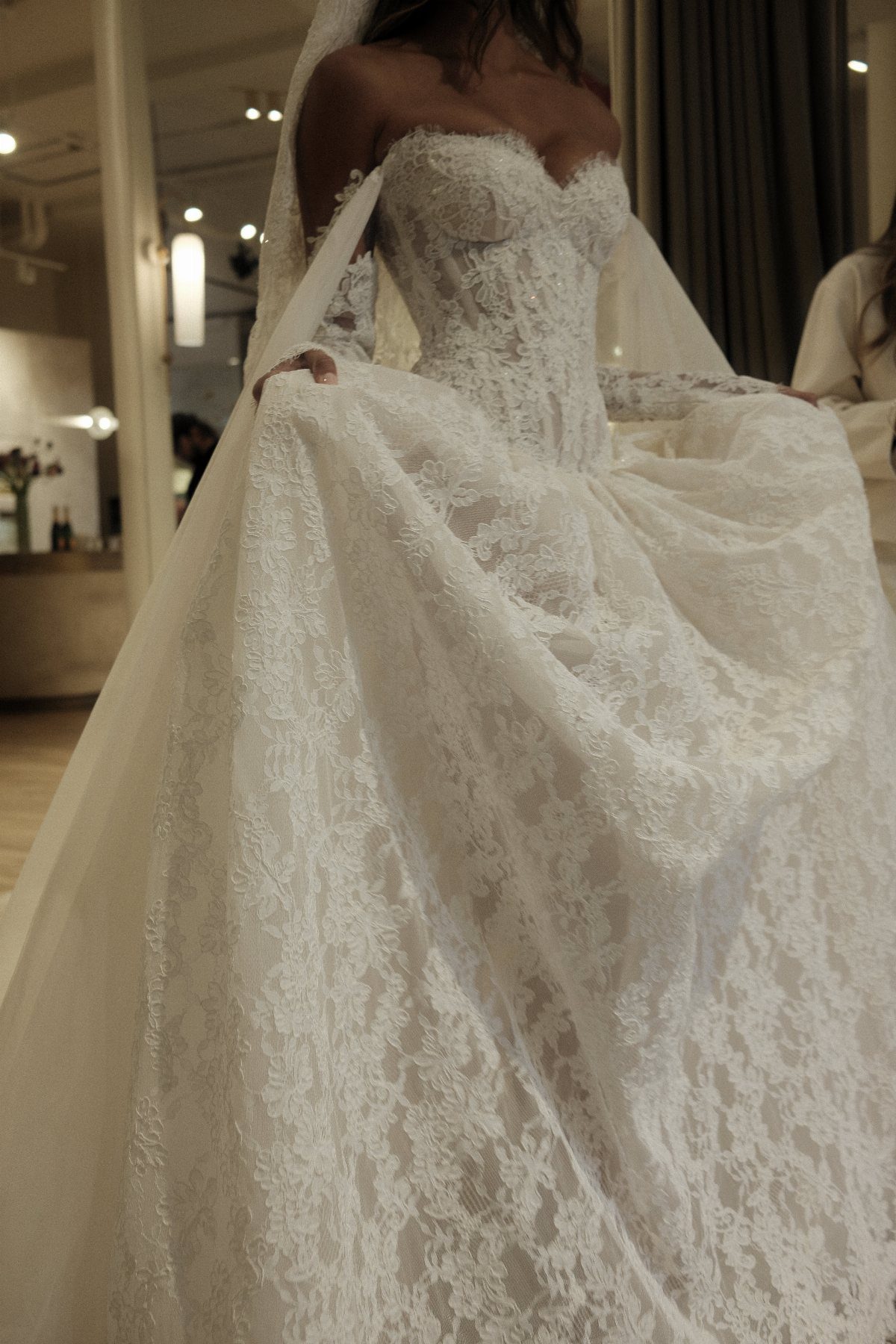
A strapless sweetheart neckline in full lace, with a long sheer veil, is a classic that rewards close inspection. Check how the lace is laid across the bodice and whether the edges sit flat.
Because the lace carries the whole look, I’d keep everything else simple. The veil is sheer, so it adds length without competing with the pattern.
Try it on with and without the veil before you decide what to spend on each.
7. 3D Floral Appliqué Gown
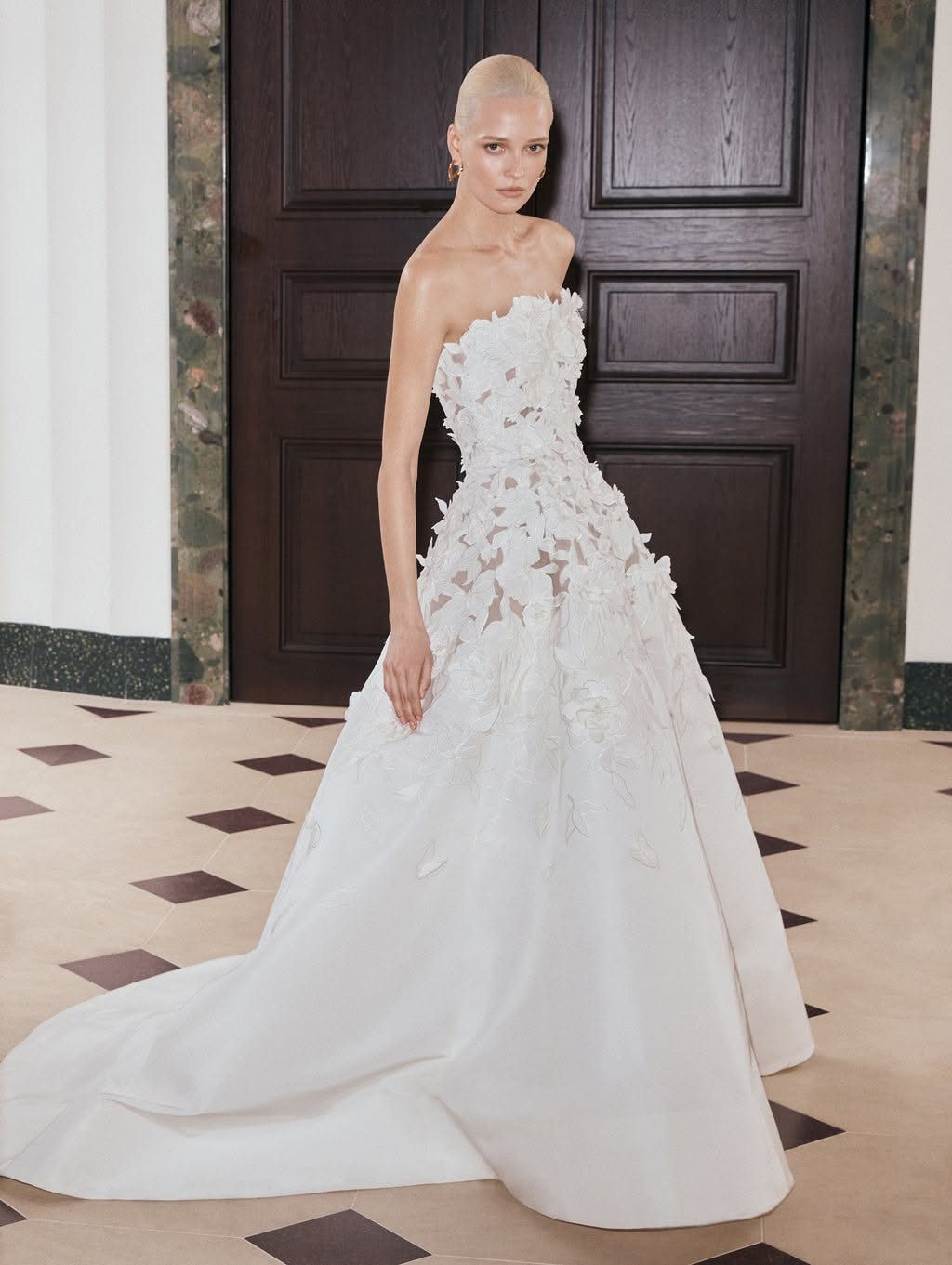
Appliqué flowers lifted off the fabric give a strapless bodice texture that flat lace can’t, and that dimension is where the cost sits. Each flower is placed and attached individually, so the price climbs with the count.
I’d run a hand over the bodice and skirt at the fitting, checking that every flower is secure and the edges aren’t lifting.
Ask whether the florals continue onto the full skirt or stop at the waist, since that changes how much you pay.
On a tight budget, put the 3D flowers only on the bodice and let the skirt stay plain, since that’s where the eye lands first.
8. Dramatic Cathedral Lace Train
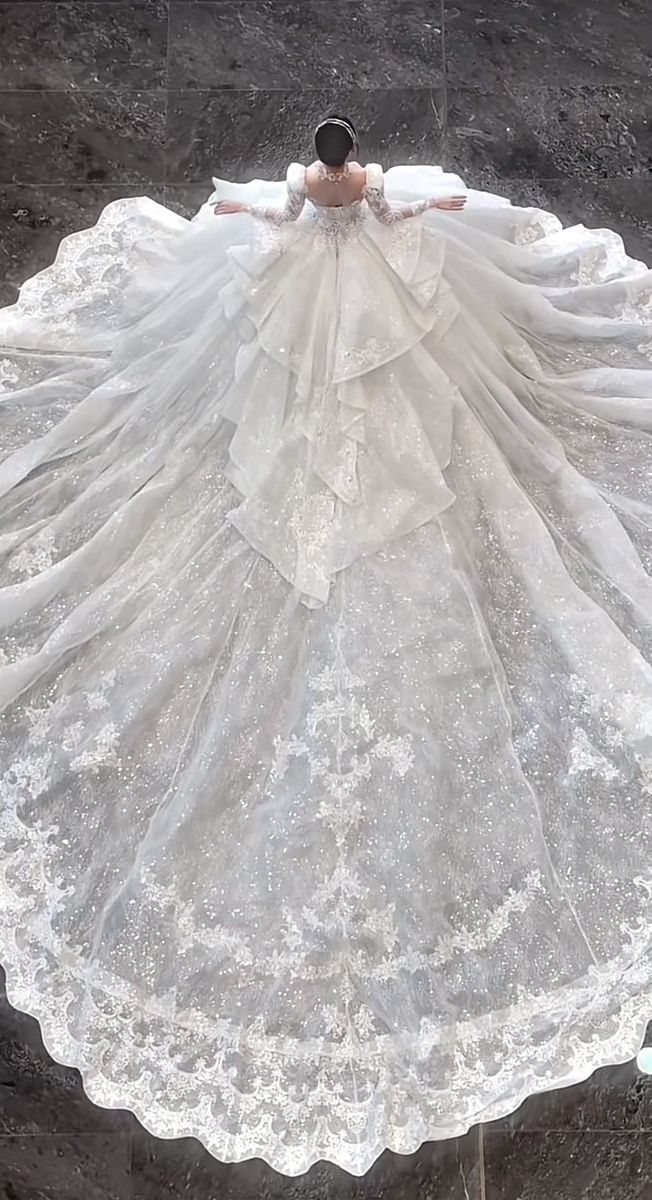
A cathedral train turns a gown into a floor-length piece of lace, and the pattern only shows when it’s laid out flat.
Ask to see it fully spread before you decide, because a train that looks ornate on the hanger can read differently on stone.
Long trains cost more in fabric and finishing, and they need handling on the day. Ask how it bustles and who will arrange it for photos and the walk down the aisle.
I’d pair it with a simple veil so the lace stays the focus.
9. Sculptural Ruffle Skirt Ballgown
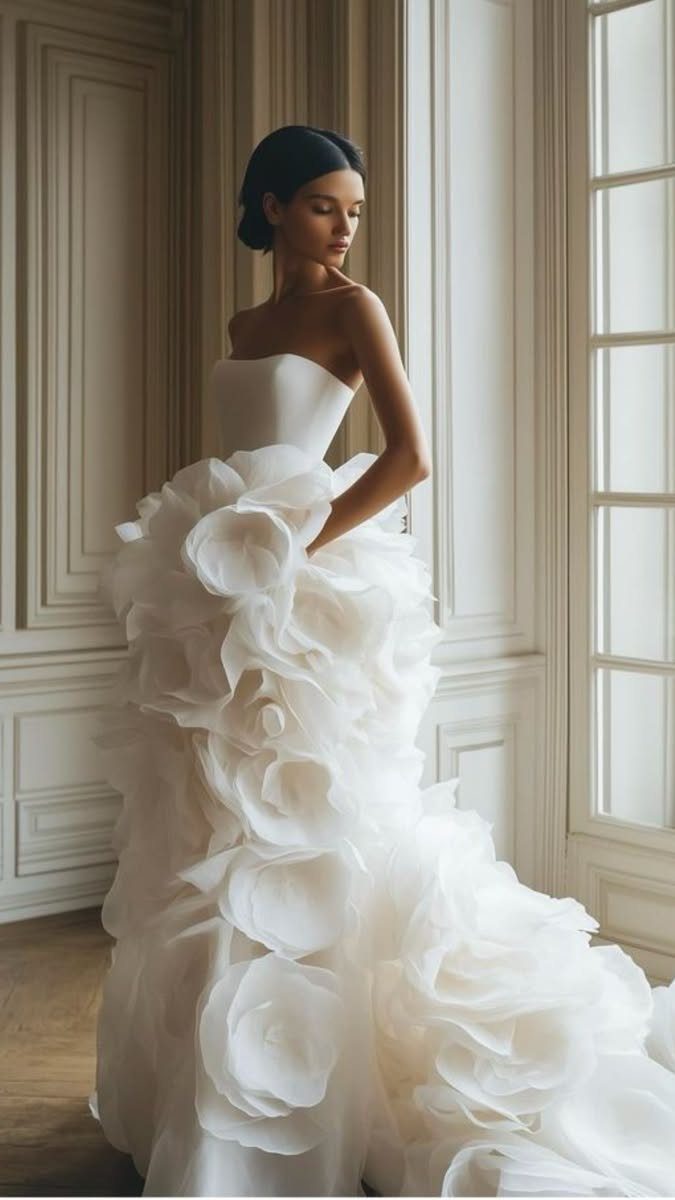
Oversized fabric ruffles shaped like flowers make the skirt the whole statement, so the bodice can stay clean and strapless. That is the version I’d pick if you want one dramatic feature instead of detail everywhere.
Sculpted ruffles hold their shape through structure, and that construction is what you pay for. Check from several angles in person, since the arrangement of the ruffles changes how full the skirt looks.
Keep jewelry minimal. The skirt already does the talking.
10. Satin Gown with Statement Bow
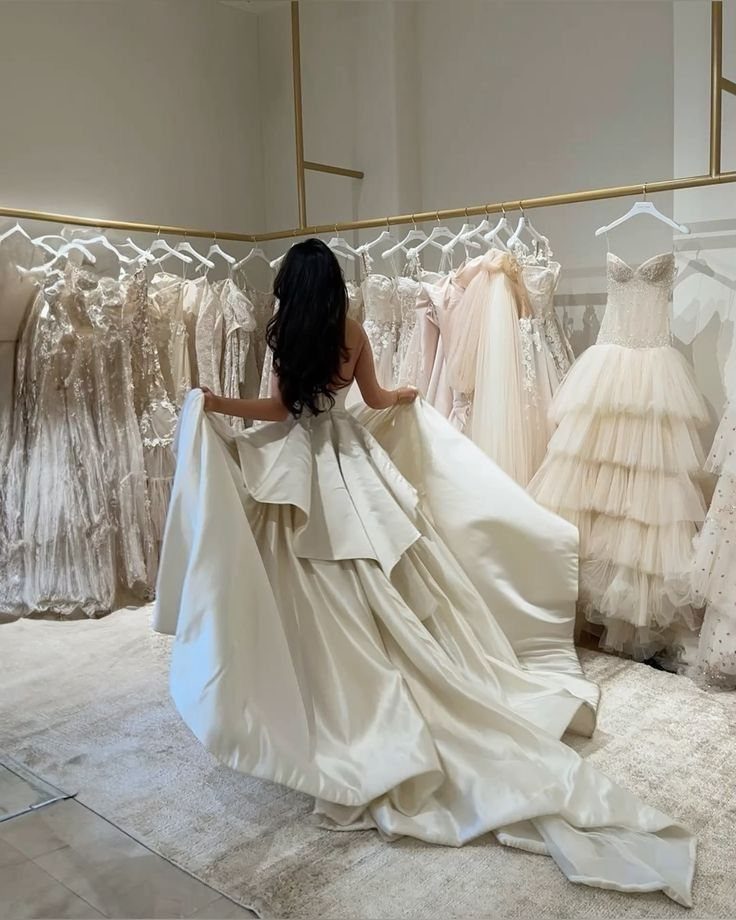
A big bow on the back of a white satin gown is a high-impact detail with very little decoration elsewhere.
Satin is unforgiving, so look at how the bow is attached and whether it sits crisply where the skirt falls into the train.
Have someone photograph you from behind during the fitting, because the bow is the part guests will see during the ceremony.
Next to a beaded gown, this one gets its drama from satin and silhouette, so your money goes into cut and fabric instead of hours of hand sewing.
Factors Influencing Dress Value
A dress’s worth splits into 4 parts: construction quality, how unusual the design is, what it feels like to wear, and what it might fetch later.
Rank them before you shop, because a gown rarely wins on all four at your budget.
Quality is the easiest to check. 3 details tend to justify a high price: beadwork stitched by hand, laces imported from Europe, and boning or corsetry built inside the bodice so the dress holds its shape and still feels comfortable.
Those details drive a gown’s original retail price and they stay intact on a pre-owned dress.
That makes pre-owned the place where a limited budget stretches furthest. One example is an Allure Couture gown listed at $999.
If resale or handing the dress down matters to you, a designer label tends to hold its value better than a mass-produced one. I’d still weigh the emotional part first, since you’re the one wearing it.
Designer Dress Shopping Experience
Designer salons sell guidance along with the gown, so use it.
A good stylist knows each designer’s collection well, so she can walk you through silhouettes, fabrics, and custom changes, and steer you away from a gown that looks lovely on the hanger but won’t flatter you.
Ask early what changes the salon offers. Designer gowns often allow neckline changes or an extended train, and a small alteration can make an in-budget dress feel like yours.
Plan for the emotional side too. Slipping into a gown that fits well and feels right is a real moment, and it can pull your budget upward quickly.
Decide your ceiling before the appointment, and tell the stylist the number plainly. A stylist who respects it saves you from trying on dresses you can’t buy.
Trends in Wedding Dress Design
Plus-size brides now have far better luxury options than a few years ago.
Pre-owned is where this gets affordable. Listings I’d use as price benchmarks run $875, $925, and $1,000 for plus-size designer gowns.
When you shop, ask to try the real silhouette you want in your size instead of judging from a smaller sample. Fit changes how structure and lace sit on the body.
Relaxed styles and unusual silhouettes are also in the mix right now. Choose what flatters you and suits the venue, not what is simply new.