The list covers a cathedral-length mantilla that trails far behind the bride, plus lace-sleeved gowns, tiered lace dresses, hem details and a classic church aisle look, and the styling shifts with each.
Choose the veil once you know how your hair will be worn, and bring the actual veil to your hair trial so you can see how the lace sits.
1. Mantilla Veil Definition
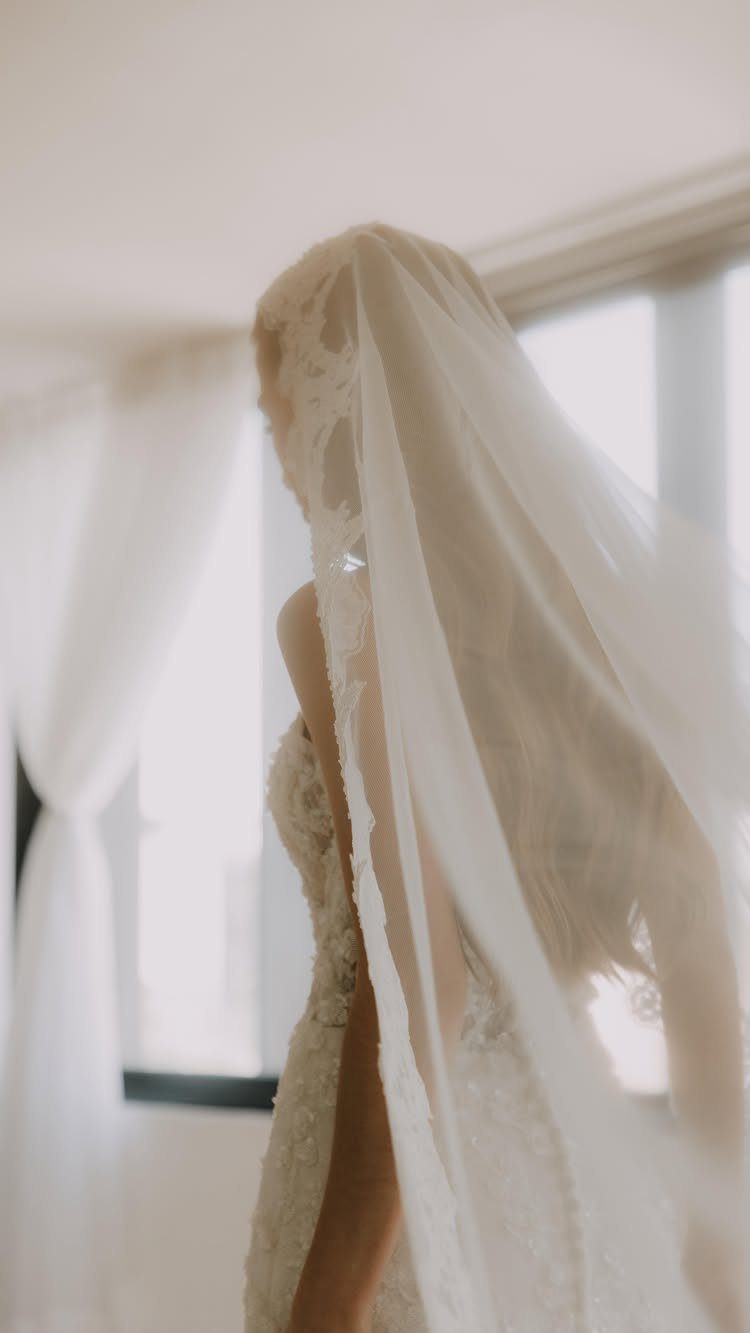
A mantilla is a lace-edged veil with a soft, rounded shape, and it falls around the face and shoulders rather than standing out from the head. That makes it a traditional choice that still looks quiet and finished.
Because the lace carries the design, I would pair it with a gown that has some lace of its own, or one plain enough to let the edging stand out.
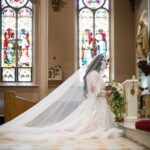
2. Cathedral Mantilla Veil
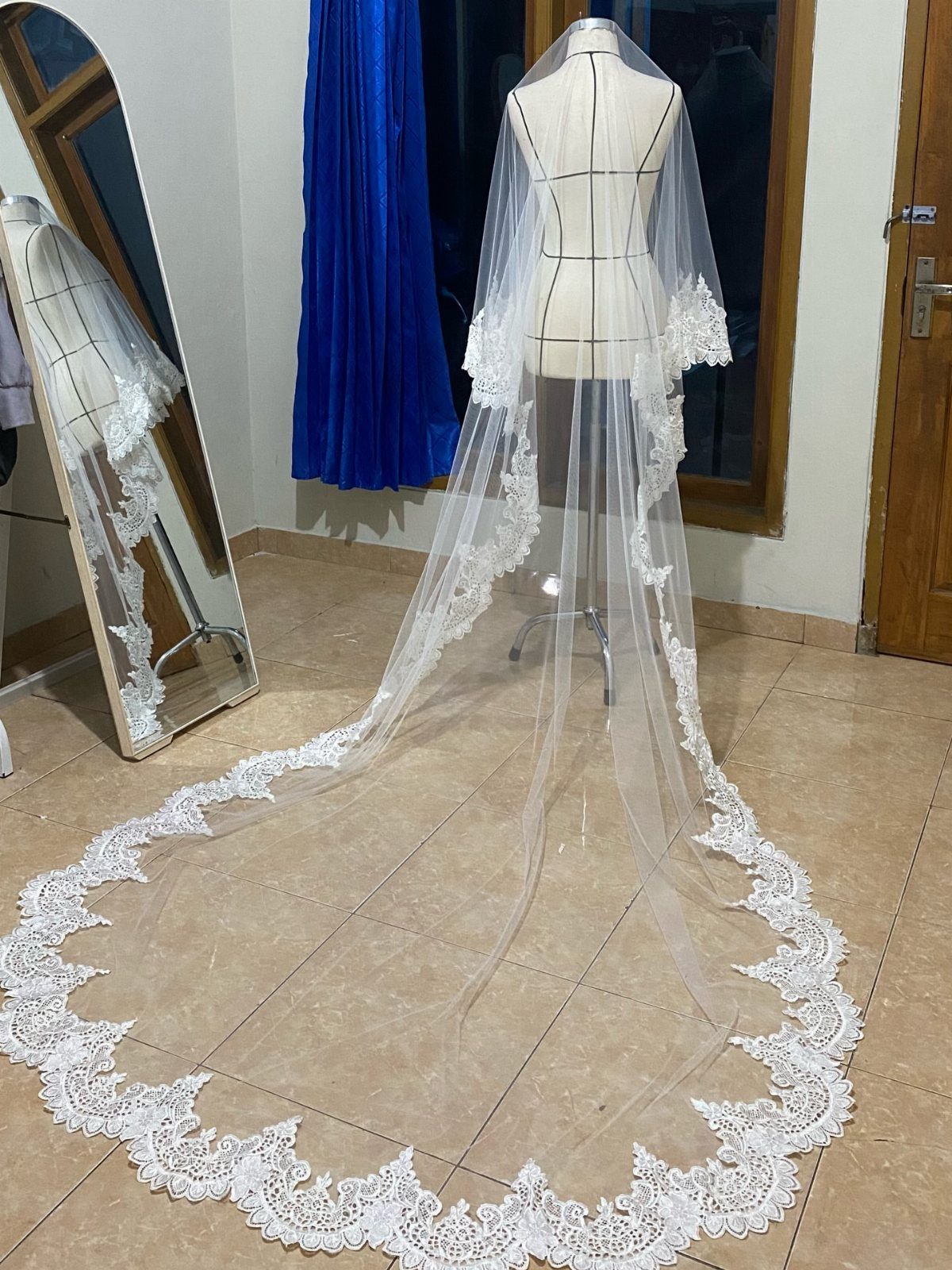
Length is what makes a cathedral mantilla. It trails far behind the bride, and the lace trim along the edge is what keeps it from reading as plain tulle.
Plan for the full drop in your ceremony space and your photos.
I would pick this over a shorter mantilla only if the aisle is long enough to show it off, and if someone will be free to arrange it behind you.
3. Bridal Styling Tips
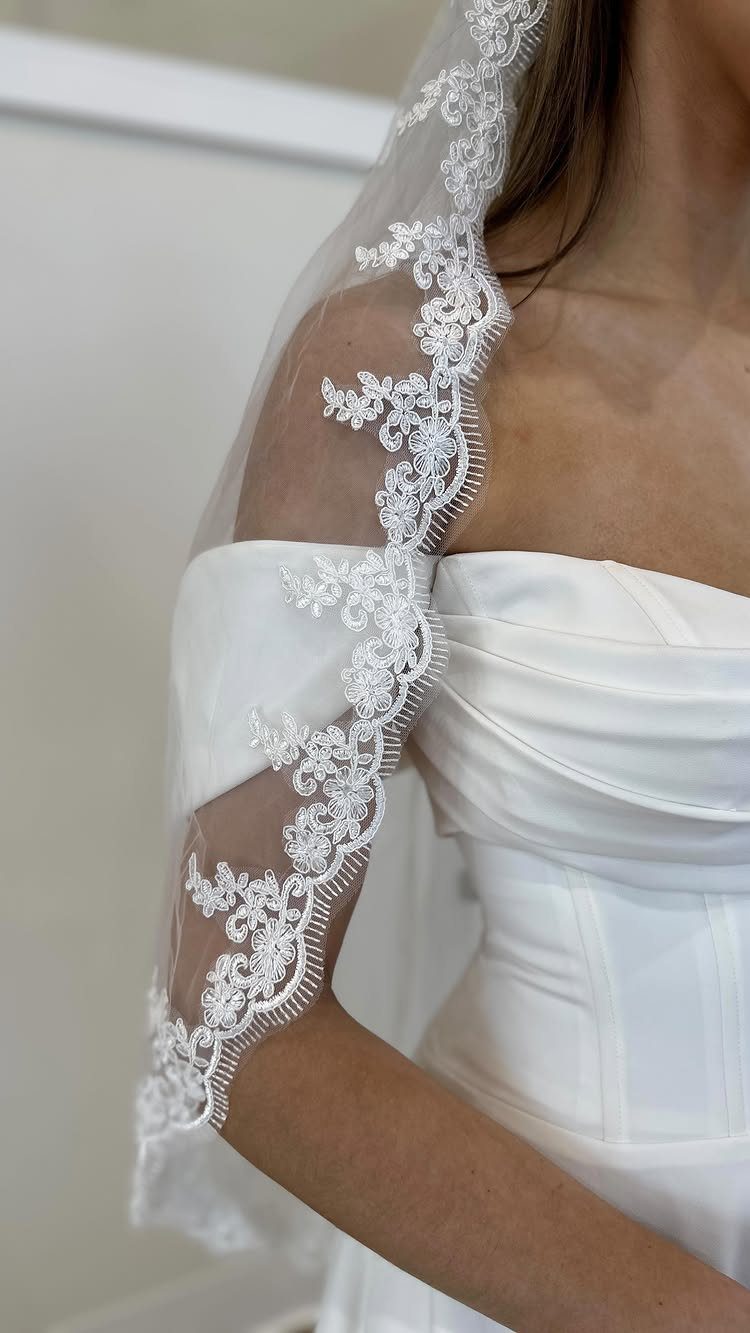
A wide, ornate lace border changes how a veil frames the face, so choose the border before the length.
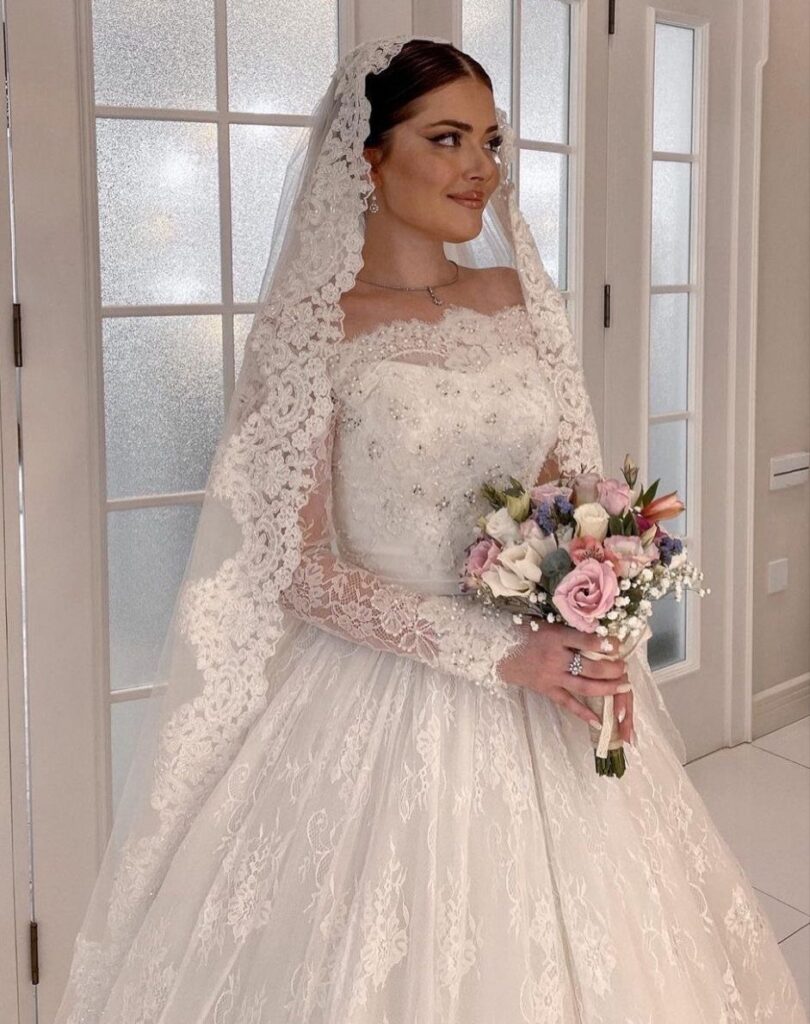
With an off-the-shoulder neckline like this one, a mantilla sits softly across the shoulders and adds detail where the dress is bare.
Hold the veil up against your dress in natural light, since lace tones can clash with the gown fabric. My pick for a simple neckline is a bold border with a sheer center.
4. Lace-sleeved Gown with Mantilla Veil
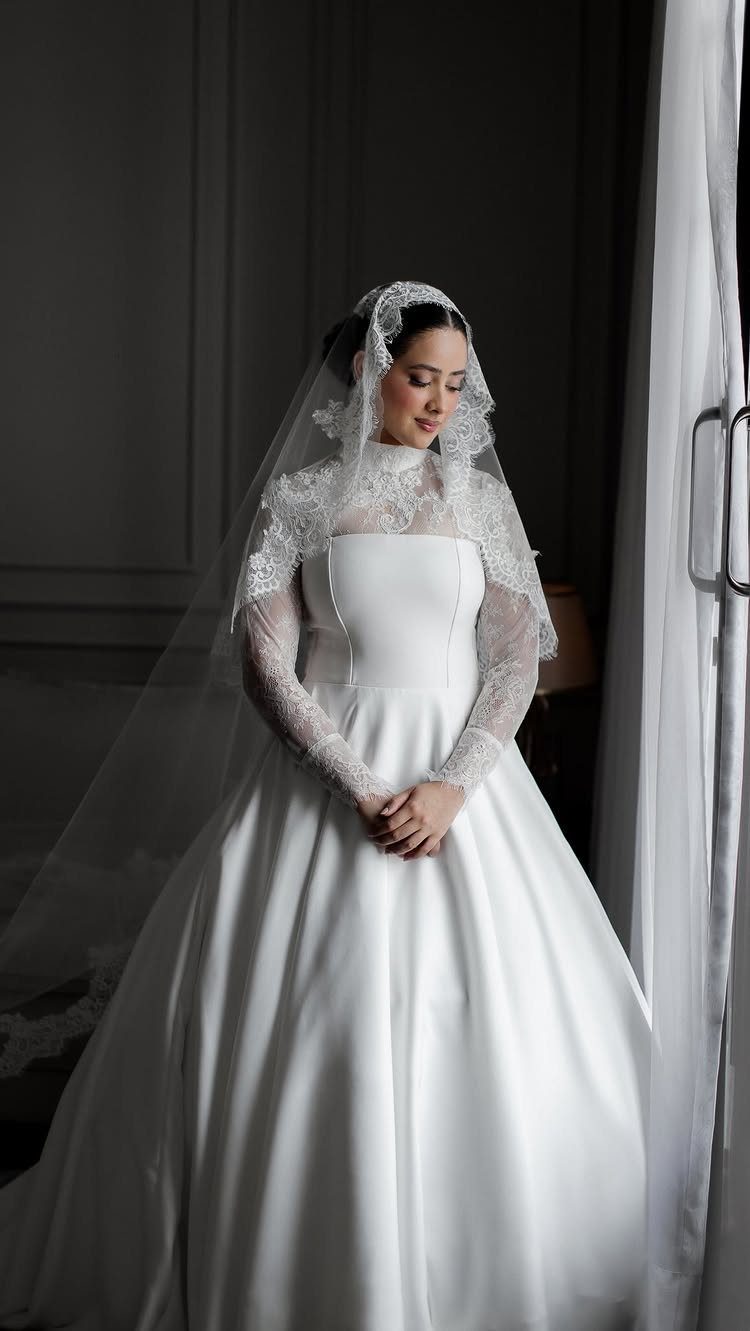
Long sleeves already bring lace and satin into the look, so the veil should echo that lace rather than compete with it. Matching the pattern, or staying close to it, keeps the whole outfit cohesive.
Drape the mantilla over the crown of your head and let it fall past the shoulders. Order a lace swatch first and hold it against the gown fabric in daylight, since ivory and white can clash.
A black mantilla is also traditionally worn by a woman who is meeting with the Pope and a white mantilla is appropriate for a church wedding, but can be worn at other ceremony occasions as well.
5. Mantilla Veil with Wedding Bouquet
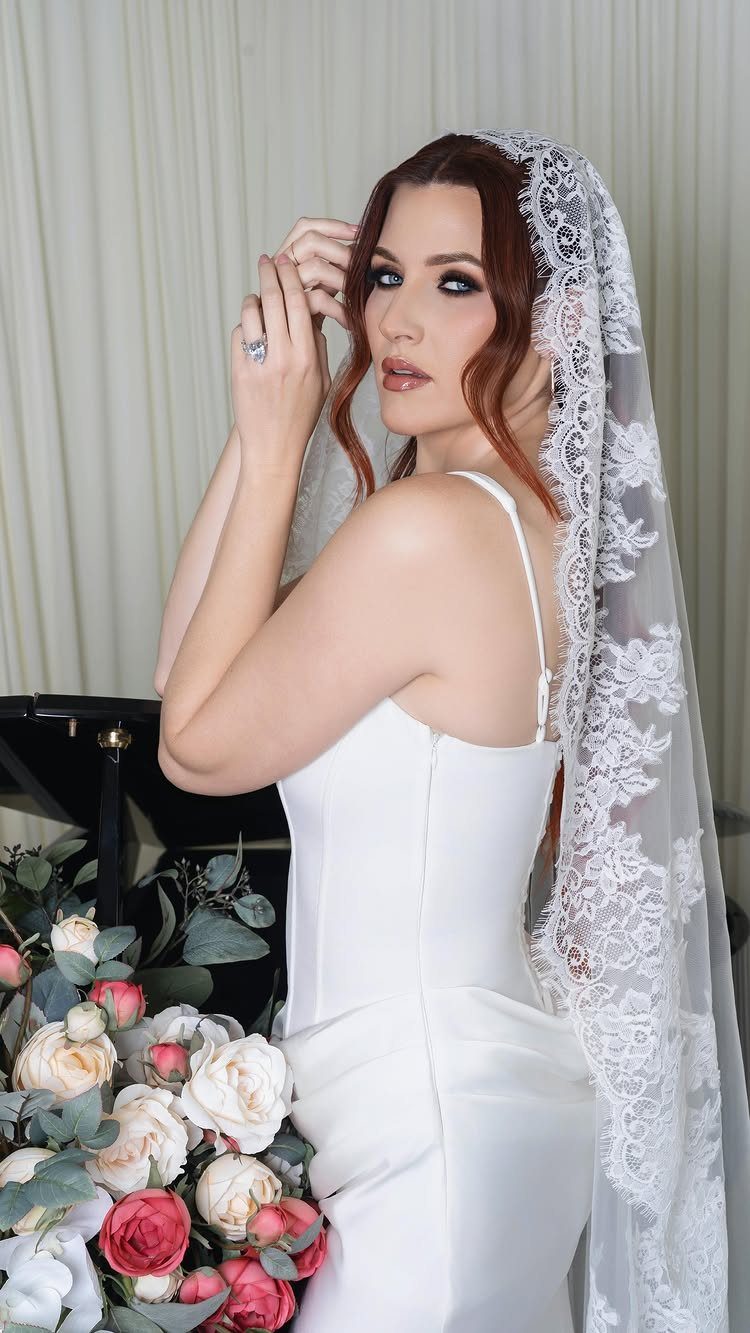
An embroidered mantilla and a soft rose bouquet pair well because both have a gentle, handmade look. Keep the bouquet loose and low so it does not cover the embroidery at the front of the veil.
I would hold the flowers slightly to one side when posing. Then the veil’s pattern and the roses each stay visible in photos.
6. Tiered Lace Dress and Mantilla
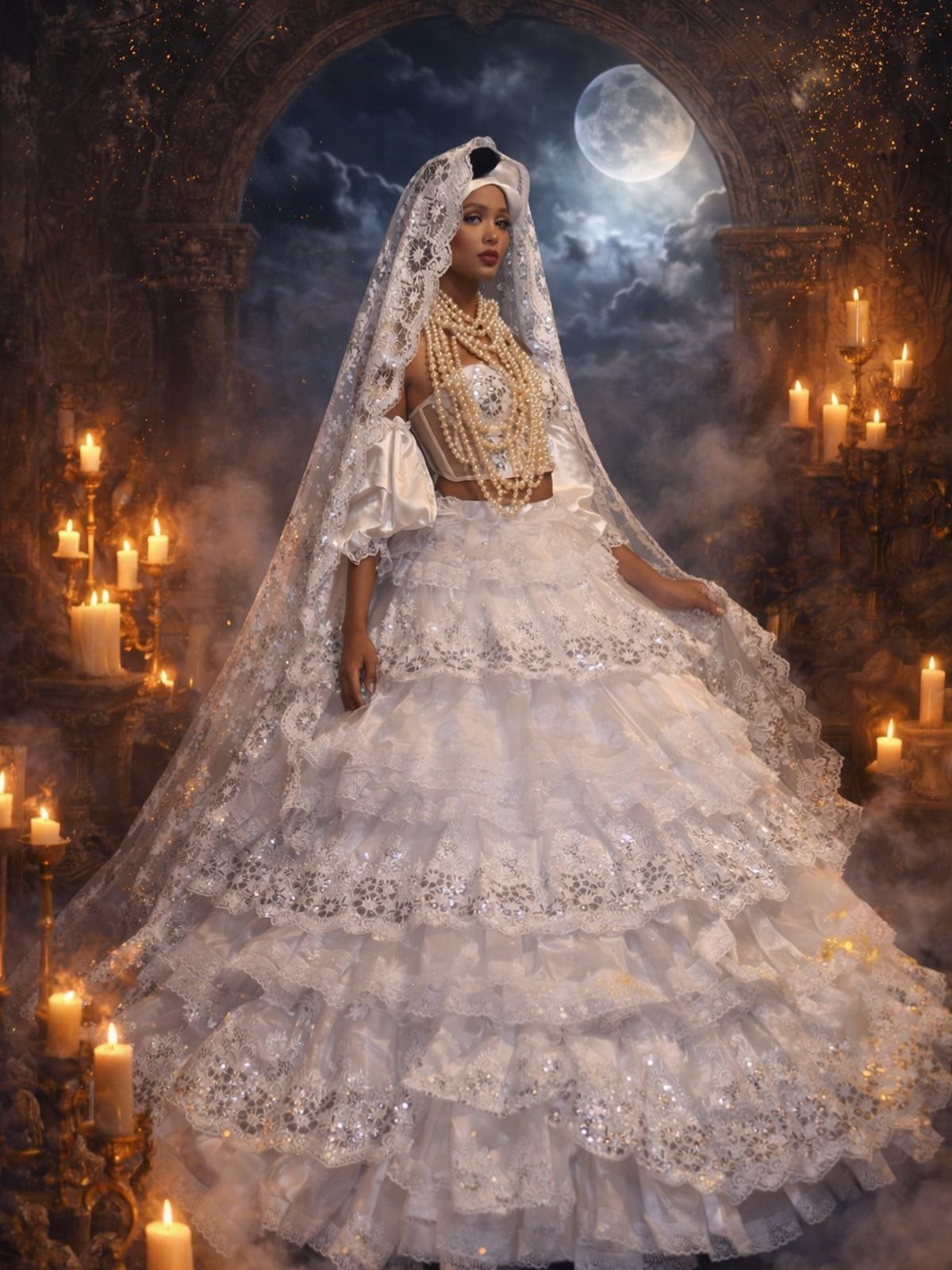
A tiered lace gown already has plenty of movement, so the sweeping mantilla works best when it stays simple and sheer. Choose lace that matches the dress in tone, or the layers will look busy.
I like this pairing for evening ceremonies, where candles or low light soften all that texture. Wear your hair in a sleek, low style so the veil carries the drama.
7. Intricate Lace Hem Mantilla Veil
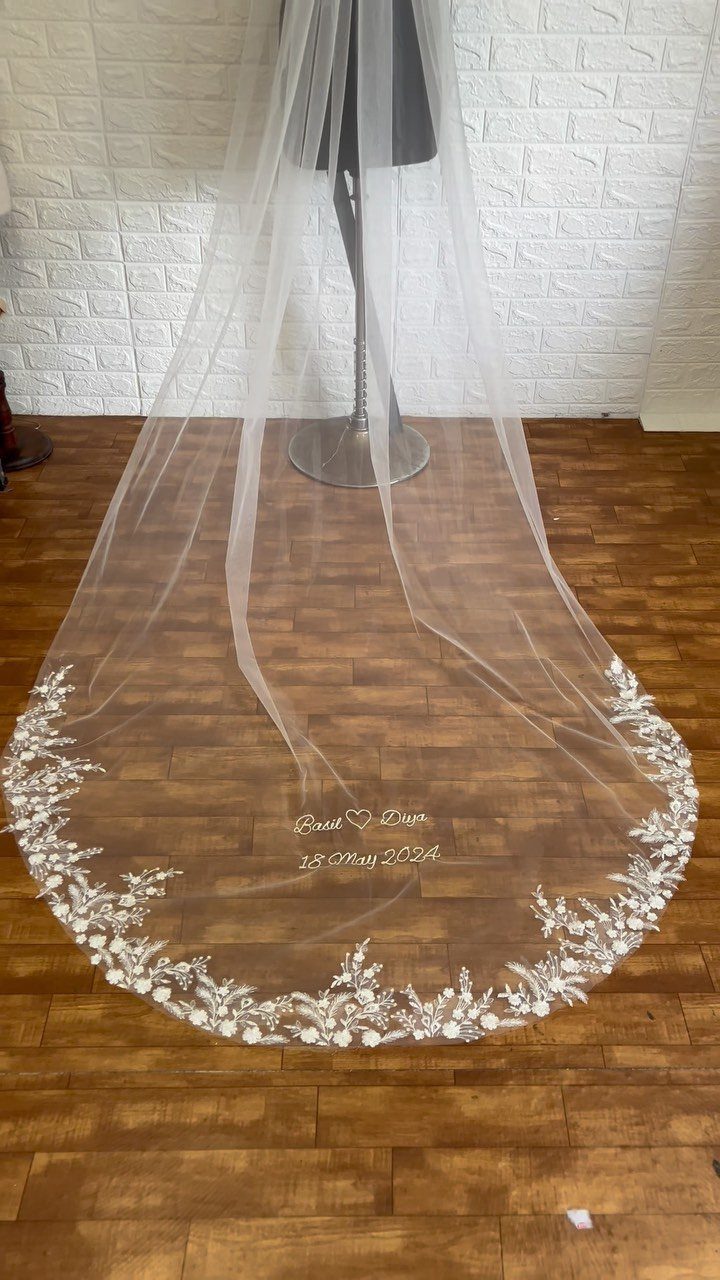
Personalized embroidery turns a mantilla into a keepsake. A name and wedding date stitched near the lace border sit where the veil rests against the skirt, so they stay quiet in photos and only show up when someone looks closely.
I would choose a white veil with a lace border and keep the lettering small, so the lace remains the main detail. Check the spelling and date with the seller before ordering, since embroidery cannot be undone.
Hang the veil on a mannequin or padded hanger afterward, and the stitching will stay easy to see and preserve.
8. Classic Church Aisle Mantilla Veil
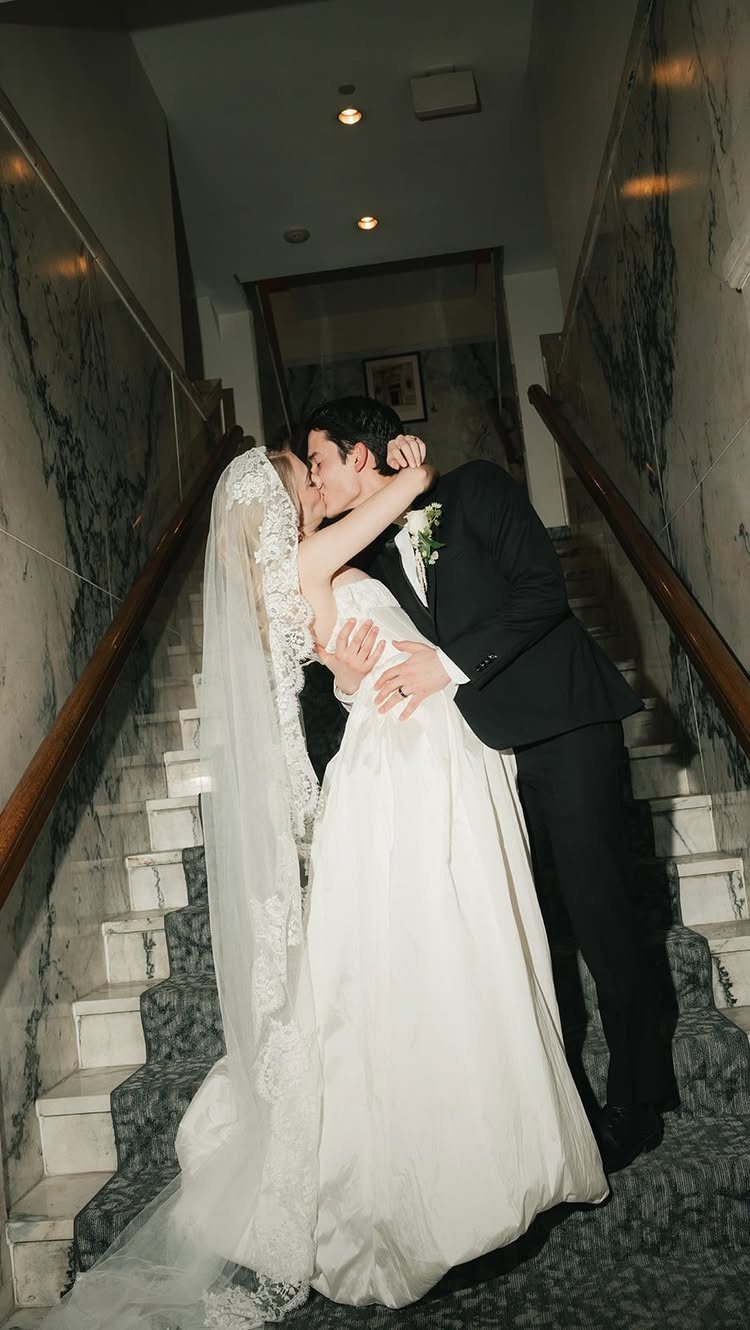
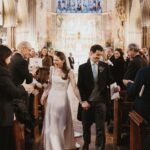
A lace mantilla suits a kiss on a staircase because the veil falls softly around the shoulders and does not block the face. Against a dark suit, white lace also reads clearly.
Ask your photographer to shoot from a little below and behind, where the lace edge and the steps both show. I would keep the gown simple here so the veil stays the detail people notice.
Have someone straighten the lace before the kiss, since it can bunch on stone steps.
Choosing the Right Hairstyle
A mantilla depends on the hair underneath more than almost any other veil.
A mantilla hangs from the crown of your head with no rigid comb to hold its shape, so your hairstyle controls how the lace sits and frames your face.
Flat and structured wins. A low chignon or bun and a mid-height updo both anchor the veil well, and the mid-height updo is the most common pairing.
A classic ballerina bun can work, but a high one pushes the veil forward, so I would test the placement before committing. Half-up with a smooth, flat top can also work if you use plenty of pins.
Soft waves and fully loose or curly hair are harder. Texture at the crown makes even placement difficult, and the veil can shift into the hair and lose the lace frame.
Plan to wear your hair down? Bring the real veil to your hair trial, because a stand-in won’t drape the same way.
Practical Tips for Wearing
Preparation does most of the work here. Test the attachment and placement with your hairstylist before the wedding, so the morning of the ceremony is not the first time you try it.
Pins hold the veil, so secure your hairstyle first and then pin the lace through it. Check the placement in a mirror from the front and the side.
Before buying, I would try at least 3 mantilla styles with your dress. Look at the lace, the length and where it sits, and judge them against both the gown and the venue.
Walk, hug someone and sit down in it, since comfort and movement matter through the reception too. For an outdoor ceremony, ask about small veil weights, since wind will lift lace fast.
Cultural Context
Lace versions became popular in the 17th and 18th centuries, and the style grew out of the Christian practice of covering the head in prayer.
Bridal versions are almost always white or ivory and skip the tall comb.
You do not have to claim Spanish heritage or a religious affiliation to wear one. If you do have that background, I would say so to your seamstress or seller, since some will suggest details that honor it.
Frequently Asked Questions
What is a mantilla wedding veil?
Think of a mantilla as a round or oval piece of lace with a scalloped, lace-trimmed edge and no gathered fullness.
Instead of fanning out from a comb, the fabric falls softly over the hair, framing the face and resting on the shoulders. Because the lace is the design, it looks traditional but still quiet and finished.
What lengths do mantilla veils come in?
They run from shoulder, elbow and fingertip lengths up to chapel and cathedral.
A cathedral mantilla trails far behind the bride, so I would choose it only if the aisle is long enough to show it and someone can arrange it behind you. Shorter lengths are easier to move and dance in.
What hairstyle works best with a mantilla veil?
Smooth, low styles hold the lace best, so a chignon, a low bun or a mid-height updo gives it a firm place to sit.
A high bun pushes the veil forward, and loose waves or curls make even placement hard because texture at the crown lets the veil sink into the hair.
Loose hair changes how the lace falls, so take your actual veil to the trial rather than testing with a substitute.
Do you have to be Spanish or religious to wear a mantilla veil?
No.
Anyone can wear one, whatever their background or beliefs. Its roots lie in the Christian custom of covering the head for prayer, and lace versions caught on in the 17th and 18th centuries.