Old fashioned cakes range from a hand-piped buttercream single tier to 3 tiers of Lambeth piping and sugar flowers, and the price follows the labor: the more handwork on the surface, the more hours your baker bills.
Your budget and your baker’s time decide which one is yours, since buttercream piping suits modest budgets and some nerve, while Lambeth work is priced by the hour. Get a written quote before you fall for a design.
1. Vintage Wedding Cake
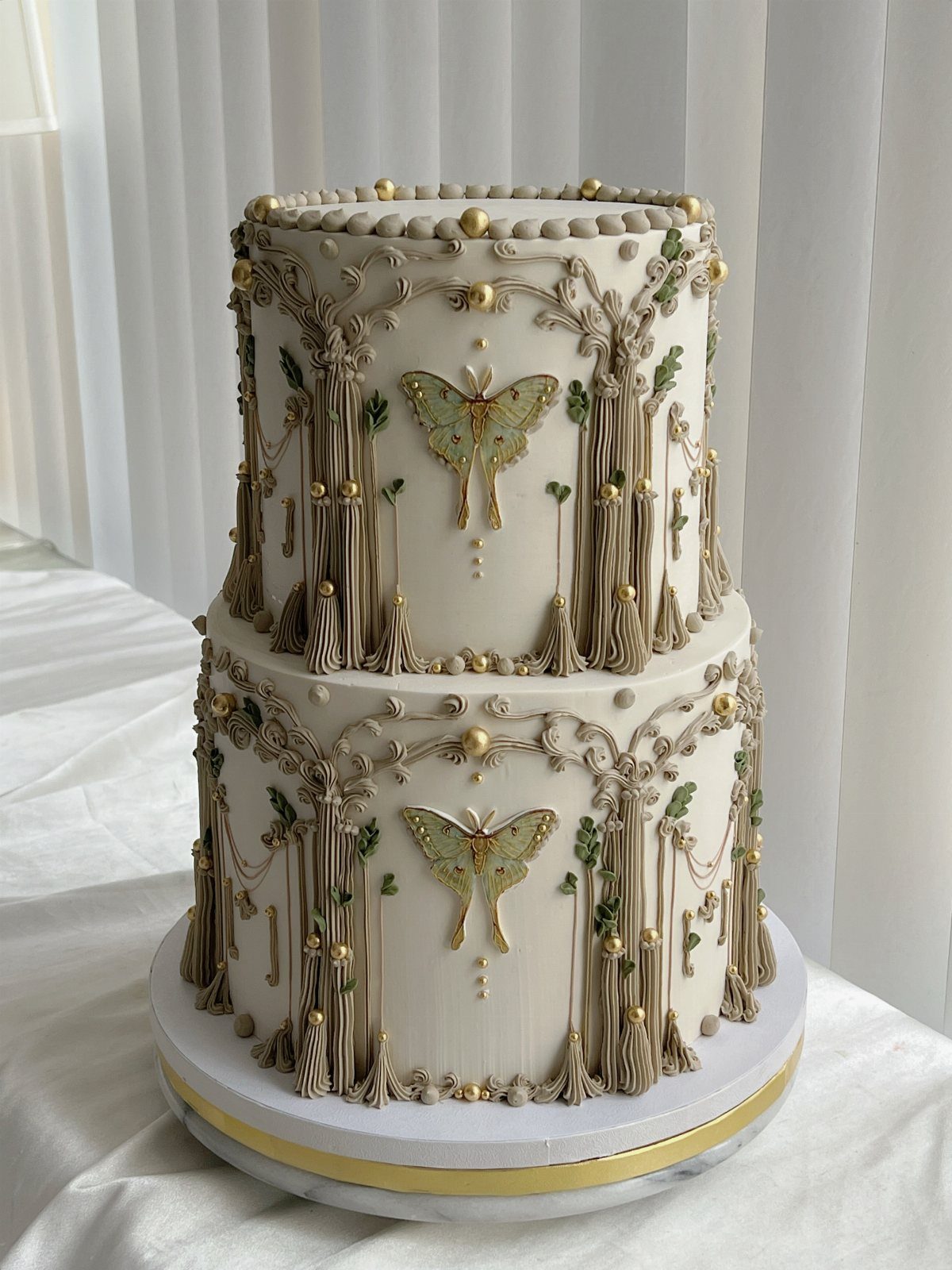
Butterflies are the detail that keeps this cake from reading as a plain white classic.
Keep the palette tight: white, beige and gold is plenty for a vintage cake. Piping and pearls do the work, so the cake stays calm and the butterflies get noticed.
2. Buttercream Wedding Cakes
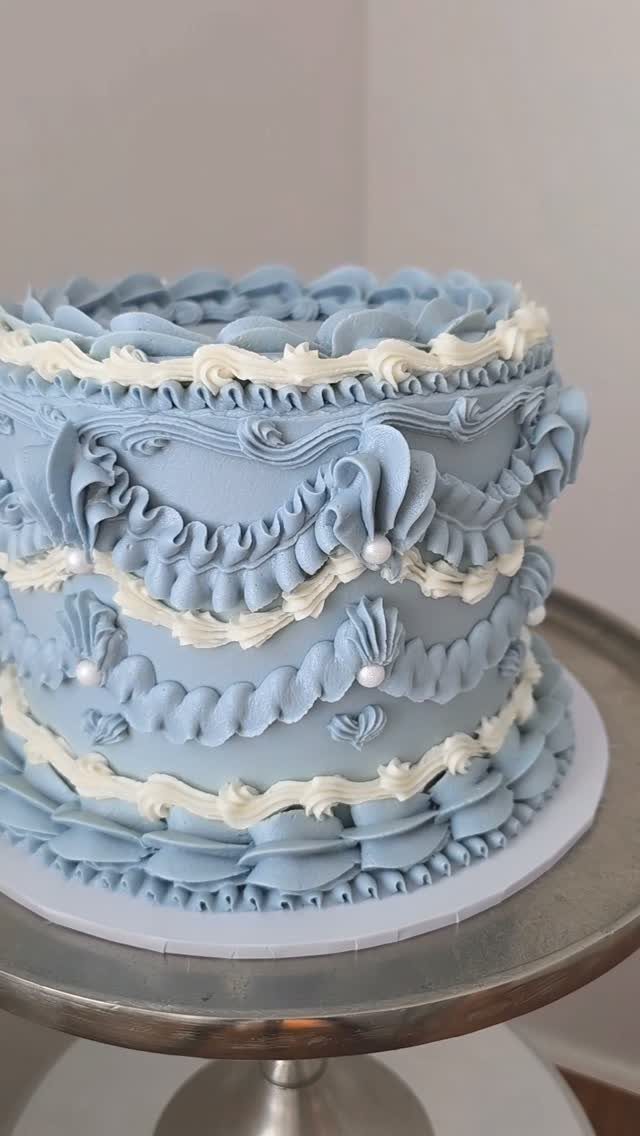
Ruffles piped in buttercream give a single tier real presence, and light blue makes them feel nostalgic. White pearls break up the color so it doesn’t read as flat.
The baker of this cake credits a leaf-shaped number 70 tip, though I would pair it with a petal tip if you want full ruffles down the side.
Brands of that tip can differ slightly in shape, so if you are piping at home, buy the same one for the whole cake and practice on parchment first.
Buttercream suits couples with modest budgets and some baking nerve. For texture, buttercream beats fondant in my book.
3. Lambeth Wedding Cake
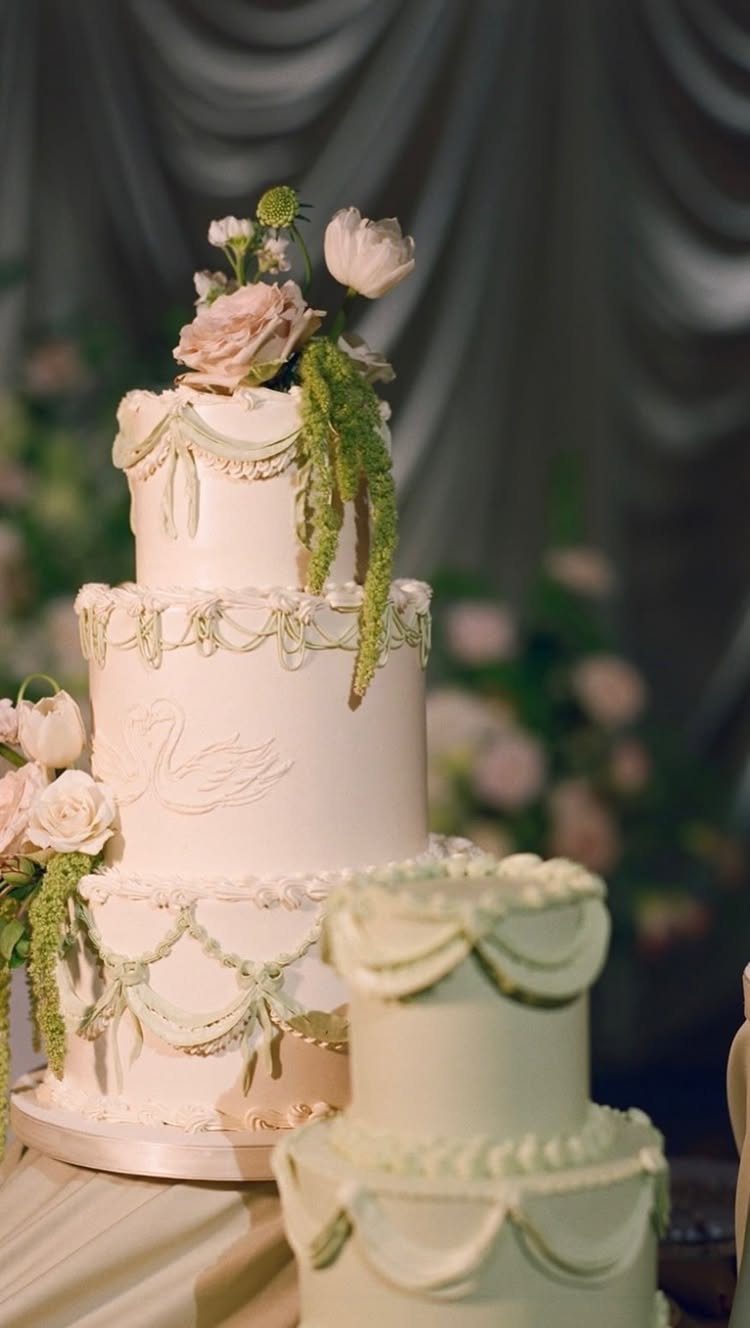
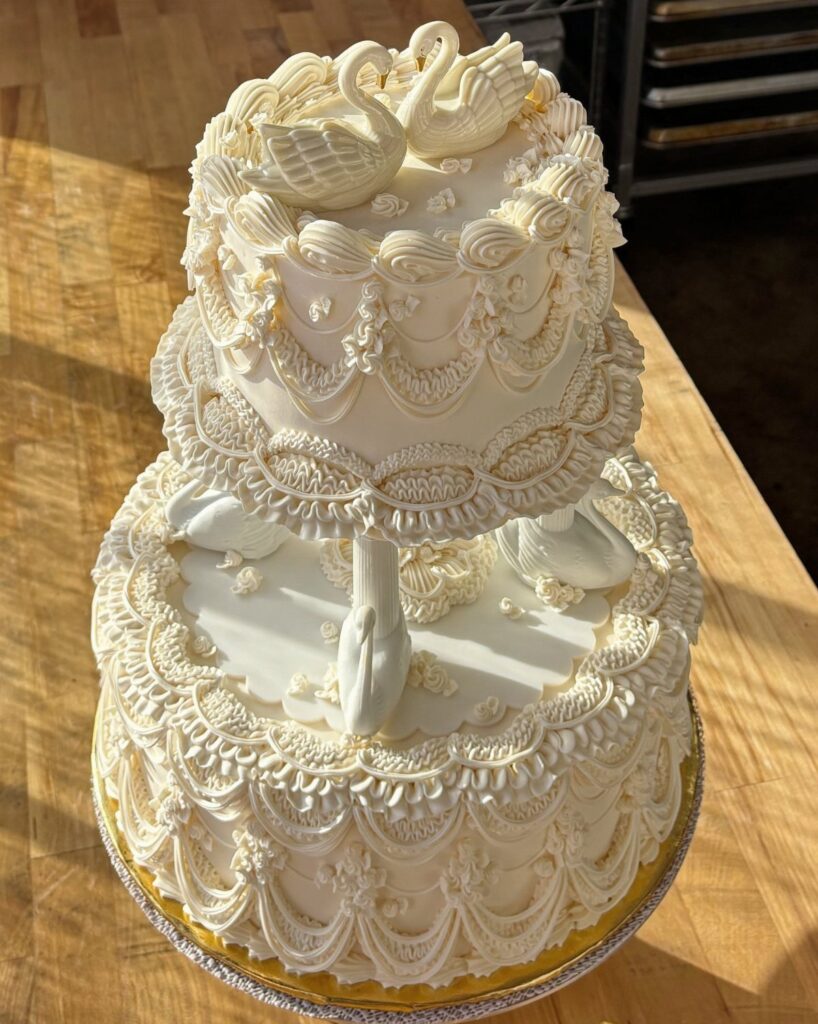
Lambeth piping is the overpiped, layered style: scrolls, strings and drops stacked in tight rows around each tier. That is why it looks so ornate on 3 tiers of white.
I would keep flowers to a few clusters, since the piping already fills every surface.
Expect this to cost more than a simply frosted cake, because the piping takes a skilled hand and a lot of hours. Get a written quote from your baker first, since Lambeth piping is priced by the hour.
4. Fondant Wedding Cakes
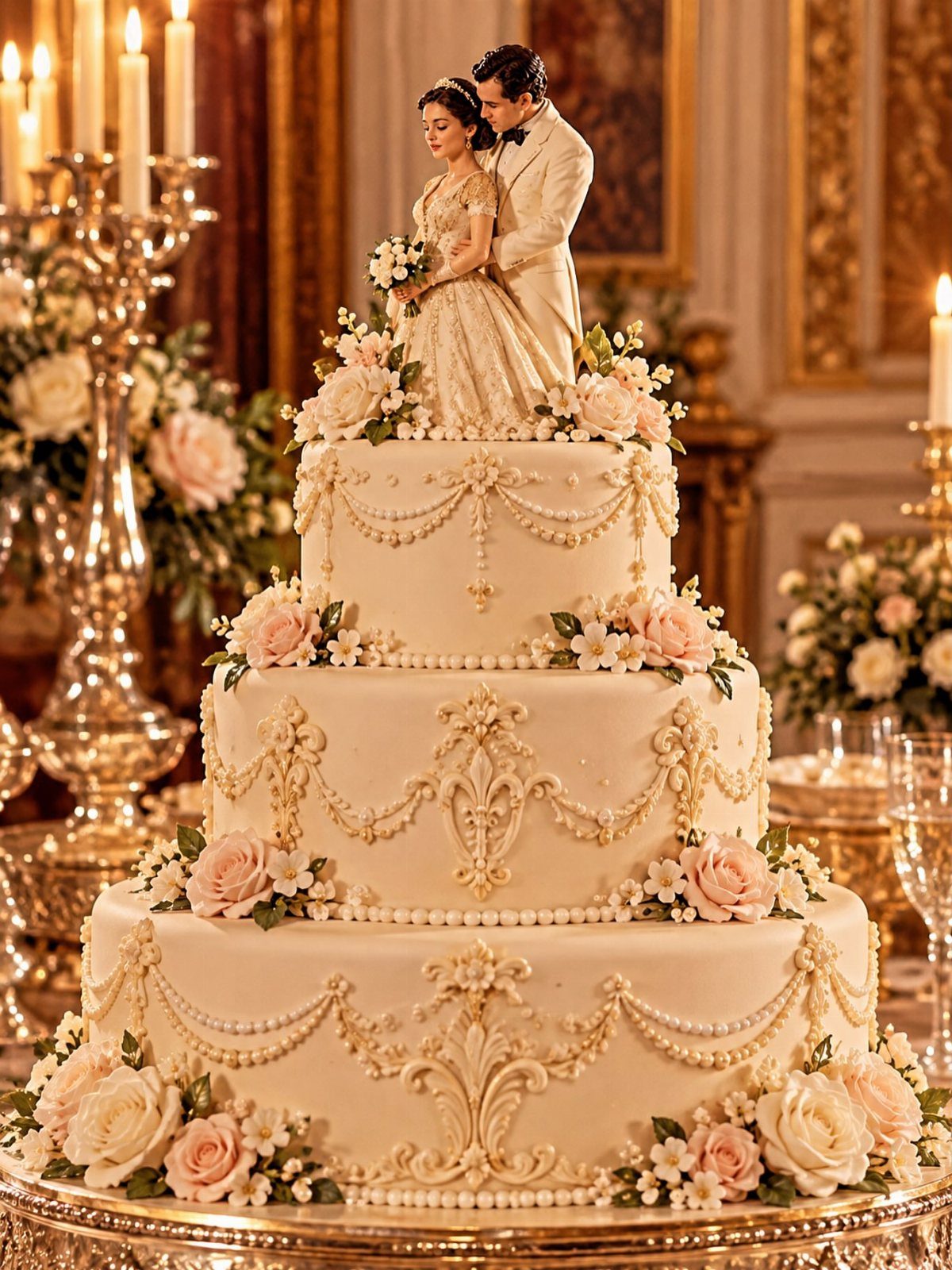
Fondant gives a cake that sleek, flawless surface, which is why it holds gold piping and sugar roses so crisply. Ivory fondant over 3 tiers, topped with a couple figurine, reads as formal and finished.
I would choose it when the design is detailed and you want clean lines under the decoration. Buttercream is softer and more forgiving, but it won’t give you this smoothness.
5. Heart-Shaped Cakes
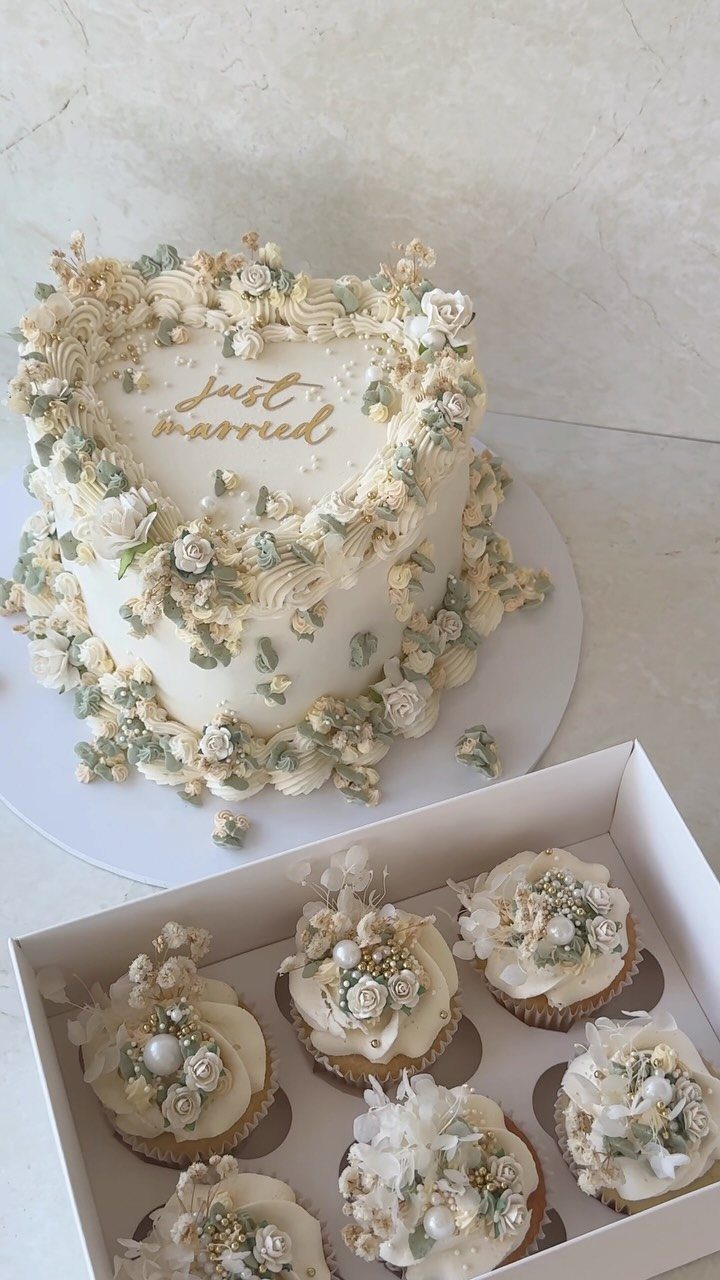
A heart-shaped cake is the quickest way to make a small wedding feel retro. Cream frosting, floral accents and a "just married" message carry a heart-shaped cake, and matching cupcakes stretch it to more guests.
It suits an intimate celebration well. For a bigger guest list, I would add boxed cupcakes like these rather than ordering a larger heart.
The unapologetically lavish, heart-shaped desserts have become so requested that Renee has made them a permanent part of her menu. She adds that she doesn’t see the vintage cake trend, which she calls a classic, going away anytime soon.
6. Vintage Cake Tiers
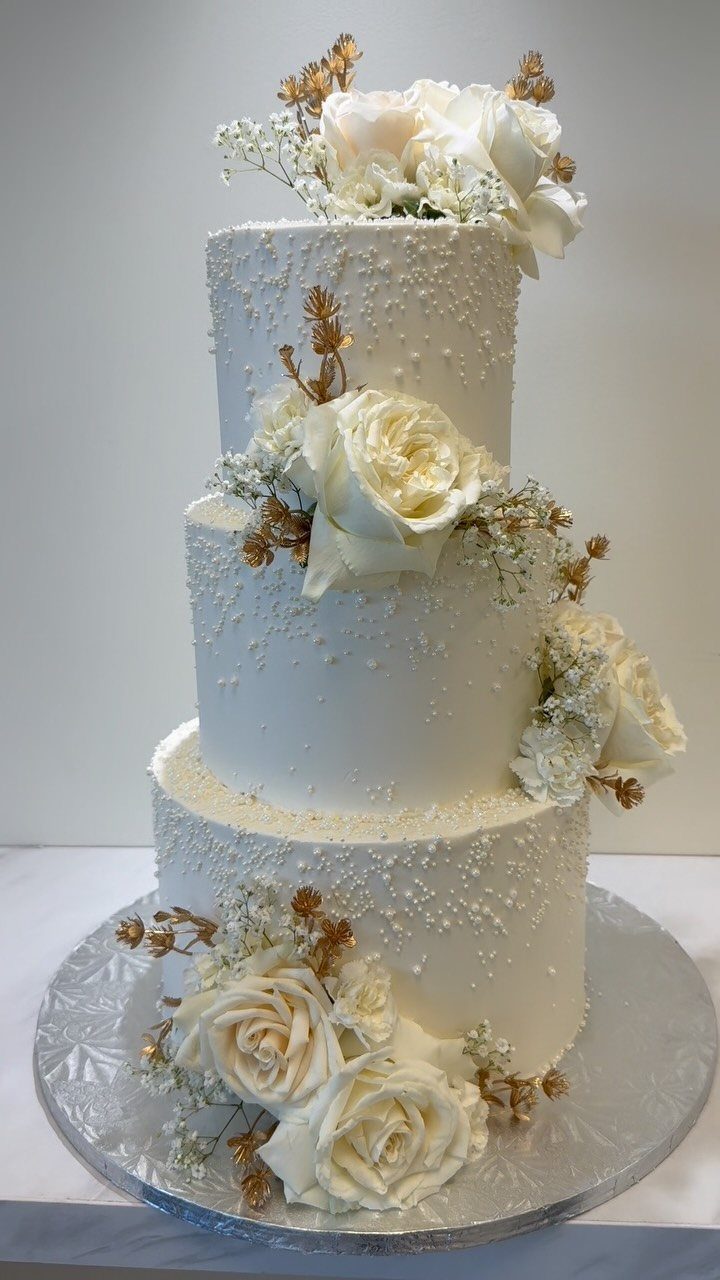
3 tiers read as traditional before anyone looks at the decoration. Here, white edible pearls and cream roses with gold accents keep the whole cake soft and romantic.
The baker describes it as delicate pearls and white florals, and I agree that restraint is what makes it last in photos. On a smaller budget, I would keep the pearls and cut back on the roses.
7. Decorative Sugar Flowers
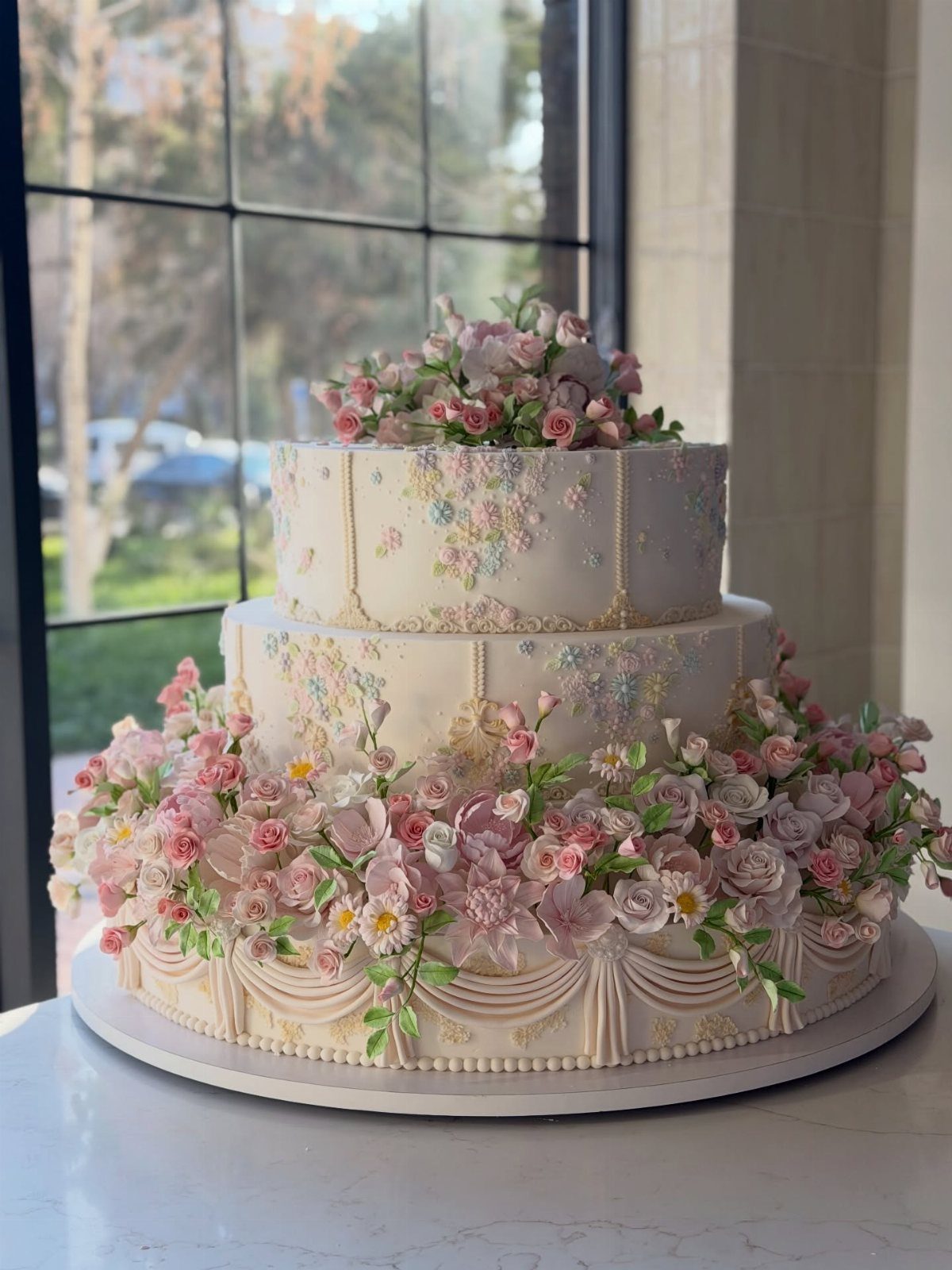
Sugar flowers are made entirely from sugar, so every petal on this cake is edible, and they hold their shape in a way fresh blooms can’t.
Pink and white ones over drapery icing give 3 white tiers a soft, romantic finish.
2 colors are plenty for this cake, and the folds in the icing can handle everything else.
Sugar flowers are handwork, so expect them to cost more than a simple frosted cake, and get a quote from your baker before agreeing to a full cascade.
8. Traditional Bride and Groom Topper
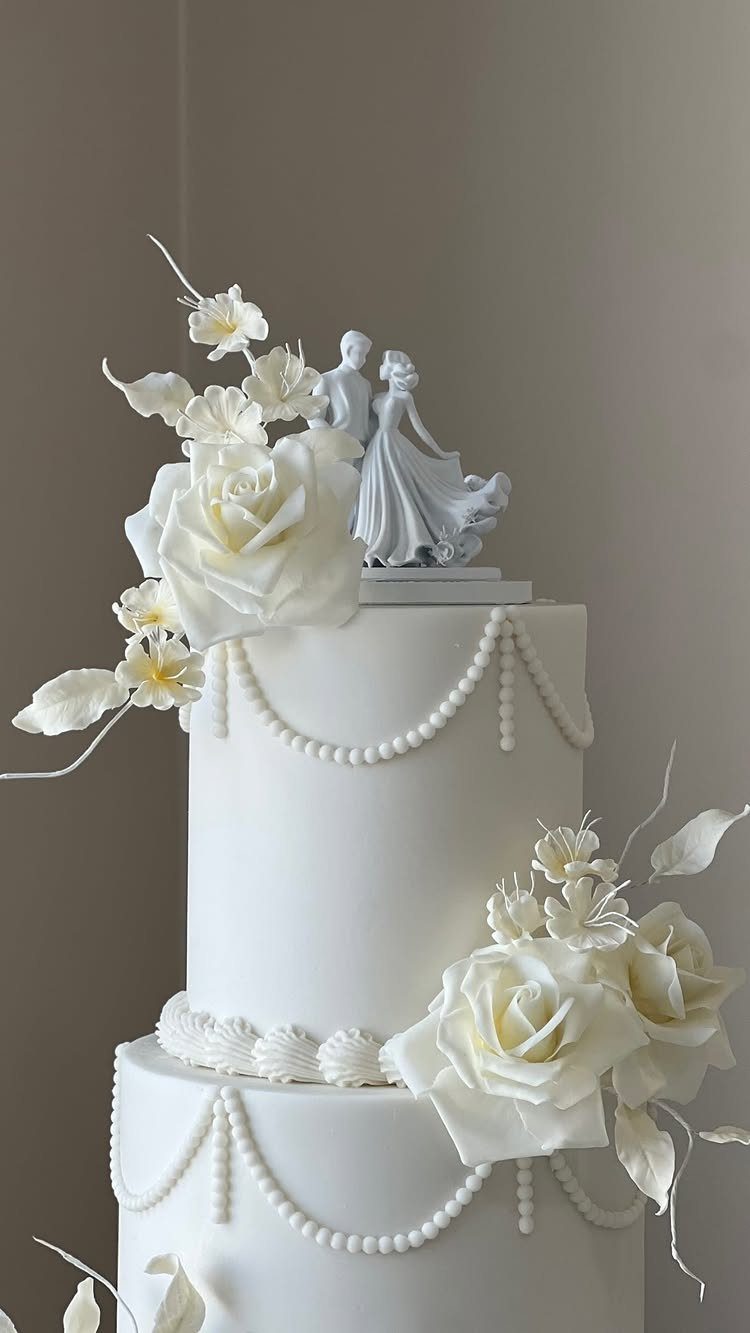
An old-fashioned bride and groom figurine on top tells guests this cake is traditional before they see a single tier.
Here it sits above white sugar roses and pearl swags, and the white-on-white scheme keeps the figurine from fighting the decoration.
I would pick this when you want a classic look with little guesswork. Pick a figurine that matches the cake’s white so it looks planned, and skip extra toppers, since the roses and swags already fill the tiers.
Planning a Vintage Wedding Cake
Bring photos to your baker before you settle on anything. A saved image shows style, color and tier count faster than a description, and it lets the baker tell you what is realistic for your budget and date.
Ask for a custom design if nothing on the standard menu matches.
Then check that the cake fits the rest of the day: the flavors you choose, the colors on your invitations and the style of your venue should feel like one plan.
If you plan to decorate the cake yourself, relax a little. This style is forgiving, and piping that isn’t flawless still looks good on a vintage cake.
Cake Decoration Techniques
Piping is the best place to start if you are decorating at home. The vintage look is forgiving, so uneven scrolls and bows read as handmade rather than as mistakes.
Practice still matters. Pipe a few rows on parchment before touching the cake, and repeat any pattern you plan to use until your hand repeats it without thinking.
Fondant is a different job, and I would leave a smooth, full covering to a baker unless you have done it before.
Lace details, hand-piped bows, vintage patterns and small sugar flowers are all traditional techniques, so you can mix one or two instead of trying every style on a single cake.
Frequently Asked Questions
What did wedding cakes look like in the 1920s?
They tended to be multi-tiered with elaborate, intricate icing. I can’t give you a year-by-year breakdown, but that heavy decoration is the thread running through today’s vintage cakes: piped scrolls, pearls and sugar flowers stacked on white tiers.
What is a classic wedding cake?
A classic wedding cake is typically multi-tiered, with traditional flavors and elegant decoration.
A cake stacked in 3 round tiers looks traditional from across the room, well before anyone notices the piping or the flowers. White pearls, cream roses with gold accents, or a bride and groom figurine on top all strengthen that look.